Fire is a foundational ecological process that shapes ecosystem structure, diversity, and resilience. Quantifying paleofire regime attributes such as frequency, severity, and intensity is essential for understanding the historical range of variability in fire behavior and its ecological effects. While frequency and severity are often reconstructed in paleofire studies, quantitative reconstructions of fire intensity remain limited. Recent work has shown that maximum pyrolysis temperature—a proxy for fire intensity—and plant species type can be inferred from charcoal using transmission Fourier-transform infrared (FTIR) spectroscopy. However, the sample preparation for transmission FTIR is destructive and time-consuming, limiting application and reuse of materials for other analyses. We evaluated reflectance FTIR spectroscopy as a non-destructive alternative for reconstructing combustion temperature and plant species from laboratory-generated charcoal. We also examined the influence of contrasting airflow environments (ambient air versus nitrogen-rich) on pyrolysis temperature and plant species reconstruction prediction accuracies and compared predictive performance between a novel, neural network–based deep learning model with the traditional modern analogue technique (MAT) using k-nearest neighbor functions. As proof of concept, we apply our enhanced methodology to ancient charcoal to demonstrate applicability at improving long-term fire regime reconstructions and the ability to link paleofire records with contemporary fire ecology. Our analysis shows that transmission and reflectance FTIR spectra yield comparable spectral profiles. However, sample preparation for reflectance FTIR is minimal and non-destructive, unlike transmission FTIR which is destructive. We demonstrate that oxygen environments improved reconstruction accuracy relative to nitrogen-rich conditions. Finally, our deep learning neural network (DL) achieved testing accuracies of 98.7
Identifying the influence of low-density Indigenous populations in paleofire records has been methodologically challenging. In the Southwest United States, well-replicated fire histories suggest that abundant lightning and suitable climate conditions drove frequent low-severity wildfires in dry pine forests independent of human activities even as ethnography provided hints that highly mobile indigenous populations used fire in myriad land use contexts. Here, we leverage published and unpublished tree-ring fire history records from pine forests in Western Apache (Ndee) traditional territory in central and eastern Arizona (N = 34 sites, N = 649 trees) to demonstrate that historical fire regimes were overwhelmingly influenced by Ndee cultural burning. Our tree-ring synthesis shows significantly more frequent fires in Ndee territory than elsewhere in the region for centuries before the establishment of reservations (1600-1870 CE). Despite the heightened fire activity, fires were largely small and asynchronous, occurred disproportionately in late April and May, when Ndee invested significant subsistence activities in these pine forests, and occurred independent of climate drivers. This suggests that Ndee fire stewardship created a patchwork of nearly annual small, spring fires that inhibited natural fire spread and limited the influence of drought on fire activity. Our work shows that even relatively small, highly mobile populations of forager-gardeners had significant influence on some pre-Euroamerican fire regimes despite abundant natural ignitions. Our study shows clearly that Indigenous fire management impacted fire-size distributions, fire frequencies, and fire seasonality in ways that cannot be explained by seasonal and annual lightning densities.
The inability of many dry conifer forests in western North America to recover from modern wildfires has highlighted the impacts of land-use history (fire suppression, logging, overgrazing) and climate change on the resilience of these otherwise fire-adapted forests. Although spatially and temporally variable, Indigenous populations could have influenced historical fire regimes for centuries to millennia, even when those influences were subtle enough to be nearly indistinguishable from lightning-only fire regimes in the paleoecological record. Here, we combine archaeology, paleoecology, and paleoclimate records to show that Indigenous land use in at least two regions of the Southwest US improved the fire resilience of dry ponderosa pine (Pinus ponderosa) forests relative to spatially distant lightning-dominated landscapes. Native American fire management that involved high frequency, small patch burning in environments that already experienced frequent lightning ignitions helped to limit the risk to severe fires in variable climates, suggesting that we can similarly reduce the risk of future high-severity fires by applying similar strategies today.
The impact of Indigenous populations on historical fire regimes has been controversial and beset by mismatches in the geographic scale of paleofire reconstructions and the scale of land-use behaviors. It is often assumed that anthropogenic burning is linearly related to population density and not different cultural practices. Here we take an off-site geoarchaeology strategy to reconstruct variability in historical fire regimes (<1000 years ago) at geographic scales that match the archaeological, ethnohistorical, and oral tradition evidence for variability in the intensity of Indigenous land use by two different cultural groups (Ancestral Pueblo and Western Apache). We use multiple, independent proxies from three localities in ponderosa pine (Pinus ponderosa) forests in east-Central Arizona to reconstruct fire regime variability during four phases of cultural use of different intensities. Elevated charcoal with domesticate pollen (Zea spp.) but otherwise unchanged forest pollen assemblages characterized intensive land use by Ancestral Pueblo people during an early phase, suggesting fire use to support agricultural activities. By contrast, a phase of intensive pre-reservation Western Apache land use corresponded to little change in charcoal, but had elevated ash-derived phosphorus and elevated grass and ruderal pollen suggestive of enhanced burning in fine fuels to promote economically important wild plants.
This research elucidates the changing function of some of the earliest types of monumental architecture in the Maya world, the E-Group, using ICP-MS soil chemistry analysis of associated floor surfaces at the site of Holtun, Guatemala. E-groups are architectural assemblages first appearing during the Middle Preclassic period that are associated with public, ritual activities, such as marking important celestial and agricultural events. Our methodology targeted sequential, stratigraphic plaza floors in the E-Group compound at Holtun to examine changing activities through time. Residential patio surfaces were also sampled as a comparison to public, ritual activity. Our results suggest that activities related to food production and consumption are visible in sequential plaza floors of the E-Group, and the locations of some of these activities changed over time. Moreover, activities and locations revealed through soil chemical analysis also differed somewhat from those in residential patios, suggesting different patterns of use in public versus private spaces.
Remote islands in the Pacific Ocean (Oceania) experienced dramatic environmental transformations after initial human settlement in the past 3,000 yr. Here, human causality of this environmental degradation has been unquestioned and viewed as evidence of the inherent destructive tendencies of human societies in both archaeological and popular discourse. We use charcoal and stable carbon isotopes from deep soil cores to reconstruct the dynamics of fire activity and deforestation across the Sigatoka River valley on the leeward (dry) side of Viti Levu, Fiji. Fires and pyrogenic patches of grassland predated human settlement by millennia, but the magnitude of fire activity and landscape transformation accelerated with the establishment and expansion of swidden agriculture. Regional comparisons with previous studies in Fiji and elsewhere in Remote Oceania settled between 3,200 and 2,900 yr BP reveal a similar pattern of pre- and post-settlement fire activity and landscape change. Pre-settlement fires generally corresponded to droughts, probably driven by El Niño, often correlating with drought-driven wildfires elsewhere in the region. Post-settlement, charcoal and C4 grasses increased dramatically, but nearly all major peaks in charcoal and grasses corresponded to increased El Niño activity. This indicates that fire activity and deforestation were a product of the interaction between swidden agriculture and climate rather than land use alone.
Fire activity and deforestation accelerated in Remote Oceania following human settlement. However, geoarchaeology and palaeoecology indicate that peak fire activity and grassland expansion primarily coincided with high frequencies of El Nino droughts, which suggests that there are complex relationships among human land use, fire and climate in the western Pacific.
Colonialism has disrupted Indigenous socioecological systems around the globe, including those supported by intentional landscape burning. Because most disruptions happened centuries ago, our understanding of Indigenous fire management is largely inferential and open to debate. Here, we investigate the ecological consequences of the loss of traditional Aboriginal fire management on fire-exposed savannas on the Arnhem Plateau, northern Australia, using the fire-sensitive conifer Callitris intratropica as a bio-indicator. We contrast Kakadu National Park, where traditional Aboriginal fire management was severely disrupted during the early twentieth century following Aboriginal relocation to surrounding settlements, and an adjacent Aboriginal estate where traditional Aboriginal fire management endures. Since 2006, traditional Aboriginal fire management at this site has been overlaid by a program of broad-scale institutionalized burning in the early dry season, designed to reduce greenhouse emissions. Using remote sensing, field survey, and dendrochronology, we show that on the Aboriginal estate, C. intratropica populations depend on the creation of a shifting patch mosaic of long unburned areas necessary for the recruitment of C. intratropica. However, the imposition of broad-scale fire management is disrupting this population patch dynamic. In Kakadu, there have been extreme declines of C. intratropica associated with widespread fires since the mid twentieth century and consequent proliferation of grass fuels. Fire management in Kakadu since 2007, designed to increase the size and abundance of patches of unburned vegetation, has not been able to reverse the population collapse of C. intratropica . Our study demonstrates that colonial processes including relocation of Indigenous people and institutional fire management can have deleterious consequences that are nearly irreversible because of hysteresis in C. intratropica population dynamics.
Indigenous people have coexisted with flammable environments for millennia, often shaping their landscapes through fire use and wood harvesting.In this presentation, I describe a collaborative project with the Pueblo of Jemez in New Mexico that combines ethnography, oral tradition, archaeology, paleoecology, and computer modeling to analyze fire and land use at an ancient 'wildland-urban interface' that persisted for centuries.These lessons from Jemez provide much needed examples of how we might coexist with fire today.
Prior research suggests that Indigenous fire management buffers climate influences on wildfires, but it is unclear whether these benefits accrue across geographic scales. We use a network of 4824 fire-scarred trees in Southwest United States dry forests to analyze up to 400 years of fire-climate relationships at local, landscape, and regional scales for traditional territories of three different Indigenous cultures. Comparison of fire-year and prior climate conditions for periods of intensive cultural use and less-intensive use indicates that Indigenous fire management weakened fire-climate relationships at local and landscape scales. This effect did not scale up across the entire region because land use was spatially and temporally heterogeneous at that scale. Restoring or emulating Indigenous fire practices could buffer climate impacts at local scales but would need to be repeatedly implemented at broad scales for broader regional benefits.
Humans have influenced global fire activity for millennia and will continue to do so into the future. Given the long-term interaction between humans and fire, we propose a collaborative research agenda linking archaeology and fire science that emphasizes the socioecological histories and consequences of anthropogenic fire in the development of fire management strategies today.
Fire is an integral component of ecosystems globally and a tool that humans have harnessed for millennia. Altered fire regimes are a fundamental cause and consequence of global change, impacting people and the biophysical systems on which they depend. As part of the newly emerging Anthropocene, marked by human-caused climate change and radical changes to ecosystems, fire danger is increasing, and fires are having increasingly devastating impacts on human health, infrastructure, and ecosystem services. Increasing fire danger is a vexing problem that requires deep transdisciplinary, trans-sector, and inclusive partnerships to address. Here, we outline barriers and opportunities in the next generation of fire science and provide guidance for investment in future research. We synthesize insights needed to better address the long-standing challenges of innovation across disciplines to (i) promote coordinated research efforts; (ii) embrace different ways of knowing and knowledge generation; (iii) promote exploration of fundamental science; (iv) capitalize on the "firehose" of data for societal benefit; and (v) integrate human and natural systems into models across multiple scales. Fire science is thus at a critical transitional moment. We need to shift from observation and modeled representations of varying components of climate, people, vegetation, and fire to more integrative and predictive approaches that support pathways toward mitigating and adapting to our increasingly flammable world, including the utilization of fire for human safety and benefit. Only through overcoming institutional silos and accessing knowledge across diverse communities can we effectively undertake research that improves outcomes in our more fiery future.
The intersection of expanding human development and wildland landscapes-the "wildland-urban interface" or WUI-is one of the most vexing contexts for fire management because it involves complex interacting systems of people and nature. Here, we document the dynamism and stability of an ancient WUI that was apparently sustainable for more than 500 y. We combine ethnography, archaeology, paleoecology, and ecological modeling to infer intensive wood and fire use by Native American ancestors of Jemez Pueblo and the consequences on fire size, fire-climate relationships, and fire intensity. Initial settlement of northern New Mexico by Jemez farmers increased fire activity within an already dynamic landscape that experienced frequent fires. Wood harvesting for domestic fuel and architectural uses and abundant, small, patchy fires created a landscape that burned often but only rarely burned extensively. Depopulation of the forested landscape due to Spanish colonial impacts resulted in a rebound of fuels accompanied by the return of widely spreading, frequent surface fires. The sequence of more than 500 y of perennial small fires and wood collecting followed by frequent "free-range" wildland surface fires made the landscape resistant to extreme fire behavior, even when climate was conducive and surface fires were large. The ancient Jemez WUI offers an alternative model for fire management in modern WUI in the western United States, and possibly other settings where local management of woody fuels through use (domestic wood collecting) coupled with small prescribed fires may make these communities both self-reliant and more resilient to wildfire hazards.
Megafires in dry conifer forests of the Southwest US are driving transitions to alternative vegetative states, including extensive shrubfields dominated by Gambel oak (Quercus gambelii). Recent tree-ring research on oak shrubfields that predate the 20th century suggests that these are not a seral stage of conifer succession but are enduring stable states that can persist for centuries. Here we combine soil charcoal radiocarbon dating with tree-ring evidence to refine the fire origin dates for three oak shrubfields (<300 ha) in the Jemez Mountains of northern New Mexico and test three hypotheses that shrubfields were established by tree-killing fires caused by (1) megadrought; (2) forest infilling associated with decadal-scale climate influences on fire spread; or (3) anthropogenic interruptions of fire spread. Integrated tree-ring and radiocarbon evidence indicate that one shrubfield established in 1664 CE, another in 1522 CE, and the third long predated the oldest tree-ring evidence, establishing sometime prior to 1500 CE. Although megadrought alone was insufficient to drive the transitions to shrub-dominated states, a combination of drought and anthropogenic impacts on fire spread may account for the origins of all three shrub patches. Our study shows that these shrubfields can persist >500 years, meaning modern forest-shrub conversion of patches as large as >10,000 ha will likely persist for centuries.
Here, we show that the last century of fire suppression in the western U.S. has resulted in fire intensities that are unique over more than 900 years of record in ponderosa pine forests (Pinus ponderosa). Specifically, we use the heat-sensitive luminescence signal of archaeological ceramics and tree-ring fire histories to show that a recent fire during mild weather conditions was more intense than anything experienced in centuries of frequent wildfires. We support this with a particularly robust set of optically stimulated luminescence measurements on pottery from an archaeological site in northern New Mexico. The heating effects of an October 2012 CE prescribed fire reset the luminescence signal in all 12 surface samples of archaeological ceramics, whereas none of the 10 samples exposed to at least 14 previous fires (1696–1893 CE) revealed any evidence of past thermal impact. This was true regardless of the fire behavior contexts of the 2012 CE samples (crown, surface, and smoldering fires). It suggests that the fuel characteristics from fire suppression at this site have no analog during the 550 years since the depopulation of this site or the 350 years of preceding occupation of the forested landscape of this region.
Fire use has played an important role in human evolution and subsequent dispersals across the globe, yet the relative importance of human activity and climate on fire regimes is controversial. This is particularly true for historical fire regimes of the Americas, where indigenous groups used fire for myriad reasons but paleofire records indicate strong climate-fire relationships. In North American grasslands, decadal-scale wet periods facilitated widespread fire activity because of the abundance of fuel promoted by pluvial episodes. In these settings, human impacts on fire regimes are assumed to be independent of climate, thereby diminishing the strength of climate-fire relationships. We used an offsite geoarchaeological approach to link terrestrial records of prairie fire activity with spatially related archaeological features (driveline complexes) used for intensive, communal bison hunting in north-central Montana. Radiocarbon-dated charcoal layers from alluvial and colluvial deposits associated with driveline complexes indicate that peak fire activity over the past millennium occurred coincident with the use of these features (ca. 1100-1650 CE). However, comparison of dated fire deposits with Palmer Drought Severity Index reconstructions reveal strong climate-fire linkages. More than half of all charcoal layers coincide with modest pluvial episodes, suggesting that fire use by indigenous hunters enhanced the effects of climate variability on prairie fire regimes. These results indicate that relatively small, mobile human populations can impact natural fire regimes, even in pyrogeographic settings in which climate exerts strong, top-down controls on fuels.
 Thomas W. Swetnam合作论文数Laboratory of Tree-Ring Research, College of Science, University of Arizona14
 David Bowman合作论文数School of Natural Sciences, University of Tasmania;The Fire Centre, University of Tasmania9
 Andrew Cunningham Scott (Andrew C. Scott)合作论文数Department of Earth Sciences, Royal Holloway University of London9
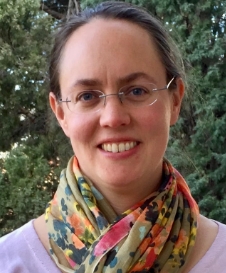 Jennifer Balch合作论文数Department of Geography, College of Arts and Sciences, University of Colorado Boulder7
 Fay Johnston合作论文数Menzies Institute for Medical Research, University of Tasmania;Department of Health and Human Services, Tasmania7
 Christopher H. Guiterman合作论文数6
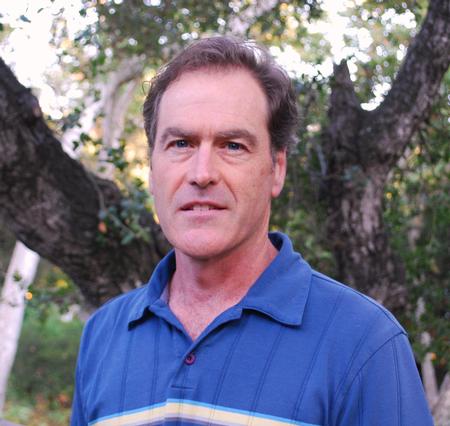 Max Alan Moritz (Max Moritz)合作论文数Moritz Lab, Bren School of Environmental Science & Management, University of California6Meg A. Krawchuk合作论文数Department of Renewable Resources6
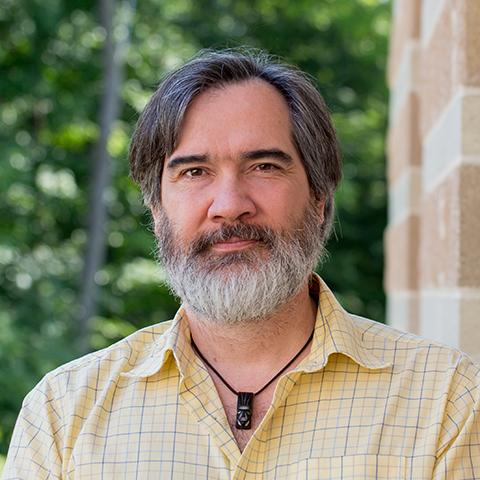 Mark Cochrane合作论文数Appalachian Laboratory, Center for Environmental Science, University of Maryland;Instituto do Homem e Meio Ambiente na Amazônia;Center for Global Change and Earth Observations, Michigan State University5
 Paulo Artaxo合作论文数Instituto de Estudos Avancados, Universidade de São Paulo;Departamento de Física Aplicada, Instituto de Física, Universidade de São Paulo5
 Ruth DeFries合作论文数Department of Ecology, Evolution, and Environmental Biology, Climate School, Columbia University;Earth Institute, Columbia University5
 Christian A. Kull合作论文数School of Geography and Environmental Science, Monash University5
 William Bond合作论文数Department of Biological Sciences, University of Cape Town5
 Jon Keeley合作论文数Western Ecological Research Center, United States Geological Survey4
 Stephen J. Pyne合作论文数School of Life Sciences, Arizona State University4Dudgeon John V合作论文数4
 Matthew Liebmann合作论文数Department of Anthropology, Harvard University4
 Michelle Cailin Mack合作论文数Center for Ecosystem Science and Society, Northern Arizona University;Department of Biological Sciences, Northern Arizona University4Joshua Farella合作论文数Univ Arizona, Univ Arizona Cooperat Extens3Nicholas C. Laluk合作论文数3
 Toddi Steelman合作论文数Duke University3
 Navjot S Sodhi合作论文数Department of Biological Sciences, Faculty of Science, National University of Singapore3
 Carla D'Antonio合作论文数Department of Ecology, Evolution and Marine Biology, University of California3
 Rachel Loehman合作论文数Rocky Mountain Research Station Fire Sciences Laboratory, US Forest Service3
 Bart R. Johnson合作论文数Department of Landscape Architecture, University of Oregon3
 Julie S. Field合作论文数Department of Anthropology, The Ohio State University3
 Ellis Q. Margolis合作论文数3John D. Bailey合作论文数2Dana Drake Rosenstein合作论文数2Andrew Quicksall合作论文数2
 Kacy Hollenback合作论文数university of arizona2
 Michael J. Aiuvalasit合作论文数Nucl Phys Lab, Univ Illinois2jenna m battillo合作论文数2Jeffrey D. Kline合作论文数2
 Brandon Collins合作论文数Department of Environmental Sciences, Policy and Management, Rausser College of Natural Resources, University of California, Berkeley;Forest Biology Research Center2Jelena Vukomanovic合作论文数Ctr Geospatial Analyt, North Carolina State Univ2
 Christopher A. Kiahtipes合作论文数Institute for the Advanced Study of Culture and the Environment, University of South Florida2
 Alexandra Paige Fischer合作论文数School for Environment and Sustainability, University of Michigan-Ann Arbor2
 Forrest Robert Stevens合作论文数2
 Stephen Lycett合作论文数Department of Anthropology, College of Arts and Sciences, University at Buffalo, The State University of New York2
 Olsen Christine S合作论文数Department of Forest Ecosystems &Oregon State University;Department of Forest Ecosystems & Society, Oregon State University2
 Jessica Leahy合作论文数The University of Maine School of Forest Resources 5755 Nutting Hall Orono ME 04469-5755 USA2
 Claire Belcher合作论文数University of Exeter2
 Travis Paveglio合作论文数Department of Natural Resource Sciences, Washington State University2
 Anna Klimaszewski-Patterson合作论文数New Mexico State University2
 Eric M. White合作论文数United States Department of Agriculture Forest Service2William G. Chaloner合作论文数2
 Cassandra Moseley合作论文数University of Oregon Eugene2




