Some occlusions of multiple vehicles might occur in the surveillance camera-based vehicle tracking system; thus, the tracking system will lose track of a vehicle and mistakenly assign this vehicle a new ID. This problem, called ID switch, will significantly impact the accuracy of vehicle tracking applications if they rely on consistent tracking results. To address this challenge of ID switches caused by occlusions, a new trajectory restoration method is proposed. The proposed method will first group the same direction of trajectories and the system will compute the central trajectory. When a trajectory is identified as broken, the system can follow the central trajectory to search for another matching broken segment. This process not only enhances the continuity of vehicle tracking but also helps in maintaining the identity of the vehicle throughout the tracking duration. In this study, the performance of the proposed algorithm is evaluated using the dataset from Taipei City’s roadside surveillance cameras in urban areas. The experimental results show that the proposed method is effective in reducing the number of ID switches, improving the overall accuracy of vehicle tracking, and contributing to more reliable traffic analysis.
Metaheuristic algorithms are capable of solving various complex engineering optimization problems efficiently; however, most of them rely on a certain number of searched solutions to guide their searches during the convergence process. Although it is not hard to imagine that a larger number of searched solutions will provide a better description of the landscape of the solution space, retaining all the searched solutions remains a challenge. Inspired by this observation, we present in this paper a novel called, which is equipped with a new mechanism called space net for depicting the landscape of the solution space using the information provided by most searched solutions. With the space net, a is then kind of like having a “vision” for knowing the landscape of the solution space to improve its search accuracy, such as investing more searches on high potential regions and reducing the number of searches on low potential regions. Simulation results show that is capable of providing a promising result for solving single objective bound constrained problems.
With the advance of the internet, large-scale inappropriate content can be seen everywhere. It is not easy to use a fixed and static domain name list to filter inappropriate websites because domain names can easily be changed to avoid abnormal detection. The number of normal websites is typically significantly more than that of abnormal websites; therefore, the website data for these two types might be imbalanced. This paper presents a text data augmentation method to augment a blacklist for improving the accuracy of website classification (detection) tasks by synthesizing data for the minority categories using a language model. It also adopts a selection strategy to filter out the toxic output to get suitable synthetic data and then to distill knowledge from a language model into a synthetic dataset. To evaluate the performance of the proposed method, we compared it with easy data augmentation (EDA) and TextSmoothing for a blacklist to filter inappropriate webpages. Experimental results show the proposed data augmentation mechanism can enhance the performance of a blacklist. Also, the proposed method can outperform the other data augmentation methods for filtering inappropriate webpages.
The transformer has good predictive performance for short-term load forecasting, but its computational cost is higher than traditional machine learning models, such as random forests. Structured pruning techniques reduce computational load and model size, enabling transformer deployment in resource-constrained environments. This paper proposes a structured pruning framework for the transformer that decomposes the transformer into multiple substructures. It evaluates the importance of each substructure unit and employs a metaheuristic algorithm to find the optimal pruning rate for each substructure. Unlike traditional weight-based importance evaluation methods, This paper employs limited training epochs to learn additional parameters and identify the most critical units. Experimental results show that, compared to other standard methods available for metaheuristic-based pruning, the proposed approach achieves better performance while maintaining high pruning rates in short-term load forecasting tasks. Using a metaheuristic algorithm, floating-point operations and parameter count of the transformer are reduced by over 88% with slight performance improvements.
Short-term load forecasting (STLF) in smart grids (SG) is crucial for maintaining grid stability and improving energy efficiency. As electricity usage patterns become more complex, traditional statistical methods might not be able to achieve predictive accuracy. That is why machine learning and deep learning become alternative solutions in recent years. However, designing high-quality neural network architectures is time-consuming and requires significant expert knowledge. This study proposes using training-free neural architecture search techniques to address this challenge by an architecture encoding method, a genetic algorithm, and a surrogate model. The proposed method discovered neural network architectures that performed well on two SG datasets according to the mean absolute error metric while showing average performance in root mean square error and normalized root mean square error metrics. Established a benchmark for the STLF task in SG, available at https://github.com/tinghsuan1214/Benchmark.
In practice, much data is organized in hierarchical structures. To extract meaningful information from such data, hierarchical data mining algorithms have been developed that account for both the hierarchy and the utility of items. While existing algorithms mine Frequent Weighted Itemsets (FWI) in hierarchical databases, they often lack result simplification. This study proposes an algorithm for mining FWI in hierarchical databases, which also simplifies the results through closed representations.
For the surveillance camera-based vehicle tracking, vehicles may be occluded by other vehicles when many vehicles are on the road. In this case, a vehicle tracking system may have trouble tracking a vehicle continuously so that it can be retrieved later. This problem is typically referred to as ID switch. A promising application, named vision-based vehicle counting, normally requires reliable results from vehicle tracking; the ID switch problem, however, may strongly affect the end results of such an application. A trajectory restoration method is proposed in this paper to automatically define the road areas of entries and exits of each intersection and search for broken trajectories. In addition to matching broken trajectories by distances, the proposed algorithm uses multi-camera tracking to repair incomplete trajectories. In this study, the dataset of New Taipei City’s roadside surveillance cameras is used to evaluate the performance of the proposed algorithm. Experimental results show that the proposed method is able to reduce the number of ID switches; thus outperforming three object trackers and achieving state-of-the-art results.
The artificial intelligence (AI) and blockchain (BC) are obviously two promising research topics that will no doubt open up many business opportunities. Although there exists essential difference between AI and BC, some recent studies have attempted to put them into a single information system. Such integrations, of course, can be either AI for BC or BC for AI based integrated systems. However, putting these two distinctive technologies directly into a single system might not create integrating synergistic effects because several AI technologies were originally designed for centralized computing environment while BC technologies were designed for distributed computing environment. This article begins with a brief review of AI and BC technologies. A distributed AI framework based on BC technologies is then presented to provide an integrated solution to combine these two critical technologies. Finally, several important open issues and possible research directions of BC for intelligent systems will then be given to depict the future of these two technologies.
Several machine learning based methods were presented to generate the survival model for predicting the hazard ratio of the covariates of patients in recent years. To enhance the risk prediction for survival analysis, an adaptive ensemble survival model (AESurv) is presented in this paper. The proposed method combines a set of well-known survival models—namely, Cox proportional hazards model, random survival forest, DeepSurv, DeepHit, neural multi-task logistic regression model, and CoxTime—as an "ensemble model" to improve the generalization ability for risk prediction. Also proposed in this paper are an "adaptive voting neural network" to optimize the prediction results of the proposed ensemble model for different datasets and a "hyperparameter optimization method" based on simulated annealing to fine-tune the hyperparameters for the voting neural network to maximize the predictive performance. Experimental results show that AESurv outperforms seven state-of-the-art survival models on five public medical datasets in terms of the concordance index.
Motivated by the observation that most neural architecture search (NAS) methods are time consuming because a "training process" is required to evaluate each searched neural architecture, this article presents an efficient NAS algorithm based on a promising metaheuristic algorithm named search economics (SE) and a new training-free estimator to evaluate the searched neural architectures for not only obtaining a good neural architecture but also accelerating the computation time. The basic idea of the proposed NAS algorithm is to use the so-called expected value of each region in the search space to guide the search so that it will focus on searching high potential regions instead of solutions with high objective values in particular regions. To evaluate the performance of the proposed algorithm, we compare it with state-of-the-art nontraining-free and training-free NAS methods. Experimental results show that the proposed algorithm is capable of finding a result that is similar to or better than those found by most nontraining-free NAS algorithms compared in this study but taking only a tiny portion of the computation time.
AbstractSeveral machine learning and deep learning algorithms have been presented to detect the criminal behaviours in a smart grid environment in recent studies because of many successful results. However, most learning algorithms for the electricity theft detection have their pros and cons; hence, a critical research issue nowadays has been how to develop an effective detection algorithm that leverages the strengths of different learning algorithms. To demonstrate the performance of such an integrated detection model, the algorithm proposed first builds on deep neural networks, a meta‐learner for determining the weights of detection models for the construction of an ensemble detection algorithm and then uses a promising metaheuristic algorithm named search economics to optimise the hyperparameters of the meta‐learner. Experimental results show that the proposed algorithm is able to find better results and outperforms all the other state‐of‐the‐art detection algorithms for electricity theft detection compared in terms of the accuracy, F1‐score, area under the curve of precision‐recall (AUC‐PR), and area under the curve of receiver operating characteristic (AUC‐ROC). Since the results show that the meta‐learner of the proposed algorithm can improve the accuracy of deep learning algorithms, the authors expect that it will be used in other deep learning‐based applications.
How to keep the information of most, if not all, of the searched solutions of a metaheuristic algorithm has been an important research issue in recent years. The main reason is because the information is very helpful in determining precisely the search directions during the convergence process. Recently, the space net optimization (SNO) was presented that attempts to use the information from most of the searched solutions to understand the solution (or objective) space landscape of the single objective bound constrained problem. In this study, a simplified version of SNO, called multi-objective simple space net optimization (MOSSNO), is presented to solve the multi-objective optimization problem. This algorithm adopts some essential mechanisms and operators of SNO; namely, (1) elastic points and space net to make it possible for a metaheuristic algorithm to depict the landscape of the objective space of an optimization problem and (2) expected values of different regions in the objective space to guide searches during the convergence process. Moreover, the proposed algorithm uses an external archive mechanism to save the nondominated solutions so that it is able to avoid searching the areas that have been searched before repeatedly. Experimental results show that the proposed method can provide better results than the other multi-objective evolutionary algorithms (MOEAs) evaluated in this study in terms of the inverted generational distance (IGD) in most cases.
Explainable AI (XAI) has found numerous applications in computer vision. While image classification-based explainability techniques have garnered significant attention, their counterparts in semantic segmentation have been relatively neglected. Given the prevalent use of image segmentation, ranging from medical to industrial deployments, these techniques warrant a systematic look. In this paper, we present the first comprehensive survey on XAI in semantic image segmentation. We analyze and categorize the literature based on application categories and domains, as well as the evaluation metrics and datasets used. We also propose a taxonomy for interpretable semantic segmentation, and discuss potential challenges and future research directions.
The training-free score function was proposed in recent studies because it can be used to cut down the computation costs in evaluating a neural architecture compared to a complete training process. However, although most training-free score functions can dramatically accelerate the speed of a neural architecture evaluation, a certain number of misjudgments for neural architectures may still occur during the process of neural architecture search (NAS). To address this problem, this paper presents a new training-free score function and genetic algorithm to evaluate a neural architecture for NAS, called genetic algorithm for lightweight training-free neural architecture search (GALTNAS). The training-free score function proposed here will not only take into account the number of parameters and convolution layers of a neural architecture, but it also takes less computation costs than other training-free score functions. In order to evaluate the performance of the proposed algorithm, we compare it with other state-of-the-art training-free and non-training-free NAS algorithms. The experimental results show that GALTNAS outperforms all the other NASs in terms of the accuracy and computational cost for complex search spaces. The results also show that GALTNAS can provide a 10% improvement in accuracy compared to other non-weight-sharing, weight-sharing, and training-free methods.
Using machine learning algorithm to build detection model of an intrusion detection system (IDS) to detect abnormal behaviors is an effective way that can be found in several studies; however, some different abnormal behaviors have similar characteristics that are quite difficult to be distinguished by using a single one detection model. To effectively identify such abnormal behaviors, the proposed method will construct a certain number of classifiers for different abnormal behaviors as a hierarchical and ensemble classification (detection) model. The proposed IDS will also adopt the domain adaptation method to remove the irrelevant augmented data because some of them may be assigned with incorrect labels during the augmentation process. Experimental results show that the proposed method can outperform other classification methods in terms of accuracy and recall such as machine learning, ensemble learning, and deep learning methods. It is shown that the proposed method can provide a promising design to detect different types of malicious intrusions.
The goal of neural architecture search (NAS) is to either downsize the neural architecture and model of a deep neural network (DNN), adjust a neural architecture to improve its end result, or even speed up the whole training process. Such improvements make it possible to generate or install the model of a DNN on a small device, such as a device of internet of things or wireless sensor network. Because most NAS algorithms are time-consuming, finding out a way to reduce their computation costs has now become a critical research issue. The training-free method (also called the zero-shot learning) provides an alternative way to estimate how good a neural architecture is more efficiently during the process of NAS by using a lightweight score function instead of a general training process to avoid incurring heavy costs. This paper starts with a brief discussion of DNN and NAS, followed by a brief review of both model-dependent and model-independent training-free score functions. A brief introduction to the search algorithms and benchmarks that were widely used in a training-free NAS will also be given in this paper. The changes, potential, open issues, and future trends of this research topic are then addressed in the end of this paper.
The transition operator typically generates new candidate solutions; as such, it has a strong impact on the search ability of a metaheuristic algorithm. This chapter starts with the description of different types of transition operators that are used to generate new candidate solutions from other solutions, from a random process, toward another solution, and from accumulated information. Partially mapped crossover (PMX), cycle crossover (CX), order crossover (OX), and modified one-point crossover (MOPC) operators of GA for solving the traveling salesman problem are used as examples to show how a transition operator may have a strong impact on the results of a metaheuristic algorithm. The source code for PMX, CX, OX, and MOPC is also given to show how to realize them.
Most metaheuristic algorithms rely on a few searched solutions to guide later searches during the convergence process for a simple reason: the limited computing resource of a computer makes it impossible to retain all the searched solutions. This also reveals that each search of most metaheuristic algorithms is just like a ballpark guess. To help address this issue, we present a novel metaheuristic algorithm called space net optimization (SNO). It is equipped with a new mechanism called space net; thus, making it possible for a metaheuristic algorithm to use most information provided by all searched solutions to depict the landscape of the solution space. With the space net, a metaheuristic algorithm is kind of like having a ``vision'' on the solution space. Simulation results show that SNO outperforms all the other metaheuristic algorithms compared in this study for a set of well-known single objective bound constrained problems in most cases.
Many metaheuristic algorithms have been presented, and they all have their own distinguishing features. Although we can classify metaheuristic algorithms as single-solution-based or population-based, most metaheuristic algorithms presented after 2000 are population-based; therefore, this classification is not particularly suitable for classifying metaheuristic algorithms proposed recently. A simple classification based on the abbreviations, names, and inspirations of metaheuristic algorithms is given in this chapter, dividing them into six groups, namely, (1) neighborhood heuristics, (2) evaluation computation, (3) swarm intelligence, (4) human intelligence, (5) astronomy and physics, and (6) natural phenomena. A family tree and a summary table based on this classification are presented to provide a concrete overview of metaheuristic algorithms developed from the 1960s to the present. Last but not least, some promising research directions and open issues are given to discuss the future of metaheuristic algorithms.
The focus of this chapter is on a well-known population-based metaheuristic algorithm, called the genetic algorithm (GA). Since the search behavior of GA is inspired by the natural selection theory of Darwin, examples are first given to show the solution structure of GA, that is, what the terms population, chromosome, gene, and fitness mean in GA. Other examples are then given to illustrate the major search operators and the search behavior of GA in the landscape of the solution space. The basic idea and pseudocode of GA are also given to explain the key ideas of fitness values, selection, crossover, and mutation. The source code and simulation results of GA are also presented to show how to use it for solving the one-max and deceptive optimization problems. The last section is focused on the historical development, applications, and recent research trends of GA.
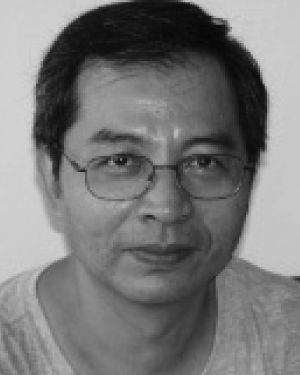 Ming-Chao Chiang合作论文数Department of Computer Science and Engineering, National Sun Yat-sen University105
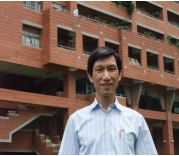 Chu-Sing Yang合作论文数Department of Electrical Engineering, National Cheng Kung University77
 Shih-Pang Tseng合作论文数13
 Kai-Cheng Hu合作论文数12
 Chin-Feng Lai (賴槿峰)合作论文数Department of Engineering Science, National Cheng Kung University11
 Ko-Wei Huang合作论文数Department of Computer and Communication Engineering, National Cheng Kung University10
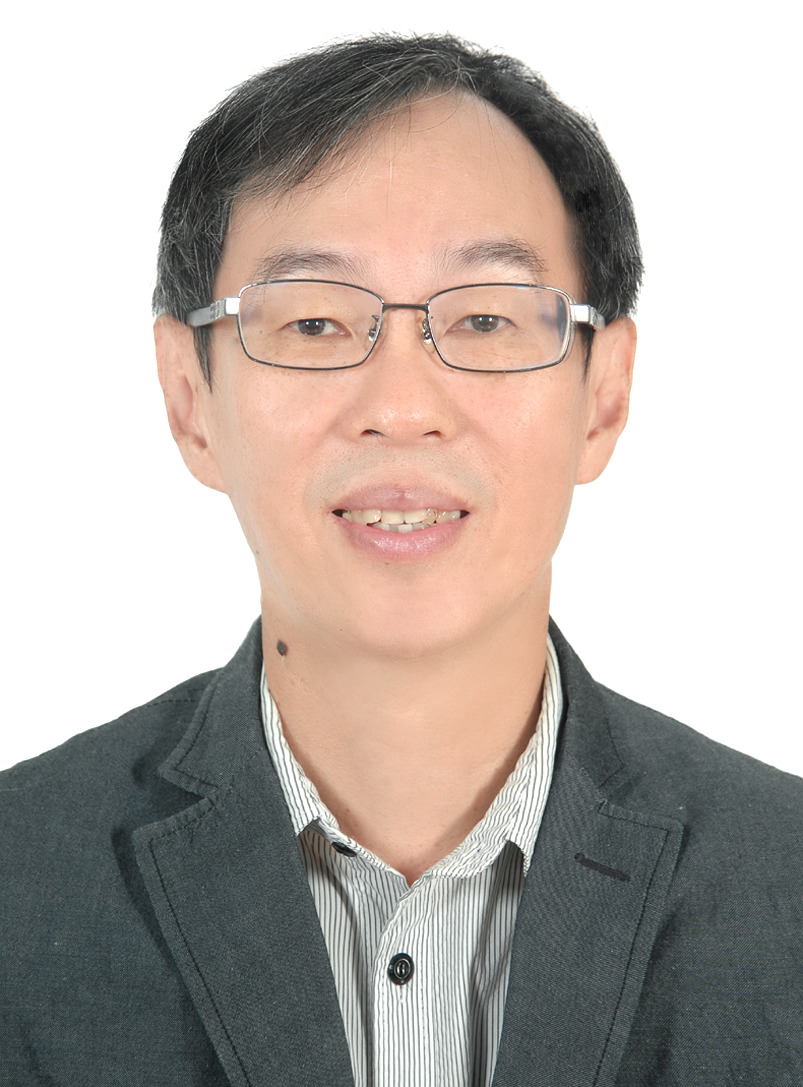 Tzung-Pei Hong合作论文数Department of Computer Science and Information Engineering, College of Engineering, National University of Kaohsiung;Department of Electrical Engineering, National University of Kaohsiung;AI Research Center, National University of Kaohsiung;Department of Computer Science and Engineering, National Sun Yat-sen University9Cf Tsai合作论文数8
 Abba Suganda Girsang合作论文数8Jui-Le Chen合作论文数7
 Athanasios V. Vasilakos合作论文数Center for AI Research, University of Agder;Department of Computer Science, Electrical and Space Engineering, Lulea University of Technology7Huan Chen合作论文数7Jui-che Tsai合作论文数5Keng-Mao Cho合作论文数5
 Han-Chieh Chao合作论文数Department of Electrical Engineering, College of Science and Engineering, National Dong Hwa University5
 Cheng-Fa Tsai合作论文数Department of Management Information Systems, National Pingtung University of Science and Technology5Chung-Yen Pai合作论文数5
 Shyh-Lin Tsao合作论文数5Zhi-Yan Fang合作论文数4Chi-ping Chen合作论文数4Shih-Jui Liu合作论文数4
 Hsin-Te Wu合作论文数Natl Ilan Univ, Dept Comp Sci & Informat Engn, Yilan, Taiwan4
 Wen-Shyong Hsieh合作论文数4
 Pang-Wei Tsai合作论文数4Chiou-Herr Yang合作论文数4Shi-Jui Liu合作论文数3Sl Tsao合作论文数3Wei-Yan Chang合作论文数3Meng-Ting Wu合作论文数3Ting-Wen Liang合作论文数3han‑chieh chao合作论文数3Yi-Chung Wang合作论文数3Chiou F S合作论文数3
 Shih-Hsiang Liu合作论文数3Hsu-Tang Chang合作论文数3
 Joel Rodrigues合作论文数Instituto de Telecomunicações3Chih-Ming Wang合作论文数3
 Min Chen (陈敏)合作论文数School of Computer Science and Engineering, South China University of Technology3
 Jeng Shyang Pan (潘正祥)合作论文数School of Artificial Intelligence, Nanjing University of Information Science & Technology3
 Alexander Pelov合作论文数3
 Ming-Yi Liao合作论文数College of Chemistry, Peking University3Wei-Shuo Li合作论文数3Heng-Yao Hsu合作论文数3
 Francesco Piccialli合作论文数Department of Mathematics and Applications "Renato Caccioppoli", University of Naples Federico II3
 Jiun-Huei Ho合作论文数3Po Jen Chuang合作论文数2Po-Hsun Chen合作论文数2Ban-Dar Hsu合作论文数2Wei-Shan Yang合作论文数2




