Australia’s Aboriginal Community Controlled Health Organizations are under-resourced and too few. As a result, older Aboriginal and Torres Strait Islander peoples needing dementia-related care frequently receive services from mainstream organizations and non-Indigenous care providers unfamiliar with or unsure about providing culturally safe care. This paper presents reflections of Aboriginal Elders following their initial visit to a rural mainstream residential care community in Trouwerner/Lutruwita (Tasmania) prior to initiating an innovative series of podcasts and vodcasts focused on culturally safe care. Elders spent two days to appreciate and learn about the area and then two days at the residential care community, beginning with a Smoking Ceremony. Elders yarned with staff, individually and in small groups, moving freely about the center. Elders then met to yarn and de-brief. Thematic analysis identified both positive and challenging issues. Six themes were identified: (1) Importance of truth telling, (2) Value of staff interest, (3) Impact of the Smoking Ceremony, (4) Appreciation of the care environment; (5) Lack of Acknowledgement and understanding, and (6) Contribution of an Elder-in-Residence program. Elders’ initial experiences and reflections provided valuable insight into the need for their project and important baseline data from which to measure its impact.
Purpose of research Data show that many Aboriginal and Torres Strait Islander peoples experiencing dementia receive services at mainstream health organizations and from non-Indigenous health care providers. It is imperative that non-Indigenous health care providers are educated about culturally respectful and safe care for Aboriginal and Torres Strait Islander peoples with dementia. The purpose of this research was to partner with Aboriginal Elders to co-design and implement an online unit on culturally respectful and safe care to educate non-Indigenous health care providers. Principal results Twelve Aboriginal Elders from four Australian states, along with state-based Aboriginal project officers, partnered with the national, interdisciplinary research team to co-create and co-deliver the 13-week unit. Elders formed a Governance Group to guide the research team and ensure the content, delivery and methods of assessment of the unit privileged the spirit, voices, and diverse cultures of Aboriginal and Torres Strait Islander peoples. A team of Aboriginal markers, including Elders and project officers, was established to evaluate students’ assessments. The unit commenced in late July 2024 with 375 students enrolled. Major conclusions Comments from both Elders and students affirmed the importance of Elders’ presence in the unit through their weekly zoom sessions with students and participation in evaluation of students’ learnings. Elders’ guidance in the co-creation and co-delivery of the unit has been recognized at program, college and university levels. The unit is available nationally and internationally through the online Diploma of Dementia Care offered by the University of Tasmania, Australia.
Over the past decade, Australian schools have been directed to positively engage with Aboriginal and Torres Strait Islander histories and cultures and put in place strategies to enhance the success of Aboriginal and Torres Strait Islander students. These directives have come from both the Australian Curriculum Cross-curriculum priorities and the Australian Professional Standards for Teachers and School Leaders. Since these changes have been introduced, research has continually suggested that non-Indigenous teachers and school leaders are hesitant to engage with this content. In this paper, we propose a three-dimensional engagement model for teachers and school leaders to use when planning their curriculum. Our model for engagement has three elements: structure, affect and knowledge. The development of the model draws from the recent literature and interviews with 12 teachers and 5 school leaders from a selection of Catholic schools and colleges in Tasmania. We use our model to locate a strength-based approach to school change. Our model helps explain how teachers and school leaders in a supportive education system negotiate hesitation in teaching the CCP, and offers a bridge to future, deeper questioning of hesitancy through dimensions of knowledge, affect and structure. We acknowledge its limitations, given our working knowledge and respect for contextual variation.
School leaders in Australia have responsibilities to support First Nations student engagement. In Australia, where Reconciliation is unfinished business, this work requires leaders to negotiate a complex set of arrangements that are often associated with deficit approaches. This paper attempts to disrupt these deficit discourses by researching the management of school reforms for success in student engagement. We analyze survey and interview responses of 40 participants who reflect on their school leadership practices using a framework of Leading for Aboriginal and Torres Strait Islander student success. The findings reveal that school leaders can be agents of decolonizing agendas to position schools as allies for the aspirations of Aboriginal and Torres Strait Islander communities.
Appears in: INTED2023 Proceedings Publication year: 2023Page: 4125 (abstract only)ISBN: 978-84-09-49026-4ISSN: 2340-1079doi: 10.21125/inted.2023.1095Conference name: 17th International Technology, Education and Development ConferenceDates: 6-8 March, 2023Location: Valencia, Spain
Abstract This paper argues that a component of increasing the rate of Aboriginal and Torres Strait Islander children and youths completing their secondary education is having parents and teachers maintain heightened expectations of these children in achieving this goal. To understand this phenomenon, we investigate the importance of, and discrepancies between, primary caregiver and teacher outlooks regarding Indigenous youths completing year 12. For the purpose of this paper, we adopt the term ‘primary caregiver’ in place of parent. This is because the majority (87.7%) of P1s analysed are the biological mothers with the remainder being close female relatives. P2s analysed are all male, 93.3% are biological fathers; remainder are step-fathers or adoptive fathers. This paper uses quantitative data from the Longitudinal Study of Indigenous Children to measure expectations from parents and teachers of Indigenous children. Results suggest that parents maintain exceptionally high expectations of their children, while teacher's expectations significantly decline over the course of Indigenous children's primary and secondary schooling years. We suggest that relationships and communication between parents and teachers, regarding expectations of students, are important to establishing an equilibrium in expectations of children, and that teachers may benefit from further training to address any underlying biases towards Indigenous children.
Appears in: INTED2019 Proceedings Publication year: 2019Page: 8330 (abstract only)ISBN: 978-84-09-08619-1ISSN: 2340-1079doi: 10.21125/inted.2019.2072Conference name: 13th International Technology, Education and Development ConferenceDates: 11-13 March, 2019Location: Valencia, Spain
This chapter will discuss the challenges faced by Aboriginal people seeking recognition of their identity as Indigenous Australians.It will explore government policies, their impact on identity formation and the ongoing impact of colonisation on education and health outcomes for Indigenous people in Australia.The issues raised will include historical and contemporary experiences as well personal values and attitudes.The strategies and programs introduced within educational settings as part of an inclusive practice regime will be highlighted.Aboriginal people have faced many challenges, and continue to do so in postcolonial times, including challenges to their identity.
This paper delivered at the Cultural Competence in Higher Education: Dilemmas, Policies and Practice Conference at the University of Sydney in 2018 discusses the work in progress at The University of Tasmania (UTAS) to enhance graduate attributes and understandings and increase staff capacity. It explores a cultural competence framework developed for health and education - related degrees as well as arrangements in place to promote staff development for the inclusion of Indigenous perspectives with a view to improving health and education services and outcomes for Australia's First Peoples. It describes arrangements at UTAS to provide insights into practice towards developing culturally responsive graduates. The approach taken is based on collaboration with Indigenous staff and community members and is Indigenous led. As there is a lack of scholarship on how the work of cultural competence is being carried out within higher education the strategies adopted at UTAS may be useful for others working in this space.
This chapter addresses the role and participation of Australian Indigenous support staff at the University of Tasmania and more broadly in Australian universities. The inclusion and support of Aboriginal and Torres Strait Islander staff, their professional advancement, and career opportunities, along with their contribution to both Indigenous and non-Indigenous student outcomes, are discussed. The importance of strong Indigenous leadership is affirmed; as well as Aboriginal Employment Strategies to drive change, enhance outcomes for Indigenous Australians and break the cycle of disadvantage, by developing culturally inclusive courses and learning environments.
This project aimed to provide an online portal for teachers to access material about Aboriginal Tasmania to use in their teaching, as many teachers are unwilling to include this information as they have not been fully prepared to do so through their own education or during teacher training. As teachers are busy and time poor to seek out the information themselves, by making it available in one location as a resource portal we hoped to increase its accessibility. Our objective was to provide a learning resource through community collaboration and investigate its use over time The project was initiated as a Community Engagement project during 2015 with key stakeholders who highlighted the following: 1 The need for non-Aboriginal people to learn more about the contribution made to history by Aboriginal people in Tasmania; and 2 The importance of Aboriginal peoples identifying, recording and writing their own histories of self and of country. The project team consisted of seven members who were joined by four major Aboriginal community groups. Overall more than 80 people were involved in creating the map. Aboriginal places from a range of sources were contributed to the Aboriginal Tasmania Digital Map site, then assembled, to create meaning and a deep sense of place using a range of formats, so that teachers can enrich their teaching by integrating components from the resource. The Map now contains more than seventy objects, of varying language difficulty and aesthetic quality all of which are unique to Tasmania. The resource provides a web-based virtual tour of Aboriginal Tasmania, highlighting regions and people, groups and organisations as well as places and events of historical and cultural importance. The project received very positive media coverage (for example, http://www.media.utas.edu.au/general-news/all-news/online-interactive-aboriginal-story-map-launched) and is being used as a teaching resource in courses at the University of Tasmania and also by teachers in schools throughout the state. It can be accessed at http://www.utas.edu.au/aboriginaltasmania-storymap The Aboriginal Tasmania Digital Story Map, launched on 27 May 2016, assists in building greater awareness of Aboriginal histories and culture, by providing easy access for the general public in Tasmania, as well as tourists. "This resource is a unique story map, taking locals and visitors on a virtual tour of Aboriginal Tasmania and allowing access to important historical information, events, places and people, some of which may not have been told before,"said Professor Dominic Geraghty, University of Tasmanian Deputy Chair of Academic Senate, at the official launch. The map has provided greater access to a wider audience looking to learn more about Tasmania's Aboriginal history. It is designed for everyone to use, residents, tourists, teachers and historians. It will also continue to evolve with ongoing collaboration and development. This digital story project achieved its goal to reveal Aboriginal place names and languages and to encourage hesitant primary and high school teachers to include Aboriginal content in their teaching programs. Currently teachers are accessing the resource and we will continue to monitor its use over the next 2 years. This paper explores the research and processes involved to engage with community to create the Aboriginal Tasmania Story Map.
Riawunna' is an Aboriginal word meaning a place of learning' for Aboriginal people, from entry level to tertiary studies, at the University of Tasmania (UTAS) and operates on Hobart, Launceston and Burnie campuses. The Riawunna Centre was established to encourage Aboriginal people to aspire to higher levels of education, and to support them to be successful in their chosen course of study. One strategy developed to support the participation, retention and success of Aboriginal and Torres Strait Islander people is the Murina program. During the four year period between 2010 and 2013 every student at UTAS who graduated from the Murina program and chosen to enrol in undergraduate studies has been successful in completing their courses. One of the tools used to achieve this result is the strong use of narrative and images in our teaching. This whole-person approach to teaching resonates culturally with Aboriginal and Torres Strait Islander people, but is also applicable to any student of any culture, especially those who come to university tentatively and with low expectations of what they can achieve.
In this article, we provide an emic perspective of being uniquely positioned as part of Australia’s only multidisciplinary Indigenous research network, the National Indigenous Research and Knowledges Network (NIRAKN). We used collaborative autoethnography and reflection in our practices and experiences. Our purpose was to better understand and improve the functionality of our research network and practice, and to offer some direction for the growth and sustainability of NIRAKN and similar networks. Our narratives strongly demonstrate that mainstream models of support for Indigenous researchers have major limitations for professional development and cultural safety, and do not meet our needs and realities. The significant message is that we need appropriately resourced exclusive spaces and must lead, develop and define the theoretical and cultural specifications and applications of Indigenous researcher support models in higher education institutions. The model should be cross-disciplinary, have national and international reach and be characterised by connectedness, cultural safety and self-determination, and be located in a resource-rich environment.
This paper describes the development of Pictorial Conceptual Metaphors, a pictorial outcome of systemic action research that captures and explains complex systems from the perspectives of the participants involved. The Pictorial Conceptual Metaphors presented in this paper developed from the authors’ work on a literature review for the Indigenous Health and Wellbeing Node of NIRAKN. In this paper, the authors provide an overview of the theories that influenced their development of Pictorial Conceptual Metaphors, including systems theory, soft systems thinking, visual metaphor theory, and the ecosciences approach of pictorial conceptual models. They work from a systemic action research perspective, and argue that Pictorial Conceptual Metaphors provide a powerful way of ‘seeing the system’, understanding a system within its historical context, and developing a catalyst for systemic change. They propose that Pictorial Conceptual Metaphors can be used to enhance understandings and encourage conversations about the change needed in complex systems such as Australia’s health system, in a way that is culturally respectful and appropriate for Indigenous Australians.
This paper describes the collaborative work practices of the Health and Wellbeing Node within the National Indigenous Research and Knowledges Network (NIRAKN). The authors reflect on the processes they used to research and develop a literature review. As a newly established research team, the Health and Wellbeing Node members developed a collaborative approach that was informed by action research practices and underpinned by Indigenous ways of working. The authors identify strong links between action research and Indigenous processes. They suggest that, through ongoing cycles of research and review, the NIRAKN Health and Wellbeing Node developed a culturally safe, respectful and truly collaborative way of working together and forming the identity of their work group. In this paper, they describe their developing work processes and explain the way that pictorial conceptual models contributed to their emerging ideas.
To address the deficit in knowledge and understanding of Australian Indigenous histories, societies, and cultures by all Faculty of Health Science and Faculty of Education students, a cross-disciplinary project involving representatives from health disciplines, education, and Aboriginal Studies was undertaken to develop a program of cultural awareness and training for student practitioners. The program, called Footprints, is based on a graduated model to move students from cultural awareness to competence over the duration of their degree. It builds cultural competence through: (1) knowledge and understanding of Aboriginal culture including historical and contemporary experiences, (2) reflection on personal values and attitudes and those of the profession, and (3) development of culturally appropriate skills and strategies. It is anticipated that the issues considered in relation to working with Aboriginal and Torres Strait Islanders, the Indigenous peoples of Australians, will also increase awareness for dealing with cultural issues among other cultural groups.
Aboriginal and Torres Strait Islander students in Australian schools continue to have poor education and health outcomes, and the introduction of a new national curriculum may assist in redressing this situation. This curriculum emphasises recommendations which have been circulating in the sector over many years, to require teacher education institutions to provide their students with an understanding of past and contemporary experiences of Indigenous Australians, as well as the social, economic and health disadvantages that challenge Indigenous communities, and to equip them to integrate Indigenous issues into their future teaching programs. This article, while focusing on teacher education developments at the University of Tasmania (UTAS) to meet National Standards and Frameworks for preservice teachers, provides some general background, and identifies recently developed resources, including the potential for Indigenous centres within universities to assist educators.
There are numerous aspects to becoming an effective, culturally competent health practitioner, among these is the need to "become knowledgeable about the historical and sociopolitical backgrounds of clients" (Bemak et al., 2003, p. 26). It has been established that culturally sensitive empathy has the potential to contribute greatly to the healing process when working across cultures. It is therefore essential for an effective and productive client-healer relationship. Indeed it is said that "empathy bridges the gap" between practitioner and client (David & Erickson, 1990). This paper explores a model to develop cultural competence within health related courses.
 Dawn Bessarab合作论文数Centre for International Health, Curtin University of Technology5
 Carolyn Daniels合作论文数4
 Rowena Ball合作论文数Mathematical Sciences Institute, College of Science, The Australian National University4
 L. Collard合作论文数Moodjar Consultancy4
 Kathleen Clapham合作论文数4
 Roxanne Bainbridge合作论文数4
 Bronwyn Fredericks合作论文数Monash University;Islander Health Council;Islander Health Council, Monash University4Mick Adams合作论文数3debbie duthie合作论文数2
 Marlene Longbottom合作论文数Peoples Hlth & Wellbeing Res Ctr 1, Univ Wollongong2glenn auld合作论文数Sch Educ, Deakin Univ2
 Tim Corcoran合作论文数Department of Educational Studies, University of Sheffield2
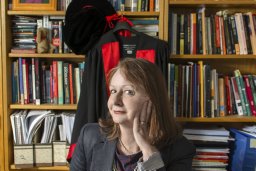 Maggie Walter合作论文数Dept. of Neurology, Ludwig-Maximilians-University Munich Friedrich-Baur-Institute2
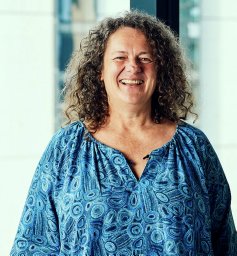 Joanne O’Mara合作论文数2
 Kitty Te Riele合作论文数University of Technology, Sydney2
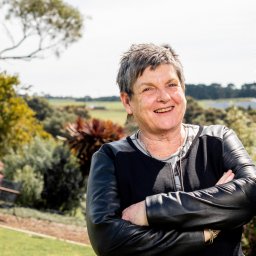 Julianne Moss合作论文数The University of Melbourne2Pat Dudgeon合作论文数1
 Natalie Brown合作论文数1Marlene Thompson (Longbottom)合作论文数1
 Huw Peacock合作论文数1
 Ngare Wilkinson合作论文数1
 Wendy Aitken合作论文数Sch Social Sci, Univ Tasmania1
 Emily Rudling合作论文数University of Tasmania1
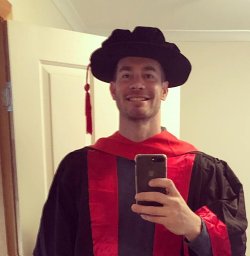 Jacob Prehn合作论文数Social Work, Univ Tasmania1
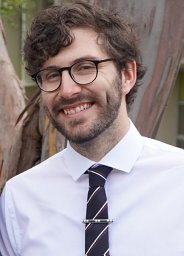 Michael Guerzoni合作论文数Univ Tasmania1
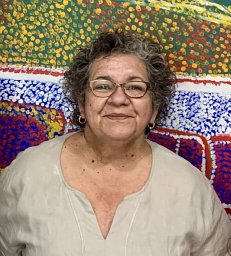 Tracey Bunda合作论文数University of Queensland1
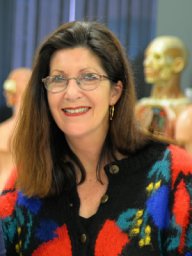 Lynette Ruth Goldberg合作论文数College of Health Professions, Wichita State University1
 Jade Cartwright合作论文数1
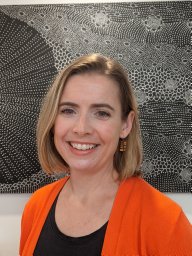 Radford Kylie合作论文数Neuroscience Research Australia, University of New South Wales1
 Jenni Judd合作论文数1
 Alison Canty合作论文数Wicking Dementia Research & Education Centre, University of Tasmania1
 Yvette Roe合作论文数School of Health Sciences, University of South Australia1Dina Logiudice合作论文数1
 Michael (Mike) Adams合作论文数School of Chemical Engineering, University of Birmingham1
 Kate E. Smith合作论文数1
 James Vickers合作论文数Wicking Dementia Research and Education Centre, University of Tasmania1




