There is a consensus that the increasingly large number of LEO debris objects represents a major threat to both active and defunct satellites and that means a potential runaway collisional cascading. This problem urgently demands to be addressed immediately, since the number of satellites in LEO is also dramatically increasing.Many active space debris removal programs have been proposed and those based on using laser from space appear to be really promising, taking into account that one of the most challenging issues from the orbital standpoint is to guarantee the appropriate accuracy for the laser beams that are shot from space-based LEO trackers.In this work, we propose how to build up space-based laser brooms consisting of a significant number of autonomous LEO trackers aimed at performing surgical local shooting actions to deflect the most dangerous middle-size debris objects into the Atmosphere by means of laser ablation.The precision of these brooms lies in the use of the post-Newtonian equations for the computation of absolute and relative positions and velocities, as well as ranges.
In this article, we contrast laser ablation propulsion with photon pressure propulsion. LAP must use repetitive short pulses (~100 ps) for best performance, while PPP requires GW-level continuous (CW) lasers and a lightsail to receive the beam and drag the payload to relativistic speeds.
In this paper we claim that the most likely surprise visit from an epoch-ending NEO (near-Earth object) is one arriving from the Oort Cloud on a radial track toward the Sun, rather than co-orbiting with the Earth. We assume the Breakthrough Starshot laser has been funded and used to launch small photon sails into space with light pressure. Given this, we show that using this laser to ablate the surface of an oncoming comet core can generate enough force to slow the object enough to avoid an epoch-ending collision with Earth. These NEO’s are dark: the low reflectivity of a “dirty iceball” approaching Earth is so low that the NEO will not be detected until it has approached to within 0.35 AU of Earth, but with a velocity that gives about two weeks to react. We assume it is 1km in diameter, with the density of water. Detection depends on raster-scanning the sky to find the solar-illuminated object. Given 100GW from Breakthrough Starshot applied during that period, we show that a collision can be avoided, by slowing the NEO just enough that the Earth passes the collision point prior to predicted collision
Photonic Associates is a high-tech company in Santa Fe, NM. We began as a sole proprietorship, after Dr. Claude Phipps left Los Alamos National Laboratory for greener pastures in 1995. In those early days, we were one of the first research corporations to work in a distributed, remote fashion via the internet and organized around achieving laser space propulsion. In 2004, we became an LLC, with partners in Albuquerque. Our main focus has been furthering laser- driven spaceflight, including debris clearing and satellite propulsion, with novel devices, models and concepts. These mostly involve repetitively pulsed lasers, rather than continuous (CW) lasers. Examples of our products are the high-thrust and high-exhaust velocity versions of the laser plasma thruster (LPT) for satellites, which generated 0.1 – 10 millinewtons thrust, 3 millinewton/optical watt and 200 seconds specific impulse (Isp) in the long-pulse model. The short-pulse model produced 3,000s in tests. We have also proposed liquid fuel extensions of this design capable of generating 1 newton thrust. We worked intensely over two decades to use lasers to solve the critical environmental problem of space debris, literally junk left in space by launch operators, and debris resulting from collisions among existing satellites and debris. In fact, the largest source of new debris today is the collisions among existing debris. This is called the Kessler instability, predicted by Don Kessler back in 1978. Debris threaten to limit our use of near-Earth space because of their growing density. One of the more enjoyable things we have done is organize the International High Power Laser Ablation Symposia (HPLA) in Santa Fe every two years. Originally a SPIE meeting, in the last decade, HPLA has partnered with Blue 52 Productions, Petoskey MI as the event producer. We usually have 150 attendees at these meetings, more than half from outside the U.S. HPLA is a forefront scientific conference, with world-renowned keynote speakers such as Prof. Paul Corkum, and Charles Townes. The next HPLA meeting is scheduled for April 2023.
This work is aimed to introduce a strategy that may help reach the conclusion that using lasers in space is one of the most promising methods to reduce the risk of collisions between active satellites and middle-size LEO debris. The strategy accounts for the implementation of the post-Newtonian (p-N) corrections that are decisive to reach the accuracy required by some Just-in-Time Collision Avoidance (JCA) space-based methods. In fact, we show how and why all JCA methods similar to the one introduced here, which involves simple formations of trackers in Sun-synchronous orbits (SSO), would be within the most efficient to throw middle size debris objects into the Atmosphere by laser ablation, as long as the trackers can implement these corrections while the objects are targeted.
The Special Section on High Power Laser Ablation II considers the field of laser ablation as a broad range of research from studies of the fundamental mechanisms of material removal and surface modification by high-power laser radiation to various applications of that effect.Longterm practical experience shows that lasers can ablate any materials, even those that exhibit superior hardness.Moreover, properly focused laser radiation combined with precise control over laser power or pulse energy delivers the smallest dimensions and the best accuracy of machined features that are not attainable for any traditional micromachining by mechanical instruments.This makes laser ablation an imperative tool for precise and accurate micro-and nano-machining.Development of novel lasers, e.g., ultrafast laser systems, and emerging novel materials challenge new generations of researchers in this field and stimulate continuous research both in the fundamentals of laser ablation and in various applications.Although material micro-and nano-machining are the first applications of laser ablation to come to one's mind, the applications are not limited by the machining.Laser ablation has found significant applications in many other fields, e.g., energy industry, laser-induced breakdown spectroscopy, medicine, nanotechnology, removal of debris in near space, and propulsion of small objects to space.All those and many other areas of laser-ablation research are covered at High Power Laser Ablation (HPLA) conferences held every other year.With the first meeting held in April 1998, this line of conferences organized by Dr. Claude R. Phipps celebrated its 20th anniversary in 2018.Because of the COVID pandemic, the 21 st HPLA conference was held in virtual format from April 13 through April 15, 2021.It brought together some 200 researchers from the US, Europe, Asia, and Australia to deliver presentations on the fundamental effects and mechanisms of laser-matter interactions, ultrafast laser ablation, simulations and theory of laser ablation, high-power lasers, space propulsion by ablation, biomedical applications, laser-driven fusion, micromachining, surface modification, and removal of space debris by ablation.The next meeting will be in person April 17-20, 2023, at the hotel La Fonda in Santa Fe, New Mexico.The high and stable level of attendance of the HPLA meetings observed over years, broad geographic representation, and the high level of presentations at the HPLA meetings signal continuous interest to those fields.Stimulated by multiple requests from conference participants and success of the previous special section on High Power Laser Ablation, organizers of the HPLA conference have decided to work on another special section of Optical Engineering on High Power Laser Ablation.As before, the papers published in this second special section address some ablation applications as well as fundamental aspects and mechanisms of that phenomenon.Among the papers focused on the ablation applications, we feature a brief review paper by Hora et al. focused on novel approaches to drive laser-assisted confinement fusion and use of that process as a new source of green energy.The traditional methods consider the fusion reaction between the nuclei of the two heavy isotopes of hydrogendeuterium and tritium.Their major bottleneck is the need to heat the fuel to the temperatures of the order of 50 million Kelvin and keep it for some time under extreme pressure conditions produce by laser ablation of a shell of a fuel cell.The novel approach discussed in this paper considers use of non-thermal radiation
We measured the impulse coupling coefficient C-m (target momentum per joule of the incident laser light) and ejecta velocity v(E) with glass-covered Si solar (photovoltaic) cells following the irradiation by repetitive 71 ps, 1064 nm laser pulses at fluence of order 10 J/cm(2) in vacuum. We measured high C-m values up to 600 N/MW, but very low specific impulse I-sp = v(E)/g(o) of order 10 s. Thousands of glass particles 20-1500 mu m in size were ejected and found on the floor of the vacuum chamber close to the target. At lower fluences, larger pieces were ejected. While pulsed laser coupling data exist on typical metals used for satellite construction, to our knowledge, this is the first data on solar arrays which comprise a large fraction of the total area exposed to a laser pulse intended to nudge or re-enter a satellite. On bare Si, C-m was about two orders of magnitude lower, and no large pieces were dislodged. The consequence of these data are that lasers for nudging or re-entering defunct satellites should be focused carefully on the metal parts, avoiding solar arrays, to avoid creating a cloud of microscopic debris, enhancing rather than ameliorating the space debris problem. Further, data on MLI (multi-layer insulation) and other complex layered structures should be obtained to guarantee against other unintended consequences.
In this paper, we review practical limitations to laser space propulsion that have been discussed in the literature. These are as follows: (1) thermal coupling to the propelled payload, which might melt it; (2) a decrease in mechanical coupling with number of pulses, which has been observed in some cases; and (3) destruction of solar panels in debris removal proposals that might create more debris rather than less. Previously, lack of data prevented definite assessments. Now, new data on multipulse vacuum laser impulse coupling coefficient Cm on several materials at 1064 nm, at 1030 nm, and at 532 nm are available. We are now able to compare the results for single and multiple pulses on materials that have been considered for laser ablation space propulsion (LASP), or that are likely space debris constituents, and decide whether LASP is a practical idea. Laser space propulsion and debris removal concepts depend on thousands or hundreds of thousands of repetitive pulses. Repetitive pulse mechanical coupling as well as thermal coupling (which can melt the target rather than propel it) are both important considerations. Materials studied were 6061T6 aluminum, carbon-doped polyoxymethylene (POM), undoped POM, a yellow POM copolymer, and a mixture of Al and POM microparticles combined and pressed, containing a 50%/50% mixture of the two materials by mass. We address 6 and 70 ps pulses because of the availability of data at these pulse durations. We also briefly consider continuous wave (CW) laser propulsion. Finally, we consider a recent paper concerning solar panel destruction from a positive perspective.
The ever increasing number of orbital objects since 1957 raises numerous questions concerning future sustainability of space. Among the 34,000 objects larger than 10 cm in orbit, 20,000 only are cataloged. These cataloged objects include roughly 2000 active satellite, among which less than 1500 are maneuverable. All the rest are orbital debris, large satellites of launcher upper stages, mission related objects, inert pieces from frag-mentations or collisions, with no maneuvering capabilities. Collision Avoidance is a common practice when at least one maneuvering satellite is involved, even though it requires a very significant effort to do so. But it is today not possible to avoid collisions among two debris, which represent by far the most frequent collision scenario. It appears necessary to find solutions to avoid such collisions as they have the potential to generate thousands of new orbital pieces and feed to so-called Kessler syndrome; indeed, numerous publications underline the frequent near-misses among very large derelict, and the consequences such collisions would have. Several solutions for such "Just in time Collision Avoidance (JCA)" have been proposed and are recalled in the paper. Three of them have recently been studied in order to assess their feasibility, and appear promising. The use of an orbital laser system can first drastically improve our the accuracy of the ephemerids, second impart a very small Delta V to a passive debris early enough to enable a significant increase in distance between the two objects. Another solution which appears very promising considers the launch on a small sounding rocket of a system releasing a cloud of particle and gas in front of one of the debris; the associated drag, even very small, is enough to lower the probability of an announced collision. Swarms of nano-tugs could also be attached to the most hazardous derelicts, de-tumble them, and slightly modify their trajectory in order to prevent collisions.
Studies on laser Irradiation Parameters Show that, for an appropriate intensity, a short wavelength and short pulse length can lead to a coupling coefficient c_m maximized to produce an optimal mechanical pulse coupling, and to minimize the thermal load: Spacecraft and other objects can be propelled in this way.
WhereAblation lasers shine is in propelling a remote object using a space-based mother ship with an onboard laser. In some cases, there is no other reasonable choice. These cases include small low Earth orbit (LEO)Low Earth Orbit (LEO) debris reentry, large LEOLow Earth Orbit (LEO) debris nudging to avoid collisions, direct launch to LEOLow Earth Orbit (LEO) of small payloads at low cost and raising large geosynchronous (GEO) objects to graveyard orbits. We introduce the new, exciting idea of the laser rocket, in which a "burst mode" laser accelerates a 25-kg spherical probe surrounded by a discardable ablator layer to 3.6 km/s in minutes.
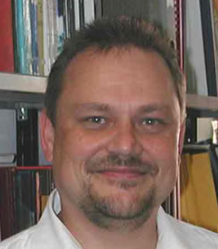 Thomas Lippert合作论文数Paul Scherrer Institut, ETH Zurich22
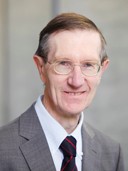 Alexander Wokaun合作论文数Department of Chemistry and Applied Biosciences, ETH Zurich15
 Scott Thomas合作论文数13James R. Luke合作论文数13
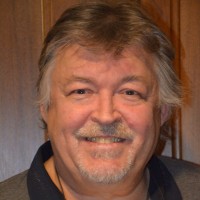 Christophe Bonnal合作论文数CNES12wesley d helgeson合作论文数10
 John E. Sinko合作论文数10Marc Hauer合作论文数9JR Luke合作论文数7David Edward Watkins合作论文数7Jf Figueira合作论文数6Séverine Agnès Éliette Boyer合作论文数6Jonathan W. Campbell合作论文数6Michel Boustie合作论文数Laboratoire de Combustion et de Détonique5M. M. Michaelis合作论文数5L. Urech合作论文数4
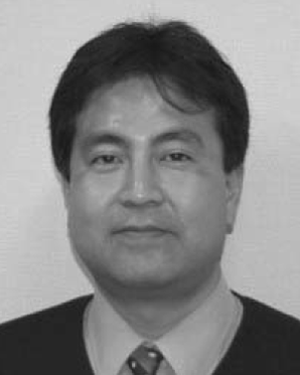 Kimiya Komurasaki合作论文数university of tokyo4
 Laurent Videau合作论文数4
 Akihiro Sasoh (佐宗章弘)合作论文数Shock Wave and Space Propulsion Laboratory, Department of Aerospace Engineering, Graduate School of Engineering, Nagoya University;School of Engineering Mechanical and Aerospace Engineering, School of Engineering, Nagoya University4
 James Reilly合作论文数Department of Chemistry, The College of Arts + Sciences, Indiana University Bloomington4Lukas Urech合作论文数4scott j thomas合作论文数3Jp Reilly合作论文数3
 Elizaveta Sharaborova合作论文数3R Nakagawa合作论文数3J. Luke合作论文数3frederic masson合作论文数3
 Laurent Berthe合作论文数Arts et Metiers Institute of Technology, HESAM University3Loktionov, E.Y.合作论文数Bauman Moscow State Tech. Univ. Instn.;c;Bauman Moscow State Tech. Univ. Instn.3J ROBERT合作论文数3
 Oskar Nuyken合作论文数Fakultät für Chemie, Technische Universität München3
 Matthieu Schneider合作论文数3S. D. Baton合作论文数3Baasandash Choijil合作论文数3
 Stefan Scharring合作论文数3
 Masashi Yamaguchi合作论文数Medical Mycology Research Center, Chiba University3
 Itsuro Kajiwara合作论文数Tokyo Institute of Technology3
 Takashi Yabe (矢部孝)合作论文数Department of Mechanical Sciences and Engineering, Tokyo Institute of Technology3M Kovacs合作论文数2G Dryden合作论文数2F Corbett合作论文数2richard h pohle合作论文数2glen mcduff合作论文数2K. Aoki合作论文数2ronald s dingus合作论文数2Stéphane Oriol合作论文数2Max Michaelis合作论文数2Je Sollid合作论文数2yoichi ogata合作论文数2




