Iconic historical figures are meant to represent a society’s most enduring and universal values. And yet, across partisan and sociodemographic groups Americans believe their most important values are widely contested rather than shared. Whether these perceived divisions extend to sentiments for objects of collective memory meant to represent shared values remains unknown. Relying on a dataset measuring public sentiments toward the 15 most institutionally consecrated iconic historical figures, we examine both polarization and false polarization, defined as the misperception that political opponents hold polarized views of these figures. We find little evidence of true polarization in sentiments toward iconic historical figures such as Abraham Lincoln, Anne Frank, Martin Luther King Jr., and many others. In contrast, we find that false polarization is widespread, patterned, and asymmetric. Ultimately, we find that the false polarization of collective memory is rooted in partisan animus and social sorting into mental camps, both of which are amplified by homogeneous social networks and attenuated by crosscutting ties.
Research on cultural polarization often presumes a direct link between rising affective animus and contestation over everyday items of popular culture. Yet the degree to which affective polarization is driving cultural polarization is unknown. We propose two main models through which affective and cultural polarization may be linked, which we term the "spillover model" and "consolidation model" of cultural polarization, and test them in the context of contemporary conservative social movement: book bans in public schools and libraries. Using vignette experiments that manipulate the social characteristics of the main characters in existing novels, our findings support the consolidation model of cultural polarization. Although Americans are inclined to judge the appropriateness of books based on the social identities of their main characters, they still generally consider stories about outgroups and rivals to be appropriate for public schools and libraries. Ideological effects are significantly attenuated by sociodemographic, psychometric, and sociometric factors that have been consolidated into parties. This suggests that even at the height of a "takeoff" issue replete with consistent cueing by partisan elites and targeted campaigns by activists, affective polarization may not be driving culture polarization to the degree that is presumed.
Research on cultural polarization implicitly relies on two models: the spillover model, in which politics seeps into everyday life, and the consolidation model, in which everyday life is increasingly sorted into politics. These frameworks hold significant implications both for our understanding of cultural polarization, and our real-world strategies to address it. To help adjudicate between these two perspectives we examine a contemporary conservative social movement: book bans in public schools and libraries. Using vignette experiments that manipulate the social characteristics of the main characters in existing novels, our findings support the consolidation model of cultural polarization. Although Americans are inclined to judge the appropriateness of books based on the social identities of their main characters, they still generally consider stories about outgroups and rivals to be appropriate for public schools and libraries. Ideological effects are significantly attenuated by sociodemographic, psychometric, and sociometric factors that have been consolidated into parties. This suggests that even at the height of a “take-off” issue replete with consistent cueing by partisan elites and targeted campaigns by activists, popular culture remains a resource for polarized partisans, rather than a creator of them.
What does it mean when individuals report having a wide variety of cultural knowledge and taste? Core contemporary theories propose different answers to this question, suggesting that cultural breadth is either rooted in the development of “passing knowledge” across multiple domains, or the expression of more general “dispositional openness” to a wide variety of culture. To adjudicate between these two perspectives I introduce the use of pseudo items into culture research, and integrate their usage with Bourdieu’s observations about “competence” and the “right to speak.” I find evidence for a dispositional openness account to claimed cultural knowledge, in addition to a known gender effect that is likely also rooted in dispositions. In closing I discuss how my findings may be suggestive of a new form of allodoxia for elites. I also discuss how pseudo items and other productively weird methodological tools can help refine our analyses of longstanding culture questions, while also generating new ones.
Recent research suggests that political polarization has spilled over into otherwise mundane areas of social life. And yet, the size, shape, and depth of that spillage into popular culture is generally unknown. Relying on a sample of 135 of the most widely known movies, TV shows, musicians, sports, and leisure activities, we investigate this question. We find the oil spill into popular culture is large but loosely organized into multiple fairly shallow pools. Cultural polarization is also asymmetric. Liberals like a wide variety of popular culture, do not dislike conservative popular culture, and their tastes are more rooted in their sociodemographics. Conservatives, on the other hand, like a much narrower range of popular culture, dislike the culture created and liked by Black and urban liberals, and their tastes are more directly rooted in their political ideology. Potential implications of an asymmetric culture war, and ideas for future research, are discussed.
Research on tokenism has mostly focused on negative experiences and career outcomes for individuals who are tokenized. Yet tokenism as a structural system that excludes larger populations, and the meso-level cultural foundations under which tokenism occurs, are comparatively understudied. We focus on these additional dimensions of tokenism using original data on the creation and long-term retention of postcolonial literature. In an institutional environment in which the British publishing industry was consolidating the production of non-U.S. global literatures written in English, and readers were beginning to convey status through openness in cultural tastes, the conditions for tokenism emerged. Using data on the emergence of postcolonial literature as a category organized through the Booker Prize for Fiction, we test and find for non-white authors (1) evidence of tokenism, (2) unequal treatment of those under consideration for tokenization, and (3) long-term retention consequences for those who were not chosen. We close with a call for more holistic work across multiple dimensions of tokenism, analyses that address inequality across and within groups, and a reconsideration of tokenism within a broader suite of practices that have grown ascendent across arenas of social life.
We used to talk. By “we” I mean cultural sociologists and scholars in the humanities, and by “used to talk” I mean acknowledge each other’s existence, and at times, perhaps even generously so. There are different versions as to what happened, one of which is a bit more intellectual than the other, although neither of which are entirely right. The more intellectual version is that for a brief spell in the late 1980s and early 1990s it looked like our interests might converge. At around the same time many of us stopped being scolds about popular culture, deciding instead that it was more fruitful and interesting to engage the world than to police it. Some of us were also asking similar questions, be it about the role of authors and their ability (or lack thereof) to enforce, guide, or push readers into certain meanings, or about the role of interpretive communities and groups to either buffer against the impingement of those meanings, or to generate localized meanings all anew. So we congregated around folks like Richards, Iser, Jauss, Bakhtin, Fish, Barthes, or Foucault, and sometimes we even cited each other too, and then it just all kind of petered out.
Research on the relationship between categorical unconventionality and popularity has produced mixed results. While many accounts suggest that unconventionality is penalized, much sociological theorizing indicates that success comes from a delicate balancing act between conventional and unconventional offerings. Using data on the genre self-classifications of over 2 million musicians and bands across the United States, the authors find broad support for this balancing act. Yet the shape it takes is also conditioned on local contexts, across both high-order complexes of musical genres and geographic space. The authors highlight the local metropolitan area characteristics that shift the relationship between unconventionality and popularity. They also create a typology of cities based on how their unconventional offerings are rewarded and punished. An online visualization tool enables further investigation of these relationships. The authors close by proposing an agenda for how to study local heterogeneity in the relationship between unconventionality and popularity.
This methods paper addresses a simple, yet curiously understudied question: When do we first acquire the ability to view specific persons, properties and practices as ‘similar’ or ‘different’, ‘equal’ or ‘unequal’ in social status? Despite sociology's theoretical commitment to the importance of ‘primary socialization’, sociological research on the ontogenesis of our ability to situate ourselves and others in social space remains scarce. This paper argues that the reasons for sociology's ‘child neglect’ are not purely conceptual, but also methodological in nature. Conventional sociological methods are in fact not particularly well-geared to dealing with the obstacles that accompany the study of young actors. This paper discusses three of these obstacles – mastery of language, limitations in attention-span and the asymmetry of the researcher/respondent-relationship – and presents a visual method designed to circumvent or minimize their impact. This method centers around a classificatory game that allows children to combine a set of drawings of persons and objects according to different and even opposing principles of classification (i.e. color or social status). Preliminary results produced by this method suggest that an elementary ‘social sense’ already starts to form among preschoolers.
The British Journal of SociologyVolume 72, Issue 2 p. 470-471 BOOK REVIEW Berta, P. Materializing Difference: Consumer Culture, Politics, and Ethnicity among Romanian Roma. University of Toronto Press, 2019. 399 pp. £67.99 (hardback) £23.99 (paperback). Clayton Childress, Corresponding Author Clayton Childress ccchildress@gmail.com orcid.org/0000-0003-3213-6992 Department of Sociology, University of Toronto, Toronto, ON, CanadaSearch for more papers by this author Clayton Childress, Corresponding Author Clayton Childress ccchildress@gmail.com orcid.org/0000-0003-3213-6992 Department of Sociology, University of Toronto, Toronto, ON, CanadaSearch for more papers by this author First published: 05 February 2021 https://doi.org/10.1111/1468-4446.12821Read the full textAboutPDF ToolsExport citationAdd to favoritesTrack citation ShareShare Give accessShare full text accessShare full-text accessPlease review our Terms and Conditions of Use and check box below to share full-text version of article.I have read and accept the Wiley Online Library Terms and Conditions of UseShareable LinkUse the link below to share a full-text version of this article with your friends and colleagues. Learn more.Copy URL Share a linkShare onFacebookTwitterLinked InRedditWechat No abstract is available for this article. Volume72, Issue2March 2021Pages 470-471 RelatedInformation
The study of genre classifications within creative industries typically orients toward the maintenance of order within organizational and institutional contexts. This study takes up the case of Jarrettsville, a work of fiction published in the United States in Fall 2009 to highlight prevalent disorders and debates in the development of a work of fiction. What looks like a clear and ordered process of genre assignment after-the-fact may actually contain a wealth of negotiations, strategic practices, and decisions to be made. In short, the assignment of genres can be conflicted, debated and opportunistic. As a work of culture is transmuted into a piece of commerce, cultural workers must navigate the interplay between text and context, and sometimes with competing agendas. When texts don’t fit a preferred context, the text itself may change. And when the context of the texts’ fabrication as a piece of commerce does not fit the text, contexts must be mediated as well. This case study highlights these processes in action.
Are higher status cultural tastes in the modern United States better described as being inclusive and broad or exclusive and narrow? We construct an original dataset in response to conflicting answers to this question. We fill a major gap in the literature on cultural tastes by simultaneously considering taste for both musical genres and artists within genres. By examining the compositional balance of respondents’ taste portfolios, we reconcile seemingly incommensurate theoretical frameworks of class homology and omnivorousness. The results indicate that an omnivorous disposition to music is a relatively middle-status position in the social structure. In contrast, positions characterized by higher levels of cultural capital map onto exclusive and narrower tastes for consecrated culture.
Sociologists agree that there is something cultural that exists within individuals, in interactions, and in objects. And yet the process through which the culture inside individuals interacts with the culture outside of them is only partially understood and is generally untested. Relying on a novel quasi‐experimental design, we investigate how the culture within individuals, interactions, and objects operates in the making of shared meanings. First, we find that cultural schemas set a baseline for shared meanings of objects. Second, we find that shared meanings are also made through interactions, and more vociferously between individuals with shared schemas. Third, we find that objects encoded with meanings set a higher baseline in interpretive clarity than more ambiguous objects. Lastly, we find that schema similarity and interactions jointly lead to greater shared meanings for more ambiguous objects, suggesting that individuals within groups work rapidly toward generating institutionalized and objectified meanings for objects when those assigned meanings do not yet exist. Findings begin to uncover the routine mechanisms of shared meaning creation, pointing toward new empirical frontiers in culture and cognition.
Are contemporary higher-status tastes inclusive, exclusive, or both? Recent work suggests that the answer likely is both. And yet, little is known concerning how configurations of such tastes are learned, upheld, and expressed without contradiction. We resolve this puzzle by showing the affordances of different levels of culture (i.e., genres and objects) in the expression of tastes. We rely on original survey data to show that people of higher status taste differently at different levels of culture: more inclusively for genres and more exclusively for objects. Inclusivity at the level of genres is fostered through familial socialization, and exclusivity at the level of objects is fostered through formal schooling. Individuals’ taste configurations are mirrored in and presumably reinforce their adult social-structural positions. The results have important implications for understanding the subtle maintenance of status in an increasingly diverse and putatively meritocratic society.
Multimethod studies generally fall under what are referred to as “confirmatory” or “complementary” approaches. Yet in addition to these two approaches, Hammersley ( 1996 ) identifies a third, which he refers to as “facilitation.” In this paper, we build on Hammersley’s observation and argue that methods can be used propulsively, setting the researcher down whole new paths. We first put this observation in conversation with other recent works and pragmatist theorizing. We then use the archive as a point of departure to show the value of such an approach. Specifically, we use our investigation of the archives at the Nelson Mandela Centre of Memory in Johannesburg, South Africa as a site to show how we used propulsive facilitation to engage with and make sense of materials relating to Mandela’s memoirs.
Symbolic InteractionVolume 43, Issue 3 p. 569-571 BOOK REVIEW A Battle of the Ages Clayton Childress, Clayton Childress University of TorontoSearch for more papers by this author Clayton Childress, Clayton Childress University of TorontoSearch for more papers by this author First published: 30 October 2019 https://doi.org/10.1002/symb.463Read the full textAboutPDF ToolsRequest permissionExport citationAdd to favoritesTrack citation ShareShare Give accessShare full text accessShare full-text accessPlease review our Terms and Conditions of Use and check box below to share full-text version of article.I have read and accept the Wiley Online Library Terms and Conditions of UseShareable LinkUse the link below to share a full-text version of this article with your friends and colleagues. Learn more.Copy URL Share a linkShare onFacebookTwitterLinkedInRedditWechat No abstract is available for this article. Volume43, Issue3August 2020Pages 569-571 RelatedInformation
 Craig Michael Rawlings合作论文数Department of Sociology, Trinity College of Arts & Sciences, Duke University7
 Alison Gerber合作论文数Dept Sociol, Lund Univ4
 Jean-François Nault合作论文数Dept Sociol, Univ Toronto3
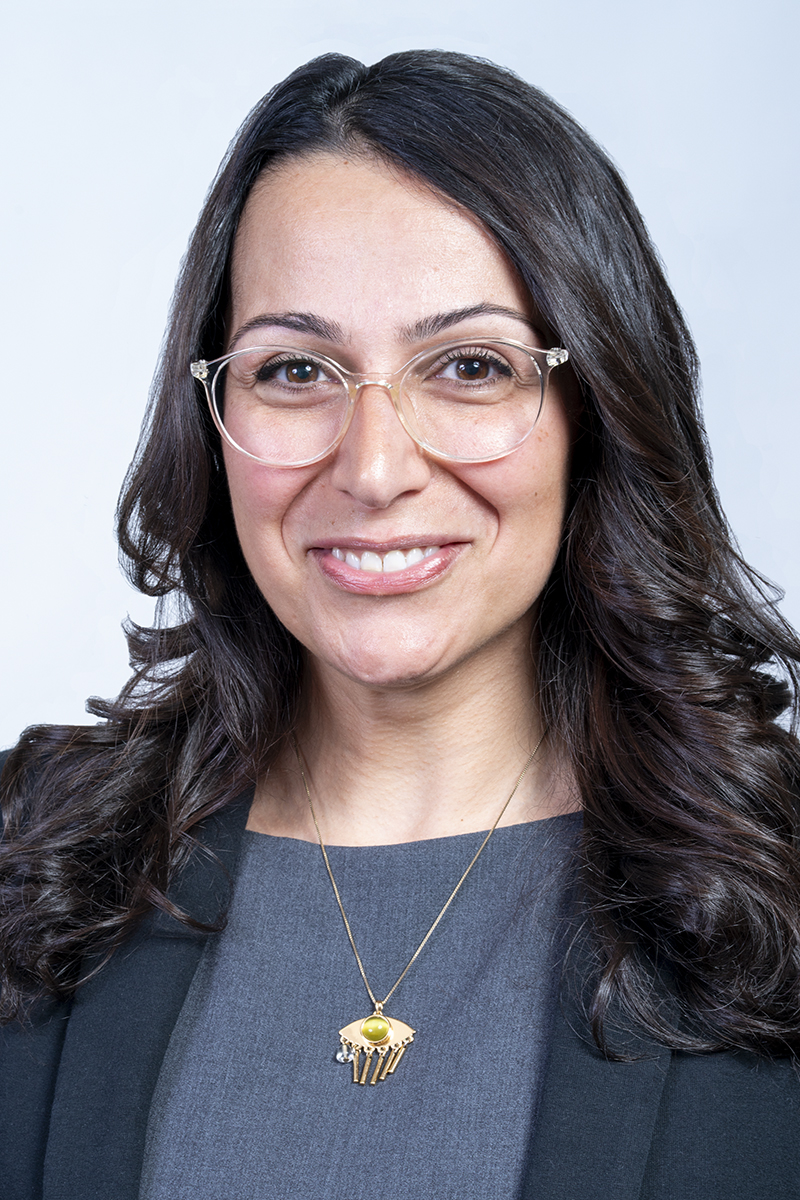 Neda Maghbouleh合作论文数Department of Sociology, Faculty of Arts, The University of British Columbia3monica lee合作论文数2
 Daniel Silver合作论文数Department of Sociology, University of Toronto Scarborough2
 Shyon Baumann合作论文数Department of Sociology, Munk School of Global Affairs & Public Policy, University of Toronto2
 Fabio Dias合作论文数1
 Erik Schneiderhan合作论文数Department of Sociology, University of Toronto at Mississauga1
 Brian Moeran合作论文数School of Oriental1
 Noah Friedkin合作论文数Department of Sociology, College of Letters and Science, University of California, Santa Barbara1Klaus Nathaus合作论文数1Adam Slez合作论文数University of Wisconsin;University of Wisconsin;University of Wisconsin, University of Wisconsin1




