Large Language Models (LLMs) have achieved significant advances in natural language processing, yet their potential for high-stake political decision-making remains largely unexplored. This paper addresses the gap by focusing on the application of LLMs to the United Nations (UN) decision-making process, where the stakes are particularly high and political decisions can have far-reaching consequences. We introduce a novel dataset comprising publicly available UN Security Council (UNSC) records from 1994 to 2024, including draft resolutions, voting records, and diplomatic speeches. Using this dataset, we propose the United Nations Benchmark (UNBench), the first comprehensive benchmark designed to evaluate LLMs across four interconnected political science tasks: co-penholder judgment, representative voting simulation, draft adoption prediction, and representative statement generation. These tasks span the three stages of the UN decision-making process—drafting, voting, and discussing—and aim to assess LLMs' ability to understand and simulate political dynamics. Our experimental analysis demonstrates the potential and challenges of applying LLMs in this domain, providing insights into their strengths and limitations in political science. To the best of our knowledge, this is the first benchmark to systematically evaluate LLMs in UN decision-making, contributing to the growing intersection of AI and political science.
Numerous studies have assessed the proficiency of AI systems, particularly large language models (LLMs), in facilitating everyday tasks such as email writing, question answering, and creative content generation. However, researchers face unique challenges and opportunities in leveraging LLMs for their own work, such as brainstorming research ideas, designing experiments, and writing or reviewing papers. In this study, we introduce AAAR-1.0, a benchmark dataset designed to evaluate LLM performance in three fundamental, expertise-intensive research tasks: (i) EquationInference, assessing the correctness of equations based on the contextual information in paper submissions; (ii) ExperimentDesign, designing experiments to validate research ideas and solutions; (iii) PaperWeakness, identifying weaknesses in paper submissions; and (iv) REVIEWCRITIQUE, identifying each segment in human reviews is deficient or not. AAAR-1.0 differs from prior benchmarks in two key ways: first, it is explicitly research-oriented, with tasks requiring deep domain expertise; second, it is researcher-oriented, mirroring the primary activities that researchers engage in on a daily basis. An evaluation of both open-source and proprietary LLMs reveals their potential as well as limitations in conducting sophisticated research tasks. We will keep iterating AAAR-1.0 to new versions.
Post-training Large Language Models (LLMs) with explicit reasoning trajectories can enhance their reasoning abilities. However, acquiring such high-quality trajectory data typically demands meticulous supervision from humans or superior models, which can be either expensive or license-constrained. In this paper, we explore how far an LLM can improve its reasoning by self-synthesizing reasoning paths as training data without any additional supervision. Existing self-synthesizing methods, such as STaR, suffer from poor generalization to out-of-domain (OOD) reasoning tasks. We hypothesize it is due to that their self-synthesized reasoning paths are too task-specific, lacking general task-agnostic reasoning guidance. To address this, we propose **Reasoning Generalist via Self-Improvement (ReGenesis)**, a method to *self-synthesize reasoning paths as post-training data by progressing from abstract to concrete*. More specifically, ReGenesis self-synthesizes reasoning paths by converting general reasoning guidelines into task-specific ones, generating reasoning structures, and subsequently transforming these structures into reasoning paths, without the need for human-designed task-specific examples used in existing methods. We show that ReGenesis achieves superior performance on all in-domain and OOD settings tested compared to existing methods. For six OOD tasks specifically, while previous methods exhibited an average performance decrease of approximately 4.6% after post training, ReGenesis delivers around 6.1% performance improvement. We also conduct an in-depth analysis of our framework and show ReGenesis is effective across various language models and design choices.
We present xGen-VideoSyn-1, a text-to-video (T2V) generation model capable of producing realistic scenes from textual descriptions. We extend the latent diffusion model (LDM) architecture by introducing a video variational autoencoder (VidVAE). Our Video VAE compresses video data spatially and temporally, significantly reducing the length of visual tokens and the computational demands associated with generating long-sequence videos. To further address the computational cost, we propose a divide-and-merge strategy that maintains temporal consistency across video segments. Our Diffusion Transformer (DiT) model incorporates spatial and temporal self-attention layers, enabling robust generalization across different time frames and aspect ratios. We also designed a data collection and processing pipeline, which helped us gather over 13 million high-quality video-text pairs. The pipeline includes steps such as clipping, text detection, motion estimation, aesthetics scoring, and dense captioning based on our xGen-MM video-language model. Training the Video VAE and DiT models required approximately 40 and 642 H100 days, respectively. Our model supports over 14-second 720p video generation in an end-to-end way and demonstrates competitive performance against state-of-the-art T2V models.
The large-scale conversational recommendation dataset is pivotal for the development of conversational recommender systems (CRS). Most existing CRS datasets suffers from the problems of data inextensibility and semantic inconsistency. To tackle these limitations and establish a benchmark in the conversational recommendation scenario, in this paper, we introduce the LLM-REDIAL dataset1 to facilitate the research in CRS. LLM-REDIAL is constructed by leveraging large language models (LLMs) to generate the high-quality dialogues. To provide the LLMs with detailed guidance, we integrate historical user behavior data with dialogue templates that are carefully designed through the combination of multiple pre-defined goals. LLM-REDIAL has two main advantages. First, it is the largest multidomain CRS dataset which consists of 47.6k multi-turn dialogues with 482.6k utterances across 4 domains. Second, dialogue semantics and the users' historical interaction information is highly consistent. Human evaluation are conducted to verify the quality of LLM-REDIAL. In addition, we evaluate the usability of advanced LLM-based models on LLM-REDIAL.
This paper presents FOFO, a pioneering benchmark for evaluating large language models' (LLMs) ability to follow complex, domain-specific formats, a crucial yet underexamined capability for their application as AI agents. Despite LLMs' advancements, existing benchmarks fail to assess their format-following proficiency adequately. FOFO fills this gap with a diverse range of real-world formats and instructions, developed through an AI-Human collaborative method. Our evaluation across both open-source (e.g., Llama 2, WizardLM) and closed-source (e.g., GPT-4, PALM2, Gemini) LLMs highlights three key findings: open-source models significantly lag behind closed-source ones in format adherence; LLMs' format-following performance is independent of their content generation quality; and LLMs' format proficiency varies across different domains. These insights suggest the need for specialized tuning for format-following skills and highlight FOFO's role in guiding the selection of domain-specific AI agents. FOFO is released here. (1)
This work is motivated by two key trends. On one hand, large language models (LLMs) have shown remarkable versatility in various generative tasks such as writing, drawing, and question answering, significantly reducing the time required for many routine tasks. On the other hand, researchers, whose work is not only time-consuming but also highly expertise-demanding, face increasing challenges as they have to spend more time reading, writing, and reviewing papers. This raises the question: how can LLMs potentially assist researchers in alleviating their heavy workload? This study focuses on the topic of LLMs assist NLP Researchers, particularly examining the effectiveness of LLM in assisting paper (meta-)reviewing and its recognizability. To address this, we constructed the ReviewCritique dataset, which includes two types of information: (i) NLP papers (initial submissions rather than camera-ready) with both human-written and LLM-generated reviews, and (ii) each review comes with "deficiency" labels and corresponding explanations for individual segments, annotated by experts. Using ReviewCritique, this study explores two threads of research questions: (i) "LLMs as Reviewers", how do reviews generated by LLMs compare with those written by humans in terms of quality and distinguishability? (ii) "LLMs as Metareviewers", how effectively can LLMs identify potential issues, such as Deficient or unprofessional review segments, within individual paper reviews? To our knowledge, this is the first work to provide such a comprehensive analysis.
Large Language Models (LLMs) have become ubiquitous across various domains, transforming the way we interact with information and conduct research. However, most high-performing LLMs remain confined behind proprietary walls, hindering scientific progress. Most open-source LLMs, on the other hand, are limited in their ability to support longer sequence lengths, which is a key requirement for many tasks that require inference over an input context. To address this, we have trained XGen, a series of 7B parameter models on up to 8K sequence length for up to 1.5T tokens. We have also finetuned the XGen models on public-domain instructional data, creating their instruction-tuned counterparts (XGen-Inst). We open-source our models for both research advancements and commercial applications. Our evaluation on standard benchmarks shows that XGen models achieve comparable or better results when compared with state-of-the-art open-source LLMs. Our targeted evaluation on long sequence modeling tasks shows the benefits of our 8K-sequence models over 2K-sequence open-source LLMs.
Aligning language models (LMs) with preferences is an important problem in natural language generation. A key challenge is that preferences are typically provided at the *sequence level* while LM training and generation both occur at the *token level*. There is, therefore, a *granularity mismatch* between the preference and the LM training losses, which may complicate the learning problem. In this paper, we address this issue by developing an alternate training process, where we iterate between grounding the sequence-level preference into token-level training guidance, and improving the LM with the learned guidance. For guidance learning, we design a framework that extends the pairwise-preference learning in imitation learning to both variable-length LM generation and the utilization of the preference among multiple generations. For LM training, based on the amount of supervised data, we present two *minimalist* learning objectives that utilize the learned guidance. In experiments, our method performs competitively on two distinct representative LM tasks --- discrete-prompt generation and text summarization.
Biomedical Named Entity Recognition (BioNER) aims at identifying biomedical entities such as genes, proteins, diseases, and chemical compounds in the given textual data. However, due to the issues of ethics, privacy, and high specialization of biomedical data, BioNER suffers from the more severe problem of lacking in quality labeled data than the general domain especially for the token-level. Facing the extremely limited labeled biomedical data, this work studies the problem of gazetteer-based BioNER, which aims at building a BioNER system from scratch. It needs to identify the entities in the given sentences when we have zero token-level annotations for training. Previous works usually use sequential labeling models to solve the NER or BioNER task and obtain weakly labeled data from gazetteers when we don't have full annotations. However, these labeled data are quite noisy since we need the labels for each token and the entity coverage of the gazetteers is limited. Here we propose to formulate the BioNER task as a Textual Entailment problem and solve the task via Textual Entailment with Dynamic Contrastive learning (TEDC). TEDC not only alleviates the noisy labeling issue, but also transfers the knowledge from pre-trained textual entailment models. Additionally, the dynamic contrastive learning framework contrasts the entities and non-entities in the same sentence and improves the model's discrimination ability. Experiments on two real-world biomedical datasets show that TEDC can achieve state-of-the-art performance for gazetteer-based BioNER.
Considering the expensive annotation in Named Entity Recognition (NER), Cross-domain NER enables NER in low-resource target domains with few or without labeled data, by transferring the knowledge of high-resource domains. However, the discrepancy between different domains causes the domain shift problem and hampers the performance of cross-domain NER in low-resource scenarios. In this article, we first propose an adversarial adaptive augmentation, where we integrate the adversarial strategy into a multi-task learner to augment and qualify domain adaptive data. We extract domain-invariant features of the adaptive data to bridge the cross-domain gap and alleviate the label-sparsity problem simultaneously. Therefore, another important component in this article is the progressive domain-invariant feature distillation framework. A multi-grained MMD (Maximum Mean Discrepancy) approach in the framework to extract the multi-level domain invariant features and enable knowledge transfer across domains through the adversarial adaptive data. Advanced Knowledge Distillation (KD) schema processes progressively domain adaptation through the powerful pre-trained language models and multi-level domain invariant features. Extensive comparative experiments over four English and two Chinese benchmarks show the importance of adversarial augmentation and effective adaptation from high-resource domains to low-resource target domains. Comparison with two vanilla and four latest baselines indicates the state-of-the-art performance and superiority confronted with both zero-resource and minimal-resource scenarios.
Although some existing models are proposed to exploit reviews for improving performance for recommender systems, few of them can handle the following issues led by the insufficient review data: (i) The regular training process does not exactly fit the scenario of preference prediction with few historical behaviors. (ii) Extracting informative and sufficient semantic features from limited review texts is a challenging work. To alleviate these issues, this paper proposes an enhanced prototypical network, FS-EPN, that leverages reviews for recommendation under the few-shot setting. FS-EPN consists of an attentional prototypical network being the basic architecture, a sentiment encoder and a memory collector cooperating to capture the extra sentimental and collaborative information from both user and item perspectives for semantic information supplement. We train FS-EPN under the meta-learning framework, which models the training process in the episodic manner to mimic the few-shot test environment. Extensive experiments conducted on six publicly available datasets demonstrate the superior capability of FS-EPN over several state-of-the-art models in few-shot recommendation.
In intent detection tasks, leveraging meaningful semantic information from intent labels can be particularly beneficial for few-shot scenarios. However, existing few-shot intent detection methods either ignore the intent labels, (e.g. treating intents as indices) or do not fully utilize this information (e.g. only using part of the intent labels). In this work, we present an end-to-end One-to-All system that enables the comparison of an input utterance with all label candidates. The system can then fully utilize label semantics in this way. Experiments on three few-shot intent detection tasks demonstrate that One-to-All is especially effective when the training resource is extremely scarce, achieving state-of-the-art performance in 1-, 3- and 5-shot settings. Moreover, we present a novel pretraining strategy for our model that utilizes indirect supervision from paraphrasing, enabling zero-shot cross-domain generalization on intent detection tasks. Our code is at https://github.com/jiangshdd/AllLablesTogether.
Most of the existing personalized recommendation methods predict the probability that one user might interact with the next item by matching their representations in the latent space. However, as a cognitive task, it is essential for an impressive recommender system to acquire the cognitive capacity rather than to decide the users' next steps by learning the pattern from the historical interactions through matching-based objectives. Therefore, in this paper, we propose to model the recommendation as a logical reasoning task which is more in line with an intelligent recommender system. Different from the prior works, we embed each query as a box rather than a single point in the vector space, which is able to model sets of users or items enclosed and logical operators (e.g., intersection) over boxes in a more natural manner. Although modeling the logical query with box embedding significantly improves the previous work of reasoning-based recommendation, there still exist two intractable issues including aggregation of box embeddings and training stalemate in critical point of boxes. To tackle these two limitations, we propose a Contrastive Box learning framework for Collaborative Reasoning (CBox4CR). Specifically, CBox4CR combines a smoothed box volume-based contrastive learning objective with the logical reasoning objective to learn the distinctive box representations for the user's preference and the logical query based on the historical interaction sequence. Extensive experiments conducted on four publicly available datasets demonstrate the superiority of our CBox4CR over the state-of-the-art models in recommendation task.
Many NLP tasks can be regarded as a selection problem from a set of options, such as classification tasks, multi-choice question answering, etc. Textual entailment (TE) has been shown as the state-of-the-art (SOTA) approach to dealing with those selection problems. TE treats input texts as premises (P), options as hypotheses (H), then handles the selection problem by modeling (P, H) pairwise. Two limitations: first, the pairwise modeling is unaware of other options, which is less intuitive since humans often determine the best options by comparing competing candidates; second, the inference process of pairwise TE is time-consuming, especially when the option space is large. To deal with the two issues, this work first proposes a contextualized TE model (Context-TE) by appending other k options as the context of the current (P, H) modeling. Context-TE is able to learn more reliable decision for the H since it considers various context. Second, we speed up Context-TE by coming up with Parallel-TE, which learns the decisions of multiple options simultaneously. Parallel-TE significantly improves the inference speed while keeping comparable performance with Context-TE. Our methods are evaluated on three tasks (ultra-fine entity typing, intent detection and multi-choice QA) that are typical selection problems with different sizes of options. Experiments show our models set new SOTA performance; particularly, Parallel-TE is faster than the pairwise TE by k times in inference.
Text classification is the most fundamental and essential task in natural language processing. The last decade has seen a surge of research in this area due to the unprecedented success of deep learning. Numerous methods, datasets, and evaluation metrics have been proposed in the literature, raising the need for a comprehensive and updated survey. This paper fills the gap by reviewing the state-of-the-art approaches from 1961 to 2021, focusing on models from traditional models to deep learning. We create a taxonomy for text classification according to the text involved and the models used for feature extraction and classification. We then discuss each of these categories in detail, dealing with both the technical developments and benchmark datasets that support tests of predictions. A comprehensive comparison between different techniques, as well as identifying the pros and cons of various evaluation metrics are also provided in this survey. Finally, we conclude by summarizing key implications, future research directions, and the challenges facing the research area.
Open-domain question answering (OpenQA) is an important branch of textual QA which discovers answers for the given questions based on a large number of unstructured documents. Effectively mining correct answers from the open-domain sources still has a fair way to go. Existing OpenQA systems might suffer from the issues of question complexity and ambiguity, as well as insufficient background knowledge. Recently, conversational OpenQA is proposed to address these issues with the abundant contextual information in the conversation. Promising as it might be, there exist several fundamental limitations including the inaccurate question understanding, the coarse ranking for passage selection, and the inconsistent usage of golden passage in the training and inference phases. To alleviate these limitations, in this paper, we propose a framework with Multifaceted Improvements for Conversational open-domain Question Answering (MICQA). Specifically, MICQA has three significant advantages. First, the proposed KL-divergence based regularization is able to lead to a better question understanding for retrieval and answer reading. Second, the added post-ranker module can push more relevant passages to the top placements and be selected for reader with a two-aspect constrains. Third, the well designed curriculum learning strategy effectively narrows the gap between the golden passage settings of training and inference, and encourages the reader to find true answer without the golden passage assistance. Extensive experiments conducted on the publicly available dataset OR-QuAC demonstrate the superiority of MICQA over the state-of-the-art model in conversational OpenQA task.
The explosion of e-commerce has caused the need for processing and analysis of product titles, like entity typing in product titles. However, the rapid activity in e-commerce has led to the rapid emergence of new entities, which is difficult for general entity typing. Besides, product titles in e-commerce have very different language styles from text data in general domain. In order to handle new entities in product titles and address the special language styles of product titles in e-commerce domain, we propose our textual entailment model with continuous prompt tuning based hypotheses and fusion embeddings for e-commerce entity typing. First, we reformulate entity typing into a textual entailment problem to handle new entities that are not present during training. Second, we design a model to automatically generate textual entailment hypotheses using a continuous prompt tuning method, which can generate better textual entailment hypotheses without manual design. Third, we utilize the fusion embeddings of BERT embedding and Char-acterBERT embedding to solve the problem that the language styles of product titles in e-commerce are different from that of general domain. To analyze the effect of each contribution, we compare the performance of entity typing and textual entailment model, and conduct ablation studies on continuous prompt tuning and fusion embeddings. We also evaluate the impact of different prompt template initialization for the continuous prompt tuning. We show our proposed model improves the average F1 score by around 2% compared to the baseline BERT entity typing model.
With the explosive growth of products and multimedia contents on the Internet, the desire of users to find these online resources matching their interests makes it imperative to develop high quality recommendation systems. In this paper, we propose one novel neural network, namely Dynamic Heterogeneous Graph Convolutional Network (DHGCN), for item recommendation. Specifically, our proposed DHGCN consists of two components, namely the graph learner and heterogeneous graph convolution. The graph learner considers not only the user–item interactions but also user–user and item–item interactions, which are dynamically established during the graph evolution process. The heterogeneous graph convolution relies on a novel cross gating strategy to aggregate the representations yielded by the convolution over the learned heterogeneous graph and the item content information. Through comprehensive experiments on two real-world datasets, the proposed model is demonstrated to be effective on item recommendation task, outperforming the existing state-of-the-art models.
To capture the semantic graph structure from raw text, most existing summarization approaches are built on GNNs with a pre-trained model. However, these methods suffer from cumbersome procedures and inefficient computations for long-text documents. To mitigate these issues, this paper proposes HETFORMER, a Transformer-based pre-trained model with multi-granularity sparse attentions for long-text extractive summarization. Specifically, we model different types of semantic nodes in raw text as a potential heterogeneous graph and directly learn heterogeneous relationships (edges) among nodes by Transformer. Extensive experiments on both single- and multi-document summarization tasks show that HETFORMER achieves state-of-the-art performance in Rouge F1 while using less memory and fewer parameters.
 Philip S. Yu (俞士綸)合作论文数Department of Computer Science, College of Engineering, University of Illinois Chicago;Big Data and Social Computing Lab, University of Illinois Chicago30
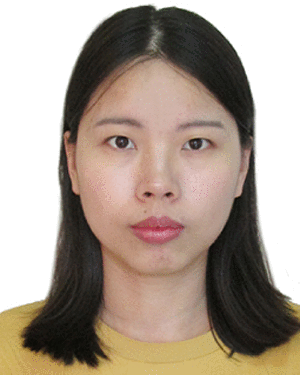 Tingting Liang (梁婷婷)合作论文数School of Computer Science and Technology, Hangzhou Dianzi University10
 Chenwei Zhang合作论文数Amazon Stores Foundational AI8
 Caiming Xiong合作论文数Stealth Mode Startup Company7
 Yuyu Yin (殷昱煜)合作论文数Hangzhou Dianzi University7
 Jiangshu Du合作论文数University of Illinois at Chicago6
 Lifang He (何丽芳)合作论文数P.C. Rossin College of Engineering and Applied Science, Lehigh University6
 Wenpeng Yin (尹文鹏)合作论文数Department of Computer Science and Engineering, Penn State University;Center for Socially Responsible Artificial Intelligence, Penn State University;Institute for Computational and Data Sciences, Penn State University;AI4Research Lab, Penn State University6
 Hao Peng (彭浩)合作论文数School of Cyber Science and Technology, Beihang University;Beijing Advanced Innovation Center for Big Data and Brain Computing5
 Lichao Sun合作论文数Lehigh University;Mayo Clinc5
 Chen Xing (星辰)合作论文数Scale AI4
 Jiawei Zhang合作论文数Department of Computer Science, University of California, Davis;Information Fusion and Mining Laboratory, University of California, Davis4
 Ziqiang Zhao合作论文数3
 Tao Zhang合作论文数National Institute of Standards and Technology3
 Yaliang Li合作论文数Tongyi Lab, Alibaba Group3
 Zhiwei Liu合作论文数Salesforce AI Research3
 Yang Tao合作论文数Department of Computer Science and Engineering, Arizona State University3Yihao Feng合作论文数Salesforce Research3
 Jianxin Li (李建欣)合作论文数School of Computer Science & Engineering, Beihang University;Beijing Advanced Innovation Center of Big data and Brain Computing, Beihang University3
 Wei Fan合作论文数Taimei Technology3
 Fenglong Ma合作论文数College of Information Sciences and Technology, The Pennsylvania State University;Institute for Computational and Data Sciences, The Pennsylvania State University3Yixuan Jiang合作论文数2
 Yibo Wang合作论文数Department of Computer Science, University of Illinois at Chicago2Xinyi Yang合作论文数2Haoran Xu合作论文数Zhejiang University2
 Qian Li (李倩)合作论文数School of Computer Science and Engineering, Beihang University2
 Ye Liu合作论文数Salesforce AI Research2
 Renze Lou (楼仁泽)合作论文数Pennsylvania State University;Microsoft2
 Limeng Cui合作论文数Amazon2
 Shu Zhao (赵姝)合作论文数School of Computer Science and Technology, Anhui University2
 Kai Shu合作论文数Department of Computer Science, College of Arts and Sciences, Emory University2
 Jason Wu (吳建昇)合作论文数Salesforce AI Research2
 Hoang Nguyen合作论文数Department of Computer Science, University of Illinois at Chicago2
 Zhongfen Deng合作论文数Department of Computer Science, University of Illinois at Chicago2
 Yutong Deng (窦英通)合作论文数Visa Research2
 Xian Wu合作论文数Pinterest2
 Nan Du合作论文数OpenAI2
 Jianguo Zhang (张建国)合作论文数Salesforce AI Research2
 Lifu Tu (涂利福)合作论文数Salesforce AI Research;Toyota Technological Institute at Chicago2
 Senthil Purushwalkam合作论文数Salesforce Research2
 Yingbo Zhou合作论文数Salesforce2
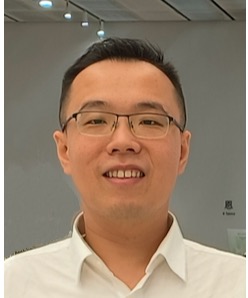 Renyu Yang (杨任宇)合作论文数Reliable, Automated and Intelligent Distributed Systems Lab, School of Software, Beihang University2
 Silvio Savarese合作论文数Salesforce;Institute for Human-Centered Artificial Intelligence, Stanford University2Xi Li合作论文数1Wenchao Ma合作论文数1Hongchao Fang合作论文数1Hanzi Xu合作论文数1Yixin Cao合作论文数1Eduardo Blanco合作论文数1




