Classic theories of religious pluralism theorized that religions compete for plausibility and acceptance based on the assumption that individuals can only have one religious identity or none. Religious identification in the United States has long been conceptualized as exclusive in nature, and surveys have in turn tended to only allow an individual to identify with a single religion. Recent research has questioned these assumptions, and there are theoretical reasons to expect that some individuals would be more likely to identify with multiple religions. The study presented here utilizes data from a probability survey of U.S. adults in which respondents were allowed to select all the religions with which they identify to test hypotheses concerning patterns of multiple identification. A multinomial logistic regression model finds that childhood exposure to different world religions is positively associated with multiple identification relative to single identification, while religiosity and political conservatism is negatively associated with multiple identification relative to single identification.
The academic job market is changing rapidly due to financial and political strains. This is particularly true for sociology. Yet, we do not know much about sociology graduate students’ preferences for and expectations about their future career paths. Using survey data from a representative sample of graduate students in the U.S., we assess sociology students’ career preferences and expectations and how they compare to graduate students in other disciplines. We find that sociology graduate students have particularly high preferences for and expectations of a tenure-track career that likely do not align with the job market. We offer recommendations for ways that sociology graduate programs can better prepare students both psychologically and materially for a wider range of career paths.
Past research has identified several factors, such as social ties, that can influence an individual's attitudes towards a particular religious group. This study extends this literature to consider the role of a scientific worldview in shaping attitudes towards different religious groups. In addition to expanding the literature on religious tolerance, this study advances the social scientific study of religion and science in two ways. First, unlike much research that has considered conflict between religion and science in purely abstract or institutional terms, this study considers how such conflict could impact interpersonal interactions and relationships. Second, unlike much research in this area that has operationalized religion in a generic sense, this study assesses how a scientific worldview influences attitudes towards specific religious groups. Our analysis of survey data collected with a probability sample of US adults finds that, net of other factors, a scientific worldview is negatively associated with personal attitudes towards Christians and Jews, unassociated with attitudes towards Muslims, Hindus, and Buddhists, and positively associated with attitudes towards atheists.
Abstract While research has examined how the career decisions and outcomes of scientists are influenced by their partners and children, less research has examined the role of their family of origin. Using data from an original survey fielded on a sample of U.S. graduate students in five natural and social science disciplines, we consider how a students’ closeness to and concerns about caring for their family of origin might influence their educational and career decision-making. Our analysis finds that women and many racially- or ethnically-minoritized groups express greater closeness to their family of origin and greater concerns about caring for their family of origin when compared to men and white students. In turn, closeness to and concerns about caring for one’s family of origin are both independently associated with students saying they picked their graduate program to be close to their family of origin and saying they would like to live close to their family after completing their graduate program. These patterns could lead individuals to seek programs and jobs of less prestige and compensation than they could otherwise obtain and have implications for efforts to recruit and retain these groups in science.
While most prior research assumes that if someone attends religious services, they only attend at one place of worship, a handful of studies suggest that some individuals do regularly attend multiple congregations. This paper seeks to answer the following questions: What percentage of U.S. adults who attend religious services attend multiple congregations? What are the socio-demographic and religious characteristics of those who attend multiple congregations and how do they compare to those who only attend one congregation? What are the reasons for attending additional congregations? And, how do the congregational activities of multiple attenders compare to those who only attend one congregation? We examine these research questions using a nationally representative survey of U.S. adults conducted in 2023. Most American adults who attend religious services attend multiple congregations at least occasionally. Comparing those who always attend services at the same congregation to those who attend multiple congregations, we found that they differ in terms of education, marital status, political ideology, sexual identity, religious identity, and overall religious service attendance. This paper provides interesting insights into the religious and socio-demographic profile of U.S. adults who attend multiple congregations.
Past research suggests that youth who identify with marginalized sexual identities can encounter hostility from their parents due to their sexuality. Such rejection could lead individuals to look to other relationships for material, social, and psychological support as they grow up. We assess this hypothesis by analyzing data produced from a probability survey of U.S. adults that asked respondents to identify the most important people who raised them. Multinomial logistic regression models find that gay or lesbian individuals are more likely than straight individuals to choose their grandmother as the most important person who raised them. Similarly, gay or lesbian individuals are more likely than straight individuals to choose a non-family member-such as a neighbor or teacher-as the second most important person who raised them. These findings provide support for past research that has mainly used qualitative or non-probability data to examine how sexuality shapes family relationships.
Religiosity and political conservatism are often hypothesized to be negatively associated with attitudes towards science. Yet, past research has often failed to distinguish between trust in science versus the acceptance of science as a source of truth. Using data generated from a probability survey of U.S. adults, we identify four latent factors within a battery of items asking about individuals’ views on science. Two of these represent science’s power as a source of truth, while the other two represent trust in science and scientists. A structural equation model finds that, all else being equal, measures of religiosity tend to be negatively associated with an individual’s view of science as a source of truth and unrelated to their trust in science. Adherence to Christian nationalism is negatively associated with an individual’s trust in science, while political conservatism and Republican identification is negatively associated with both trust in science and seeing science as a source of truth.
Berger (1967) argued that the plausibility of a religious worldview depends on the strength of the plausibility structure supporting it. We hypothesize that a weaker religious plausibility structure (or, alternatively, a stronger non-religious plausibility structure) will increase the odds of adopting an atheistic worldview. We use waves 2 and 4 of the National Study of Youth and Religion to test the relationship between non-religious and religious friendship ties and adopting an atheistic worldview in the United States. We find that a stronger non-religious plausibility structure, regardless of how it is operationalized (e.g., percent, majority, or entirety of one’s friendship network who are not religious), is significantly associated with increased odds of adopting an atheistic worldview as an emerging adult. Even having one friend who is not religious among mostly religious friends may potentially serve for some to relativize one’s religious worldview thereby increasing the odds of adopting an atheistic worldview. Still, regardless of one’s friendship network’s composition, maintaining a non-atheistic worldview is more common than adopting an atheistic worldview suggesting that worldviews may not be as fragile as some prior research has suggested.
Astrology is a multi-million-dollar industry. Its ubiquity in contemporary social life suggests that astrology may be an important component of Americans’ identity and lived experience. Despite this popularity, scholarly attention to the uses and views of astrology is limited and has largely focused on its relationship with religion and religiosity. Further, little is known about who uses astrology in the United States, how, and why. In this article, we conduct a preliminary analysis of how Americans view and utilize astrology, drawing from survey and interview data with Americans and professional astrologers. Nationally representative quantitative data indicate that women, sexual minorities, and younger adults are each more likely to consult their horoscope, consistent with recent research. Qualitative data suggests that astrology can be a marker of identity, self-understanding, and entertainment for the public, rather than strictly as a facet of religious belief and may occupy a cultural space akin to other “personality” indicators for some. For professional astrologers and their clients, astrology is viewed as part of a complex spirituality and used as a tool for decision-making and self-understanding. We conclude by discussing promising directions for future sociological research on astrology.
Reasons for vaccine hesitancy, refusal, and acceptance within the Amish and Old Order Mennonite populations reflect the views of the larger society, often citing risks or protective factors as motivating behavior. We use the open-ended comments from a survey of Amish and Old Order Mennonite parents in the Holmes County, Ohio, settlement to explore views on vaccination decisions. We find the Amish and Mennonite respondents talk about vaccine risks and benefits through a moral worldview lens of faith, family, and community. We note the values of the Amish and Old Order Mennonites do not motivate behavior uniformly across all respondents. The findings have important implications for how health care workers provide information and care to people in the Amish community.
Social environments shape group identity. Environmental changes force adaptation in varying ways. Disruptions created by the COVID-19 pandemic provide an opportunity to empirically study how group identities form, transform, and establish and reinforce collective boundaries. All social groups discern between "us," referencing in-group members from "them," referring to outsiders. High-tension religious communities tend to reinforce pre-defined group boundaries. This study examines COVID-19-related discourse in March and April of 2020, communicated within Amish and conservative Mennonite communities. We draw data from a large sample of scribe letters published in The Budget and The Diary, correspondence newspapers providing dispatches from several hundred Amish and Mennonite communities worldwide. We found that for the Amish and Mennonites, the pandemic created an opportunity within the community narrative to reinforce core values of the community (such as respect for government authority, caring for people's needs, and the virtues of simplicity as a way of life), which in turn served to unite group members closer together while also reinforcing differences which exist between them and outsiders.
Most prior research on religion and crime focuses on predictors of criminal behavior and neglects victimization. Studies of religion and victimization generally examine religion-based hate crimes. We present a theory of religion-based victimization drawing on routine activities theory, emphasizing how particular religious beliefs and practices may increase one’s vulnerability to predatory crime victimization due to opportunity, not hate. We draw on newspaper reports and secondary data to illustrate our theoretical propositions.
"Excess deaths" is a means to estimate the lethality of COVID-19 (directly and indirectly). Assessing "excess death" in closed religious communities provides information on how COVID-19 impacted these communities. We use obituary information published in an Amish/Mennonite newspaper to examine excess death among the Amish/Mennonites in 2020. Our results indicate the Amish/Mennonite excess death rates are similar to the national trends in the USA. The excess death rate for Amish/Mennonites spiked with a 125% increase in November 2020. The impact of COVID-19 on this closed religious community highlights the need to consider religion to stop the spread of COVID-19.
A prominent focus of New Age beliefs and practices has always been health and healing-including the use of holistic healing, power crystals, homeopathy, and complementary and alternative medicine. Given its association with modern science and medicine, genetic testing would seem to run counter to New Age alternative medical practices. On the other hand, the use of at-home genetic health tests and the use of such New Age alternative medical practices could both be motivated by a desire for personalized healthcare. Using data generated from a survey fielded on a probability sample of U.S. adults, we examine associations between individuals' use of at-home genetic health tests and their use of power crystals and acupuncture or other homeopathic medicine. Logistic regression models find that those who use power crystals or homeopathic medicine have significantly greater odds of having used an at-home genetic health test. We discuss the implications of these findings for our understanding of the direct-to-consumer genetic testing market and the relationship between science, religion, and spirituality more broadly.
Measures to limit COVID-19's spread were vital at the pandemic's onset. While some churches complied with public health mandates, others resisted them. Some religious ceremonies depend on third parties independent of the church. Funerals may require mortuary services overseen by funeral directors. Religious groups that may otherwise resist public health directives may comply when they depend on a third party. Extending street-level bureaucracy theory, we examine the role of service providers who function as street-level bureaucrats in shaping how religious groups respond to public policy mandates. Using the case of funeral rites in Old Order Amish churches, we content-analyzed Old Order Amish obituaries from an Amish correspondence newspaper and interviewed funeral directors that serve the Amish. We found that the content of obituaries changed to incorporate COVID-19 mitigation strategies due to requirements from some funeral homes. We also found that funeral directors used discretion to interpret health mandates.
Sociologists define power as one party's capacity to influence another's action. Thus, power is a relational property of interpersonal interaction. However, its dynamics embed within institutions such as the church and the state. This paper explores power dynamics using a case study of the conflict between an Old Order Amish church and the civil law of Ohio. The church excommunicated a member for violating community rules. The member countered by suing the church in state court. We trace power within and across these spheres of influence, showing how each party defined the situation according to institutional vectors of power. While one might expect the state to possess greater power in this situation, we demonstrate that ultimately neither party had total power, and both lost to some extent. This case study identifies the importance of viewing power as interactional, dynamic, and contextual.
Previous research has examined people's attitudes toward science and scientists, highlighting how religious identities, beliefs, or behavior shapes these attitudes. However, survey design choices have been previously shown to influence individuals' attitudes toward religion and science. We investigated the extent to which question ordering (i.e. presenting questions about science before questions about religion or the paranormal) in a large-scale survey would influence respondents' attitudes toward science and religion. Utilizing an experimental design, we found that responding to science questions first led to (1) more interest in science, (2) more confidence in the scientific community, (3) increased agreement that science is a way of knowing truth, (4) more confidence in responding to science knowledge items, (5) more agreement to scientific statements, and (6) more trust in scientists. We discuss the implications of question ordering when analyzing attitudes toward science and religion within the same surveys and future directions for research.
Forces of secularization are theorized to disenchant an individual's worldview-i.e., erode an individual's belief in nonnatural beings, forces, or abilities. Tests of this proposition, though, have often failed to measure the variety of forms of worldview enchantment found among individuals. Drawing on the broader secularization literature, we theorize correlates of (dis)enchantment and test these predictions using a nationally representative survey of U.S. adults featuring a wide battery of enchanted beliefs. We identify four latent enchanted worldview dimensions and find, consistent with secularization theories, that education and income are consistently and negatively associated with all four worldview enchantment dimensions.
Introduction: It remains unclear where members of the SBS/IF community access disease-specific information and what their information needs are. This study investigated information access and priorities among SBS/IF patients and caregivers. Methods: A cross-sectional survey, developed by community members to capture the needs, priorities, and information-seeking behaviors of SBS/IF patients and caregivers, was disseminated through patient support organizations and relevant social media groups. Bivariate cross-tabulations were calculated between socio-medical-demographic variables and information access and needs; multivariate logistic regression was used to predict information access. Results: 320 eligible respondents completed the survey; a majority were non-Hispanic white (90.6%), female (89%), and located in North America (83.3%). Half of respondents (49.5%) were receiving IRP care; 52.2% were adults with SBS/IF, with the remainder caregivers of children (36.2%) or adults with SBS/IF (11.6%). Regardless of patient- and IRP- status, specialist providers/teams (63.7%) and social media support groups (49.8%) were the most frequently accessed sources of SBS/IF-specific information. In multivariate analyses, IRP management was positively associated with the odds of frequently obtaining information from a specialist provider/team (OR=4.19, p <.001); adult patients and their caregivers had higher odds of frequently accessing information from a GP (OR=3.57, p<.01). Years since diagnosis was negatively associated with the odds of frequently accessing information from specialist providers/teams (OR=0.97, p <.05), peers (OR=0.96, p<.05), social media support groups (OR=0.96, p<.01), and the internet (OR=0.95, p <.01). Regardless of patient- or IRP- status and time since diagnosis, respondents most often reported desiring more information about long-term outcomes (63.8%) and quality of life (60.6%). In bivariate analyses, adult patients and their caregivers less frequently desired information about a range of items; the one exception was where to find experienced providers (51.5% of adult patients/caregivers vs. 31.9% of pediatric caregivers). Information needs were lower among those further out from diagnosis relative to those who were more recently diagnosed. Still, a substantial share of patients/caregivers 12+ years post diagnosis desired receiving information about medications (46%), diet (44.6%), finding experienced providers (43.2%), daily living (41.9%), relevant research (40.5%) and mental health (40.5%). Conclusions: These data suggest that, in addition to specialist providers, social media support groups are a prominent avenue through which SBS/IF patients and caregivers access disease-specific information. Information needs are most pronounced in the first years after diagnosis, but even those many years post diagnosis continue to desire information to better understand and manage their condition and achieve the quality of life they desire.
 Christopher P. Scheitle合作论文数Department of Sociology and Anthropology, West Virginia University25
 James K. Wellman合作论文数Integrated Social Sciences, University of Washington/The Henry M. Jackson School of International Studies, University of Washington25
 Kate Stockly合作论文数20
 Rachel E. Stein合作论文数17Corey J. Colyer合作论文数15
 David Pettinicchio合作论文数Department of Sociology, University of Toronto Mississauga;Department of Sociology, University of Oxford12Bernard D. DiGregorio合作论文数11Annette M. Mackay合作论文数6
 Blaine Robbins合作论文数Department of Sociology, College of Arts & Science, New York University6
 Steven Pfaff合作论文数National Weather Service Forecast Office Wilmington5
 Sara K. Guthrie合作论文数4
 Erin Brooke Hudnall合作论文数3
 Jacob T. N. Young合作论文数Department of Sociology, University of Washington3
 Brittany M. Kowalski合作论文数Dept Sociol & Anthropol, West Virginia Univ2
 Rodney Stark合作论文数Department of The Social Sciences, Baylor University2karen a snedker合作论文数2warren bird合作论文数1david bednarz合作论文数1Swapna Kakani合作论文数1Savas T. Tsikis合作论文数1kate stocklymeyerdirk合作论文数1Meagan Short合作论文数1Carina Perrone合作论文数1Andrew Duncan合作论文数1
 Bernd Wurpts合作论文数1
 Ellory Dabbs合作论文数1Nicholas Krupansky合作论文数1
 Stephanie House-Niamke合作论文数Sociol & Anthropol, West Virginia Univ1
 Lindsey Beach合作论文数Dept Sociol, Univ Washington1Caitlin Halligan合作论文数Department of Sociology, Western Michigan University1
 Cameron Mackey合作论文数Psychol, Ohio Univ1
 Matthew D. Larson合作论文数Oak Ridge Natl Lab1
 William Seto合作论文数Jet Prop Lab, CALTECH1paul muench合作论文数1Marie L Neumann合作论文数1Scott C Fligor合作论文数Vascular Biology Program and the Department of Surgery, Boston Children’s Hospital1
 Shiri Noy合作论文数Dept Anthropol & Sociol, Denison Univ1Baek Sora合作论文数1Puder Mark合作论文数1Martinez Sydney A合作论文数Department of Biostatistics and Epidemiology, University of Oklahoma Health Sciences Center1
 Kimberly Rios合作论文数Ohio University1
 Scott Thumma合作论文数Emory University1Bogdan Vacaliuc合作论文数1
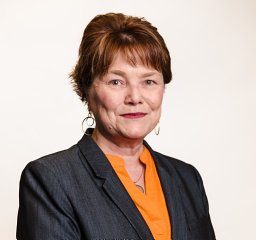 Jeralynn Cossman合作论文数Department of Sociology, Anthropology and Social Work, Mississippi State University1
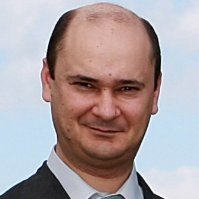 Moulay Akhloufi合作论文数Department of Computer Science, Université de Moncton1
 David J D Wilson合作论文数Molecular Structure and Detection Group;School of Environmental and Life Sciences;University of Newcastle;School of Environmental and Life Sciences, University of Newcastle1
 Kathleen M. Gura合作论文数Department of Pharmacy, Children's Hospital Boston1Michael Hechter合作论文数1




