BackgroundSarcopenia, frailty syndrome, and obstructive sleep apnea (OSA) are increasingly recognized as age-related conditions with overlapping biological pathways. Their coexistence may be relevant in head and neck cancer and upper airway disorders, but direct evidence integrating OSA with head and neck cancer (HNC) and geriatric vulnerability remains limited.ObjectiveThis scoping review aimed to map the evidence on the relationships among sarcopenia, frailty, and OSA in the context of head and neck cancer and upper airway disorders, and to determine whether the available literature supports an integrated clinical model linking OSA-related vulnerability with HNC outcomes.MethodsThe review was conducted in accordance with PRISMA ScR guidelines. A literature search was performed in PubMed, EBSCO, and Google Scholar for studies published between January 2015 and December 2025. Eligible studies included adult populations and addressed sarcopenia, frailty, OSA, or their clinically relevant relationships in head and neck cancer and upper airway disorders.ResultsTwelve studies met the inclusion criteria. Evidence clustered into two main streams. First, OSA was associated with frailty and sarcopenia-related phenotypes through mechanisms including intermittent hypoxia, systemic inflammation, sleep fragmentation, and neuroendocrine dysregulation. Second, in HNC, sarcopenia and frailty were associated with worse clinical outcomes, greater treatment burden, postoperative complications, treatment toxicity, and mortality. Direct evidence linking OSA with HNC within the included studies was limited. Therefore, the available evidence does not yet establish a fully demonstrated three-way clinical relationship among sarcopenia, frailty, and OSA in HNC.ConclusionThe available evidence supports clinically relevant overlap between OSA, frailty, and sarcopenia-related phenotypes, and a parallel association of sarcopenia and frailty with adverse HNC outcomes. However, the proposed triad should be interpreted as a hypothesis-generating framework rather than an established clinical entity. Future prospective studies should integrate objective OSA assessment, frailty evaluation, and radiological muscle measurements in HNC populations.
Breast cancer remains the most common malignancy among women globally, and postoperative radiotherapy (PORT) is essential for improving local control and overall survival. Proton therapy (PT) is emerging as an alternative to conventional radiotherapy due to its ability to reduce dose exposure to healthy tissues. It could be of particular use in patients requiring radiotherapy to the internal mammary chain, a population that is likely to also be undergoing systemic therapy as part of their breast cancer treatment. This review evaluates current preclinical and clinical data on the integration of PT with systemic treatments in the setting of breast cancer, highlighting its potential role to improve therapeutic outcomes while reducing toxicity. The findings of this review highlight PT’s potential to minimize side effects, particularly cardiotoxicity and potentially to enhance the efficacy of systemic treatments such as immunotherapy.
Aim of this study is to validate with an external independent cohort of patients previously published Normal Tissue Complication Probability (NTCP) models for radiation-related toxicity in head and neck cancer patients treated with curative radiotherapy (± associated systemic treatments). Patients treated from 2010 to 2022 at IEO were retrospectively reviewed. Five NTCP models for the following endpoints were evaluated: I) physician-rated swallowing dysfunction grade (G) 2–4, 6 months after RT; II) tube-feeding dependence (TFD) 6 months after RT; III) acute oral mucositis (OM) G ≥ 3 at any time during RT; IV) OM during RT treatment, mean G ≥ 1.5; V) G ≥ 2 laryngeal edema within 15 months from RT. External validation of the selected models on our cohorts was assessed evaluating the discriminating ability (in terms of Area Under the Receiver Operating Characteristic curve (AUC), Brier score) and the calibration (in terms of calibration intercept, calibration slope, and finally through the Hosmer–Lemeshow goodness-of-fit test). A total of 97 patients met the inclusion criteria for dysphagia (5
BACKGROUND:The research activity is fundamental to improve knowledge in Medicine. In the setting of clinical oncology, radiotherapy (RT) represents a cornerstone for patients treated with curative intent. PURPOSE:The aim of this snapshot was to investigate the number and the characteristics of clinical trials currently ongoing in the Lombardy (Italy) RT divisions highlighting involved resources and eventual needs to improve the process of study activation. METHODS:In April 2024, a survey composed of two parts, a snapshot of clinical and research activity and a database to report data on ongoing clinical trials, was proposed to the 30 RT centers in Lombardy. The snapshot consisted of 19 short answer questions. RESULTS:A total of 26 (87%) centers answered the survey. The total number of active studies was 161. The median age among principal investigators was 51 years. Most studies were multicentric (61%) national (76%). Among 72 studies with available phase, 43% resulted phase III studies. Fifty-three (33%) studies were sponsored. IRCCS (Istituti di Ricovero e Cura a carattere scientifico) RT have a median of 11 active studies vs versus 6 in non-IRCCS structures. More resources are available in IRCCS centers compared to non-IRCCS: data management service 50% vs 25%, dedicated scientific nurses 20% vs 0%, clinical statistics services 60% vs 25%. The main difficulties in conducting clinical trials were bureaucratic difficulties with ethics committees (5 centers), time constraints (5 centers), and a lack of resources and staff (15 centers). The most frequently (58% of the centers) proposed solution was an increase in resources and staff. CONCLUSION:While the RT centers in Lombardy demonstrate a commendable commitment to clinical research, disparities in resources and infrastructure remain significantly challenging.
 Roberto Orecchia合作论文数Dipartimento di Medical Imaging and Radiation Science, Istituto Europeo di Oncologia di Milano;Scuola di Specializzazione in Radioterapia, Università degli Studi di Milano;Centro Nazionale di Adroterapia Oncologica di Pavia102
 Jereczek-Fossa Barbara Alicja合作论文数84
 Giulia Marvaso合作论文数Medical Radiation Oncology Unit, Magna Graecia University and Cancer Center73
 Stefania Volpe合作论文数Dept Oncol & Hemato Oncol, Univ Milan64
 Mohssen Ansarin合作论文数Division of Head and Neck Surgery, European Institute of Oncology59Ferrari Annamaria合作论文数46B. Jereczek Fossa合作论文数34Mattia Zaffaroni合作论文数34
 Federica Cattani合作论文数31Stefania Comi合作论文数27
 Lorenzo Preda合作论文数26Anna Merlotti合作论文数26Marta Tagliabue合作论文数Divisione di Chirurgia Cervico Facciale, Istituto Europeo di Oncologia25Piperno Gaia合作论文数24Cossu Rocca Maria合作论文数23Sara Gandini合作论文数23
 Federico Mastroleo合作论文数Department of Translational Medicine, University of Piemonte Orientale22Fausto Maffini合作论文数21Belgioia Liliana合作论文数Division of Radiation Oncology, IRCCS San Martino - IST National Cancer Research Institute and University19Maria Giulia Vincini合作论文数Division of Radiation Oncology, European Institute of Oncology IRCCS18Stefano Zorzi合作论文数18Fausto Chiesa合作论文数18Ester Orlandi合作论文数17Samantha Dicuonzo合作论文数17
 Anna Starzynska合作论文数17Pansini Floriana合作论文数17
 Delia Ciardo合作论文数Department of Radiation Oncology, European Institute of Oncology17
 Elvio Grazioso Russi合作论文数Radiation Oncology Department, Santa Croce e Carle General Hospital17Almalina Bacigalupo合作论文数17Elena Rondi合作论文数16Cristina Garibaldi合作论文数Department of Medical Physics, IEO - Istituto Europeo di Oncologia16A. Ferrari合作论文数15Gerardi Marianna Alessandra合作论文数15
 Fanetti Giuseppe合作论文数Medical Oncology Department, Alessandro Inno15M. Cossu Rocca合作论文数15
 Giovanni Mazzola合作论文数Dipartimento di Medicina Clinica e delle Patologie Emergenti, Azienda Ospedaliera Universitaria Policlinico ″Paolo Giaccone″ di Palermo14
 Elisa D'Angelo合作论文数14
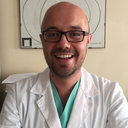 Pierfrancesco Franco合作论文数13
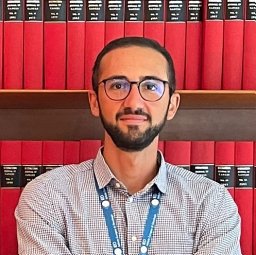 Matteo Pepa合作论文数IRCCS, European Institute of Oncology13
 Giuseppe Sanguineti合作论文数UOC di Radioterapia, IRCCS Istituto Tumori Regina Elena13
 Gioacchino Giugliano合作论文数13
 Guido Baroni合作论文数Polytechnic University of Milan,Department of Electronics, Information and Bioengineering13
 M. Liotta合作论文数12
 Marta Maddalo合作论文数12
 Luca Calabrese合作论文数12
 Dario Zerini合作论文数Department of Radiotherapy, European Institute of Oncology12Cristiana Fodor合作论文数Department of Radiation Oncology, the Istituto Europeo di Oncologia Milan12Stefano Ursino合作论文数11Paiar Fabiola合作论文数Department of Radiotherapy, University of Florence11




