The training of large language models (LLMs) is expensive. In this paper, we study data-efficient approaches for pre-training LLMs, i.e., techniques that aim to optimize the Pareto frontier of model quality and training resource/data consumption. We seek to understand the tradeoffs associated with data selection routines based on (i) expensive-to-compute data-quality estimates, and (ii) maximization of coverage and diversity-based measures in the feature space. Our first technique, Ask-LLM, leverages the zero-shot reasoning capabilities of instruction-tuned LLMs to directly assess the quality of a training example. To target coverage, we propose Density sampling, which models the data distribution to select a diverse sample. In our comparison of 19 samplers, involving hundreds of evaluation tasks and pre-training runs, we find that Ask-LLM and Density are the best methods in their respective categories. Coverage sampling can recover the performance of the full data, while models trained on Ask-LLM data consistently outperform full-data training -- even when we reject 90% of the original dataset, while converging up to 70% faster.
High-quality representations are a core requirement for effective recommendation. In this work, we study the problem of LLM-based descriptor generation, i.e., keyphrase-like natural language item representation generation frameworks with minimal constraints on downstream applications. We propose AgenticTagger, a framework that queries LLMs for representing items with sequences of text descriptors. However, open-ended generation provides little control over the generation space, leading to high cardinality, low-performance descriptors that renders downstream modeling challenging. To this end, AgenticTagger features two core stages: (1) a vocabulary building stage where a set of hierarchical, low-cardinality, and high-quality descriptors is identified, and (2) a vocabulary assignment stage where LLMs assign in-vocabulary descriptors to items. To effectively and efficiently ground vocabulary in the item corpus of interest, we design a multi-agent reflection mechanism where an architect LLM iteratively refines the vocabulary guided by parallelized feedback from annotator LLMs that validates the vocabulary against item data. Experiments on public and private data show AgenticTagger brings consistent improvements across diverse recommendation scenarios, including generative and term-based retrieval, ranking, and controllability-oriented, critique-based recommendation.
Large language models have become drivers of evolutionary search, but most systems rely on a fixed, prompt-elicited policy to sample next candidates. This limits adaptation in practical engineering and research tasks, where evaluations are expensive, and progress depends on learning task-specific search dynamics. We introduce PACEvolve++, an advisor-model reinforcement learning framework for test-time policy adaptation in evolutionary search agents. PACEvolve++ decouples strategic search decisions from implementation: a trainable advisor generates, assesses, and selects hypotheses, while a stronger frontier model translates selected hypotheses into executable candidates. To train the advisor under non-stationary feedback, we propose a phase-adaptive approach that adapts its optimization strategy to different phases of the evolutionary process. Early in evolution, it uses group-relative feedback to learn broad search preferences; later, as reward gaps compress, it emphasizes best-of-k frontier contribution to support stable refinement. Across expert-parallel load balancing, sequential recommendation, and protein fitness extrapolation, PACEvolve++ outperforms the state-of-the-art evolutionary search framework with frontier models, achieving faster convergence and stabilizing test-time training during evolutionary search.
Large Language Models (LLMs) have emerged as powerful operators for evolutionary search, yet the design of efficient search scaffolds remains ad hoc. While promising, current LLM-in-the-loop systems lack a systematic approach to managing the evolutionary process. We identify three distinct failure modes: Context Pollution, where experiment history biases future candidate generation; Mode Collapse, where agents stagnate in local minima due to poor exploration-exploitation balance; and Weak Collaboration, where rigid crossover strategies fail to leverage parallel search trajectories effectively. We introduce Progress-Aware Consistent Evolution (PACEvolve), a framework designed to robustly govern the agent's context and search dynamics, to address these challenges. PACEvolve combines hierarchical context management (HCM) with pruning to address context pollution; momentum-based backtracking (MBB) to escape local minima; and a self-adaptive sampling policy that unifies backtracking and crossover for dynamic search coordination (CE), allowing agents to balance internal refinement with cross-trajectory collaboration. We demonstrate that PACEvolve provides a systematic path to consistent, long-horizon self-improvement, achieving state-of-the-art results on LLM-SR and KernelBench, while discovering solutions surpassing the record on Modded NanoGPT.
Post-training with Reinforcement Learning (RL) has substantially improved reasoning in Large Language Models (LLMs) via test-time scaling. However, extending this paradigm to Multimodal LLMs (MLLMs) through verbose rationales yields limited gains for perception and can even degrade performance. We propose Reinforced Attention Learning (RAL), a policy-gradient framework that directly optimizes internal attention distributions rather than output token sequences. By shifting optimization from what to generate to where to attend, RAL promotes effective information allocation and improved grounding in complex multimodal inputs. Experiments across diverse image and video benchmarks show consistent gains over GRPO and other baselines. We further introduce On-Policy Attention Distillation, demonstrating that transferring latent attention behaviors yields stronger cross-modal alignment than standard knowledge distillation. Our results position attention policies as a principled and general alternative for multimodal post-training.
Deep learning techniques have demonstrated impressive effectiveness across a wide array of web applications. Notably, graph neural networks (GNNs) and large language models (LLMs) have become essential tools for modeling the extensive graph-structured data and text/language data that populate the web. Despite their success, the advancement of these methods is frequently hampered by resource constraints. Key challenges include the scarcity of labeled data (datalevel constraints) and the demand for smaller model sizes suitable for real-world computing environments (model-level constraints). Addressing these issues is crucial for the effective and efficient deployment of models across various real-world web systems and applications, such as social networks, search engines, recommender systems, question answering, and content analysis. Therefore, there is an urgent need to develop innovative and efficient learning techniques that can overcome these resource limitations from both data and model perspectives. In this lecture-style tutorial, we will focus on state-of-the-art approaches in resource-efficient learning, specifically exploring a range of data- and model-efficient methods for GNNs and LLMs, along with their practical applications in web contexts. Our objectives for this tutorial are threefold: (1)to categorize challenges in resource-efficient learning and discuss data and model constraints; (2) to provide a comprehensive review of existing methods and recent advances in resource-efficient learning, particularly concerning GNNs and LLMs; and (3) to highlight open questions and potential future research directions in this rapidly evolving field. Together, these objectives will provide participants with a comprehensive understanding of resource-efficient learning for GNNs and LLMs, its challenges, and its potential for future advancements. The promo video for this tutorial is available through: Promo Video Link.
Modern machine learning techniques, particularly deep learning, have showcased remarkable efficacy across numerous knowledge discovery and data mining applications. However, the advancement of these methods is frequently impeded by resource constraint challenges in many scenarios, such as limited labeled data (data-level), small model size requirements in real-world computing platforms (model-level), and efficient mapping of the computations to heterogeneous target hardware (system-level). Addressing all these factors is crucial for effectively and efficiently deploying developed models across a broad spectrum of real-world systems, including large-scale social network analysis, recommendation systems, and real-time anomaly detection. Therefore, there is a critical need to develop efficient learning techniques to address the challenges posed by resource limitations, whether from data, model/algorithm, or system/hardware perspectives. The proposed third international workshop on ''Resource-Efficient Learning for Knowledge Discovery (RelKD 2025)'' will provide a great venue for academic researchers and industrial practitioners to share challenges, solutions, and future opportunities for resource-efficient learning.
Generative recommendation (GR) is an emerging paradigm where user actions are tokenized into discrete token patterns and autoregressively generated as predictions. However, existing GR models tokenize each action independently, assigning the same fixed tokens to identical actions across all sequences without considering contextual relationships. This lack of context-awareness can lead to suboptimal performance, as the same action may hold different meanings depending on its surrounding context. To address this issue, we propose ActionPiece to explicitly incorporate context when tokenizing action sequences. In ActionPiece, each action is represented as a set of item features. Given the action sequence corpora, we construct the vocabulary by merging feature patterns as new tokens, based on their co-occurrence frequency both within individual sets and across adjacent sets. Considering the unordered nature of feature sets, we further introduce set permutation regularization, which produces multiple segmentations of action sequences with the same semantics. Our code is available at: https://github.com/google-deepmind/action_piece.
Statefulness is essential for large language model (LLM) agents to perform long-term planning and problem-solving. This makes memory a critical component, yet its management and evolution remain largely underexplored. Existing evaluations mostly focus on static conversational settings, where memory is passively retrieved from dialogue to answer queries, overlooking the dynamic ability to accumulate and reuse experience across evolving task streams. In real-world environments such as interactive problem assistants or embodied agents, LLMs are required to handle continuous task streams, yet often fail to learn from accumulated interactions, losing valuable contextual insights, a limitation that calls for test-time evolution, where LLMs retrieve, integrate, and update memory continuously during deployment. To bridge this gap, we introduce Evo-Memory, a comprehensive streaming benchmark and framework for evaluating self-evolving memory in LLM agents. Evo-Memory structures datasets into sequential task streams, requiring LLMs to search, adapt, and evolve memory after each interaction. We unify and implement over ten representative memory modules and evaluate them across 10 diverse multi-turn goal-oriented and single-turn reasoning and QA datasets. To better benchmark experience reuse, we provide a baseline method, ExpRAG, for retrieving and utilizing prior experience, and further propose ReMem, an action-think-memory refine pipeline that tightly integrates reasoning, task actions, and memory updates to achieve continual improvement.
Recommender system (RecSys) plays important roles in helping users navigate, discover, and consume massive and highly-dynamic information. Today, many RecSys solutions deployed in the real world rely on categorical user profiles and/or pre-calculated recommendation actions that stay static during a user session. However, recent trends suggest that RecSys need to model user intent in real time and constantly adapt to meet user needs at the moment or change user behavior in situ. There are three primary drivers for this emerging need of online adaptation. First, in order to meet the increasing demand for a better personalized experience, the personalization dimensions and space will grow larger and larger. It would not be feasible to pre-compute recommended actions for all personalization scenarios beyond a certain scale. Second, in many settings the system does not have user prior history to leverage. Estimating user intent in real time is the only way to personalize. As various consumer privacy laws tighten, it is foreseeable that many businesses will reduce their reliance on static user profiles. Therefore, it makes the modeling of user intent in real time an important research topic. Third, a user's intent often changes within a session and between sessions, and user behavior could shift significantly during dramatic events. Therefore, it is important to investigate more on online and adaptive recommender systems (OARS) that can adapt in real time to meet user needs and be robust against distribution shifts. Every year, the organizers survey the most important topics for OARS and propose a new workshop program. In light of the recent advancement of (multi-modal) LLMs in RecSys, in this new edition, we decide to formally add the new topic of (multi-modal) LLM models in OARS. We will invite experts and papers in the field to disseminate new knowledge and foster further advancements.
Deep learning techniques, such as large language models and graph neural networks, have demonstrated impressive effectiveness across various web applications. Despite their success, the advancement of these methods is frequently hampered by different resource constraint challenges. Key challenges include the scarcity of labeled data (data-level constraints), the need for smaller model sizes that fit real-world computing environments (model-level constraints), and the integration of neural network design with system and hardware for energy efficiency (system-level constraints). Tackling these issues is essential for the effective and efficient deployment of models in various real-world web systems and applications, including social networks, search engines, recommender systems, question answering, and content analysis. Therefore, there is an urgent need to develop innovative and efficient learning techniques that can overcome these resource limitations. The proposed international workshop on "Resource-Efficient Learning for the Web (RelWeb 2025)" will provide a great venue for academic researchers and industrial practitioners to share challenges, solutions, and future opportunities for resource-efficient learning. Our workshop objectives are threefold: (1) to establish an engaging platform where experts and participants can share their latest research findings and innovative practices in resourceefficient learning; (2) to explore emerging technologies and trends that could shape the future of this field; and (3) to foster a collaborative environment that encourages partnerships and exchanges among participants. Together, we can advance resource-efficient learning and propel future research in this area.
Recent controls over user data have diluted user signals essential to train industrial recommendation systems, replacing traditional event-level labels with aggregated item-level labels. Fitting these noisy aggregates into the event-level paradigm used by industrial recommendation systems causes models to be biased and miscalibrated, hurting critical business metrics. Learning from Label Proportions (LLP), a framework where instance-level prediction models are trained from aggregated signals, offers a principled solution to this problem — as long as all samples from an aggregate are present within the same training batch. Unfortunately, industry-scale recommender systems impose infrastructure constraints that fail this critical assumption because (1) they are trained in a sequential streaming framework that spreads aggregates across batches, (2) aggregates often exceed the size of a single batch, and (3) label noise makes it difficult to identify the time boundaries that correspond to the aggregated label. To address these issues, we propose a novel technique called Cross-Batch Aggregate (XBA) Loss to adapt LLP to the streaming setting. We design the loss to have a gradient that mimics the true aggregated loss gradient, approximating the distribution of the aggregate by using cumulative statistics across each aggregate. This enables (1) optimizing for model calibration and (2) learning a conversion model from the aggregate signals. We have deployed this technique to a Google Ads system impacted by conversion signal loss due to privacy constraints, delivering significant improvements on model calibration (48.8% reduction in online bias), advertiser value, and business metrics. Our key contribution is the extension of LLP to the streaming setting, providing a practical solution that bridges the gap between LLP research and industrial applications.
In recent years, massive transformer-based architectures have driven breakthrough performance in practical applications like autoregressive text-generation (LLMs) and click-prediction (recommenders). A common recipe for success is to train large models on massive webscale datasets [3, 15], e.g., modern recommenders are trained on billions of user-item click events, and LLMs are trained on trillions of tokens extracted from the public internet. We are close to hitting the computational and economical limits of scaling up the size of these models, and we expect the next frontier of gains to come from improving the: (i) data quality of the training dataset, and (ii) data efficiency of the extremely expensive training procedure. Inspired by this shift, we present a set of "data-centric" techniques for recommendation and language models that summarizes a dataset into a terse data summary, which is both (i) high-quality, i.e., trains better quality models, and (ii) improves the data-efficiency of the overall training procedure. We propose techniques from two disparate data frameworks: (i) data selection (a.k.a., coreset construction) methods that sample portions of the dataset using grounded heuristics, and (ii) data distillation techniques that generate synthetic examples which are optimized to retain the signals needed for training high-quality models. Overall, this work sheds light on the challenges and opportunities offered by data optimization in web-scale systems, a particularly relevant focus as the recommendation community grapples with the grand challenge of leveraging LLMs.
We study data distillation for auto-regressive machine learning tasks, where the input and output have a strict left-to-right causal structure. More specifically, we propose Farzi, which summarizes an event sequence dataset into a small number of synthetic sequences -- Farzi Data -- which are optimized to maintain (if not improve) model performance compared to training on the full dataset. Under the hood, Farzi conducts memory-efficient data distillation by (i) deriving efficient reverse-mode differentiation of the Adam optimizer by leveraging Hessian-Vector Products; and (ii) factorizing the high-dimensional discrete event-space into a latent-space which provably promotes implicit regularization. Empirically, for sequential recommendation and language modeling tasks, we are able to achieve 98-120% of downstream full-data performance when training state-of-the-art models on Farzi Data of size as little as 0.1% of the original dataset. Notably, being able to train better models with significantly less data sheds light on the design of future large auto-regressive models, and opens up new opportunities to further scale up model and data sizes.
Industrial recommendation systems process billions of daily user feedback which are complex and noisy. Efficiently uncovering user preference from these signals becomes crucial for high-quality recommendation. We argue that those signals are not inherently equal in terms of their informative value and training ability, which is particularly salient in industrial applications with multi-stage processes (e.g., augmentation, retrieval, ranking). Considering that, in this work, we propose a novel self-auxiliary distillation framework that prioritizes training on high-quality labels, and improves the resolution of low-quality labels through distillation by adding a bilateral branch-based auxiliary task. This approach enables flexible learning from diverse labels without additional computational costs, making it highly scalable and effective for Google-scale recommenders. Our framework consistently improved both offline and online key business metrics across three Google major products. Notably, self-auxiliary distillation proves to be highly effective in addressing the severe signal loss challenge posed by changes such as Apple iOS policy. It further delivered significant improvements in both offline (+17% AUC) and online metrics for a Google Apps recommendation system. This highlights the opportunities of addressing real-world signal loss problems through self-auxiliary distillation techniques.
Large Language Models (LLMs) have demonstrated exceptional capabilities in generalizing to new tasks in a zero-shot or few-shot manner. However, the extent to which LLMs can comprehend user preferences based on their previous behavior remains an emerging and still unclear research question. Traditionally, Collaborative Filtering (CF) has been the most effective method for these tasks, predominantly relying on the extensive volume of rating data. In contrast, LLMs typically demand considerably less data while maintaining an exhaustive world knowledge about each item, such as movies or products. In this paper, we conduct a thorough examination of both CF and LLMs within the classic task of user rating prediction, which involves predicting a user's rating for a candidate item based on their past ratings. We investigate various LLMs in different sizes, ranging from 250M to 540B parameters and evaluate their performance in zero-shot, few-shot, and fine-tuning scenarios. We conduct comprehensive analysis to compare between LLMs and strong CF methods, and find that zero-shot LLMs lag behind traditional recommender models that have the access to user interaction data, indicating the importance of user interaction data. However, through fine-tuning, LLMs achieve comparable or even better performance with only a small fraction of the training data, demonstrating their potential through data efficiency.
Industry recommender systems usually suffer from highly-skewed long-tail item distributions where a small fraction of the items receives most of the user feedback. This skew hurts recommender quality especially for the item slices without much user feedback. While there have been many research advances made in academia, deploying these methods in production is very difficult and very few improvements have been made in industry. One challenge is that these methods often hurt overall performance; additionally, they could be complex and expensive to train and serve. In this work, we aim to improve tail item recommendations while maintaining the overall performance with less training and serving cost. We first find that the predictions of user preferences are biased under long-tail distributions. The bias comes from the differences between training and serving data in two perspectives: 1) the item distributions, and 2) user's preference given an item. Most existing methods mainly attempt to reduce the bias from the item distribution perspective, ignoring the discrepancy from user preference given an item. This leads to a severe forgetting issue and results in sub-optimal performance. To address the problem, we design a novel Cross Decoupling Network (CDN) to reduce the two differences. Specifically, CDN (i) decouples the learning process of memorization and generalization on the item side through a mixture-of-expert architecture; (ii) decouples the user samples from different distributions through a regularized bilateral branch network. Finally, a new adapter is introduced to aggregate the decoupled vectors, and softly shift the training attention to tail items. Extensive experimental results show that CDN significantly outperforms state-of-the-art approaches on popular benchmark datasets. We also demonstrate its effectiveness by a case study of CDN in a large-scale recommendation system at Google.
"Garbage in, Garbage out" is a familiar maxim to ML practitioners and researchers, because the quality of a learned data representation is highly crucial to the quality of any ML model that consumes it as an input. To handle systems that serve billions of users at millions of queries per second (QPS), we need representation learning algorithms with significantly improved efficiency. At Google, we have dedicated thousands of iterations to develop a set of powerful techniques that efficiently learn high quality data representations. We have thoroughly validated these methods through offline evaluation, online A/B testing, and deployed these in over 50 models across major Google products. In this paper, we consider a generalized data representation learning problem that allows us to identify feature embeddings and crosses as common challenges. We propose two solutions, including: 1. Multi-size Unified Embedding to learn high-quality embeddings; and 2. Deep Cross Network V2 for learning effective feature crosses. We discuss the practical challenges we encountered and solutions we developed during deployment to production systems, compare with SOTA methods, and report offline and online experimental results. This work sheds light on the challenges and opportunities for developing next-gen algorithms for web-scale systems.
Deep learning techniques have advanced rapidly in recent years, leading to significant progress in pre-trained and fine-tuned large-scale AI models. For example, in the natural language processing domain, the traditional "pre-train, fine-tune" paradigm is shifting towards the "pre-train, prompt, and predict" paradigm, which has achieved great success on many tasks across different application domains such as ChatGPT/BARD for Conversational AI and P5 for a unified recommendation system. Moreover, there has been a growing interest in models that combine vision and language modalities (vision-language models) which are applied to tasks like Visual Captioning/Generation. Considering the recent technological revolution, it is essential to emphasize these paradigm shifts and highlight the paradigms with the potential to solve different tasks. We thus provide a platform for academic and industrial researchers to showcase their latest work, share research ideas, discuss various challenges, and identify areas where further research is needed in pre-training, fine-tuning, and prompt-learning methods for large-scale AI models. We foster the development of a strong research community focused on solving challenges related to large-scale AI models, providing superior and impactful strategies that can change people's lives in the future.
 Ed H. Chi (紀懷新)合作论文数Google DeepMind24
 Lichan Hong合作论文数Google DeepMind18
 Wang-Cheng Kang合作论文数Google DeepMind14
 Ruoxi Wang合作论文数9
 Xinyang Yi合作论文数9
 Benjamin Coleman合作论文数Google8
 Noveen Sachdeva合作论文数Google DeepMind8
 Jianmo Ni合作论文数Google DeepMind7
 Tiansheng Yao合作论文数Google Brain7
 Zhankui He (何占魁)合作论文数Google DeepMind5
 Kaize Ding合作论文数Department of Statistics and Data Science, Weinberg College of Arts & Sciences, Northwestern University5
 Ting Chen合作论文数xAI5
 Huan Liu (刘欢)合作论文数School of Computing and Augmented Intelligence, Ira A. Fulton Schools of Engineering, Arizona State University5
 Julian Mcauley合作论文数Department of Computer Science & Engineering, Jacobs School of Engineering, University of California, San Diego;NICTA5
 Yin Zhang合作论文数Google Brain4Dong Lin合作论文数Google†#TAB#4
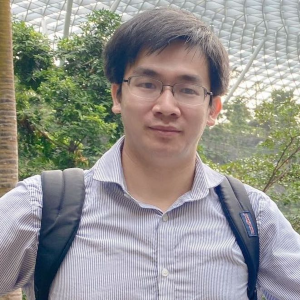 Chuxu Zhang (张初旭)合作论文数School of Computing, College of Engineering, University of Connecticut4
 Jundong Li合作论文数Department of Electrical and Computer Engineering, School of Engineering and Applied Science, University of Virginia;Department of Computer Science, School of Engineering and Applied Science, University of Virginia4
 Zhouhang Xie合作论文数University of California, San Diego3
 Jonathan Valverde合作论文数University of Maryland3Ziqi Chen合作论文数Computer Science and Engineering Department, The Ohio State University3
 Yang Ji (纪阳)合作论文数School of Information and Communication Engineering, Beijing University of Posts and Telecommunications3
 Fernando Pereira合作论文数Google DeepMind3
 James Caverlee合作论文数Department of Computer Science and Engineering, College of Engineering, Texas A&M University3Evan Ettinger合作论文数3
 Haoyu Wang (王浩宇)合作论文数School of Cyber Science and Engineering, Huazhong University of Science and Technology2Rakesh Shivanna合作论文数Google2
 Mahesh Sathiamoorthy合作论文数BespokeLabsAi2
 Zhe Zhao (赵哲)合作论文数Department of Computer Science, College of Engineering, University of California, Davis2
 Zhe Chen合作论文数University of Michigan2
 Sagar Jain合作论文数Meta2
 Steven K. Tjoa合作论文数Department of Electrical and Computer Engineering, University of Maryland2Jerry Zhang合作论文数1Samuel Ieong合作论文数1Andrew Evdokimov合作论文数1Yuan Gao合作论文数1Xiang Li合作论文数1Albert Jiongqian Liang合作论文数1
 Matthew Fahrbach合作论文数Google Research1Nikhil Mehta合作论文数1Yuan Li合作论文数1Yongpeng Yang合作论文数Google Inc., Mountain View, CA, USA1Kishor Barman合作论文数Google Inc., Mountain View, CA, USA1
 Adam Kraft合作论文数Google1




