Die Lage eines Punkte P im Raum wird durch den Ortsvektor r(t) beschrieben.
Stoß: Als Stoß bezeichnet man ein plötzliches Aufeinanderprallen zweier Körper.
ZusammenfassungDie Bewegung eines Massenpunktes unter der Wirkung von Kräften wird beschrieben durch $$ \boxed{\frac{{d(mv)}}{{dt}} = \dot{p} = F}, $$ mit F = ∑ F i und dem Impuls $$ p = mv. $$
ZusammenfassungFormt man das Newtonsche Grundgesetz für die Bewegung eines Massenpunktes (oder des Schwerpunktes eines starren Körpers) um $$ ma = \sum {F \to \sum {F - ma = 0} } $$ und führt die Trägheitskraft (Scheinkraft) $$ {{F}_{T}} = - ma $$ ein, so erhält man das „dynamische Gleichgewicht“ $$ \boxed{\sum F + {{F}_{T}} = 0}. $$
Massenpunktsystem: Auf die Masse m i wirken die äußere Kraft F i und die inneren Kräfte F ij = -F ji. Bleiben die Abstände r ij zwischenden Massen konstant, so liegt ein starrer Punkthaufen vor.
Calving of iceberg at ice shelves and floating glacier tongues is a poorly understood process, hence a physically motivated calving law is not yet existing. The demands on developing appropriate models for calving is large, as calving rates are needed for large scale ice sheet models that simulate the evolution of ice sheets. Here, we present a new approach for simulating fracture in ice. Our model is based on a finite strain theory for a viscoelastic Maxwell material, as the large simulation time leads to high strains. The fracturing process is simulated using a fracture phase field model that takes into account the elastic strain energy. We conduct simulations for a typical calving front geometry, with ice rises governing the formation of cracks. To represent the stress state adequately,we first conduct a spin-up to allow the viscous contribution to develop before the fracture phase field is computed. The analysis comprises the assessment of the crack path in comparison to observations, the influence of the spin-up, as well as elastic versus viscous strain contributions based on Hencky strain. Additionally, an estimate of released energy based on high resolution optical imagery of a Greenlandic calving front is presented.
This investigation presents a mechanical model to determine energetically favourable particle shapes, motivated by precipitation hardening in ferroelectric materials. We examine Li-doped NaNbO_3 and propose a system of equations to derive the correct material constants for this material system. To model the elongated precipitate shape we introduce two approaches: An elliptic shape and a shape based on cubic B-spline-curves. We subject both definitions to an optimisation routine that yields equilibrium shapes. We further use the spline approach to derive configurational forces on the interface.
Bisher wurde angenommen, daß alle betrachteten Körper eine glatte Oberfläche haben. Zwischen zwei solchen Körpern können nach Abschnitt 2.4 nur Kräfte normal zur Berührebene übertragen werden. Diese Idealisierung beschreibt das mechanische Verhalten dann richtig, wenn die in Wirklichkeit infolge der Rauhigkeit der Oberfläche auftretenden Tangentialkräfte vernachlässigt werden können. Mit den Eigenschaften der tangentialen Kräfte soll sich dieses Kapitel beschäftigen. Hierzu betrachten wir zunächst ein einfaches Beispiel.
Wir haben bisher nur Probleme behandelt, die eine analytische Lösung der Bewegungsgleichungen erlaubten. In vielen Fällen ist es allerdings schwierig oder sogar unmöglich, eine solche Lösung zu finden. Dann ist es erforderlich, mit Hilfe einer numerischen Integration eine Näherungslösung zu ermitteln. Wir wollen in diesem Kapitel einige Verfahren kennenlernen, die in solchen Fällen eine numerische Lösung der Differentialgleichungen erlauben und die eine Grundlage für weitere Methoden bilden. Die Studierenden sollen damit in die Lage versetzt werden, numerische Verfahren sachgerecht für die Behandlung von Problemen der Kinetik anzuwenden.
We present a multiphysics phase-field fracture model for thermo-elasto-plastic solids in the context of finite deformation and apply it to simulate the hot cracking phenomenon during metal additive manufacturing. The model is derived in a thermodynamically consistent manner, with the intercoupling mechanisms among elastoplasticity, phase-field crack and heat transfer comprehensively considered. It involves particularly coupled parameters among these materials physics, e.g. plasticity-dependent degradation function and fracture toughness, damage-dependent yield surface and thermal properties, and temperature-dependent elastoplastic properties and fracture strength. The finite element implementation of the coupled phase-field model is benchmarked with simulation results of a tensile test of an I-shape specimen, encompassing elastoplasticity, hardening, necking, crack initiation and propagation, in contrast to the related experimental results. The validated model is further employed to simulate the multiphysics hot cracking phenomenon in additive manufacturing in the context of both the effective powder-bed model and the powder-resolved model thanks to prior non-isothermal phase-field powder-bed-fusion simulations. Simulation results reveal certain key features of the hot crack and its dependency on process parameters like beam power and scan speed, which are helpful for the fundamental understanding of crack formation mechanisms and process optimization.
Thermal fracture is prevalent in many engineering problems and is one of the most devastating defects in metal additive manufacturing. Due to the interactive underlying physics involved, the computational simulation of such a process is challenging. In this work, we propose a thermo-mechanical phase-field fracture model, which is based on a thermodynamically consistent derivation. The influence of different coupling terms such as damage-informed thermomechanics and heat conduction and temperature-dependent fracture properties, as well as different phase-field fracture formulations, are discussed. The model is numerically implemented with the finite element method. Finally, the model is applied to simulate the hot cracking in additive manufacturing. Thereby not only the thermal strain but also the solidification shrinkage is considered. As for the thermal profile, both analytical temperature solution and numerical thermal field around the melting pool are taken into account. Based on the latter approach, the influence of different process parameters is further studied. The study reveals that the solidification shrinkage strain takes a dominant role in the formation of the circumferential crack, while the temperature gradient is mostly responsible for the central crack. Process parameter study demonstrates further that a higher laser power and slower scanning speed are favorable for keyhole mode hot cracking while a lower laser power and quicker scanning speed tend to form the conduction mode cracking. The numerical predictions of the hot cracking patterns are in good agreement with similar experimental observations, showing the capability of the model for further studies.
High‐resolution optical camera systems are opening new opportunities to study fractures in ice. Here, we present data obtained from the Modular Aerial Camera System camera system operated onboard of Alfred Wegener Institute Helmholtz Centre for Polar and Marine Research (AWI) polar aircraft in northeast Greenland in 2022. In addition, we are using optical and radar satellite imagery. The study area is the 79°N Glacier (Nioghalvfjerdsbræ, 79NG), an outlet glacier of the Northeast Greenland Ice Stream. We found that crack tips are exhibiting additional isolated cracks ahead of the main crack. Subsequent crack propagation is starting from those isolated cracks, leading to an advance of the crack, with bridges between crack faces. The bridges provide information of the episodic crack propagation. Fractures have typically a length scale of kilometers and the distance of crack faces is in the order of meters to tenths of meters. Fracture modes will be inferred from stress fields computed by an inverse modeling approach using the Ice Sheet and Sea Level System Model. To this end, a surface velocity field derived from satellite remote sensing is used for the optimal control method that constrains model parameters, for example, basal friction coefficient or rheology.
Die mathematische Formulierung mechanischer Probleme führt auf Gleichungen, die für konkrete Aufgabenstellungen gelöst werden müssen. Diese Gleichungen können je nach Fragestellung von ganz unterschiedlichem Typ sein. Sie schließen algebraische Beziehungen, Differentialgleichungen oder Variationsgleichungen ein. Beispiele dafür finden sich in den ersten drei Bänden der Lehrbuchreihe und in den vorangegangenen Kapiteln dieses Buches. In der Elastostatik können wir die Gleichgewichtsbedingungen (algebraische Gleichungen) oder die Gleichung der Biegelinie eines Balkens (Differentialgleichung) nennen. In der Kinetik wird die Bewegung des Massenpunktes durch gewöhnliche Differentialgleichungen beschrieben. Die Gleichungen für die Scheibe in Kapitel 2 oder für die Membran in Kapitel 3 stellen partielle Differentialgleichungen dar. Variationsgleichungen für den Stab und den Balken sind in Abschnitt 2.7.3 angegeben.
 Ralf Muller合作论文数TU Darmstadt Civil Engineering and Geodesy Hochschulstr.194
 Jorg Schroder合作论文数Fakultät für Ingenieurwissenschaften, Universität Duisburg-Essen78
 Werner Hauger合作论文数56
 Wolfgang Ehlers合作论文数Institute of Applied Mechanics (CE), University of Stuttgart41E.h. Walter Schnell合作论文数32
 Wolfgang A. Wall合作论文数School of Engineering and Design, Technische Universität München;Institute for Computational Mechanics, Technische Universität München32
 Tsviatko Rangelov合作论文数Institute of Mathematics and Informatics, Bulgarian Academy of Sciences31
 Petia Simeonova Dineva合作论文数31Bai-Xiang Xu合作论文数27David Schrade合作论文数25
 Peter Wriggers合作论文数Professor für Mechanik, Leibniz Universität Hannover
21
Peter Wriggers合作论文数Professor für Mechanik, Leibniz Universität Hannover
21 Yuesheng Wang (汪越胜)合作论文数Department of Mechanics, School of Mechanical Engineering, Tianjin University;Institute of Engineering Mechanics, Beijing Jiaotong University19Thomas Seelig合作论文数18R. Mueller合作论文数17
 Herbert Baaser合作论文数15Ch. Zhang合作论文数13
 Nimal Rajapakse合作论文数Carleton University10
 Stefan Kolling合作论文数10
 Sanjay Govindjee合作论文数Department of Civil Engineering and the Horace, Dorothy, and Katherine Johnson Endowed, University of California, Berkeley9
 Michael H Basista合作论文数Third Surgical Clinic N. Copernicus Academy of Medicine 358T Seelig合作论文数7
 Ganyun Huang (黄干云)合作论文数School of Mechanical Engineering, Tianjin University7
 Javier Bonet合作论文数University of Greenwich7
 Angelika Humbert合作论文数Helmholtz Ctr Polar & Marine Res, Alfred Wegener Inst7
 Xiqiao Feng (冯西桥)合作论文数Department of Engineering Mechanics, School of Aerospace Engineering, Tsinghua University6Oliver Goy合作论文数6
 Markus Klassen合作论文数Chair of Applied Mechanics, University of Kaiserslautern6
 Leon Mishnaevsky Jr.合作论文数Department of Wind Energy, Technical University of Denmark5I. Schmidt合作论文数5Th. Seelig合作论文数5L DREILICH合作论文数4A BETTIN合作论文数4J. Lei合作论文数4S. Rafiee合作论文数4St. Heimer合作论文数4
 Ralf Müller合作论文数Department Elektrotechnik-Elektronik-Informationstechnik, Technische Fakultät, Friedrich-Alexander-University of Erlangen-Nürnberg4J. Hohe合作论文数3
 Carolin Plate合作论文数3h thai合作论文数3
 Charlotte Kuhn合作论文数University of Kaiserslautern3
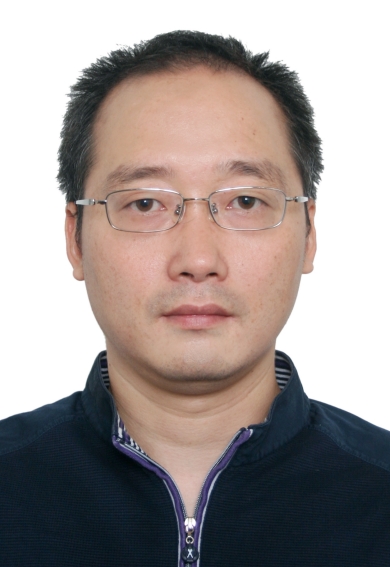 Jun Lei (雷钧)合作论文数College of Mechanical Engineering and Applied Electronics Technology, Beijing University of Technology3B. Lauterbach合作论文数3Ingo Schmidt合作论文数3
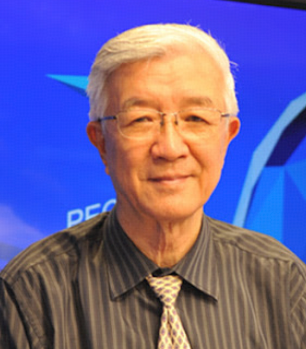 Shouwen Yu (余寿文)合作论文数Department of Engineering Mechanics, Tsinghua University3
 Marc-André Keip合作论文数Institute for Mechanics, University of Duisburg-Essen3M.E. Ergüven合作论文数3
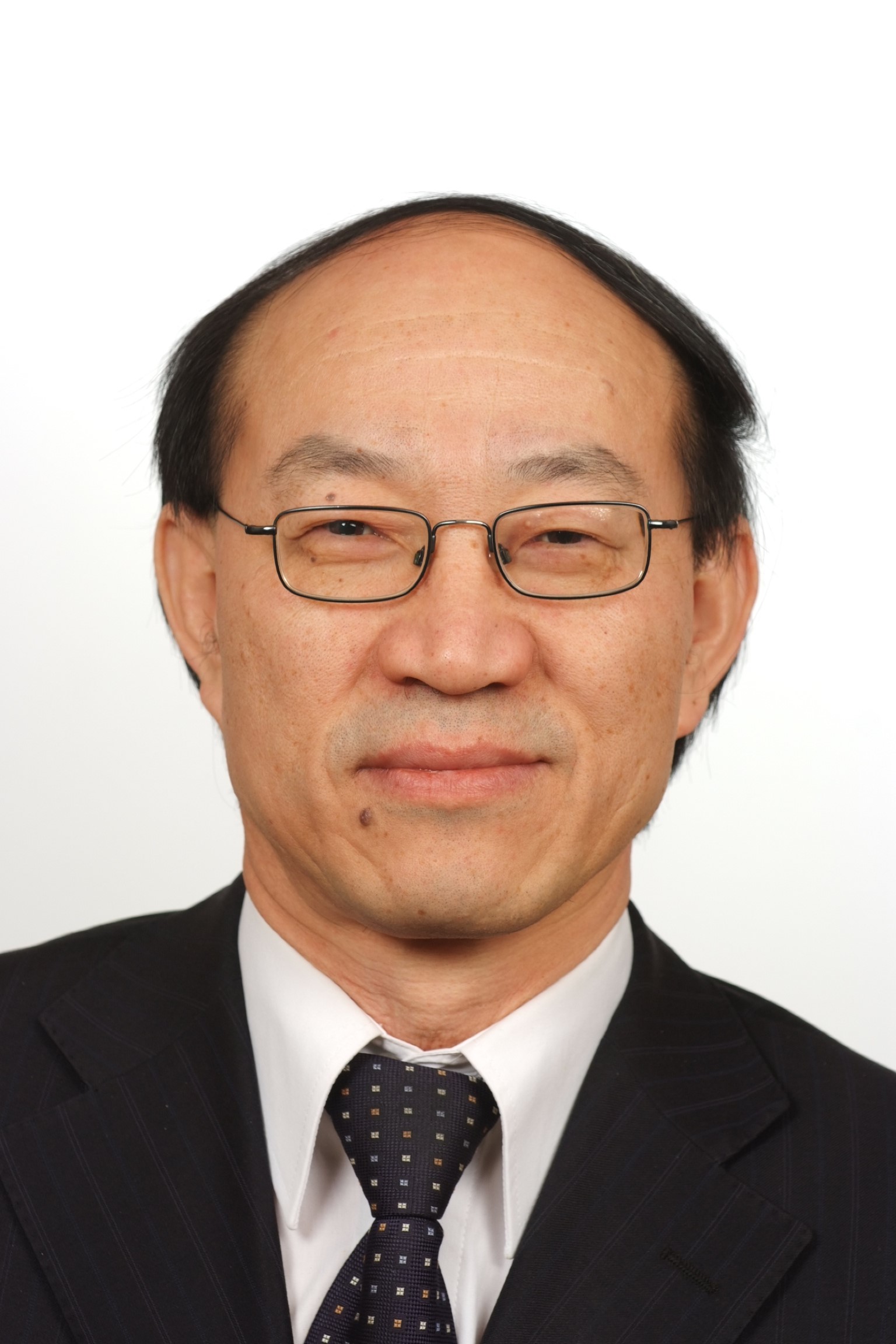 Chuanzeng Zhang合作论文数Department of Civil Engineering, School of Science and Technology, University of Siegen3




