We study variational quantum algorithms for the Maximum Independent Set (MIS) problem on benchmark graphs of 64, 99, and 180 vertices. The Variational Quantum Eigensolver (VQE) and Quantum Approximate Optimization Algorithm (QAOA) are compared across SPSA and COBYLA optimizers at multiple circuit depths. A preprocessing pipeline comprising spectral graph reordering (via the Fiedler vector) and distance-based sparsification reduces circuit depth while preserving energy fidelity. Classical post-processing via history-guided bitstring correction and stepwise maximality extension recovers the exact MIS across all instances. With CVaR optimization, VQE with SPSArecovers up to 6 distinct MIS per run for the 64-node instance and up to 10 distinct MIS per run for the 99-node instance, sampling broadly from the optimal solution population. Repeated runs with different SPSA trajectories collectively enumerate a larger fraction of all MIS for each instance. For the 180-node instance, where standard approaches stall at size 14 (MIS is 15), we introduce ancilla-assisted superposition initialization: ancilla qubits prepare a uniform superposition over classically-found near-optimal solutions, and an excitation-preserving ansatz evolves this state while conserving Hamming weight. This novel construction enables quantum-parallel variational search over multiple seeds simultaneously, discovering the exact MIS where single-seed methods fail. The 180-qubit simulation represents, to our knowledge, the largest scale at which gate-based variational algorithms have solved MIS to optimality. Hardware validation on IBM Quantum hardware ibm_marrakesh confirms that converged simulator parameters transfer effectively to noisy quantum execution.
Learning-to-optimize (L2O) methods accelerate repeated optimization by training models to predict solutions, warm starts, branching decisions, or other forms of solver guidance. A critical yet largely overlooked component of these pipelines is the feature function that maps problem instances to inputs for machine learning models. Existing L2O methods typically rely on hand-crafted features, making representation design manual and largely fixed across domains. We introduce FunL2O, the first unified framework for automating feature design through LLM-driven program evolution for L2O. In a FunSearch-style loop, an LLM proposes executable feature functions, while a fixed evaluation process retrains the original L2O model and measures downstream optimization performance. We evaluate FunL2O on linear and quadratic programming tasks involving solution prediction and warm-starting, as well as on mixed-integer optimization tasks using GNN-guided backdoor branching and Predict-and-Search. Across continuous and discrete optimization tasks and four LLMs, the evolved features consistently outperform hand-crafted representations. These results establish LLM-driven feature evolution as a general and effective approach to automating representation design in L2O.
The Quantum Approximate Optimization Algorithm (QAOA) is a hybrid quantum-classical framework for combinatorial optimization on near-term quantum devices. A central bottleneck is the classical estimation of its variational parameters γ and β, which must be optimized over a high-dimensional, non-convex landscape corrupted by sampling noise. We observe that the classical feature matrices constructed from QAOA measurement samples exhibit pronounced low-rank structure, and exploit this property for noise-robust, reduced-dimension parameter search. We present the Hamiltonian-Guided Leverage Embedding (HGLE) algorithm - a hybrid pipeline that encodes low-energy quantum samples into a weighted Ising feature matrix and compresses it via leverage-score row sampling, provably preserving the dominant rank-rsubspace geometry. The compressed representation drives a classical trust-region loop for (γ, β) estimation at a fraction of the original cost. We provide formal guarantees for rank preservation and energy approximation error, and demonstrate robustness across problem types (Max-Cut, Maximum Independent Set) and graph topologies of varying density.
Shuffling strategies for stochastic gradient descent (SGD), including incremental gradient, shuffle-once, and random reshuffling, are supported by rigorous convergence analyses for arbitrary within-epoch permutations. In particular, random reshuffling is known to improve optimization constants relative to cyclic and shuffle-once schemes. However, existing theory offers limited guidance on how to design new data-ordering schemes that further improve optimization constants or stability beyond random reshuffling. In this paper, we design a pipeline using a large language model (LLM)-guided program evolution framework to discover an effective shuffling rule for without-replacement SGD. Abstracting from this instance, we identify two fundamental structural components: block reshuffling and paired reversal. We analyze these components separately and show that block reshuffling strictly reduces prefix-gradient variance constants within the unified shuffling framework, yielding provable improvements over random reshuffling under mild conditions. Separately, we show that paired reversal symmetrizes the epoch map and cancels the leading order-dependent second-order term, reducing order sensitivity from quadratic to cubic in the step size. Numerical experiments with the discovered algorithm validate the theory and demonstrate consistent gains over standard shuffling schemes across convex and nonconvex benchmarks.
We present a framework for training trustworthy large language model (LLM) agents for optimization modeling via a verifiable synthetic data generation pipeline. Focusing on linear and mixed-integer linear programming, our approach begins with structured symbolic representations and systematically produces natural language descriptions, mathematical formulations, and solver-executable code. By programmatically constructing each instance with known optimal solutions, the pipeline ensures full verifiability and enables automatic filtering of low-quality demonstrations generated by teacher models. Each dataset instance includes a structured representation of the optimization problem, a corresponding natural language description, the verified optimal solution, and step-by-step demonstrations - generated by a teacher model - that show how to model and solve the problem across multiple optimization modeling languages. This enables supervised fine-tuning of open-source LLMs specifically tailored to optimization tasks. To operationalize this pipeline, we introduce OptiTrust, a modular LLM agent that performs multi-stage translation from natural language to solver-ready code, leveraging stepwise demonstrations, multi-language inference, and majority-vote cross-validation. Our agent achieves state-of-the-art performance on standard benchmarks. Out of 7 datasets, it achieves the highest accuracy on six and outperforms the next-best algorithm by at least 8 percentage on three of them. Our approach provides a scalable, verifiable, and principled path toward building reliable LLM agents for real-world optimization applications.
Foundational models (FMs), pretrained on extensive datasets using self-supervised techniques, are capable of learning generalized patterns from large amounts of data. This reduces the need for extensive labeled datasets for each new task, saving both time and resources by leveraging the broad knowledge base established during pretraining. Most research on FMs has primarily focused on unstructured data, such as text and images, or semi-structured data, like time-series. However, there has been limited attention to structured data, such as tabular data, which, despite its prevalence, remains under-studied due to a lack of clean datasets and insufficient research on the transferability of FMs for various tabular data tasks. In response to this gap, we introduce a framework called TabularFM, which incorporates state-of-the-art methods for developing FMs specifically for tabular data. This includes variations of neural architectures such as GANs, VAEs, and Transformers. We have curated a million of tabular datasets and released cleaned versions to facilitate the development of tabular FMs. We pretrained FMs on this curated data, benchmarked various learning methods on these datasets, and released the pretrained models along with leaderboards for future comparative studies. Our fully open-sourced system provides a comprehensive analysis of the transferability of tabular FMs. By releasing these datasets, pretrained models, and leaderboards, we aim to enhance the validity and usability of tabular FMs in the near future.
This paper presents two methodological advancements in decentralized multi-task learning under privacy constraints, aiming to pave the way for future developments in next-generation Blockchain platforms. First, we expand the existing framework for collaborative dictionary learning (CollabDict), which has previously been limited to Gaussian mixture models, by incorporating deep variational autoencoders (VAEs) into the framework, with a particular focus on anomaly detection. We demonstrate that the VAE-based anomaly score function shares the same mathematical structure as the non-deep model, and provide comprehensive qualitative comparison. Second, considering the widespread use of "pre-trained models," we provide a mathematical analysis on data privacy leakage when models trained with CollabDict are shared externally. We show that the CollabDict approach, when applied to Gaussian mixtures, adheres to a Renyi differential privacy criterion. Additionally, we propose a practical metric for monitoring internal privacy breaches during the learning process.
This paper considers the optimal sensor allocation for estimating the emission rates of multiple sources in a two-dimensional spatial domain. Locations of potential emission sources are known (e.g., factory stacks), and the number of sources is much greater than the number of sensors that can be deployed, giving rise to the optimal sensor allocation problem. In particular, we consider linear dispersion forward models, and the optimal sensor allocation is formulated as a bilevel optimization problem. The outer problem determines the optimal sensor locations by minimizing the overall Mean Squared Error of the estimated emission rates over various wind conditions, while the inner problem solves an inverse problem that estimates the emission rates. Two algorithms, including the repeated Sample Average Approximation and the Stochastic Gradient Descent based bilevel approximation, are investigated in solving the sensor allocation problem. Convergence analysis is performed to obtain the performance guarantee, and numerical examples are presented to illustrate the proposed approach.
In numerous machine learning applications, there is a preference for classifiers characterized by a polyhedral description, as they are intended for utilization within optimization frameworks or for interpretability purposes. Here, we present a structured classifier designed to cater to downstream decision-making tasks. The classification method is achieved through the process of partitioning the feature domain into clusters and encompassing each cluster within a polytope. We employ a combined approach that integrates semi-supervised k-means with SVM. This unified optimization framework enables the simultaneous generation of multiple polytopes. The central concept involves using a k-means-based clustering method for the clustering step, followed by the utilization of SVM to construct hyperplanes between each pair of clusters. Notably, the clustering process for each class considers classification loss as well as information from other classes when allocating sample points to clusters. We propose an algorithm to solve the integer program. Our numerical experiments demonstrate the competitiveness of the proposed method across a wide spectrum of datasets, exhibiting its efficacy in comparison to existing hyperplane-based classifiers and nonlinear classifiers.
Time series forecasting using historical data has been an interesting and challenging topic, especially when the data is corrupted by missing values. In many industrial problem, it is important to learn the inference function between the auxiliary observations and target variables as it provides additional knowledge when the data is not fully observed. We develop an end-to-end time series model that aims to learn the such inference relation and make a multiple-step ahead forecast. Our framework trains jointly two neural networks, one to learn the feature-wise correlations and the other for the modeling of temporal behaviors. Our model is capable of simultaneously imputing the missing entries and making a multiple-step ahead prediction. The experiments show good overall performance of our framework over existing methods in both imputation and forecasting tasks.
Deep learning models are frequently used to capture relations between inputs and outputs and to predict operation costs in dynamical systems. Computing optimal control policies based on the resulting regression models, however, is a challenging task because of the nonlinearity and nonconvexity of deep learning architectures. To address this issue, we propose in this paper a linearizable approach to design optimal control policies based on deep learning models for handling both continuous and discrete action spaces. When using piecewise linear activation functions, one can construct an equivalent representation of recurrent neural networks in terms of a set of mixed-integer linear constraints. That in turn means that the optimal control problem reduces to a mixed-integer linear program (MILP), which can then be solved using offthe-shelf MILP optimization solvers. Numerical experiments on standard reinforcement learning benchmarks attest to the good performance of the proposed approach.
For large scale monitoring of the environment, the number of possible pollution sources can be larger than the number of sensors. For optimal sensor placement under various wind fields in source inversion problems, this paper proposes a framework under non-Gaussian priors for the detection and inversion estimate of emission rates. The optimization framework with non-Gaussian prior utilizes a bi-level optimization expression with inner quadratic programming. The proposed truncated Gaussian prior is to incorporate non-negativity of emission rates, but it poses a challenge in optimization. We preliminarily investigate the bi-level optimization with a Gaussian plume model example. The Karush–Kuhn–Tucker conditions of the inner quadratic programming are considered for solving the bi-level optimization. The efficiency of the proposed optimization framework is demonstrated by numerical results to optimally place sensors and quantify emission rates.
In this paper, we propose a site-wide lead advisor, which is an artificial intelligence–based prediction and set-point recommendation engine, by combining the use of machine learning with optimization techniques. It provides operational set-point recommendations to continuously improve site-wide operations for throughput measured in additional barrels of oil produced per day. A key contribution and differentiator is the utilization of sensor data to continuously learn the behavior of all the subsystems of an oil-producing plant and use this within an optimization framework to provide advisory control in near real time. This is novel in that it does not require a model of the plant to be provided as input. The predictive model is learned automatically and continuously from data. This work required the development of a new prediction-optimization modeling framework that optimizes throughput while staying in the vicinity of the historical process behavior and employing the model’s structure in designing algorithms to solve it. This solution has been deployed at Suncor Energy, an oil-sands company, since January 2019 and is estimated to generate business value in the order of tens of millions of dollars per year. The generalized approach of this framework lends it the ability to be applied to any processing or manufacturing plant.
In this paper, we propose the StepDIRECT algorithm for derivative-free optimization (DFO), in which the black-box objective function has a stepwise landscape. Our framework is based on the well-known DIRECT algorithm. By incorporating the local variability to explore the flatness, we provide a new criterion to select the potentially optimal hyper-rectangles. In addition, we introduce a stochastic local search algorithm performing on potentially optimal hyper-rectangles to improve the solution quality and convergence speed. Global convergence of the StepDIRECT algorithm is provided. Numerical experiments on optimization for random forest models and hyper-parameter tuning are presented to support the efficacy of our algorithm. The proposed StepDIRECT algorithm shows competitive performance results compared with other state-of-the-art baseline DFO methods including the original DIRECT algorithm.
This tutorial presents a design and implementation of a scikit-compatible system for detecting anomalies from time series data for the purpose of offering a broad range of algorithms to the end user, with special focus on unsupervised/semi-supervised learning. Given an input time series, we discuss how data scientist can construct four categories of anomaly pipelines followed by an enrichment module that helps to label anomaly. The tutorial provides an hand-on-experience using a deployed system on IBM API Hub for developer communities that aim to support a wide range of execution engines to meet the diverse need of anomaly workloads such as Serveless for CPU intensive work, GPU for deep-learning model training, etc.
We introduce NC-SARAH for non-convex optimization as a practical modified version of the original SARAH algorithm that was developed for convex optimization. NC-SARAH is the first to achieve two crucial performance properties at the same time—allowing flexible minibatch sizes and large step sizes to achieve fast convergence in practice as verified by experiments. NC-SARAH has a close to optimal asymptotic convergence rate equal to existing prior variants of SARAH called SPIDER and SpiderBoost that either use an order of magnitude smaller step size or a fixed minibatch size. For convex optimization, we propose SARAH++ with sublinear convergence for general convex and linear convergence for strongly convex problems; and we provide a practical version for which numerical experiments on various datasets show an improved performance.
Clustering is a popular unsupervised learning tool often used to discover groups within a larger population such as customer segments, or patient subtypes. However, despite its use as a tool for subgroup discovery and description - few state-of-the-art algorithms provide any rationale or description behind the clusters found. We propose a novel approach for interpretable clustering that both clusters data points and constructs polytopes around the discovered clusters to explain them. Our framework allows for additional constraints on the polytopes - including ensuring that the hyperplanes constructing the polytope are axis-parallel or sparse with integer coefficients. We formulate the problem of constructing clusters via polytopes as a Mixed-Integer Non-Linear Program (MINLP). To solve our formulation we propose a two phase approach where we first initialize clusters and polytopes using alternating minimization, and then use coordinate descent to boost clustering performance. We benchmark our approach on a suite of synthetic and real world clustering problems, where our algorithm outperforms state of the art interpretable and non-interpretable clustering algorithms.
We develop two new algorithms, called, FedDR and asyncFedDR, for solving a fundamental nonconvex composite optimization problem in federated learning. Our algorithms rely on a novel combination between a nonconvex Douglas-Rachford splitting method, randomized block-coordinate strategies, and asynchronous implementation. They can also handle convex regularizers. Unlike recent methods in the literature, e.g., FedSplit and FedPD, our algorithms update only a subset of users at each communication round, and possibly in an asynchronous manner, making them more practical. These new algorithms can handle statistical and system heterogeneity, which are the two main challenges in federated learning, while achieving the best known communication complexity. In fact, our new algorithms match the communication complexity lower bound up to a constant factor under standard assumptions. Our numerical experiments illustrate the advantages of our methods over existing algorithms on synthetic and real datasets.
In this paper, we propose a unified convergence analysis for a class of generic shuffling-type gradient methods for solving finite-sum optimization problems. Our analysis works with any sampling without replacement strategy and covers many known variants such as randomized reshuffling, deterministic or randomized single permutation, and cyclic and incremental gradient schemes. We focus on two different settings: strongly convex and nonconvex problems, but also discuss the non-strongly convex case. Our main contribu-tion consists of new non-asymptotic and asymptotic convergence rates for a wide class of shuffling-type gradient methods in both nonconvex and convex settings. We also study uni-formly randomized shuffling variants with different learning rates and model assumptions. While our rate in the nonconvex case is new and significantly improved over existing works under standard assumptions, the rate on the strongly convex one matches the existing best-known rates prior to this paper up to a constant factor without imposing a bounded gradient condition. Finally, we empirically illustrate our theoretical results via two nu-merical examples: nonconvex logistic regression and neural network training examples. As byproducts, our results suggest some appropriate choices for diminishing learning rates in certain shuffling variants.
 Jayant Kalagnanam合作论文数IBM T.J. Watson Research Center;IBM Research24
 Lam M. Nguyen合作论文数IBM Research, Thomas J. Watson Research Center22
 Soumyadip Ghosh合作论文数IBM T.J. Watson Research Center10
 Pubudu Pathirana合作论文数Faculty of Science Engineering and Built Environment, Deakin University;School of Engineering, Deakin University;Institute for Health Transformation, Deakin University10
 Tsuyoshi Ide (井手剛)合作论文数IBM Thomas J. Watson Research Center;IBM T. J. ワトソン研究所8
 Malcolm K. Horne合作论文数Clinical Neurophysiology, Alfred Hospital Prahran8
 Nhan H. Pham合作论文数IBM Thomas J. Watson Research Center7
 Quoc Tran-Dinh合作论文数Department of Statistics and Operations Research, College of Arts and Sciences, University of North Carolina at Chapel Hill7
 William W. Hager合作论文数Department of Mathematics, College of Liberal Arts and Sciences, University of Florida6
 In Seop Na合作论文数6
 Phuong Ha Nguyen合作论文数School of Physical and Mathematical Sciences, Nanyang Technological University6
 Laura Power合作论文数5
 David J. Szmulewicz合作论文数5
 Emrah Acar合作论文数4
 Soo Hyung Kim合作论文数Chonnam National University4
 Jinjun Xiong合作论文数College of AI, Cyber and Computing, The University of Texas at San Antonio4
 Nam H. Nguyen合作论文数Capital One4
 David Kung合作论文数IBM Thomas J. Watson Research Center;IBM Research AI4Pavankumar Murali合作论文数Dept . of Industrial & Systems Engineering;University of Southern California;Dept . of Industrial & Systems Engineering, University of Southern California4
 Marten Van Dijk合作论文数Department of Electrical and Computer Engineering, University of Connecticut;Department of Computer Security, Centrum Wiskunde & Informatica;Department of Computer Science, Vrije Universiteit Amsterdam4
 Andy Sun合作论文数Sloan School of Management, Massachusetts Institute of Technology4B Smith合作论文数3
 Matt Menickelly合作论文数Argonne Natl Lab, Math & Comp Sci Div, Lemont, IL 60439 USA3
 Bipasha Kashyap合作论文数Networked & Sensing Control NSC Lab, Deakin Univ3Parisa Farzanehfar合作论文数Parkinsons Lab, Florey Inst Neurosci & Mental Hlth3
 Andrew R. Conn合作论文数Department of Mathematical Sciences
IBM T.J. Watson Research Center;Numerical Analysis Group3
Andrew R. Conn合作论文数Department of Mathematical Sciences
IBM T.J. Watson Research Center;Numerical Analysis Group3 Amith Singhee合作论文数Thomas J. Watson Research Center3
 Kyongmin Yeo合作论文数IBM T.J. Watson Research Center3Gary S. Ditlow合作论文数3Bhavna Agrawal合作论文数IBM Corporation3
 Nianjun Zhou合作论文数IBM T.J. Watson Research Center3Ali Koc合作论文数IBM T.J. Watson Research Center3Gary Ditlow合作论文数2Hongsheng Liu合作论文数2Chandra Reddy合作论文数IBM T.J.Watson Research Center, Yorktown Heights, NY2
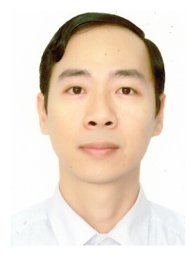 Nhan Nguyen合作论文数Van Lang Univ, Fac Mech Elect & Comp Engn, Sch Engn & Technol, 69-68 Dang Thuy Tram St,Ward 13, Ho Chi Minh City 70000, Vietnam2
 Xinchao Liu (刘信超)合作论文数Department of Industrial Engineering, University of Arkansas2
 Ernauli Aprilia合作论文数Alliander NV, Innovat & LiveLab, Arnhem, Netherlands2
 Hwang Youngdeok合作论文数2
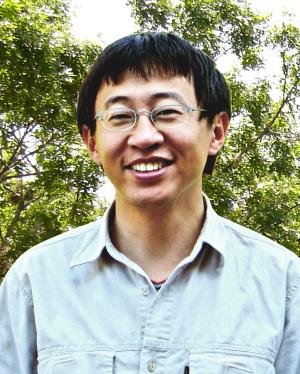 Hongchao Zhang合作论文数Department of Mathematics, Louisiana State University;Center for Computational & Technology, Louisiana State University2
 Aruna Prasad Seneviratne合作论文数University of New South Wales;CSIRO2
 Dhaval Patel合作论文数IBM Research2
 Peter Feldmann合作论文数D. E. Shaw Research2
 Anshul Gupta合作论文数Thomas J. Watson Research Center2
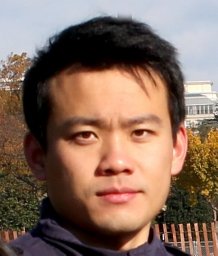 Xiao Liu合作论文数2Ulrich Finkler合作论文数T.J. Watson Center, International Business Machines2
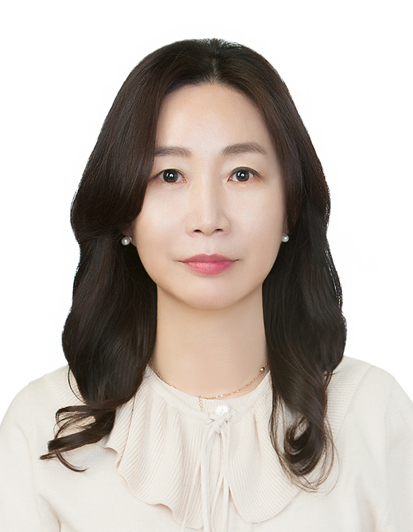 Hyung-jeong Yang合作论文数Department of Artificial Intelligence Convergence, Chonnam National University2
 Surya Shravan Kumar Sajja合作论文数IBM Research Lab2




