We read with interest the paper entitled, "A Retrospective Observational Study of Mangrove Pit Viper Envenomation Presented to Selangor Middle Zone Cluster Hospitals in Malaysia", authored by Chan and colleagues (Toxicon 249, 108086), but have concerns about some of its content. First, the authors claim that: "All patients recruited were diagnosed with mangrove pit viper bite based on either real snake specimen or photographic evidence that enabled species identification clinically (Fig. 1)". However, there is no specific record of the person(s) or expert service who formally provided presumably qualified identification of the specimens and/or images of those assigned responsibility for envenoming. This is an important consideration and should at least be stated under "Limitations", or if there were, stated under "Acknowledgement". The study contains several flaws and misleading assertions, particularly regarding antivenom use and some of the reported clinical observations, and gives an inadequate account of what is published on this interesting species, the recent revisions to its taxonomy, and the clinical effects of envenoming. Below, we have provided comments on the most important of these because they conceivably could impact management of envenomed patients.
Large animals, wild and domestic, should be treated with respect; they may not be astame as they appear. Lions, leopards, hyenas, domestic dogs, jackals, wolves,elephants, rhinos, hippopotamuses, buffaloes, domestic cattle, domestic and wildpigs, ostriches and even rams have been responsible for occasional human deaths. Inrecent months, two campers in Kenya have been seized by the head and severelymauled by hyenas while sleeping in the open. Sharks kill about 50 people each year.
Background: Scorpionism (scorpion sting envenoming) is an endemic public health concern in many Arab Middle Eastern countries. However, our knowledge of the epidemiology of scorpion stings in the West Bank is limited. Aim: To investigate the epidemiology of scorpion stings in 4 districts of the West Bank over a specified period. Methods: We obtained scorpion sting records from the main hospitals in 4 districts of the West Bank for 2012 and 20142020. A total of 2175 cases were analyzed retrospectively using SPSS version 17. Results: The average age and standard deviation (±SD) for both sexes was 24.7±17.5 years (22.7±16.5 and 27.1±18.4 years for males and females, respectively). The median age was 20 years and 47.2% were children under 18 years. Most cases were reported during the summer months, between June and October, with a peak in July–August. By anatomic site, the right hand was the most commonly stung in both sexes, followed by the right foot. The chest, buttocks and scrotum were the least affected body parts. Clinical data were available for 405 cases, in which pain, vomiting and sweating were the most common symptoms. The overall incidence of stings was 26.32 per 100 000 inhabitants per year over the study period of 8 years (59.21–171.67, 95% CI). Conclusion: Scorpion stings are commonly encountered by adults and children in the West Bank. There is a need for awareness among the West Bank populations on how to avoid being stung, to train medical staff to better manage sting cases, and to evaluate the antivenom currently being used by physicians for scorpion stings.
Proatheris superciliaris, the lowland swamp viper, has a limited distribution along lakeshores and rivers in Malawi, Southern Tanzania, and central Mozambique. Its venom is known to be procoagulant. Only five P. superciliaris bites have been reported, all inflicted by captive snakes, and none was fatal. Here we present a case of sudden death following a bite by Proatheris superciliaris in rural Malawi that cannot be attributed to envenoming. A healthy 32-year-old woman was planting rice in a flooded rice paddy field when she suddenly told her sister in a quiet voice that she had been bitten by a snake. She then collapsed face-upwards into the ankle-deep water. She remained motionless while her sister and uncle carried her out of the rice paddy onto dry land a few meters away. The victim did not regain consciousness. Her uncle heard one exhalation but no further breathing. The snake responsible was killed by a friend. Although the venom of this species can cause life-threatening coagulopathy, this woman's death occurred too rapidly to be attributable to envenoming. Only two explanations seem plausible: anaphylaxis, or vasovagal shock triggered by fear. In the present case, the victim died within minutes of the bite, closely observed by her anxious relatives, but showed no features of anaphylaxis. In Malawi, as in much of sub-Saharan Africa, many people are reportedly terrified of snakes, believing that bites by almost any species can cause rapid death. In this case, death occurred less than 2 min after a bite from Proatheris superciliaris. We believe that the cause of death was most likely a severe vasovagal attack, in response to the fear and pain of the snakebite that triggered vasodilatation, bradycardia, and hypotension leading to cardiac arrest.
The Samar cobra, Naja samarensis Peters, 1861 is one of the World Health Organization's category I venomous snakes in the Philippines. Although N. samarensis is known to inhabit Eastern Visayas, unlike N. philippinensis in Luzon, no clinical case reports have yet been published in the international literature. No immuno-diagnostic assays have been developed for venomous snakes in the Philippines, even for research purposes. Therefore, identification of the causative snake in hospitals is challenging. In vivo pre-clinical tests using mice showed that locally-produced antivenom raised against N. philippinensis venom ["Purified Cobra Antivenom (PCAV)"] crossneutralised N. samarensis venom. Here, we present five snakebite envenomation cases where causative snakes were confirmed in photos as N. samarensis by an expert local herpetologist. Patients' symptoms and signs varied, from mild to extensive local cytotoxic to systemic neurotoxic envenomation. In one case, venom had been spat into the eye. Out of five patients, two underwent surgical debridement of necrotic tissue at the bite site. One paediatric patient was intubated because of cardiopulmonary arrest. Except for the spitting cobra case, four cases were successfully treated with PCAV and supportive management. These are the first clinical case reports of confirmed N. samarensis envenomation.
There is increasing recognition of the public health importance of snakebite envenoming. Worldwide annual incidence is likely to be 5 million bites, with mortality exceeding 150 000 deaths, and the resulting physical and psychological morbidity leads to substantial social and economic repercussions. Prevention through community education by trained health workers is the most effective and economically viable strategy for reducing risk of bites and envenoming. Clinical challenges to effective treatment are most substantial in rural areas of low-resource settings, where snakebites are most common. Classic skills of history taking, physical examination, and use of affordable point-of-care tests should be followed by monitoring of evolving local and systemic envenoming. Despite the profusion of new ideas for interventions, hyperimmune equine or ovine plasma-derived antivenoms remain the only specific treatment for snakebite envenoming. The enormous interspecies and intraspecies complexity and diversity of snake venoms, revealed by modern venomics, demands a radical redesign of many current antivenoms.
Despite the wide distribution of the Persian false-horned viper (Pseudocerastes persicus) in the Middle East, few identified bites have been reported. A 33-year-old herpetologist bitten on the hand by Pseudocerastes persicus in Kerman Province, Southeastern Iran, developed local pain and extensive swelling with mild non-specific systemic symptoms and minimal laboratory evidence of systemic envenoming.
A limited number of studies have investigated the clinical characteristics of snakebite envenomation by exotic (non-native) snakes in Japan. This study reviewed the literature to determine the status and risk of bites by exotic pet snakes in Japan. We reviewed reports of snakebite due to exotic snakes in Japan published between 2000 and 2022, excluding reports of bites by snakes native to Japan, such as Gloydius blomhoffii, Rhabdophis tigrinus, and Protobothrops flavoviridis. During the study period, 11 exotic snakebites were recorded, involving 11 species. The majority of those bitten (10/11 cases) were male, all cases were hand injuries, and there were no fatalities. The snakes responsible belonged to the Colubridae (4/11 cases), Viperidae (4/11 cases), and Elapidae (3/11 cases) families. Cases of envenomation by G. brevicaudus, Bungarus candidus, and Dendroaspis angusticeps were of particular interest. Ten of the eleven patients developed local cytotoxic signs, and three developed "compartment syndrome," in which the surgeons performed decompressive incisions. Two bites from elapid snakes and one from a viperid snake resulted in respiratory failure. Antivenom was given in two cases. Complications were observed, such as acute kidney injury, rhabdomyolysis, coagulopathy, and residual dysfunction of the affected finger. Emergency rooms should be prepared to manage patients who have been bitten by exotic snakes, even though the number of reported cases is not high in Japan. Initial stabilization of patients is crucial, before a definitive diagnosis is made, as with native snakebite envenomation. Finger bites are reported in most cases, which may result in functional impairment of the fingers. In order to collect more comprehensive patient data in Japan, a reporting system for all snakebite envenomations should be considered.
Snakebite is a relatively common health condition in Iran with a diverse snake fauna, especially in tropical southern and mountainous western areas of the country with a plethora of snake species. The list of medically important snakes, circumstances and effects of their bite, and necessary medical care require critical appraisal and should be updated regularly. This study aims to review and map the distributions of medically important snake species of Iran, re-evaluate their taxonomy, review their venomics, describe the clinical effects of envenoming, and discuss medical management and treatment, including the use of antivenom. Nearly 350 published articles and 26 textbooks with information on venomous and mildly venomous snake species and snakebites of Iran, were reviewed, many in Persian (Farsi) language, making them relatively inaccessible to an international readership. This has resulted in a revised updated list of Iran's medically important snake species, with taxonomic revisions of some, compilation of their morphological features, remapping of their geographical distributions, and description of species-specific clinical effects of envenoming. Moreover, the antivenom manufactured in Iran is discussed, together with treatment protocols that have been developed for the hospital management of envenomed patients.
Differential diagnosis of fevers?, Fever without localizing features?, Sepsis?, Cancer?, General rules of cancer management?, Rheumatoid arthritis?, Osteoarthritis?, Systemic lupus erythematosus?, Typhoid and paratyphoid fevers?, Rickettsioses?, Bartonella?, Ehrlichia?, Coxiella?, Relapsing fevers?, Leptospirosis?, Brucellosis?, Plague?, Melioidosis?, Anthrax?, African trypanosomiasis?, American trypanosomiasis?, Visceral leishmaniasis (kala-azar)?, Infectious mononucleosis?, Measles?, Arboviruses and zoonotic haemorrhagic fever viruses , Ebola and Marburg virus diseases, Crimean-Congo haemorrhagic fever, Rift Valley fever, Lassa fever, Hantavirus infections, Severe fever and thrombocytopenia, Zika virus, Japanese encephalitis , Dengue virus, Yellow fever, West Nile virus , Kyasanur Forest Disease, Chikungunya, Ross River fever, O'nyong nyong
The medical risks of representative nonfront-fanged colubroid snakes (NFFCs) were assessed by critical review of selected cases of bites published from 1875 to 2021. Some previously unpublished cases personally managed by or communicated to one or more of the authors were also included. Using patient-centered quality of evidence criteria, the reviewed cases were ranked A–D. The cases containing sufficient quality information allowing analysis involved approximately 130 taxa, of which only around 32 inflicted medically significant bites. A number of these received low-quality evidence rankings because of numerous flaws and pitfalls in the reports. The majority of these cases involved insignificant or mild local effects (puncture wounds, abrasions, lacerations, limited bleeding, and mild edema). A small number of reports described bites producing moderate local effects that occasionally resulted in persistent symptoms. The life-threatening risks of colubrine genera such as Dispholidus typus and Thelotornis spp. (African bird, twig, tree, or vine snakes) and that of natricids, such as three taxa of Rhabdophis (keelbacks), are well established by clear clinical evidence. Bites from these species cause consumptive coagulopathy and hemorrhagic diathesis, complicated in some cases by acute renal injury. In some cases perpetuated in the literature, fatal consequences of bites inflicted by Tachymenis peruviana (Peruvian slender snake), Philodryas olfersii (Lichtenstein's or South American racer), Oligodon arnensis (banded kukri snake), or Xenodon severus (Amazon false fer-de-lance) were implied without providing any specific information or reasonable clinical evidence supporting these outcomes. Brown tree snakes (Boiga irregularis) have been involved in a large number of bites, but the precise etiology of the serious clinical effects in a few pediatric patients remains unclear. Although there is a verified case of a Malpolon monspessulanus (Montpellier snake) bite causing cranial nerve palsies, there is a very limited number of evidence-based cases on which to evaluate the risks posed by these snakes. Isolated reports of bites by several species of NFFCs have described aberrant effects that were very likely due to alternative etiologies other than the snakebite. Speculation regarding the possible roles of toxins found in oral secretions of nonvenomous lizards (several species of varanids, anguids, agamids, and iguanids) that would support its use as “venom” should be accompanied by nonsensationalist evidence of biological use, e.g., use in acquisition of prey (unlikely) or a defensive role. To date, there is no evidence of medical importance or significance of any saurian oral secretion other than those of the venomous helodermatid lizards, the Gila monster (Heloderma suspectum), and any of the four species of beaded lizards (e.g., Heloderma horridum). Several published cases purporting the life-threatening or even fatal effects of bites by varanid lizards (principally, the Bengal monitor, V. bengalensis, and the desert monitor, V. griseus) have serious flaws such as: limited or no consideration of differential diagnoses that are more likely causes for the described clinical syndrome, absence of formal medical review, and/or insufficient/poor quality clinical evidence. Further consideration of so far unsupported clinical assignment of serious medical risks to these varanids requires very carefully documented, verifiable evidence including formal identification of the envenoming species. Although there is limited information about the epidemiology of bites by most NFFCs, analyses of larger series of documented bites by some species (e.g., the South American racers, P. olfersii and P. patagoniensis, as well as the brown tree snake, B. irregularis) have yielded some significant associations between specific factors/circumstances, and the occurrence of medically significant bites by these species, while other series (e.g., bites by the Pampas snake, Tomodon dorsatus) have reinforced the medical insignificance of bites by other species. Presuppositions about snakes, the effects of snakebites, and individual psychiatric tendencies can significantly impact the victims' response to NFFC bites.
 Sornchai Looareesuwan合作论文数50Re Phillips合作论文数Nuffield Department of Clinical Medicine, University of Oxford43Rdg Theakston合作论文数41
 Nicholas White合作论文数Faculty of Tropical Medicine, Mahidol University41M.J. Warrell合作论文数36White Julian合作论文数32P Chanthavanich合作论文数27
 David Lalloo合作论文数Liverpool School of Tropical Medicine27
 R David G Theakston合作论文数University of Liverpool26Scott A. Weinstein合作论文数26
 José María Gutiérrez合作论文数Clodomiro Picado Institute, Universidad de Costa Rica;Faculty of Microbiology, Universidad de Costa Rica22Daniel E. Keyler合作论文数19S Naraqi合作论文数18Peh Chen Au合作论文数18Aj Trevett合作论文数17
 Michael Eddleston合作论文数Centre for Cardiovascular Science, The University of Edinburgh;Centre for Pesticide Suicide Prevention, The University of Edinburgh16Juntra Karbwang合作论文数16Abdulrazaq G. Habib合作论文数John Radcliffe Hospital, University of Oxford16
 Khin Thida Thwin合作论文数15Alfred Sam合作论文数15A D Bryceson合作论文数14C Viravan合作论文数14Harrison Robert A合作论文数14RA HUTTON合作论文数14David J Williams合作论文数13
 Juan José Calvete合作论文数Evolutionary and Translational Venomics Laboratory, Instituto de Biomedicina de Valencia, Consejo Superior de Investigaciones Cientificas13R.D.G. Theakston合作论文数13E.H.O. Parry合作论文数13Mahmood Mohammad Afzal合作论文数12Gavin Laing合作论文数12John D. Firth合作论文数11AS KAMIGUTI合作论文数11PL PERINE合作论文数11W Supanaranond合作论文数10
 Myat Thet Nwe合作论文数10Davidson N M合作论文数10May Ho合作论文数10JLC Cardoso合作论文数9FOS FRANCA合作论文数9Hm Pope合作论文数9Edwards G合作论文数9D. Bunnag合作论文数9
 M.H.R Sheriff合作论文数9C. A. Ariaratnam合作论文数9Hui Fan合作论文数8
 Timothy Cox合作论文数Department of Medicine, University of Cambridge;Sidney Sussex College, University of Cambridge8
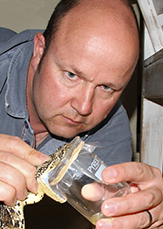 Wolfgang Wüster合作论文数Molecular Ecology and Evolution at Bangor, School of Natural Sciences, Bangor University8
 Brian Greenwood合作论文数Department of Disease Control, London School of Hygiene and Tropical Medicine;Faculty of Infectious and Tropical Diseases, London School of Hygiene and Tropical Medicine8




