This paper proposes a simple method for assessing author similarity based on the disciplines of citing articles as a complementary approach to more traditional author co-citation analysis. Sixty prolific authors from three allied disciplines are compared using multidimensional scaling and cluster analysis. Distinct and coherent clusters emerge based on disciplines.Cet article propose une méthode simple pour évaluer les similarités d’auteurs. Elle s’appuie sur les disciplines de citation d’articles comme approche complémentaire à l’analyse plus traditionnelle des co-citations d’auteur. Soixante auteurs prolifiques provenant de trois disciplines connexes sont comparés en utilisant le positionnement multidimensionnel et le regroupement hiérarchique. En émergent des groupements distincts et cohérents sur la base des disciplines.
Information literacy (IL) is a set of abilities that enable individuals to recognise when information is needed and to subsequently locate, evaluate, and utilise the required information. It enables people to interpret and make informed judgments as users of information sources, and also to become producers of information in their own right and thereby more active participants in society. Information literacy is the basis of lifelong learning. It is common across all disciplines, all learning environments, and all levels of education. This study, which was conducted among academic and library staff and students at the University of Zululand (Unizul) and the Durban University of Technology (DUT) in KwaZulu-Natal (SA) and Mzuzu University (Mzuni) in Malawi, reports on the offering and teaching of IL in these institutions of higher learning. The findings reveal that IL is offered and taught as a module at Unizul and as a course at Mzuni by their respective Departments of Library and Information Science, though not across all the faculties. At DUT, IL is only offered and taught by the library during the Library Orientation programme, campus wide. Problems encountered in the teaching and learning of IL include inadequate time, lack of computer skills, inadequate venues and equipment for teaching and students' practicals, and lack of cooperation. The study recommends that the module or course of IL should be incorporated into the university curricula of all three institutions, and the DUT should introduce a dedicated module or course in information literacy and embed it into the students' course materials. The three universities should also advertise to academic staff, students and decision makers the importance of having modules or courses in IL.
Since the ending of apartheid in 1994, the South African government has made big efforts to involve non-white South Africans in many activities formerly denied to them, or severely restricted. We wondered how much success it had had in increasing the participation of blacks, coloureds and Indians in research, and in which fields they were working. We did this through an analysis of the surnames of South African scientists, characterising them as English, Afrikaans or other White on the one hand, or Black African, Coloured or Indian. We looked at South African papers in the Web of Science for 1988-89, 1998-99 and 2008-09, and found that the non-white fractional presence (as a proportion of the total with classified names) rose from 10% to 14% and then jumped to 23% in 2008-09, with black Africans accounting for more than half of the non-white total. Non-whites were most prominent in chemistry, physics and maths (>22%) and least in earth & space, and biology (~12%). They collaborated somewhat less than white scientists with Europe, but much more with the USA, and Africa – especially the black South Africans. South Africans also now publish less in national and more in international journals.
This book focuses on the usefulness of alerting services for LIS professionals. It is a valuable and useful resource as it draws attention to the new and existing current awareness services which can be easily retrieved for updating ones information data banks. The availability of these services does not always mean that they are exploited for advancement of knowledge either by individuals or groups. This book provides a variety of definitions of current awareness services by several authors.
Search engines in the web are the only tools to explore the content in the web for most of the users. Increasingly, users rely on search engines and in most cases the retrieval depends solely on the performance of search engines. Hence newer research is being poured in to the web search mechanism. Thus, this book on web search engine research is a significant tool to activate the thrust areas of research in the web world.
The purpose of this study is to present the results of an empirical study to assess records management practices within government in the Kingdom of Swaziland. The study investigated types of records generated and how they are used; records organization and retrieval; suitability of records storage facilities; records disposal, preservation and maintenance; and training needs of records/registry staff. Methodological triangulation was used to carry out the study. Data was collected through survey questionnaire and observations. Responses to the open-ended questions were scanned to determine words and phrases used by the respondents and analyse them thematically. Statistical Package for Social Sciences (SPSS) version 12.0 for Windows was used to analyse quantitative data. Swaziland government does not have in place a records management programme. As a result the provisions of Swaziland National Archives Act No. 5 of 1971, and ISO 15489 standards for records management are hardly complied with. Across all government ministries, there is no uniform classification and filing system. Besides, a system of records appraisal and disposal does not exist. Records are vulnerable to loss because of lack of adequate measures for their care and safe custody. The study was limited to Mbabane the capital, and seat of government operations. Future research endeavours could extent to cover regional records management departments as well as the private sector from which best practices could be obtained to inform sound records management in government. Without sound records management, the government of Swaziland cannot be accountable and service delivery to citizens is hampered. This article is based on an empirical study that was carried out in 2011 to assess records management in the Kingdom of Swaziland government. The authors recommend the enactment of records management programme to enhance accountability, transparency and integrity in government.
Realizing the value of web content classification, the book, “Automatic Identification of Genre in Web pages, has been published. This serves as a compendium to genetically codify web content. Marina Sanitini in the book with the help of 12 chapters has provided a focus comprehensively on newer aspects of web content study by looking at the taxonomy as well as other the origin of texts. This way of looking at the web content naturally enables the user to gain rich understanding the content.
Today's online experience has literally added a new dimension to our information seeking activities, presenting users with a vast array of options. A considerable amount of information has migrated from the print world and is now available electronically. Thus, a lot of people immediately associate the World Wide Web (WWW) with information and its related activities. This association partly prompted this study of the Web-based information-seeking behaviour of students and staff at the University of Zululand (rural-based) and the Durban University of Technology (urban-based). The selected institutions were assumed to be at different levels of development because of the country's history and the institutions' locations. Both quantitative and qualitative research methodologies were employed in a survey. The main research instrument was a questionnaire, supported by limited interviews. The results show that the Web is a platform that people in academia have come to rely on, although only a few of its many channels are used significantly. A number of challenges were identified, chief among them being connectivity problems. Bandwidth was particularly problematic and made worse by the two institutions' large student populations. Relevant infrastructure (computer laboratories, computers, etc.) seemed available, although inadequate. The study recommends comprehensive training programs that address the skills' deficiencies noted. It is also necessary to institute mechanisms that improve both physical and intellectual access to Web resources.
This article presents challenges facing higher education in South Africa and how knowledge management can be applied to ameliorate the situation. Some of these challenges include internal and external pressures for accountability and transparency in the management of the institutions; declining state subsidies; stiff competition from global counterparts; low graduate throughput; declining enrolments; inadequate facilities (e.g. space, ICTs and equipment); ill-prepared graduates for the job market; limited partnership with industry and government; brain drain; bureaucracy and general poor service delivery. The authors submit that South African universities have largely not embraced knowledge management practices and argue that KM integration within the universities’ strategic processes and operations can help address the challenges facing them. The article is largely based on authoritative secondary and primary sources complemented by the authors’ experiences working within university environments in Southern Africa.
The paper examines selected natural sciences research output in South Africa, with special reference to research projects, theses and dissertations in order to determine the trends and nature of capacitation of national research in the selected disciplines in the country. Relevant data was extracted from the South African Bibliographic and Information Network (SABINET)-hosted Current and Completed Research (C&CR) database using subject codes as well as subject keywords. The study reveals that the trends of capacitating national research in natural sciences in South Africa follows a mixed pattern of growth, biology is the most researched subject/discipline, co-supervision of research projects in South Africa is minimal, universities are the main centres for capacitating national research, interdisciplinary and multidisciplinary research is visible, research capacity building is largely at the level of Masters degree and English language is the most commonly used language of capacitation of national research. In conclusion, we argue, among other recommendations, that there is a need to convert the completed research projects (that is, technical reports, dissertations, theses and so on) into publishable research articles for wider dissemination of research findings.
The purpose of this study was to conduct a quantitative analysis of Public Health research output in selected African countries. The comparative analyses for 13 countries, namely; Algeria, Botswana, Ghana, Kenya, Lesotho, Namibia, Nigeria, South Africa, Swaziland, Tanzania, Uganda, Zambia, and Zimbabwe for the period of 1995-2005. The data was collected by using Dialog database on Public Health to identify the literature distribution by country descriptor. Microsoft Excel was used to analyse the data for the production distribution throughout the period of study. A total of 50 874 documents were collected from the respective countries for the period of the study. The study gives both a quantitative and qualitative analysis of development and growth in the countries under study in the field of public health. South Africa produced most publications 14690(29%), much ahead of all other African countries. Nigeria 6835 (13%) is the next country that produced much in the area of public health. Kenya 5890 (11.6%), Tanzania 5266 (10.2%) and Uganda 5167 (10.2%), were following in their research output in this area.
That society benefits from domestic and international science is undisputed - scientific development not only feeds improvements in health care, agriculture and higher education, but also raises public awareness and spurs technological developments and innovations, thereby encouraging sustainable production and economic competitiveness. But how can we monitor and gauge this complex process towards attaining a better quality of life and help bridge the divide between developing and developed countries? This calls for a bird's-eye view of science, a view based on a wide range of measurements of science, using as many indicators and reliable sources of information as possible. National governments, like that of South Africa, as well as intergovernmental agencies such as UNESCO and WHO, routinely collect comparative statistical information about how well countries are performing in science. The qualitative and quantitative evaluation of scientific production is also a common need in the entire research world in order to measure the rise and fall of research outputs (Jacobs, 2006). Most of the time, statistics relate to 'inputs', especially expenditures and human resources. There are still very few comprehensive information sources and reliable statistics dealing with research outputs and impacts on society. Essentially, metrics such as Informetrics, bibliometrics scientometrics and webometrics all deal with indicators based on the output of scientific publications (Tijssen, 2005). All these terms are inter-related and at times quite confusing (Ocholla, 2007). The term (informetrie) was coined by Nacke (1979) and is the study of quantitative aspects of information (Tague-Sutcliffe, 1992). This includes the production, dissemination and use of all forms of information, regardless of its form or origin. As such, informetrics encompasses the fields of scientometrics, which studies quantitative aspects of science; webometrics, which looks into quantitative aspects of the World Wide Web; and bibliometrics, which deals with the quantitative aspects of recorded information.
This study is the part of an ongoing research which presents the mainstream scientific output and collaboration of five research universities of South Africa over a 9 year period between 1995 and 2003. Since a part of this research has already been published in 2006 where the main emphasis was on publication output, this paper concentrates more on collaboration. The paper discusses the distribution of publications by institutions, index of specialization, collaboration and patterns of co-authorship. The results show that South African authors collaborated more frequently with international authors (73.99%) than with national authors (26.01%). This was confirmed statistically at a confidence level of p-value <0.025. A further non-parametric chi-square statistical analysis illustrated that there are significant differences in the proportion of co-authorship amongst the five institutions (p-value<0.005). The results obtained shows that there is a sharp decline in publication output from 1995 until the end of 1998 and then again from 2003. The decrease in publication output is also an indication of the lack of collaborative research by South African scientists.
Increasingly web applications found to impact on numerous environments. The web log data offer more promises and particularly application of the genetic algorithms is significant as it represents the relations between different data components. We have used simple genetic algorithms to log files and we found that the preliminary results are more promising there by open more avenues for future research.
This study presents the share of 5 most productive South African institutions for the main stream scientific out put covering the 10 year periods of 1995-2004. This paper discusses the distribution of publications by institutions, Index of specialization, collaboration and pattern of co-authorship. The result shows that South African authors collaborate more frequently with international authors with a percentage of (73.99%) than did so for national collaboration which amount to (26.01%). This was confirmed statistically at the confidence level of P-value 0.025. A further non-parametric chi-square statistical analysis illustrated that there are significant differences in the proportion of co-authorship among the 5 institutions (p-value0.005).
This paper reports the preliminary findings on South Africa's most productive authors, journals and research universities. The paper makes use of Scientometric techniques to assess the quantity and quality of science research papers published by researchers in various journals. The results show that four of the most cited authors represent 40.80% of the total count. The citations per paper for these authors are Bilic N (16.40), Michael JP (6.36), Sacht C (6.00), and Marques HM (4.60). The majority of citations are found within Chemistry (37.0%), followed by Physics (26.0%), Medicine (7.40%) and Biology (7.40%). Analysis of 18 journals indexed in the Journal Citation Report OCR), revealed that only the South African Journal of Geology had an impact factor above one. The journal with the largest numbers of original papers was the South African Journal of Science with 89 articles and 1397 total citations in 2003. Statistical analysis, with Pearson's correlation coefficient (p-value <0.05), indicated significant correlation between journal productivity and citation frequency. as well as between citation frequency and immediacy index.
 S. Sarasvady合作论文数3
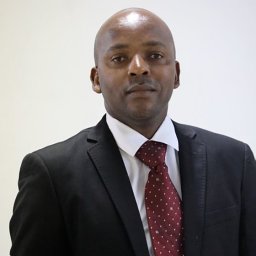 Vusi Tsabedze合作论文数Computer Science, University of Swaziland2
 Pit Pichappan合作论文数Digital Informat Res Labs, Luton, Beds, England2
 Peter Ingwersen合作论文数Royal School of Library and Information Science, University of Copenhagen2
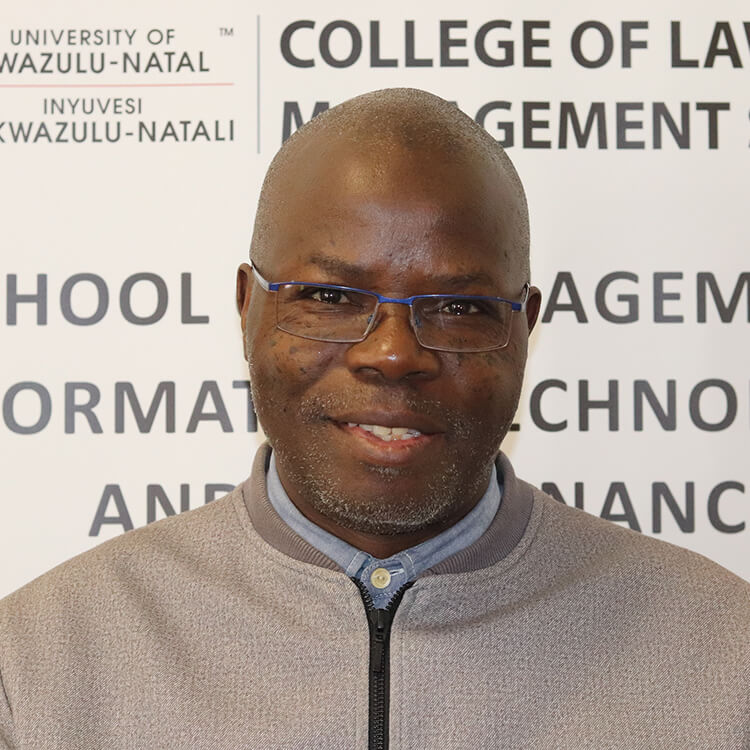 Stephen M Mutula合作论文数School of Management, IT and Governance, University of KwaZulu-Natal2
 George Chipeta合作论文数Dept Informat Sci, Mzuzu Univ1Janneke Mostert合作论文数1Snehal Kamalapur合作论文数Padmashree Dr. D. Y. Patil Inst. of Eng. &Technol.;c;Padmashree Dr. D. Y. Patil Inst. of Eng. & Technol.1
 Grant Lewison合作论文数School of Cancer & Pharmaceutical Sciences, King's College London1Neeta Deshpande合作论文数1
 Ntando Nkomo合作论文数1
 Omwoyo Bosire Onyancha合作论文数Department of Library;Information Science;University of Zululand;Department of Library|Information Science, University of Zululand1
 Dennis Ngo'ng' Ocholla合作论文数Department of Library;Information Science;University of Zululand;Department of Library|Information Science, University of Zululand1




