In situ x-ray diffraction at both the National Ignition Facility and Omega-EP Laser Facility has been utilized to determine the crystallographic state of ramp and shock-ramp compressed gold up to 1.2 TPa (1 TPa=10 Mbar=10×10^{6} atmospheres). In this Letter, we describe a series of experiments that explore a variety of pressure-temperature states in Au, accessed using tailored laser pulses. We find that the ambient pressure face-centered-cubic phase is stable under ramp compression to pressures of at least 1 TPa where the body-centered-cubic phase is observed simultaneously.
We show results from first-principles calculations for cerium at very high compressions. These reveal a most remarkable behavior in a material; depending on atomic volume, cerium adopts three distinct face-centered cubic (fcc) phases driven by different physical mechanisms. The two well-known a and phases are vigorously debated in the literature, but we focus on the a phase as a metal with delocalized character of the 4f electron. The ultimate high compression fcc phase, here named ω, is driven partly by electrostatics. Our density-functional theory (DFT) study excellently reproduces the experimentally known compression behavior of cerium up to a few Mbar but goes beyond those pressures with structural transitions to tetragonal, hexagonal, and cubic (fcc) phases occurring before 100 Mbar (10000 GPa or 10 TPa). The 4f-electron contribution to the chemical bonding is shown to rule phase transitions and compressibility. The change of 4f occupation nicely explains the pressure dependence of the structural axial ratio in the tetragonal phase. At very high pressure, structures known at low pressures return because of band broadening, electrostatic ion repulsion, and an increase in hybridization between states that under normal conditions can be considered core (atomic like) states and the valence-band states.
Rhenium, Re, is used as an x-ray shield in laser-driven material property experiments, where its strength at high pressures can be a consideration in the design, modeling, and interpretation. We present a Steinberg-Guinan (SG) strength model for Re, tailored for use in high-pressure dynamic loading simulations. Parameters for the SG model were derived from recent atom-in-jellium predictions of the shear modulus under compression and experimental data on work-hardening from rolled-bar studies. The ambient shear modulus was fixed to the measured value, and the pressure-hardening parameter was fitted to the atom-in-jellium predictions up to 1 TPa. The shear modulus model was still a reasonable fit beyond 25 TPa. Thermal softening was estimated from the thermal expansivity and bulk modulus. Work-hardening parameters were extracted by fitting the model to Knoop microhardness measurements under known plastic strains. The resulting model captures the observed hardening behavior but predicts significantly lower flow stresses at high pressures than diamond anvil cell observations suggest, implying that Re may exhibit enhanced strength at megabar pressures. These results provide a basis for improved modeling of strength in Re under extreme conditions and suggest directions for further theoretical and experimental investigation.
As part of a program to measure phase transition timescales in materials under dynamic compression, we have designed new x-ray imaging diagnostics to record multiple x-ray diffraction measurements during a single laser-driven experiment. Our design places several ns-gated hybrid CMOS (hCMOS) sensors within a few cm of a laser-driven target. The sensors must be protected from an extremely harsh environment, including debris, electromagnetic pulses, and unconverted laser light. Another key challenge is reducing the x-ray background relative to the faint diffraction signal. Building on the success of our predecessor (Target Diffraction In Situ), we implemented a staged approach to platform development. First, we built a demonstration diagnostic (Gated Diffraction Development Diagnostic) with two hCMOS sensors to confirm we could adequately protect them from the harsh environment and also acquire acceptable diffraction data. This allowed the team to quickly assess the risks and address the most significant challenges. We also collected scientifically useful data during development. Leveraging what we learned, we recently developed a much more ambitious instrument (Flexible Imaging Diffraction Diagnostic for Laser Experiments) that can field up to eight hCMOS sensors in a flexible geometry and participate in back-to-back shots at the National Ignition Facility (NIF). The design also allows for future iterations, such as faster hCMOS sensors and an embedded x-ray streak camera. The enhanced capabilities of the new instrument required a much more complex design, and the unexpected issues encountered on the first few shots at NIF remind us that complexity has consequences. Our progress in addressing these challenges is described herein, as is our current focus on improving data quality by reducing x-ray background and quantifying the uncertainties of our diffraction measurements.
The Flexible Imaging Diffraction Diagnostic for Laser Experiments (FIDDLE) is a new diagnostic at the National Ignition Facility (NIF) designed to observe in situ solid-solid phase changes at high pressures using time resolved x-ray diffraction. FIDDLE currently incorporates five Icarus ultrafast x-ray imager sensors that take 2 ns snapshots and can be tuned to collect X-rays for tens of ns. The platform utilizes the laser power at NIF for both the laser drive and the generation of 10 keV X-rays for ∼10 ns using a Ge backlighter foil. We aim to use FIDDLE to observe diffraction at different times during compression to probe the kinetics of phase changes. Pb undergoes two solid-solid phase transitions during ramp compression: from face centered cubic (FCC) to hexagonal close packed (HCP) and HCP to body centered cubic (BCC). Results will be reported on some of the first shots using the FIDDLE diagnostic at NIF on ramp compressed Pb to a peak pressure of ∼110 GPa and a single undriven CeO2 calibration shot. A discussion of the uncertainties in the observed diffraction is included.
We report measurements of the compressibility of ramp compressed tantalum to a final stress of 2.3 TPa corresponding to threefold volumetric compression. Using these data, we extended the experimental constraint on the Ta cold compression curve by an order of magnitude in pressure. By combining the resulting data with previous measurements of shock compression and ambient pressure heating, we construct an experimentally bounded and thermodynamically consistent equation of state model for Ta which has 2% uncertainty in pressure at 1 TPa. We therefore propose Ta as an in situ pressure scale for laser-heated static compression experiments which were recently able to reach terapascal pressures and thousands of degrees Kelvin. Our new equation of state of Ta is experimentally constrained at extreme pressures and temperatures relevant to a wide range of planetary interiors and will allow for more accurate comparison between experimental measurements and theory at extreme conditions.
This report details the analyses and related uncertainties in measuring longitudinal-stress-density paths in indirect laser-driven ramp equation-of-state (EOS) experiments [Smith et al., Nat. Astron. 2(6), 452-458 (2018); Smith et al., Nature 511(7509), 330-333 (2014); Fratanduono et al., Science 372(6546), 1063-1068 (2021); and Fratanduono et al., Phys. Rev. Lett. 124(1), 015701 (2020)]. Experiments were conducted at the National Ignition Facility (NIF) located at the Lawrence Livermore National Laboratory. The NIF can deliver up to 2 MJ of laser energy over 30 ns and provide the necessary laser power and control to ramp compress materials to TPa pressures (1 TPa = 10 × 106 atmospheres). These data provide low-temperature solid-state EOS data relevant to the extreme conditions found in the deep interiors of giant planets. In these experiments, multi-stepped samples with thicknesses in the range of 40-120 µm experience an initial shock compression followed by a time-dependent ramp compression to peak pressure. Interface velocity measurements from each thickness combine to place a constraint on the Lagrangian sound speed as a function of particle velocity, which in turn allows for the determination of a continuous stress-density path to high levels of compressibility. In this report, we present a detailed description of the experimental techniques and measurement uncertainties and describe how these uncertainties combine to place a final uncertainty in both stress and density. We address the effects of time-dependent deformation and the sensitivity of ramp EOS techniques to the onset of phase transformations.
X-ray diffraction is a powerful measurement technique for determining material properties, and it is now possible to perform these experiments at pressures exceeding 1 TPa [Rygg et al., Rev. Sci. Instrum. 91, 043902 (2020)] at the National Ignition Facility (NIF). The x-ray source for these experiments is the quasi-monochromatic Heα emission from metal foils heated to multi-keV temperatures. A critical aspect for understanding the sample's thermodynamic state is the amount of heating caused by absorption of the probe x-rays. In this work, we characterize the performance of the Ge foil x-ray source over more than 60 NIF x-ray diffraction experiments. We use this information to constrain the level of diffraction sample heating from the x-ray source and discuss the impact on the thermodynamic state.
The principal Hugoniot of carbon, initially diamond, was measured from 3 to 80 TPa (30 to 800 million atmospheres), the highest pressure ever achieved, using radiography of spherically-converging shocks. The shocks were generated by ablation of a plastic coating by soft x-rays in a laser-heated hohlraum at the National Ignition Facility (NIF). Experiments were performed with low and high drive powers, spanning different but overlapping pressure ranges. The radius-time history of the shock, and the profile of mass density behind, were determined by profile-matching from a time-resolved x-ray radiograph across the diameter of the sphere. Above 50 TPa, the heating induced by the shock was great enough to ionize a significant fraction of K-shell electrons, reducing the opacity to the 10.2 keV probe x-rays. The opacity and mass density were deduced simultaneously using the constraint that the total mass of the sample was constant. The Hugoniot and opacity were consistent with density functional theory calculations of the electronic states and equation of state (EOS), and varied significantly from theoretical Hugoniots based on Thomas-Fermi theory. Theoretical models used to predict the compressibility of diamond ablator experiments at the NIF, producing the highest neutron yields so far from inertial confinement fusion experiments, are qualitatively consistent with our EOS measurements but appear to overpredict the compressibility slightly. These measurements help to evaluate theoretical techniques and constrain wide-range EOS models applicable to white dwarf stars, which are the ultimate evolutionary form of at least 97
Combining an x-ray free electron laser with a high-power laser driver enables the study of equations-of-state, high strain-rate deformation processes, structural phase transitions, and transformation pathways as a function of pressure to hundreds of GPa along different thermodynamic compression paths. Future high repetition-rate laser operation will enable data to be accumulated at >1 Hz, which poses a number of experimental challenges, including the need to rapidly replenish the target. Here, we present a combined shock compression and an x-ray diffraction study on epoxy (50% vol.)-crystalline grains (50% vol.) slurry targets, which can be fashioned into extruded ribbons for high repetition-rate operation. For shock-loaded NaCl-slurry samples, we observe pressure, density, and temperature states within the embedded NaCl grains consistent with observations from shock-compressed single-crystal NaCl.
Carbon is the fourth-most prevalent element in the Universe and essential for all known life. In the elemental form it is found in multiple allotropes, including graphite, diamond and fullerenes, and it has long been predicted that even more structures can exist at pressures greater than those at Earth's core(1-3). Several phases have been predicted to exist in the multi-terapascal regime, which is important for accurate modelling of the interiors of carbon-rich exoplanets(4,5.) By compressing solid carbon to 2 terapascals (20 million atmospheres; more than five times the pressure at Earth's core) using ramp-shaped laser pulses and simultaneously measuring nanosecond-duration time-resolved X-ray diffraction, we found that solid carbon retains the diamond structure far beyond its regime of predicted stability. The results confirm predictions that the strength of the tetrahedral molecular orbital bonds in diamond persists under enormous pressure, resulting in large energy barriers that hinder conversion to more-stable high-pressure allotropes(1,2), just as graphite formation from metastable diamond is kinetically hindered at atmospheric pressure. This work nearly doubles the highest pressure at which X-ray diffraction has been recorded on any material.
The discovery of more than 4500 extrasolar planets has created a need for modeling their interior structure and dynamics. Given the prominence of iron in planetary interiors, we require accurate and precise physical properties at extreme pressure and temperature. A first-order property of iron is its melting point, which is still debated for the conditions of Earth's interior. We used high-energy lasers at the National Ignition Facility and in situ x-ray diffraction to determine the melting point of iron up to 1000 gigapascals, three times the pressure of Earth's inner core. We used this melting curve to determine the length of dynamo action during core solidification to the hexagonal close-packed (hcp) structure. We find that terrestrial exoplanets with four to six times Earth's mass have the longest dynamos, which provide important shielding against cosmic radiation.
The phase diagram of sodium chloride (NaCl) under laser shock compression has been studied at Linac Coherent Light Source (LCLS) at the x-ray free-electron laser facility. Both solid–solid (B1 → B2) and solid–liquid (B2 → liquid) transitions have been observed along the Hugoniot over nanosecond time scales. By combining structural measurements through in situ x-ray diffraction, pressure determination through velocimetry, and a thermal equation-of-state, the shock-compressed data are used to constrain the phase diagram of NaCl. Transformation into the B2 phase is found to occur at 28(2) GPa, and B2–liquid coexistence is observed between 54(4) and 66(6) GPa, with near full melt at 66(6) GPa. Late-time pressure release from an initial shocked B2-state results in a B2 → B1 back transformation. Our results show agreement with previous static compression data, suggesting that the time scale for melting is very rapid and that equilibrium states in NaCl are being accessed over nanosecond time scales. A multiphase equation-of-state description of NaCl incorporated into a one-dimensional hydrocode is used to interpret pressure and temperature evolution over these rapid time scales.
 Jon H. Eggert合作论文数Lawrence Livermore National Laboratory63
 James Mcnaney合作论文数59
 Amy Lazicki合作论文数Physics Division, Lawrence Livermore National Laboratory;Condensed Matter and Materials Division, Lawrence Livermore National Laboratory58
 Gilbert Collins合作论文数Department of Mechanical Engineering, Hajim School of Engineering & Applied Sciences, University of Rochester;Department of Physics and Astronomy, School of Arts & Sciences, University of Rochester;University of Oxford;Lawrence Livermore National Security;Imperial College London;Laboratory for Laser Energetics, University of Rochester53
 Dayne E. Fratanduono合作论文数Lawrence Livermore National Laboratory45
 Richard G Kraus合作论文数45
 James Hawreliak合作论文数Lawrence Livermore National Laboratory43
 Andrea Kritcher合作论文数Lawrence Livermore National Laboratory38
 Joseph Nilsen合作论文数Lawrence Livermore National Laboratory37Coppari Federica合作论文数34
 Ray Smith合作论文数Lawrence Livermore National Laboratory34
 Roger W. Falcone合作论文数Graduate School, Department of Physics, University of California, Berkeley33
 Rob Rudd合作论文数Computational Materials Science Group, Lawrence Livermore National Laboratory31
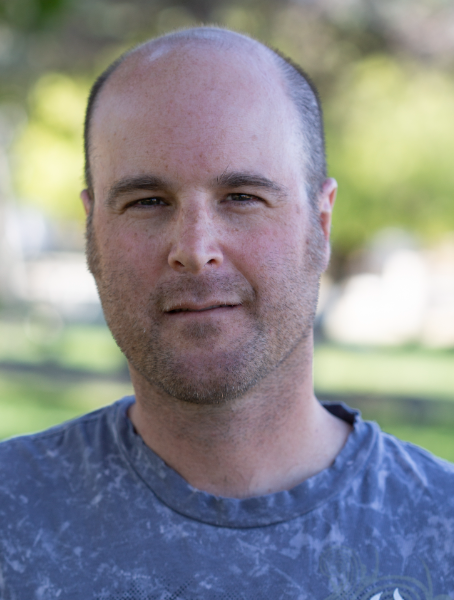 Sébastien Hamel合作论文数Quantum Simulations Group, Department of Energy, Lawrence Livermore National Laboratory31
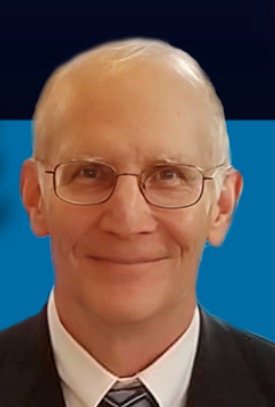 Bruce A. Remington合作论文数Lawrence Livermore National Laboratory30Christopher E. Wehrenberg合作论文数Lawrence Livermore National Laboratory27
 Siegfried Glenzer合作论文数Department of Energy Sciences, Stanford University;SLAC National Accelerator Laboratory, Stanford University;Stanford PULSE Institute, Stanford University27Bachmann B合作论文数Lawrence Livermore National Laboratory26Peter M. Celliers合作论文数Lawrence Livermore National Laboratory, University of California, Davis26
 Dominik Kraus合作论文数Institut für Physik, Universität Rostock24
 Heather D. Whitley合作论文数Lawrence Livermore National Laboratory24
 Shengnian Luo (罗胜年)合作论文数School of Materials Science and Engineering, Southwest Jiaotong University22
 Tilo Doeppner合作论文数Lawrence Livermore National Laboratory22Roberta Mulford合作论文数22
 Justin Wark合作论文数Oxford Centre for High Energy Density Science, Department of Physics, University of Oxford;Trinity College, University of Oxford20
 Shon Prisbrey合作论文数Lawrence Livermore National Laboratory19Cynthia Bolme合作论文数Shock and Detonation Physics Group, Los Alamos National Laboratory19
 Marius Millot合作论文数Lawrence Livermore Natl Lab19
 Lorin X. Benedict合作论文数Division of Physics, Lawrence Livermore National Laboratory19Despina Milathianaki合作论文数Linac Coherent Light Source (LCLS), SLAC National Accelerator Laboratory, Menlo Park, CA 94025, USA.18Gilbert W. Collins合作论文数18
 Hye-Sook Park合作论文数Lawrence Livermore National Laboratory17
 Philip D. Powell合作论文数Department of Physics;University of Illinois;Department of Physics, University of Illinois17
 Phil Sterne合作论文数Lawrence Livermore National Laboratory17
 Ryan Rygg合作论文数Department of Physics and Astronomy, School of Arts & Sciences, University of Rochester;Laboratory for Laser Energetics, University of Rochester17
 Jim Gaffney合作论文数Focused Energy Inc17Thomas Lockard合作论文数16S. Le Pape合作论文数Lawrence Livermore National Laboratory16
 Otto Landen合作论文数Lawrence Livermore National Laboratory15Dennis L. Paisley合作论文数15
 Eric Loomis合作论文数Los Alamos National Laboratory Physics Division15
 Mukul Kumar合作论文数lawrence livermore national laboratory14Athanasios Arsenlis合作论文数14M. G. Gorman合作论文数Lawrence Livermore Natl Lab13Brian Maddox合作论文数Lawrence Livermore National Laboratory13
 Andrew Higginbotham合作论文数School of Physics, Engineering and Technology, University of York13d g braun合作论文数12Neumayer, P.合作论文数12
 Burkhard Militzer合作论文数Departments of Earth and Planetary Science and Astronomy, University of California, Berkeley12




