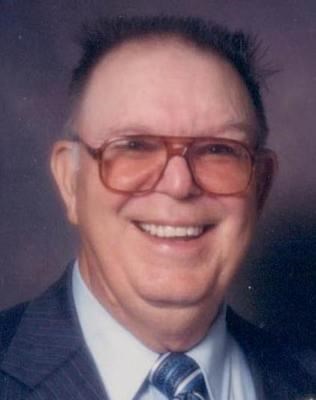
Presents an obituary for Harry C. Triandis (1926 -2019). Harry Charalambos Triandis, universally acknowledged as the father of cross-cultural social psychology as well as a leader of industrial/organizational and attitude research, passed away at his retirement home in Carlsbad, California, on June 1, 2019, in his 93rd year. Harry's academic career began in Montreal, Canada, where he enrolled in the Engineering Program at McGill University. Triandis received his master's degree in commerce from the University of Toronto, and then earned his doctorate in social psychology from Cornell University. He then joined the faculty at the University of Illinois where he remained until retirement in 1997. Early on, Harry realized that cross-cultural research had to employ different methods if the results were to be valid. Valid cross-cultural research, he reasoned, required the involvement of colleagues from the cultures being studied at every step in the process, including instrument design, hypothesis specification and analyses, joint publication, and so on. Thanks to Harry's untiring efforts to demonstrate their effectiveness, they have become standard procedure in cultural research. Harry was a prolific author, publishing over 200 papers, book chapters, and books. His work has been translated into Chinese, Farsi, German, Japanese, Russian, and Spanish and spans 60 years (1955-2015). Harry also pursued three other major funded programs of research. The first led to the publication Variations in Black and White Perceptions of the Social Environment in 1976. In his second program of research, he examined differences between Hispanic and Anglo culture in the context of social concerns about integrating the Hispanic community in the 1980s. His last research program culminated in his book on self-deception that was published in 2009. Harry received numerous accolades and awards for his contributions to cross-cultural and social psychology, some including Award for Distinguished Contributions to International Psychology (1994) and the Otto Klineberg Award from the Society for the Psychological Study of Social Issues to name a few. Harry served as president of six associations or societies of psychology, and his colleagues and students unanimously endorse his status as a world class scholar, but also a world class human being who will be deeply missed in the field of psychology. (PsycInfo Database Record (c) 2021 APA, all rights reserved).
In chapter 25, changes taking place in our global village are evaluated and how intercultural research and training can both take a lead role in creating the changes and helping people to effectively work with the changes are discussed. The role of economic development, social changes, and the Internet are discussed. Following this, some of the theoretical and methodological innovations that are on the horizon are discussed. Some of the topics identified from the chapters in the Handbook are presented here, which include culture theories, cultural story-telling, social network analysis (SNA), perception, and emotional contagion. Finally, a number of research issues that are of concern in developing a science of intercultural training that is not only produces results that are repeatable but only account for significant amounts of variance. Many more can be identified and will emerge in the future. It is hoped that researchers and practitioners will use the ideas presented in the chapters of the Handbook, to guide future theory-based research and practice in the field of intercultural training.
This chapter provides a rationale for this 4th Edition of the Handbook of Intercultural Training. This rationale is situated within a consideration of the impacts of inter-and intra-reginal migration and the impacts on sustainability of broad swathes of the planet. Following that discussion we will present some of the major theories of intercultural training. Lastly we will discuss the structure of the book and provide brief summaries of each chapter.
AbstractConflict between ethnic groups is a problem facing most societies and nation‐states. Many theories have been developed to both explain and predict the phenomenon and to outline ways to reduce the conflict. This entry summarizes the various theories and models of interethnic conflict and assesses the empirical data in support of each.
Warnick and Landis provide an overview of the major models of intercultural relations to serve as a foundation for the subsequent chapters in this text. The reader will gain a greater understanding of how the emerging field of cultural neuroscience can be applied to intercultural relations. Additionally, this chapter offers a brief guide to the book.
Ethnic conflict and racial conflict are phrases often taken to describe the same phenomenon. However, when the usage of these terms in books over time is examined, a different picture emerges. Figure 1.1, taken from the Google search of words in books between 1800 and 2000, shows that neither phrase was in common use before 1900 when “racial conflict” began to appear. The other phrase did not make a significant appearance before 1960. “Racial conflict” peaked about 1970 and then declined.
In memory of Charles E. Osgood's continuing contributions to and pervasive influences in intercultural research and communication – both in contextual theories and application methodologies, this article will summarize his life-long efforts in six ways: First, the development of theoretical foundations in human behavioral and communication processes; Second, the development of semantic technique and its applications; Third, the massive cross-cultural measurements of affective meanings of human conceptions; Fourth, the psycholinguistics research in human verbal behaviors; Fifth, his efforts in inter-ethnic and inter-national conflict resolutions and peace: Sixth, his impact on the theories and methodologies in inter-cultural awareness and trainings. Finally, his continuing contributions far beyond the above six areas are documented in terms of the authors’ own long-time endeavors in scientific research in intra- and inter-cultural communications theories, analytic methodologies, and contemporary substantive social issues, ranging from conflicts, adult intimate relationships, to youth communications and developments. It can be ascertained that Osgood's contributions will continue in both social contexts and academic disciplines as evidenced by his life-long personal contacts in communications with international colleagues and his administrative leadership of the world renowned, interdisciplines-based Institute of Communications Research for over two decades at the University of Illinois.
In memory of Charles E. Osgood's continuing contributions to and pervasive influences in intercultural research and communication – both in contextual theories and application methodologies, this article will summarize his life-long efforts in six ways: First, the development of theoretical foundations in human behavioral and communication processes; Second, the development of semantic technique and its applications; Third, the massive cross-cultural measurements of affective meanings of human conceptions; Fourth, the psycholinguistics research in human verbal behaviors; Fifth, his efforts in inter-ethnic and inter-national conflict resolutions and peace: Sixth, his impact on the theories and methodologies in inter-cultural awareness and trainings. Finally, his continuing contributions far beyond the above six areas are documented in terms of the authors’ own long-time endeavors in scientific research in intra- and inter-cultural communications theories, analytic methodologies, and contemporary substantive social issues, ranging from conflicts, adult intimate relationships, to youth communications and developments. It can be ascertained that Osgood's contributions will continue in both social contexts and academic disciplines as evidenced by his life-long personal contacts in communications with international colleagues and his administrative leadership of the world renowned, interdisciplines-based Institute of Communications Research for over two decades at the University of Illinois.
This concluding chapter will capture the important lessons from the preceding 20 case studies. We will focus on the nature and characteristics of ethnic conflicts, and on both successful and unsuccessful attempts at conflict resolution. We will consider both common and unique features of such conflicts. We will end on a hopeful note by recommending broad approaches and specific strategies that have the potential to lead not only to conflict amelioration and prevention, but also to sustainable peace.
This paper comments on six papers that deal with aspects of migration in different countries. While each of the papers provides important and interesting facets of the issue of migration and are very welcome, they also use different methodologies, sometimes within the same article, as might be expected in a rather new field. Generally, this commentary focuses on methodological issues since those will lie at the heart of any assessment of the credibility and usefulness of the various findings. After the six articles are described and strengths and concerns outlined, the commentary concludes with some thoughts on implementations.
 Dharm Bhawuk合作论文数Shidler College of Business, University of Hawaii at Manoa9
 Ocs Tzeng合作论文数5Richard Brislin合作论文数4Susanne Gabrielsen合作论文数3Mickey R. Dansby合作论文数3Harry R. Day合作论文数3carl a silver合作论文数2Oliver C. S. Tzeng合作论文数2Gloria Fisher合作论文数2Dasia Black-Gutman合作论文数2
 Jason E. Warnick合作论文数Department of Behavioral Sciences;Arkansas Tech University2Penny L. Mcgrew合作论文数2Paul Chesterton合作论文数2esther ehrensaft合作论文数1ALAN WIEDER合作论文数1Janice Ann Beran合作论文数1
 Keith Sakuda合作论文数1Elizabeth Christopher合作论文数1Lena Robinson合作论文数1GAEA LEINHARDT合作论文数1ALLEN H. KUNTZ合作论文数1WILLIAM B. MOODY合作论文数1R HESLIN合作论文数1robert m slivka合作论文数1Gerald Kulm合作论文数1Marra E. Fernandez-Esquer合作论文数1June Tapp合作论文数1JOSEPH E. SCHMEIDICKE合作论文数1E. S. MARLOW III合作论文数1LISANNE ACKERMANN合作论文数1Joseph M. Scandura合作论文数1James A. Thomas合作论文数School of Medicine, Wayne State University1
 Colleen Ward合作论文数School of Psychology, Victoria University of Wellington1R. Ware合作论文数1
 Samuel J. Messick III合作论文数Educational Testing Service USA 1Mitchell R. Hammer合作论文数1William B. Gudykunst合作论文数California State University, Fullerton1
 Chan-Hoong Leong合作论文数1Stanley H. Rude合作论文数1
 Edward William Dunbar合作论文数1
 Mark E. Mendenhall合作论文数School of Business, University of Tennessee at Chattanooga1Vijayan P. Munusamy合作论文数University of Illinois at Urbana-Champaign;Center for Creative Leadership1Stephen Bochner合作论文数1Robert S. Means合作论文数1Timothy Boggs合作论文数1
 Gabriel Horenczyk合作论文数The, Hebrew University of Jerusalem1Giorgia Doná合作论文数Refugee Research Centre;University of East;Refugee Research Centre, University of East1Anne-Marie Masgoret合作论文数Victoria University of Wellington1
 Aina Basilier Vaage合作论文数1




