The CASPER (Collaboration for Astronomy Signal Processing and Electronic Research) toolflow is a widely used framework for the design and implementation of digital signal processing (DSP) systems in radio astronomy. Over the past two decades, CASPER has provided a flexible, modular, and reusable platform that allows researchers and engineers to rapidly prototype and deploy custom hardware and software solutions for astronomical data processing. Its open hardware architecture, combined with a rich library of parameterized DSP blocks, has played a crucial role in the development of numerous radio telescopes and back-end instruments worldwide, enabling real-time data acquisition, filtering, and spectral analysis for scientific discovery.
Chang'E-4 (CE4), the first mission to soft-land on the lunar farside, provides a unique opportunity for astronomical observations from an environment shielded from terrestrial radio interference, and thus serves as pathfinder for lunar farside radio search for extraterrestrial intelligence (SETI) studies. We present a search for periodic technosignatures using low-frequency radio observations from the CE-4 mission, the first radio SETI study based on data from on the observation in lunar farside. We analyze the CE4 dynamic spectra with a component-level framework that combines principal component analysis (PCA), cross-antenna basis alignment, as well as temporal periodicity and frequency comb structure diagnostics. No final periodic candidate signal is found after the selection procedure, and we therefore find no evidence in the present CE4 sample for a credible periodic artificial signal. This study serves as a pathfinder and provides a practical framework for lunar radio SETI analysis. As more future lunar missions begin to incorporate radio instrumentation, lunar farside may become a promising site for expanding radio SETI research.
The search for extraterrestrial intelligence (SETI) commensal surveys aim to scan the sky to detect technosignatures from extraterrestrial life. A major challenge in SETI is the effective mitigation of radio frequency interference (RFI), a critical step that is particularly vital for the highly sensitive Five-hundred-meter Aperture Spherical radio Telescope (FAST). While initial RFI mitigation (e.g., removal of persistent and drifting narrowband RFI) are essential, residual RFI often persists, posing significant challenges due to its complex and various nature. In this paper, we propose and apply an improved machine learning approach, the Density-Based Spatial Clustering of Applications with Noise (DBSCAN) algorithm, to identify and mitigate residual RFI in FAST–SETI commensal survey archival data from 2019 July. After initial RFI mitigation, we successfully identify and remove 36,977 residual RFIs (accounting for ∼77.87%) within approximately 1.678 s using the DBSCAN algorithm. This result shows that we have achieved a 7.44% higher removal rate than previous machine learning methods, along with a 24.85% reduction in execution time. We finally find interesting candidate signals consistent with previous studies, and retain one candidate signal following further analysis. Therefore, DBSCAN algorithm can mitigate more residual RFI with higher computational efficiency while preserving the candidate signals that we are interested in.
The Long-Integration Magnetar Burst Observatory (LIMBO) is a real-time radio transient detection pipeline designed to search for dispersed fast radio bursts (FRBs) from Galactic magnetars. Deployed at the University of California, Berkeley's Leuschner Radio Observatory, LIMBO employs a 4.3 m dish with a dual-polarization feed to continuously monitor a 250 MHz band centred at 1475 MHz. A real-time processing pipeline performs a search for dispersed transients on the summed polarizations, with detections triggering dumps of buffered voltage data to disk. Based on calibrated sensitivity measurements, synthetic signal-injection and recovery tests, and successful detection of pulses from the Crab Pulsar, we determine that LIMBO is sensitive to radio transients with fluences ≥ 43 Jy · ms. Between May and August 2023, LIMBO conducted 833 hours of follow-up observations of the Galactic magnetar SGR 1935+2154, yielding 12 candidate FRB detections. If these events are true, we measure FRB-like event rates from SGR 1935+2154 of R(≥ 65 Jy · ms) = 112.3^+81.3_-54.5 yr^-1 and R(≥ 130 Jy · ms) = 17.7^+40.8_-15.1 yr^-1. Combining these results with previously reported FRBs from SGR 1935+2154, we infer a cumulative rate-fluence power-law slope of α=-0.60^+0.24_-0.28 in the fluence range between 10 and 10^6 Jy · ms. These observations demonstrate the capability of continuous, real-time monitoring of Galactic magnetars and establish LIMBO as an effective instrument for detecting Galactic FRBs.
The Collaboration for Astronomy Signal Processing and Electronics Research (CASPER) has long championed an open-source, broad scope philosophy with the goal of minimizing time-to-science and engaging as many users in the radio astronomy space as possible. Since CASPER’s inception, this has entailed creating modular, block-based FPGA designs using Simulink and Xilinx System Generator, abstracting away the need for chip-specific and board-specific hardware description language (HDL). Starting in 2020, AMD (Xilinx) released Model Composer, an alternative to System Generator, for high-level-synthesis and HDL generation, before completely phasing out System Generator in 2023. This necessitates development of a new front-end for the CASPER toolflow, and presents a crossroads: Either update the toolflow to be compatible with Model Composer or transition to a non-Matlab-based front-end. The latter is appealing because it adheres strongly to the CASPER mission of low-cost, open-source tooling. As such, we have begun developing an alternative front-end for the CASPER toolflow, using Scilab, a free and open-source software package, that still maintains the same modular, block-based design flow as Simulink. In addition to being open-source, Scilab also opens up the possibility of CASPER support for FPGAs from vendors other than Xilinx, such as Altera. Scilab has the added benefit that there are no licensing costs other than for the FPGA vendor’s tool. Here-in, I present on initial work to demonstrate the CASPER toolflow on an Altera (Intel) DE10-Nano development board using Scilab as the front-end. I will discuss the steps that needed to be taken to get the CASPER toolflow working as well as future plans for expanding out CASPER support for Altera devices.
SETI@home is a radio Search for Extraterrestrial Intelligence (SETI) project, looking for technosignatures in data recorded at multiple observatories from 1998–2020. Most radio SETI projects analyze data using dedicated processing hardware. SETI@home uses a different approach: time-domain data is distributed over the internet to >10 ^5 volunteered home computers, which analyze it. The large amount of computing power this affords (∼10 ^15 floating-point operations per second (FPOP s ^–1 )) allows us to increase the sensitivity and generality of our search in three ways. We use coherent integration, a technique in which data is transformed so that the power of drifting signals is confined to a single discrete Fourier transform (DFT) bin. We perform this coherent search over 123,000 Doppler drift rates in the range (±100 Hz s ^−1 ). Second, we search for a variety of signal types, such as pulsed signals and arbitrary repeated waveforms. The analysis uses a range of DFT sizes, with frequency resolutions ranging from 0.075–1221 Hz. The front end of SETI@home produces a set of detections that exceed thresholds in power and goodness of fit. We accumulated ∼1.2 × 10 ^10 such detections. The back end of SETI@home takes these detections, identifies and removes radio frequency interference, and looks for groups of detections that are consistent with extraterrestrial origin and that persist over long timescales. This paper describes the front end of SETI@home and provides parameters for the primary data source, the Arecibo Observatory; the back end and its results are described in a companion paper.
To handle the ever-increasing amount of data produced, several new and planned radio telescope arrays digitize their signals at each telescope. In these systems, each telescope transmits its digitized data back to a central location where the data are correlated and/or formed into beams. This requires each telescope to accurately timestamp its data so that the antenna voltages can be combined and integrated coherently.
The Collaboration for Astronomy Signal Processing and Electronic Research (CASPER) toolflow is a widely used framework for designing and implementing digital signal processing systems, particularly in the field of radio astronomy. It provides a set of tools and libraries that enable researchers to create custom hardware and software solutions for processing astronomical data. The CASPER toolflow has been instrumental in the development of Field-Programmable Gate Array (FPGA)-based digital instruments for various radio telescopes, enabling for real-time data processing and analysis. However, the current frontend tool that CASPER uses for high-level FPGA design is based on Model Composer integrated into MATLAB/Simulink, which is a proprietary software. In this paper, we introduce Scilab as a new frontend tool for the CASPER toolflow. Scilab is an open-source software platform for numerical computation and data visualization, which offers a similar environment to MATLAB/Simulink for designing CASPER blocks, generating FPGA Intellectual Property (IP) cores, and simulating Digital Signal Processing (DSP) systems. We present our implementation of Scilab in the CASPER toolflow and demonstrate its capabilities by developing an FPGA-based spectrometer on a RFSoC4[Formula: see text] × [Formula: see text]2, a commonly used CASPER platform well suited to radio astronomy applications. We have also developed Scilab support for other CASPER compatible platforms. Our results show that Scilab can successfully be used as an alternate frontend for CASPER-based designs.
SETI@home is a radio Search for Extraterrestrial Intelligence (SETI) project that looks for technosignatures in data recorded at the Arecibo Observatory. The data were collected over a period of 14 yr and cover almost the entire sky visible to the telescope. The first stage of data analysis found billions of detections : brief excesses of continuous or pulsed narrowband power. The second stage removed detections that were likely radio frequency interference (RFI), then identified and ranked signal candidates : groups of detections, possibly spread over the 14 yr, that plausibly originate from a single cosmic source. We manually examined the top-ranking signal candidates and selected a few hundred. In the third and final stage, we are reobserving the corresponding sky locations and frequency ranges using the Five-hundred-meter Aperture Spherical Telescope radio telescope. This paper covers SETI@home’s second stage of data analysis. We describe the algorithms used to remove RFI and to identify and rank signal candidates. To guide the development of these algorithms, we used artificial candidate birdies that model persistent ET signals with a range of power, bandwidth, and planetary motion parameters. This approach also allowed us to estimate the sensitivity of our detection system to these signals.
The increased bandwidth coupled with the large numbers of antennas of several new radio telescope arrays has resulted in an exponential increase in the amount of data that needs to be recorded and processed. In many cases, it is necessary to process this data in real time, as the raw data volumes are too high to be recorded and stored. Due to the ability of graphics processing units (GPUs) to process data in parallel, GPUs are increasingly used for data-intensive tasks. In most radio astronomy digital instrumentation (e.g. correlators for spectral imaging, beamforming, pulsar, fast radio burst and SETI searching), the processing power of modern GPUs is limited by the input/output data rate, not by the GPU's computation ability. Techniques for streaming ultra-high-rate data to GPUs, such as those described in this paper, reduce the number of GPUs and servers needed, and make significant reductions in the cost, power consumption, size, and complexity of GPU based radio astronomy backends. In this research, we developed and tested several different techniques to stream data from network interface cards (NICs) to GPUs. We also developed an open-source UDP/IPv4 400GbE wrapper for the AMD/Xilinx IP demonstrating high-speed data stream transfer from a field programmable gate array (FPGA) to GPU.
White rabbit is an open-source system for time and frequency distribution over Ethernet and is used in radio and optical astronomy, as well as physics and other radio applications. Users can purchase commercial off-the-shelf white rabbit switches, or integrate white rabbit circuitry into custom boards, with parts costing about $40 per node. White Rabbit achieves a 1 PPS time accuracy better than 30ns RMS, using 1 Gbit/sec Ethernet over optical fiber. Time accuracy and precision is stable and largely independent of temperature and fiber length because White Rabbit measures and compensates for the delay from different lengths of fibers automatically.
The rise of time-domain astronomy including electromagnetic counterparts to gravitational waves, gravitational microlensing, explosive phenomena, and even astrometry with Gaia, are showing the power and need for surveys with high-cadence, large area, and long time baselines to study the transient universe. A constellation of SmallSats or CubeSats providing wide, instantaneous sky coverage down to 21 Vega mag at optical wavelengths would be ideal for addressing this need. We are assembling CuRIOS-ED (CubeSats for Rapid Infrared and Optical Survey-Exploration Demo), an optical telescope payload which will act as a technology demonstrator for a larger constellation of several hundred 16U CubeSats known as CuRIOS. The full CuRIOS constellation will study the death and afterlife of stars by providing all-sky, all-the-time observations to a depth of 21 Vega magnitudes in the optical bandpass. In preparation for CuRIOS, CuRIOS-ED will launch in late 2025 as part of the 12U Starspec InspireSat MVP payload funded through the Canadian Space Agency. CuRIOS-ED will be used to demonstrate the <1" pointing capabilities of the StarSpec ADCS system and to space-qualify a commercial camera package for use on the full CuRIOS payload. The CuRIOS-ED camera system will utilize a Sony IMX455 CMOS detector delivered in an off-the-shelf Atik apx60 package which has no previous space heritage. We deconstructed and repackaged the apx60 camera to make it compatible with operations in vacuum environments as well as the CubeSat form factor, power, and thermal constraints. By qualifying this commercial camera solution, the cost of each CuRIOS satellite will be greatly decreased (similar to 100x) when compared with current space-qualified cameras with IMX455 detectors. Therefore, the results from this work have great implications on the CuRIOS mission as well as other Cube or SmallSat missions. We discuss the CuRIOS-ED mission design with an emphasis on the disassembly, repackaging, and testing of the Atik apx60 for space-based missions. The testing results include characterization of the Sony IMX455 detector and Atik electronics performance. We find a read noise of 2.43 +/- 0.05 e- at a gain of 1 electron/ADU and detector temperatures ranging from -10 C to 25 C. The apx60's dark current is well below an electron per second at the temperatures and exposure times tested. The apx60 camera also exhibits patterned noise in the form of horizontal striping and an asymmetric signal gradient which increases across the detector's columns. We will also comment on preliminary environmental testing results.
The Panoramic Search for Extraterrestrial Intelligence (PANOSETI) experiment is designed to detect pulsed optical signals on nanosecond timescales. PANOSETI is therefore sensitive to Cherenkov radiation generated by extensive air showers, and can be used for gamma-ray astronomy. Each PANOSETI telescope uses a 0.5 m Fresnel lens to focus light onto a 1024 pixel silicon photomultiplier camera that images a 9.9$^\circ\times$9.9$^\circ$ square field of view. Recent detections of PeV gamma-rays from extended sources in the Galactic Plane motivate constructing an array with effective area and angular resolution surpassing current observatories. The PANOSETI telescopes are much smaller and far more affordable than traditional imaging atmospheric Cherenkov telescopes (IACT), making them ideal instruments to construct such an array. We present the results of coincident observations between two PANOSETI telescopes and the gamma-ray observatory VERITAS, along with simulations characterizing the performance of a PANOSETI IACT array.
 Andrew Siemion合作论文数Berkeley SETI Research Center;Department of Astronomy, University of California, Berkeley84
 Matt Lebofsky合作论文数Department of Astronomy, University of California, Berkeley52
 Eric J. Korpela合作论文数Space Sciences Laboratory;University of California;Space Sciences Laboratory, University of California , Berkeley48Jeff Cobb合作论文数Space Sciences Laboratory, University of California, Berkeley41David Macmahon合作论文数Department of Astronomy, University of California, Berkeley35
 Stuart Bowyer合作论文数28
 Vishal Gajjar合作论文数Department of Astronomy, University of California, Berkeley26
 David Pope Anderson合作论文数Space Sciences Lab, University of California, Berkeley26
 Aaron R Parsons合作论文数Dept Astron, Univ Calif Berkeley24Steve Croft合作论文数Department of Astronomy, University of California, Berkeley23
 Wei Liu合作论文数22
 David DeBoer合作论文数Department of Astronomy, University of California, Berkeley22
 Shelley Wright合作论文数Department of Physics, University of California, San Diego;Center for Astrophysics and Space Sciences, University of California, San Diego21
 Howard Isaacson合作论文数Department of Astronomy, University of California, Berkeley;Institute for Astronomy, University of Hawaiʻi at Mānoa21J Cobb合作论文数20Jerome Maire合作论文数20
 Danny Price合作论文数Square Kilometre Array Observatory;Curtin University19
 Geoffrey Bower (包傑夫)合作论文数Institute of Astronomy and Astrophysics, Academia Sinica19
 Peter McMahon合作论文数School of Applied and Engineering Physics, College of Engineering, Cornell University19
 Jesus Emilio Enriquez合作论文数University of Texas at El Paso18Paul Horowitz合作论文数Department of Physics, Harvard University16
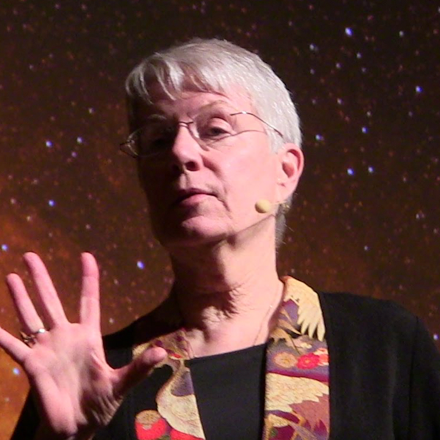 Jill Tarter合作论文数Center for SETI Research, SETI Institute16
 Gregory Hellbourg合作论文数15Remington P. S. Stone合作论文数University of California15Mark Wagner合作论文数15
 Andrew W. Howard合作论文数The Division of Physics, Mathematics and Astronomy, California Institute of Technology14Jack Hickish合作论文数13
 Griffin Foster合作论文数Dept. of Phys., Oxford Univ.;c;Dept. of Phys., Oxford Univ.13
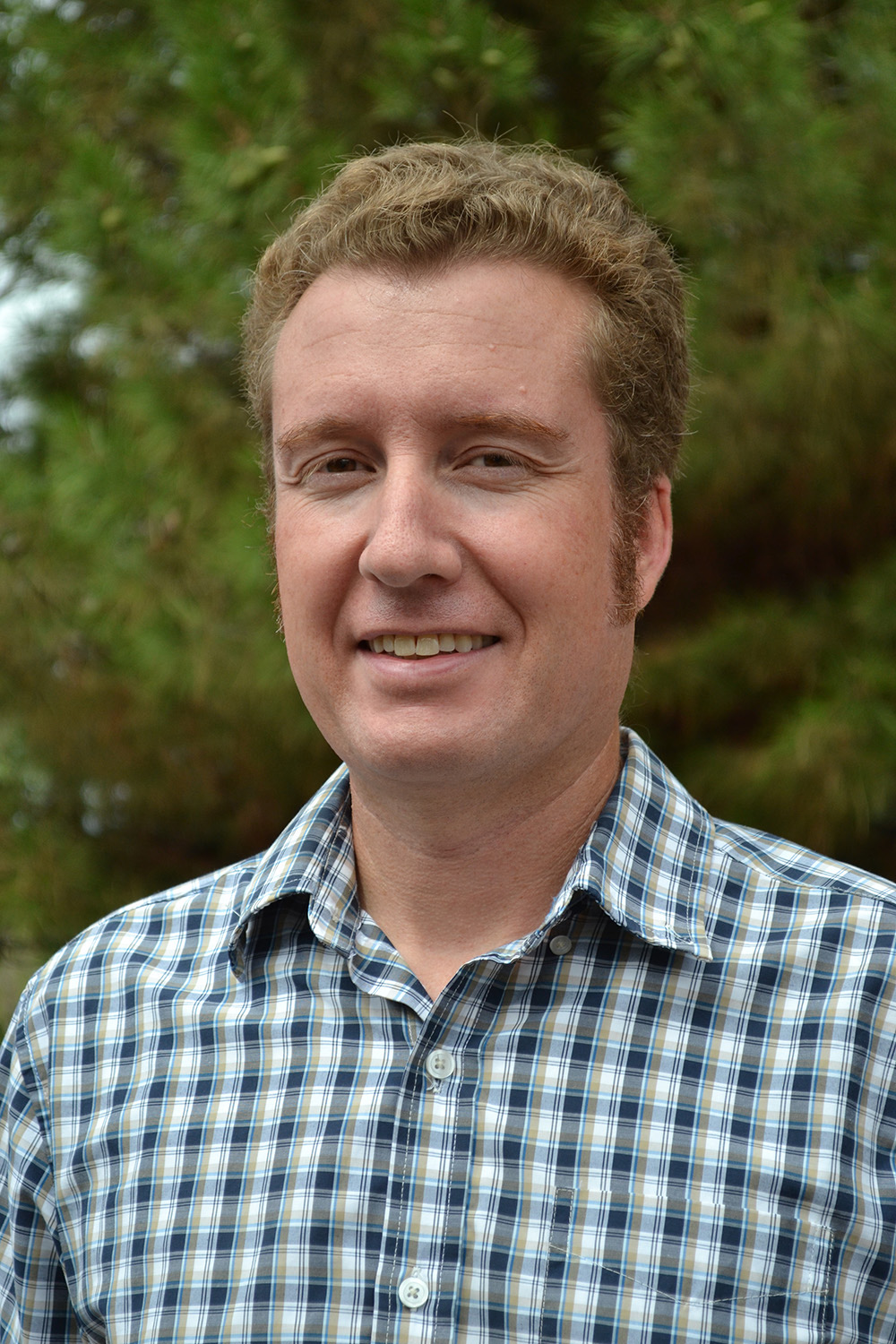 Paul Demorest合作论文数National Radio Astronomy Observatory13
 Carl Heiles合作论文数Department of Astronomy, University of California, Berkeley;Graduate School, University of California, Berkeley13Richard R Treffers合作论文数13terry filiba合作论文数12J. van Leeuwen合作论文数12Matt Dexter合作论文数Department of Astronomy, University of California, Berkeley12
 Duncan Lorimer合作论文数Department of Physics and Astronomy, Eberly College of Arts and Sciences, West Virginia University12Henry Chen合作论文数12
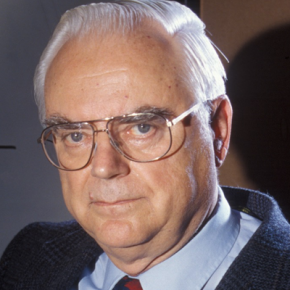 Frank Drake合作论文数University of California, Santa Cruz12
 William Mallard合作论文数Harvard University, MIT and Harvard11
 Donald C. Backer合作论文数Radio Astronomy Laboratory, University of California, Berkeley;Department of Astronomy, University of California, Berkeley11
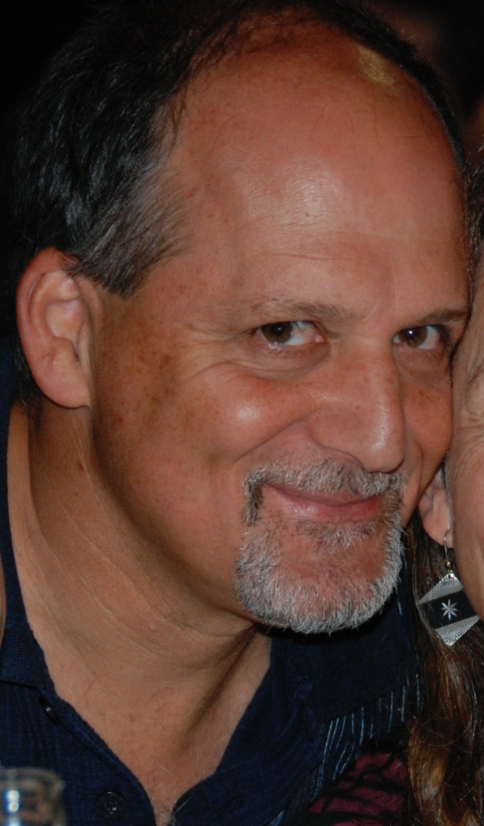 Geoffrey Marcy合作论文数Space Laser Awareness11
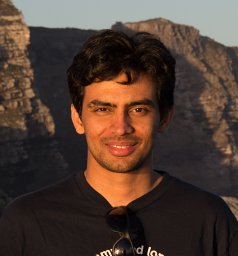 Jayanth Chennamangalam合作论文数11Maren Cosens合作论文数10Aaron Brown合作论文数10Rick Raffanti合作论文数10
 Jonathon Kocz合作论文数CALTECH, Div Phys Math & Astron, Pasadena, CA 91125 USA9Franklin Antonio合作论文数9
 Maura McLaughlin合作论文数Department of Physics and Astronomy, Eberly College of Arts and Sciences, West Virginia University9
 Aris Karastergiou合作论文数Department of Physics, University of Oxford;St Edmund Hall, University of Oxford9
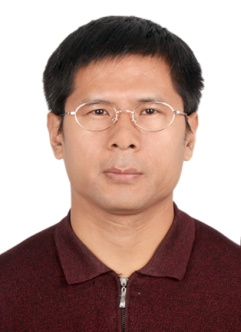 Tongjie Zhang (张同杰)合作论文数Department of Astronomy, Beijing Normal University9




