This chapter identifies challenges faculty face when teaching in a terminal industrial-organizational psychology master’s program. The authors discuss how faculty, particularly new/junior faculty, can deal with these issues to become productive in teaching, research, service, consulting, and shaping program culture. The authors offer suggestions for creating a successful program tailored to the needs of different types of students (recent graduates versus experienced students), strategies for maintaining an active research program, and ways to integrate consulting into a master’s program. This chapter includes a discussion of the challenges of offering both a master’s and doctoral program, managing administrators, and building a program culture.
Not everyone who plays golf thinks of themselves as golfers but those who do, have a *golfer identity*. The first goal of this study was to create a measure of golfer identity by borrowing constructs from popular athletic and organizational identity scales. The second goal was to integrate into the new identity measure, items that reflect place identity and the extended-self. The third goal of the study was to test whether scores on the new identity measure were related to participation, ability, self-presentation, and sport citizenship. Over 3,700 golfers completed the identity survey and Vallerand's obsessive passion scale. They also responded to items assessing participation in golf and golf ability. The new golfer identity measure was reliable and had a consistent factor structure across a variety of demographic groups. As predicted, scores on the scale were related to self-presentation, sport citizenship, golf ability, and golf frequency. The identity scale was a better predictor of participation than was obsessive passion. *Golfers*, people who define themselves by playing golf, were much more likely to participate in a wide variety of golf-related activities than *people who play golf but do not define themselves as golfers*. The study includes recommendations for changing popular identity measures and for growing golf.
The Lake Wobegon Effect is a general tendency for people to overestimate their own abilities. In this study, the authors conducted a large, nationally-representative survey of U.S. citizens to test whether Americans overestimate their own gun-relevant personality traits, gun safety knowledge, and ability to use a gun in an emergency. The authors also tested how gun control attitudes, political identification, gender, and gun experience affect self-perceptions. Consistent with prior research on the Lake Wobegon Effect, participants overestimated their gun-related competencies. Conservatives, males, and pro-gun advocates self-enhanced somewhat more than their counterparts but this effect was primarily due to increased gun experience among these participants. These findings are important to policymakers in the area of gun use, because overconfidence in one’s gun-related abilities may lead to a reduced perceived need for gun training.
Erectile dysfunction is a major complication affecting the quality of life of patients and partners after radical prostatectomy. Evolving evidence suggests that early penile rehabilitation may provide better erectile function after surgery. Phosphodiesterase type 5 (PDE-5) inhibitors are routinely considered a first-line treatment option in most algorithms for penile rehabilitation owing to their efficacy, ease of use, wide availability and minimal morbidity. Tadalafil is a long-acting, potent PDE-5 inhibitor for erectile dysfunction, with demonstrated effect in animal studies at preserving penile smooth muscle content and prevention of fibrosis of cavernosal tissue. This article evaluates the existing literature on tadalafil and critically analyzes its impact on erectile function following radical prostatectomy.
Sandbagging is a self-presentation strategy involving the false claim of inability. A golfer sandbags by intentionally inflating his or her handicap. Over 2,400 active recreational golfers participated in the study. The vast majority of these golfers claimed they would be unwilling to sandbag even in a setting where sandbagging was prevalent and one could sandbag without getting caught. Golfers who were willing to inflate their handicaps scored higher on Gibson and Sachau’s (2000) trait sandbagging scale, were more likely to believe that sandbagging is common, and were more likely to use interpersonal sandbagging on the course (direct claims of inability) than golfers who were unwilling to inflate their handicaps. Motives for sandbagging are discussed as are suggestions for reducing sandbagging.
Surveys of 1217 undergraduate students supported the reliability (inter-item and test-retest) and validity of the Prosocial and Aggressive Driving Inventory (PADI). Principal component analyses on the PADI items yielded two scales: Prosocial Driving (17 items) and Aggressive Driving (12 items). Prosocial Driving was associated with fewer reported traffic accidents and violations, with participants who were older and female, and with lower Boredom Susceptibility and Hostility scores, and higher scores on Agreeableness, Conscientiousness, Openness, and Neuroticism. Aggressive Driving was associated with more frequent traffic violations, with female participants, and with higher scores on Competitiveness, Sensation Seeking, Hostility, and Extraversion, and lower scores on Conscientiousness, Agreeableness, and Openness. The theoretical and practical implications of the PADI's dual focus on safe and unsafe driving are discussed.
In this chapter, we discuss two short-term, international service-learning trips where US graduate students, faculty and program advisors (I-O-trained management consultants) traveled to developing nations to complete projects in local schools. Drawing from these experiences, we discuss lessons we have learned regarding the challenges and benefits of the trips. Although it may be easier to imagine how people from nursing, construction, or education might serve the disadvantaged, we have found that the skill set of I-O psychologists can be of great benefit to people who need to manage their way out of poverty. I-O psychologists can, for instance, teach job search, interviewing, and supervisory skills. They can help the agencies who serve the poor by providing organizational development, managerial and problem-solving expertise. The skills of researchers and grant writers can be of immense help to those who serve and those who are served. Service learning is of growing interest to I-O psychologists and our hope is that the chapter will be useful as a resource for professionals who would like to start an international service-learning program.
Many companies seem determined to persuade us how green they are. Consider IBM, one of the most committed and most widely recognized companies. Its formal policy begins: "IBM is committed to environmental affairs leadership in all its business activities" (IBM, n.d.). It was the first major company to commit to a company-wide environmental management system, covering all its operations worldwide. Its policies include being an environmentally-responsible neighbor, conserving natural resources, using processes that do not adversely affect the environment, and sharing appropriate pollution prevention technology. And it has achieved real results while attaining substantial growth. For example, using the widely accepted Global Reporting Initiative standards, IBM has shown: 50% CO2 emissions reductions between 1990 and 2009, recycling 76% of its non-hazardous waste in 2009, and reducing its emissions of PFCs in manufacturing by 48.8% from 1995 to 2009 (IBM, 2010). This is business environmentalism at its best, achieving results and going well beyond regulatory requirements.
Over 2,400 active, adult, recreational golfers completed a golf-related goal orientation questionnaire. This measure included a six-item task orientation scale and a six-item ego orientation scale. The scales were reliable and the factor structure of the questionnaire was consistent across gender, age, and ability groups. Golfers scored considerably higher on task orientation than ego orientation. Players scoring high on task orientation were more likely to take a golf fitness course, practice at a range, practice at a simulator, practice at home, and read about golf than players who scored low on the scale. Golfers who scored high on the ego orientation scale played more golf and had a somewhat lower handicap than golfers who scored low on the scale. The benefits of task and ego orientations are discussed.
The authors describe the development of a campus-based radio show about psychological science. The authors' goals in creating the show were to inform the public about the science of psychology and to create a teaching and learning resource for faculty members and students. The show, Psychological Frontiers, airs twice a week and consists of 2-minute summaries of research and theory. Issues related to show format, medium, and script writing are discussed. The authors also present ways in which they have used this show as an activity in their courses as well as for faculty development.
The purpose of this study was to examine the extent to which work-life conflict and organizational support for work-life balance are related to job satisfaction and turnover intentions for military law enforcement personnel. More specifically, 1203 members of the United States Air Force Office of Special Investigations completed a survey that measured family-to-work conflict, work-to-family conflict, perceptions of work-life support from the organization, support from immediate supervisors, and support from peers. Work-to-family and family-to-work conflict were related to job satisfaction and turnover intentions. Perceived social support, especially at the organizational level, was negatively correlated with work-to-family and family-to-work conflict. Agents within the OSI were experiencing more work-to-family and family-to-work conflict than OSI support staff although the relationships among support, conflict and satisfaction were the same for the two groups.
 Emily Stark合作论文数7
 David R. Englert合作论文数5warren ryan合作论文数4max adler合作论文数4Lance Andrews合作论文数4luke simmering合作论文数3
 Scott Fee合作论文数3
 Bryan Gibson合作论文数University of Utah USA3
 John Houston合作论文数3Jessica Gertz合作论文数2Jose A. Vazquez合作论文数2evan blackhurst合作论文数2leann m rokes合作论文数2Pamela Congemi合作论文数2
 Jeffrey A Dahlke合作论文数Dept Psychol, Univ Minnesota2Harms Amanda合作论文数2Daniel D. Houlihan合作论文数2
 Jayne Gackenbach合作论文数Grant MacEwan College2Mahlia A. Matsch合作论文数2
 Janan Al-Awar Smither合作论文数SUNY2
 Julene D. Nolan合作论文数1James Vincent合作论文数1Andrea J. Larson合作论文数1Daniel DeNeui合作论文数1P. A. Naas合作论文数1Scot C. Harris合作论文数1w c harris合作论文数1luman yong合作论文数1colin burchfield合作论文数1Bridget McNamara合作论文数1andrea lassiter合作论文数1Wayne C. Harris合作论文数1
 Masakatsu Ono合作论文数Dornsife Center for Self-Report Science, University of Southern California1
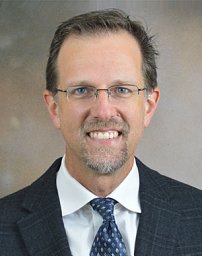 Steven D. Charlier合作论文数Department of Management.1
 David K Dodd合作论文数1
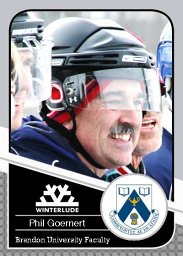 Goernert Phillip N合作论文数Department of Psychology, Brandon University1Postlethwaite Bennett E合作论文数1L Perez合作论文数1Christi A. Patten合作论文数1Thomas Snyder合作论文数1John Sappington合作论文数1
 Barbara A. Fritzsche合作论文数University of Central Florida1
 Cormac T. Taylor (Cormac Taylor)合作论文数School of Medicine, University College Dublin1Dawn N. Albertson合作论文数1
 Daniel Turban合作论文数Department of Management, Robert J. Trulaske, Sr. College of Business, University of Missouri1Dennis N. Bristow合作论文数1William P. Deal合作论文数1R. Shumate合作论文数1Lisa Hofschulte合作论文数1




