We recount the life, work, and legacy of the theoretical physicist Roy Glauber (1925-2018). Admitted to Harvard at age sixteen, called upon to participate in the Manhattan Project at age eighteen, and appointed to the Harvard Physics faculty at age twenty-nine, Glauber is credited with seminal contributions to three separate fields of physics: nuclear scattering, statistical physics, and foundational work in quantum optics, which earned him the 2005 Nobel Prize in Physics. Over decades, Glauber was also a dedicated teacher of high-school, college, and graduate students. His pedagogical gifts are reflected in his lucid papers that read as if they were written yesterday.
AbstractOtto Stern’s scientific legacy continues to animate discoveries on a rapidly advancing research frontier.
The physics community lost a treasured citizen when Gloria Becker Lubkin died of colon cancer on 26 January 2020 in Raleigh, North Carolina. Gloria Becker Lubkin COURTESY OF SHARON LUBKINPPT|High resolutionGloria was a journalist extraordinaire. Her network of friends and acquaintances was unparalleled: luminaries from essentially every major field of physics and a vast circle of researchers in academia, government, and industry. Her friendships were international, springing from scientific visits to the Soviet Union in 1968, Japan in 1975, and China in 1979, and numerous visits to Europe. Her understanding of physics and her skills as a writer and journalist, together with her enormous circle of friends and contacts, uniquely qualified her for her five-decade career at Physics Today and her legendary reputation as writer, editor, and editor-in-chief.Born in Philadelphia on 16 May 1933, Gloria received her AB in physics from Temple University in 1953. She then pursued graduate work at Boston University, where she earned an MA in nuclear physics in 1957 for a thesis supervised by Fay Ajzenberg-Selove. A week after Gloria received her degree, she married Yale Jay Lubkin. To support her graduate studies, she took a series of short-term positions in industries—often nuclear related—and as an interim professor. That pattern continued after graduation but stopped abruptly when she was fired for pregnancy, as was legal at the time.In 1963 Gloria switched careers. She enjoyed writing and had reported for her college newspaper. A great conversationalist with a natural gift for explaining physics, she phoned the editor of Physics Today (PT), Robert Davis. Their conversation ended abruptly when Davis exclaimed, “You’re hired! Come on over.”Gloria was associate editor from 1963 to 1970. In 1964 she was fired again for pregnancy; she returned to PT part time six weeks after giving birth. In 1968 she divorced and resumed full-time work at PT. Two years later she was appointed senior editor. Her career flowered, and over the decades she helped mold the magazine. She was editor-in-chief from 1985 to 1994, editorial director from 1994 to 2000, and editor-at-large from 2001 to 2003. She was editor emerita from 2003 to 2009, when she retired.In 1974–75 Gloria received a Nieman journalism fellowship at Harvard University, where she attended classes and formed links with journalists. When Peter Kapitza, a 1978 physics Nobelist, visited the US in the 1970s, the only journalists he agreed to talk with were Walter Sullivan of the New York Times and Gloria.Gloria read everything published in PT, edited many of the articles herself, and wrote about 450 articles over the years. She built a staff of editors and meticulously mentored them. She transformed much of the magazine. The Search and Discovery department grew from a series of brief reports to substantive articles by a well-informed staff. Her scientific knowledge and her reputation for integrity were powerful assets in her roles both as editor and writer.In 1986 Gloria created Reference Frame, a department of personal, thought-provoking essays by writers she selected. Her enthusiasm, scientific credibility, and charm enabled her to enlist a bravura group of authors, including Philip Anderson, David Gross, Herman Feshbach, Leo Kadanoff, James Langer, Leon Lederman, David Mermin, Helen Quinn, Vera Rubin, and Frank Wilczek. Also, both of us. (Gloria would insist on total transparency.)Throughout her career, Gloria was seriously concerned about the problems faced by women in physics. In 1971 she coorganized a session on the situation at an American Physical Society meeting and became a founding member of the Committee on the Status of Women in Physics.In the 1980s real estate developer William I. Fine proposed funding and establishing a world-class theoretical institute at the University of Minnesota. The physics department turned to Gloria for advice. She knew several Russian physicists who were distressed by the collapsing economy in their country. As a result, the Fine Theoretical Physics Institute (FTPI) was created with a critical number of first-rank Russian theorists forming its faculty. The FTPI is now a leader among such international institutes. Gloria cochaired its Oversight Committee from the beginning to 2014. In 1990 the FTPI honored her by establishing the Gloria Becker Lubkin Chair in Theoretical Physics.In 2013 Gloria was appointed visiting senior research scholar at the University of Maryland department of physics. She was working on a memoir when in 2014 a health crisis halted her writing.Frank Wilczek, Herman Feshbach Professor of Physics at MIT, spoke for many in the physics community when he commented about Gloria: “She laughed both often and infectiously. She loved physics and she loved its community. She had a story for every occasion. I’ll miss her. We all will miss her.”© 2020 American Institute of Physics.
Pierre Teilhard de Chardin, a paleontologist, geologist, philosopher, and Jesuit priest, wrote, “The history of the living world is an elaboration of ever more perfect eyes in a cosmos in which there is always something new to be seen.” Teilhard’s epigram provides a stunning description of mankind’s longing to understand the natural world, which is to say mankind’s instinct for science.Today it is essential that science continue to flourish because society desperately needs science to deal with the growing problems due to our changing climate—ocean-level rise, destructive storms, forest fires, drought, and above all, the need for new sources of energy. But society also desperately needs science that although not focused on those problems could be crucial for solving them. A glance at some modern developments shows why.Teilhard’s phrase “ever more perfect eyes” accurately portrays the evolution of telescopes from crude optical devices at the dawn of the 17th century to today’s space telescopes. That fabulous development was driven by curiosity about the nature of the universe: It was the product of basic research, which is motivated by the joy in understanding the natural world, in contrast to applied research, which is motivated by the need to solve a particular problem. Teilhard’s phrase is a pretty good description of basic research.Albert Einstein’s search for a theory of gravity—his general theory of relativity—is an iconic example of basic research. The problem he struggled to solve, to create a theory that avoided some inconsistencies in Newton’s theory of gravity, worried hardly anyone else and had no conceivable use, at least not at that time.A startling consequence of Einstein’s theory is that gravity affects time. A clock on top of a mountain runs faster than an identical clock at sea level, although not by much: At the peak of Mount Everest, a clock runs fast by only a few millionths of a second each month.Einstein’s prediction for the effect of gravity on time stimulated an experimental search. It originated on 21 January 1945 when a New York Times article carried the headline “‘Cosmic pendulum’ for clock planned.” It was the report of a speech at an American Physical Society meeting in New York City; the speaker was I. I. Rabi, a physicist at Columbia University. Rabi proposed creating a clock whose “ticks” were governed not by the swing of a pendulum but by pulsations in an atom on one of its natural frequencies that could be measured by a technique he had invented. The Greenland Telescope is one of more than eight in the global Event Horizon Telescope array that aims to observe the immediate environment of black holes. The technology used to synchronize the member telescopes derives from the same basic research that enables detailed, synchronous climate-change measurements by today’s weather satellites. (Photo by Nimesh A. Patel.) PPT|High resolutionThe accuracy of such an atomic clock could be fabulously high. The newspaper article reported, “Professor Rabi said that he would like to see someone build an atomic clock that would be capable of providing, for the first time, a terrestrial check on the Einstein postulate that the gravitational field produces a change in the frequency of radiation.” Thus the creation of atomic clocks sprang directly from curiosity about whether gravity affects the rate of a clock—that is, whether gravity affects time. Lacking any other conceivable application for such an accurate clock, the quest is a perfect example of basic research.Nobody rushed to build an atomic clock after Rabi’s 1945 talk. The research establishment was in disarray from World War II, and there were some technical barriers. Serious work on atomic clocks started around 1950, and in 1954 the first such clock was demonstrated in the UK. It came to be known as the cesium-beam atomic clock.In 1956 Norman Ramsey, a former student of Rabi’s, proposed a different type of atomic clock that would be capable of investigating Einstein’s prediction about gravity and time. The device, known as the hydrogen maser, was demonstrated in 1960. Today hydrogen masers are found in most primary timekeeping laboratories along with other atomic clocks that set the international time.Although the hydrogen maser was created to verify Einstein’s conjecture about time and gravity, its unanticipated applications are noteworthy. For instance, it made the radio astronomy technique known as very long baseline interferometry (VLBI) possible. In each radio observatory, a nearby maser provides a time-stamp signal that permits distant laboratories to synchronize their observations. With VLBI, astronomers can create radio telescope antennas that are effectively the size of Earth; they enable astronomers to create maps of hydrogen throughout the universe with astonishing detail and to look back in time toward the infancy of the cosmos.Recent progress has been reported on a new frontier of gravity. At the center of our galaxy, a massive black hole is swallowing nearby masses. Matter falling into the black hole vanishes forever, but as the matter crosses a surface called the event horizon, it radiates brilliantly. The Event Horizon Telescope, an advanced VLBI array, is letting us see that process by combining signals from radio telescopes around the world. Last month the EHT team released its first remarkable image, of the central black hole in galaxy M87. The EHT is making it possible to study the predictions of general relativity for phenomena never before witnessed: matter moving in fantastically strong gravitational fields.The greatest effect of atomic clocks on society is from the creation of the global positioning system. It is fundamentally a timing system, and atomic clocks are at its heart. To my knowledge, nobody had thought about such a system before atomic clocks became a reality, and nobody could have imagined its powers. Today GPS enables the air control systems that guide planes in flight and the ground navigational systems in smartphones and automobiles. It keeps our communications networks and power grids synchronized and is crucial for medical emergency systems. Above all, GPS is critical for understanding the existential threat that climate change is to civilization.Understanding the global climate requires data on a vast number of variables: radiant energy flow to and from Earth, vertical and horizontal temperature profiles, cloud covering and temperature, sea- and land-surface profiles, ocean-surface temperature and wind speed, global precipitation, water content of the atmosphere, the list goes on. And the quantity of data gathered is enormous.The primary source of data on Earth’s climate is a fleet of weather satellites in polar orbits, some from the US and some from Europe. The fleet scans Earth’s entire surface four times a day. Often, the satellites work together in pairs, exchanging radar and lidar signals to measure the water content of the highest region of the atmosphere. That particular measurement is vital because most of the atmospheric water is stored there. In addition to the polar fleet of weather observatories, clusters of synchronous satellites from different nations continuously view Earth. The US has two clusters viewing the entire country, one looking east, the other west.Because few of those global climate measurements could have been made without GPS, it is valuable to keep in mind the system’s origin: mere curiosity about general relativity. GPS is a transformational technology that grew out of basic research. One can cite many other examples of how basic research drives transformational advances. In physics, for instance, investigations of molecules in space by Charles Townes led to the invention of the laser, and studies of atomic nuclei by Edward Purcell and Felix Bloch led to the invention of MRI.I stress the unexpected rewards from basic research because society urgently needs new ways to deal with the rapidly growing crises of climate change. The latest report of the Intergovernmental Panel on Climate Change (IPCC) concludes that previous reports erred in being too cautious: The time to stem the flow of greenhouse gases is shorter than had been estimated. We face the possibility of a runaway situation in which an increase in global temperature feeds back to accelerate global heating. Such a process would lead to a massive change in climate and a catastrophic elevation of sea level. We face a threat to civilization.In the US today, support for basic research is dwindling. Opportunities for a career in basic research are decreasing, and our ability to attract excellent students from home and abroad is declining. When considered in the context of the most recent report of the IPCC, the neglect of basic research may be disastrous.If our civilization succeeds in learning to live in harmony with the natural world, science will have played a crucial role in the transition. The immediate problem in the US is to convince Congress that the situation is urgent. Happily, the years of developing STEM education in the US are starting to pay off. The numbers of scientifically literate citizens and members of Congress are growing. Our representatives will listen if citizens—both scientists and nonscientists—speak up for science and particularly for the value of basic research.© 2019 American Institute of Physics.
A 1950 grant application that helped launch hydrogen-line radio astronomy provides a model for the clarity, economy, and integrity attainable in such requests.
Norman Ramsey, prix Nobel de Physique 1989, décédé le 4 novembre 2011, a eu une grande influence sur le monde de la physique pendant toute la seconde moitié du 20e siècle. À côté de ses travaux de chercheur en physique atomique et quantique, il s'est investi dans la politique de la science. Il a joué un rôle déterminant dans la fondation aux États-Unis des laboratoires nationaux de Brookhaven en 1947 et du Fermilab en 1967. En tant que premier conseiller scientifique de l'OTAN, il a introduit les bourses d'études postdoctorales et les écoles d'été, qui bénéficient toujours du soutien de l'OTAN.
Norman Foster Ramsey, who was born on August 27th, 1917 and died on November 4th, 2011, had an enormous influence on the world of physics during the second half of the 20th century. His scientific ideas underlie much of the research reported at this conference and he played a principal role in the creation of ICAP itself. In 1946 Ramsey became the first head of the physics department at the newly created Brookhaven National Laboratory. He appointed Victor A. Cohen, I.I. Rabi’s first graduate student, to set up a molecular beams laboratory. Interest in molecular beam magnetic resonance grew rapidly and in the early 1950s, Ramsey, who was then at Harvard, inaugurated a summer conference–the Brookhaven Molecular Beams Conference–that was held biannually and supervised by Victor Cohen. Scientific interest flourished and in the mid 1960s Vernon Hughes proposed expanding the Brookhaven Molecular Beams Conference into the International Conference on Atomic Physics, ICAP. The first ICAP was held at New York University in the spring of 1968. Vernon Hughes is justly remembered as the father of ICAP but Norman Ramsey deserves to be remembered as its grandfather. Ramsey’s name is primarily associated with the separated oscillatory field method for which he received the Nobel Prize in 1989, but this was only one of his many scientific contributions. With Edward M. Purcell he launched the search for breakdowns of fundamental symmetries that continues today and he carried out classic studies of magnetic interactions in molecules. He had a deep interest in high precision measurements and atomic clocks. His invention of the hydrogen maser was cited in his Nobel Prize. That Prize was shared with Hans G. Dehmelt and Wolfgang Paul and at the Nobel banquet Ramsey presented what could be a credo for much of the ICAP community:
In the years since it was first published, this classic introductory textbook has established itself as one of the best-known and most highly regarded descriptions of Newtonian mechanics. Intended for undergraduate students with foundation skills in mathematics and a deep interest in physics, it systematically lays out the principles of mechanics: vectors, Newton's laws, momentum, energy, rotational motion, angular momentum and noninertial systems, and includes chapters on central force motion, the harmonic oscillator, and relativity. Numerous worked examples demonstrate how the principles can be applied to a wide range of physical situations, and more than 600 figures illustrate methods for approaching physical problems. The book also contains over 200 challenging problems to help the student develop a strong understanding of the subject. Password-protected solutions are available for instructors at www.cambridge.org/9780521198219.
While searching for a way to boost the resolution of an atomic spectrometer, Ramsey hit on a simple solution: Replace a single oscillating magnetic field with two separated ones.
Norman Foster Ramsey Jr, a towering figure of physics in the second half of the 20th century, died on 4 November 2011 at age 96. Ramsey was widely esteemed for his scientific contributions, his achievements as a statesman of science, and his teaching. He is best known for inventing the separated oscillatory field method and the hydrogen maser, for which he received the Nobel Prize in 1989, but those were just two of his many contributions. He helped to found Brookhaven National Laboratory and was instrumental in the creation of Fermilab. During his four-decade career at Harvard University, he supervised 84 PhD students. He continued to teach at Harvard and elsewhere long after his retirement in 1986.Ramsey was born on 27 August 1915 in Washington, DC. He graduated from Columbia University in 1935 with a degree in mathematics, attended Cambridge University in the UK for two years, and returned to Columbia in 1937. He joined the molecular-beams group of I. I. Rabi despite Rabi’s admonition that molecular-beam research was pretty well exhausted. A few months later Rabi’s invention of molecular-beam magnetic resonance triggered a revolution in atomic physics. Ramsey’s first research effort resulted in the discovery that the deuteron possesses an electric quadrupole moment and provided the first evidence for a noncentral nuclear force.Upon leaving Columbia in 1939, Ramsey started work on proton scattering at the Carnegie Institution of Washington and then accepted a faculty position at the University of Illinois. When World War II broke out, he shelved his academic plans and joined the staff of the Radiation Laboratory at MIT. There he helped to develop 3-cm radar. In 1943 he went to Los Alamos and worked on the Manhattan Project until the end of the war. He then returned to Columbia and resumed molecular-beam research. With Rabi, Ramsey led in organizing a consortium that created Brookhaven. He became the first head of its physics department and had planned on splitting his time between there and Columbia, but the Long Island Rail Road frustrated his commuting plans. In 1947 he joined the faculty at Harvard.Ramsey developed a program of theoretical and experimental research on magnetic interactions in molecules that he continued throughout his career. In a quest to improve the spectral resolution of molecular-beam magnetic resonance, he invented the separated oscillatory field method. That technique was quickly adopted by others and was important in the creation of atomic clocks. Today Ramsey’s method is employed in wide areas of atomic and molecular research, including spectroscopy, metrology, ultracold atom studies, atom interferometry, and studies of atom entanglement and quantum information theory. Ramsey’s molecular research had other consequences: It provided the underpinnings for the theory of chemical shifts that are fundamental to nuclear magnetic resonance spectroscopy and magnetic resonance imaging.In the late 1950s, Ramsey proposed a new type of atomic clock—the hydrogen maser—with the goal of observing the effect of gravity on time. That observation was later made with the maser by Robert Vessot and his colleagues at the Harvard–Smithsonian Center for Astrophysics. Atomic-beam clocks and hydrogen masers now lie at the heart of the global positioning system. The hydrogen maser also serves the radio astronomy community, helping to make very long baseline interferometers possible.Ramsey was the first to point out the possibility that nuclear interactions might violate parity. With his close friend Edward Purcell, he showed that this would permit the neutron to possess an electric dipole moment. They launched a search for the dipole moment that Ramsey continued for 39 years. The dipole moment has yet to be observed, but the successively smaller limits set on it have put to rest many theoretical conjectures. Ramsey sometimes expressed chagrin that he chose to search for parity violation in the strong interaction rather than in the weak interaction, where it is so large that it was discovered almost immediately after it was predicted.Beginning in 1958 Ramsey took a leave of one and a half years from Harvard to serve as the first science adviser to the North Atlantic Treaty Organization. He initiated the NATO programs for advanced study institutes, fellowships, and research grants. Those programs helped to restore European physics, which was still recovering from the effects of war. Among the NATO institutes for which Ramsey secured funding was the summer school at Les Houches, France, which continues to be an energizing force in atomic physics and other areas of science.As a scientific statesman, Ramsey is widely credited for his decisive role in the creation of Fermilab. In the early 1960s, proposals for a new accelerator were put forward by several laboratories that had conflicting visions. To deal with the controversy, 25 universities formed the Universities Research Association (URA), and Ramsey was selected to be its president. His unique background as an atomic physicist who was also conversant with particle physics (he had helped plan a cyclotron at Harvard and the Cambridge Electron Accelerator), his sterling reputation for fairness and accuracy, and his reputation for personal judgment uniquely qualified him for the job. In his new position, Ramsey quelled a simmering East Coast–West Coast scientific civil war, served as an effective spokesman to the US Congress, oversaw the entire creation of Fermilab, and personally selected Robert R. Wilson to be its first director. In gratitude, Fermilab named its auditorium in Ramsey’s honor.Ramsey made a strong impression on most everyone he met. A handsome, tall man with a broad smiling face and an open and friendly manner, he loved to tell stories with a booming voice that was legendary. Once, a visitor passing his office inquired about the noise. Told that it was Ramsey talking to someone in Chicago, he inquired, “Why doesn’t Ramsey use a phone?”To his students and colleagues, Ramsey was a role model for scientific integrity, which included a strict standard for scientific accuracy and an elevated standard for scientific behavior. For example, he and Clifford Shull of MIT once pushed the search for the neutron electric dipole moment using different methods with about the same sensitivity. In such a situation there is a natural wish to be the first to publish, but the scientific cost of premature publication can be high. The two physicists agreed that if either was ready to publish, he would notify the other and allow one week for the other to also submit a publication. Ramsey was also meticulous about allocating credit. Although he was occasionally described as the father of the atomic clock, he would scrupulously point out that the clock was originally proposed by Rabi, the first atomic frequency standard was developed by Louis Essen and Jack Parry in the UK, and the first practical atomic clock was created by Jerrold Zacharias at MIT.During the McCarthy era, Ramsey spoke out to defend intellectual freedom. In 1953 Wendell Furry, a professor in the Harvard physics department, became the victim of a witch-hunting expedition by Senator Joseph McCarthy. Furry was indicted and several of the Harvard overseers called for his dismissal. Ramsey, along with Robert Pound, successfully defended Furry within the university, but the public charges by McCarthy were unrelenting. Ramsey responded to the charges on a national TV news program with a defense that was so persuasive that McCarthy offered him a job.Although he was not often in the lab, Ramsey essentially never missed the weekly group meetings with his PhD students on Fridays, even if his attendance required breakneck travel arrangements. Aside from discussing research in progress, participants were likely to be provoked by toys Ramsey collected that appeared to defy parity conservation or other laws of physics and be entertained by anecdotes from Ramsey’s endless collection. Ramsey taught a graduate course on molecular beams to several generations of physicists, and he was an enthusiastic undergraduate teacher. His 1956 monograph on molecular beams, based on his course, was a standard reference for decades. He continued to teach after retirement, serving as a visiting professor at the Universities of Virginia, Michigan, and Chicago and at Middlebury, Mount Holyoke, and Williams Colleges.Among his many other activities, Ramsey served as president of the American Physical Society, chair of the governing board of the American Institute of Physics, and president of Phi Beta Kappa. To some of his colleagues, his schedule seemed to border on madness—he might fly from Cambridge, Massachusetts, to Washington, DC, for a morning meeting, exploit the time difference to get to Chicago for an afternoon URA meeting, return to Cambridge in the evening, and be up early next morning to teach.Ramsey hiked enthusiastically and traveled extensively, usually with his family, his students, or his many friends around the world. At the age of 81 he walked across England. A few years later he was dissuaded from taking up bungee jumping, but only with effort. In his nineties he visited both the Antarctic and the Arctic, including a wilderness adventure in Alaska. He introduced many of his students to skiing and was enthusiastic about sailing, surfing, good music, good food, and good stories.Even as Ramsey’s health declined in his final years, his cheerful disposition and optimistic outlook never deserted him. As one of his students put it, Norman Ramsey was a role model for everything.PPT|High resolution© 2012 American Institute of Physics.
We present the first results of a study of the radial dependence of the Herschbach effect. The effect displays distinctive short-range behaviour, evidently due to a contact interaction, and also reveals mid- and long-range behaviours. Cosmological implications of the long-range Herschbach effect are explored.
The collisional magnetic reorientation rate constant ${g}_{R}$ is measured for magnetically trapped atomic dysprosium (Dy), an atom with large magnetic dipole moments. Using buffer gas cooling with cold helium, large numbers ($g{10}^{11}$) of Dy are loaded into a magnetic trap and the buffer gas is subsequently removed. The decay of the trapped sample is governed by collisional reorientation of the atomic magnetic moments. We find ${g}_{R}=1.9\ifmmode\pm\else\textpm\fi{}0.5\ifmmode\times\else\texttimes\fi{}{10}^{\ensuremath{-}11}$ cm${}^{3}$ s${}^{\ensuremath{-}1}$ at 390 mK. We also measure the magnetic reorientation rate constant of holmium (Ho), another highly magnetic atom, and find ${g}_{R}=5\ifmmode\pm\else\textpm\fi{}2\ifmmode\times\else\texttimes\fi{}{10}^{\ensuremath{-}12}$ cm${}^{3}$ ${\mathrm{s}}^{\ensuremath{-}1}$ at 690 mK. The Zeeman relaxation rates of these atoms are greater than expected for the magnetic dipole-dipole interaction, suggesting that another mechanism, such as an anisotropic electrostatic interaction, is responsible. Comparison with estimated elastic collision rates suggests that Dy is a poor candidate for evaporative cooling in a magnetic trap.
In the last chapter we saw how the postulates of special relativity lead in a natural way to kinematical relations which agree with newtonian relations at low velocity but depart markedly for velocities approaching c. We turn now to the problem of investigating the implications of special relativity for dynamics. One approach would be to develop a formal procedure for writing the laws of physics in a form which satisfies the postulates of special relativity. Such a procedure is actually possible; it involves the concepts of four-vectors and relativistic invariance, and we shall pursue it in the next chapter. However, here we shall take another approach, one which is not as powerful or as economical as the method of four-vectors, but which has the advantage of using physical arguments to show the relation between the familiar concepts of classical mechanics and their relativistic counterparts.
 Thomas J. Greytak合作论文数42
 Michael Littman合作论文数Department of Mechanical and Aerospace Engineering, Princeton University20
 Lorenz Willmann合作论文数Kernfysisch Versneller Instituut, University of Groningen18Robert J. Kolenkow合作论文数18TW DUCAS合作论文数17
 Jonathan E. Allen合作论文数Global Security Computing Applications Division, Computing Directorate, Lawrence Livermore National Laboratory;Data Science Institute, Lawrence Livermore National Laboratory17
 John M. Doyle合作论文数Department of Physics, Harvard University;Jefferson Laboratory of Physics, Harvard University;Okayama University16Theodore W. Ducas合作论文数16kendra vant合作论文数13Neal W. Spellmeyer合作论文数Massachusetts Institute of Technology13Lia Matos合作论文数13MM KASH合作论文数12
 Myron Zimmerman合作论文数12
 Michael Courtney合作论文数Ballistics Testing Group11RR FREEMAN合作论文数10
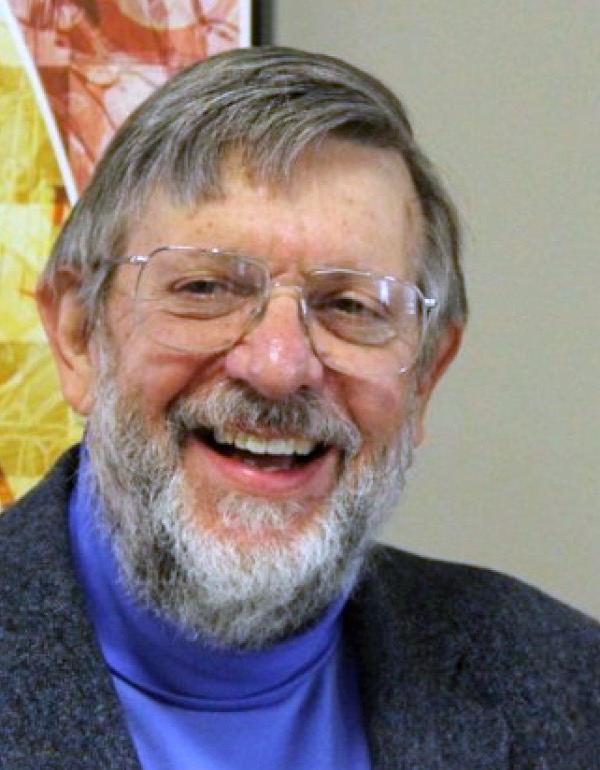 William D. Phillips合作论文数National Institute of Standards and Technology;Institute for Physical Science & Technology, College of Computer, Mathematical, & Natural Sciences, University of Maryland10Cort Johnson合作论文数9
 Julia K. Steinberger合作论文数Faculty of Geosciences and Environment Amphipôle, University of Lausanne9Bonna K. Newman合作论文数9Hong Jiao合作论文数8
 John Delos合作论文数Department of Mathematics, Arts & Sciences, William & Mary8
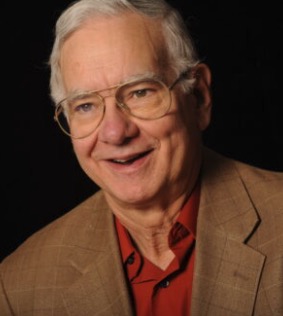 David E. Pritchard合作论文数Department of Physics, Massachusetts Institute of Technology8George R. Welch合作论文数8William Spencer合作论文数7Nf Ramsey合作论文数7
 Carlos Lenz Cesar合作论文数Departamento de Física, Centro de Ciências, Universidade Federal do Ceará7A. Ganesh Vaidyanathan合作论文数7J.C. Sandberg合作论文数7Ite A. Yu合作论文数7
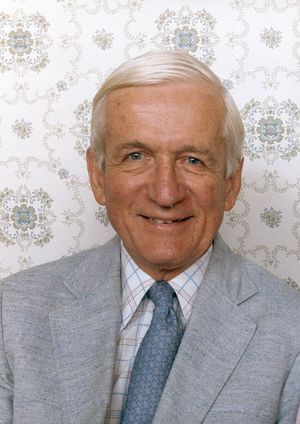 Norman F. Ramsey (小诺曼·福斯特·拉姆齐)合作论文数Harvard University7jeffrey r holley合作论文数6David Landhuis合作论文数6
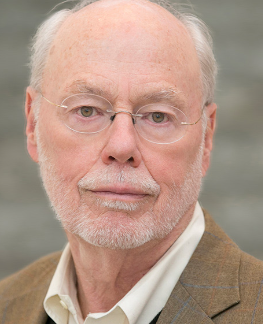 Phillip A. Sharp合作论文数Department of Biology, Massachusetts Institute of Technology;Koch Institute for Integrative Cancer Research, Massachusetts Institute of Technology6S. Crampton合作论文数6
 Greg Kochanski合作论文数5Stephen C. Moss合作论文数5Harald F. Hess合作论文数5R. S. Raymond合作论文数5
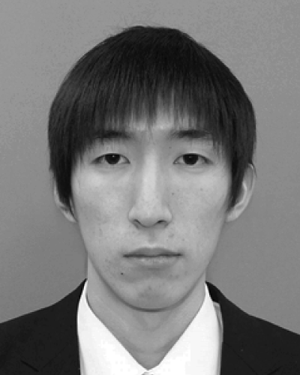 Tomohiro Ueno合作论文数5
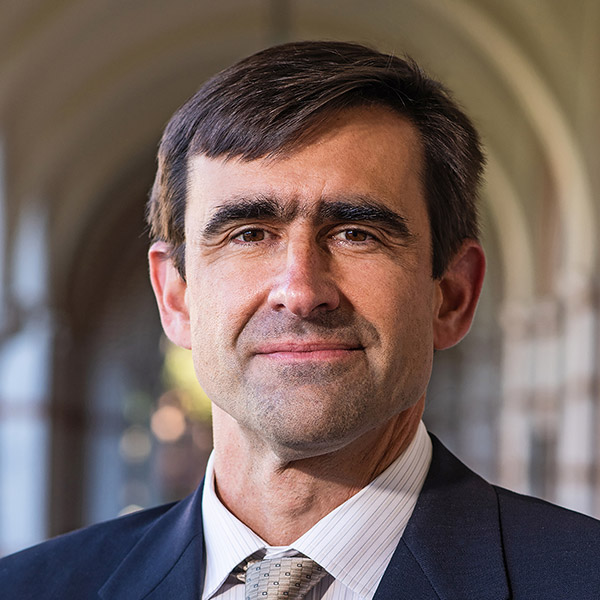 Thomas C. Killian合作论文数Department of Physics and Astronomy, Wiess School of Natural Sciences, Rice University5
 Michael Bradley合作论文数Warren Alpert Medical School, Brown University5A. D. Krisch合作论文数5V. G. Luppov合作论文数5
 Boris Blinov合作论文数Department of Physics, University of Washington5CH IU合作论文数4stephen j moss合作论文数4michael r andrews合作论文数4V. Kondratovich合作论文数4Pritchar.De合作论文数4




