In this study, we demonstrate for the first time that predictions about the future of threatened vertebrate fauna made at the beginning of conservation efforts in Spain (1970s) had a low probability of being correct (0.28 [0.15-0.45] IC 95%) and were therefore worse than would be expected by pure chance (0.5). Predictions were particularly poor for birds and predators, in contrast to mammals and non-predators. Specifically, predictions of future declines, which we identified in a literature search on wildlife from the 1970s, were much less accurate (0.20 [0.07-0.38]) than predictions of recovery (0.62 [0.25-0.91]). We discuss these results within the framework of species and habitat conservation, but also in relation to the socioeconomic changes experienced in Spain over the last 50 years, placing particular emphasis on the unexpected direct (reduced direct persecution) and indirect (changes in land use) consequences of rural exodus. If we consider only the decline predictions, we suggest that rural abandonment was behind the prediction failure in 53.1% of cases, compared to 46.9% attributable to conservation efforts. Furthermore, we reviewed the various national catalogues of threatened fauna since the first List promoted by Blas Aritio in 1973 and concluded that, in general, they have not accurately reflected the improved status of formerly threatened species.
Rare events are low-frequency environmental events whose magnitude and ecological consequences can vary across ecosystems. In this review, we clarify the terminology used to describe these anomalies and propose a statistical definition that disentangles environmental rarity and magnitude from ecological impact. Rare events generate a wide range of responses, from population declines and ecosystem reorganisation to neutral or even positive demographic outcomes. Exceptionally intense perturbations potentially dominate ecological outcomes regardless of their rarity. More commonly, however, their influence on long-term dynamics emerges from the joint effects of magnitude and return interval, such that less extreme but more frequent perturbations could contribute more consistently to population trajectories than rarer events. Long-term demographic studies are essential to identify how rare events shape ecological dynamics.
Phenotypic responses to climate affect individual fitness, but the extent to which this translates into effects on population dynamics remains poorly understood. We assemble 213 time series on phenotypes and population sizes of wild vertebrates globally and match them with local climate data. Our meta-analysis shows that morphological traits are mostly climate insensitive. However, phenology is earlier in warmer-than-average years, which contributes positively to population growth in most species. At lower latitudes, temperature has weaker effects on phenology but stronger direct negative effects on population growth, likely because these populations are less capable of tracking climate via plasticity. Variation in the phenology-mediated effect of temperature on population growth cannot be explained by latitude, generation time, migratory mode, or diet. This suggests that simple relationships between species characteristics and population responses to warming may not occur in nature. Instead, we may need to embrace ecological complexity by considering local-scale predictors that capture intra-specific variation.
Abstract The complexity–stability debate in ecology remains unresolved in part because its empirical basis is limited. Most evidence for the predicted decline of connectance with species richness comes from food webs, leaving unclear whether this pattern extends across the full spectrum of ecological interactions. Moreover, existing results remain conceptually unresolved: connectance decreases with diversity, yet both the total number of interactions and the number of interactions per species increase. Here, we analyze 1,500 ecological interaction networks spanning diverse habitats and interaction types. We show that these patterns are broadly shared across ecological interaction networks and can be interpreted through a recent theory of information dynamics in complex networks, in which sparsity is favored by a trade-off between signal propagation and response diversity. Our results suggest that the structural component of the debate may indeed reflect a general architectural regularity of ecological communities rather than a contradiction between theory and nature.
Els prats subalpins del Pirineu estan sotmesos a pressions creixents d’abandonament i sobrepastura, amb efectes importants sobre la biodiversitat. Aquest estudi analitza la resposta de les comunitats de plantes i papallones a gradients d’intensitat de pastura i condicions ambientals en deu parcel·les de la Coma de Burg (Pallars Sobirà), utilitzant dades precises de comportament del ramat obtingudes per GPS. S’hi calculen índexs de comunitat basats en valors indicadors ambientals, comparables entre els dos grups taxonòmics. Els resultats mostren que la riquesa de papallones segueix la hipòtesi de la pertorbació intermèdia i que la pastura intensa redueix l’especialització de les comunitats. Els índexs de comunitat de plantes i papallones mostren correspondències coherents, la qual cosa reflecteix la dependència tròfica entre els dos grups. La topografia i la pastura estructuren la biodiversitat de forma independent i complementària, amb implicacions rellevants per a la gestió ramadera adaptativa en el context del canvi climàtic.
Abstract Managed grazing has a larger geographic extent than any other global form of land use. In subalpine grasslands, the spatiotemporal dynamics of vegetation during its growing season may depend on grazing intensity, the type of vegetation and abiotic drivers, as well as their complex interactions. Here, we examine how free-range grazing cows and abiotic factors (climate and topography) drive grassland dynamics over three growing seasons in a Pyrenean valley. We combine high spatial resolution satellite imagery to estimate our response variable (the Soil-Adjusted Vegetation Index (SAVI), a proxy of vegetation greenness and biomass that correlates with forage quantity and quality), with GPS-tracking of cows (80–85 cows per year), the primary herbivores in the valley. We generated a detailed vegetation map and used GPS accelerometer data to separate grazing from resting cow activities, the latter resulting in higher trampling and nutrient deposition on vegetation. Results indicate that cows showed a clumped spatial distribution, consistent with collective behaviour and a heterogeneous use of the available space. SAVI showed clear seasonal cycles, peaking in early summer and declining to winter dormancy. Grassland dynamics were influenced by climate variability, both seasonal (solar radiation and temperature) and non-seasonal (soil water content, precipitation, and wind). The other drivers were also selected in the best multiple regression model, which explained 46% of SAVI temporal variance. Both cow activities had negative impacts on vegetation, with lower SAVI values associated with resting; grazing showed non-linear negative effects on SAVI, varying synergistically with elevation, slope, and orientation. The nonlinearity resulted from a steep initial decline in SAVI with grazing, followed by a diminishing negative effect as grazing intensity increased. These findings reveal the complex interplay between biotic and abiotic drivers in SAVI dynamics, emphasising the role of large herbivores in the ecological processes in subalpine ecosystems under varying environmental conditions.
The Industrial Revolution triggered rural abandonment in Europe and had a profound impact on land configuration and ecosystem dynamics, mainly the growth of forests at the expense of open agricultural habitats. However, rural abandonment has been asynchronous in space and time, depending on regional socio‐economic dynamics. In Mediterranean islands, abandonment occurred at a very fast pace, and it started much later when the tourist industry substituted for the Industrial Revolution. Here, we analysed historical (1956) and recent (2019) aerial images in the Tramuntana range (Mallorca Island, western Mediterranean) to quantify changes in major land covers (woodlands, shrublands and agricultural areas) with insights into the mechanisms of change gained through semi‐structured interviews documenting the traditional ecological knowledge (TEK) of elderly residents regarding past land‐use practices. The results confirm a transition from agricultural landscapes, which lost 40% of their area, to forests, which doubled their surface. This transition was similar in all study regions, although wildfires in the drier region delayed the expansion of forests. The forest transition was faster in patches that received greater legal protection. We also found a significant transformation in landscape structure due to reduced complexity from the reconnection of forest patches. The results of TEK showed a decrease and extinction of many traditional agricultural practices, mainly extensive livestock grazing and charcoal production from oak trees. TEK should be preserved due to its rapidly fading presence in the Mediterranean islands. Forest transition and the end of cultural fire practices have likely increased the number and magnitude of wildfires in the last decades. The study concludes that the forest transition on this Mediterranean island is a clear consequence of intertwined socio‐economic changes and the abandonment of traditional practices, with multifaceted ecological impacts. It highlights the value of integrating quantitative analysis based on historical data and local knowledge for understanding and managing landscape changes, emphasising the need for balanced approaches to address issues like wildfires and hydrological changes in these evolving socio‐ecological systems. Read the free Plain Language Summary for this article on the Journal blog.
Boom-bust dynamics (BBD) is a population dynamic pattern described in invasion ecology, where a population suddenly increases (boom) before quickly declining (bust), eventually stabilizing at much lower levels. This initial outbreak is considered a transient phase preceding a long-term population equilibrium. If BBD is common in invasions, understanding it is crucial for invasion interpretations and management. Nevertheless, how frequently BBD occurs is little known due to a scarcity and quality of data, and its underlying drivers remain poorly understood, especially among native species recolonizing restored habitats. Restored ecosystems offer a rare opportunity to investigate BBD in the absence of non-native traits. Here, we analyzed BBD in a community of 47 breeding waterbirds across 53 wetland patches from 1984 to 2023, where restoration measures (e.g., regulated hunting, improved hydrology) triggered an invasion (recolonization) process. Strikingly, although the study spanned 3-8 generation times, most species and the whole community showed long transient dynamics far from equilibrium. BBD was observed in over 75% of cases, exhibiting single and recurring patterns, particularly in wetlands with stochastic hydrology and among generalist species. Patch features influenced the occurrence of BBD nonlinearly, likely through interactions with other features, especially with species ecological typology. Rare species showed particular dynamics, characterized by high colonization-extinction turnover. Our findings, although restricted to waterbirds, suggest that, at least in this dataset, BBD are prevalent during invasions. Moreover, only approximately 20% of colonizations achieved long-term persistence, while the majority resulted in local extinctions. This underscores that failed, often undetected, colonization attempts may be widespread. Importantly, our study also shows that BBD can emerge in native species through intrinsic ecological processes alone, without invoking exotic traits or the species' ecological novelty. This challenges the prevailing view that BBD are uniquely associated with alien species and calls for a reinterpretation of population dynamics after colonization.
Grazing influences the spatial and temporal dynamics of vegetation heterogeneity and structure. Whether due to intensification or abandonment, changes in grazing dynamics may cause a variety of habitat responses at different spatio-temporal scales that significantly influence ecological communities. Despite extensive knowledge on the effects of grazing on mountain ecosystems, there is still a limited understanding of how different grazing histories and their legacy (i.e. past long-term effects) interact to shape biodiversity across broad spatial gradients. We aimed to identify the optimal stage of vegetation conditions resulting from particular grazing dynamics and their legacy effects that would maximise butterfly and plant biodiversity across a large geographical range in the Pyrenees. We sought to assess how grazing (either through legacies or immediate effects) influences the richness, abundance, community composition and functional group structure of both plant and butterfly species. We conducted butterfly and plant surveys in 60-x-60m plots in 12 valleys in the Catalan Pyrenees (western Mediterranean) under four different grazing legacy regimes representing different vegetation conditions, ranging from heavily grazed grasslands to densely scrub-encroached areas. We also conducted participatory mapping with local cattle-herders to gain insights into the spatial-temporal dynamics of the grazing legacy regimes. Intermediate grazing stages exhibited significantly higher plant and butterfly richness and abundance, and also harboured species of greater conservation concern. Grazing legacy was the main driver for butterfly and plant diversity, community composition and functionality. Maintaining low to medium grazing intensity is essential for preserving vegetation heterogeneity and enhancing both butterfly and plant richness and abundance.
Abstract Environmental change affects demographic rates through perturbations that differ in magnitude, duration, and frequency, yet their consequences for population vulnerability, i.e., potential population reduction, remain only partly understood. Here, we develop a general demographic framework that unifies pulse and press perturbations to better understand how life-history strategy shapes population declines across the fast–slow continuum. Using matrix population models for 12 plant and animal species with diverse generation time and life history strategies, we simulated perturbations acting independently on adult survival, juvenile survival, and fecundity, and measured their demographic consequences over comparable life-history timescales. We then integrated impacts across perturbation regimes to derive a novel comparative vulnerability metric and related this metric to species’ life-history descriptors. Across taxa, perturbations to adult survival consistently produced the strongest demographic impacts, with vulnerability increasing markedly towards slower life histories. Juvenile survival emerged as the main axis of demographic differentiation among species, whereas the effects of perturbations on fecundity were weaker and comparatively homogeneous across the continuum. Generation time strongly predicted vulnerability to survival perturbations, but not to reproductive output. Consistent with previous theoretical and empirical work, our results show that vulnerability is not a fixed species property, but an emergent outcome of the interaction between the perturbed vital rate, the temporal structure of environmental forcing, and the underlying life-history strategy. Importantly, as the vulnerability metric can be compared both across populations under a given perturbation regime and within populations across perturbation types and demographic targets, the framework also provides a basis for stage-specific and regime-specific management.
The use of historical information can be valuable for guiding conservation, but past distributions do not need to be an appropriate baseline for future conservation efforts. We analysed a specific criterion of the current Spanish legislation that assigns threat status based on species distribution range at the beginning of the 20thcentury, and apply it to grey wolves to assess its feasibility. We suggest that the past distribution of wolves was strongly conditioned by a) the regional scarcity of wild ungulates, and b) the common occurrence of large herds of sheep outdoors. However, both conditions have changed substantially over time. Large wild herbivores are rebounding across many European countries including Spain, whilst large numbers of sheep are no longer available for wolves in many regions, mainly due to socioecological land-use and husbandry model changes. We predict that in the future, densities of wolves will be more strongly spatially correlated with the density of wild prey than with that of livestock, and that they will be concomitant with degree of social tolerance. Areas encompassing such conditions may or may not coincide with historical wolf ranges. Our points are also discussed in relation to Iberian lynx and brown bears in Spain. We suggest that the legal criteria for the conservation of large carnivores should be modified accordingly to account for other determinants of occurrence, rather than focusing on aiming to recover past distribution ranges as the main target. Similar considerations can be applied to other world regions where policy stresses historical range recovery as a major cataloguing criterion of threat status
Task allocation in eusocial insects has long been studied under the framework of division of labor, implying a relatively rigid association between individuals and tasks. However, most eusocial species lack morphological specialization, and workers regularly switch tasks as colony demands change. This raises a fundamental question: do tasks shape the behavioral profiles of workers, or does individual behavioral variation cut across task boundaries? We addressed this in a controlled laboratory study of Aphaenogaster senilis ants, comparing the behavioral profiles of four task groups (scouts, recruits, nurses, and necrophores) spatially segregated by their location within the colony setup and subsequently tested individually in four ecologically relevant contexts. This multivariate profiling, still rarely applied in ants, revealed that some tasks impose clear behavioral specialization (scouting, brood care), whereas others do not (recruitment, necrophoresis). Critically, this specialization appears in foraging-related tasks, whereas sociality does not: it varies considerably among workers, even within a single task group. Behavioral specialization, therefore, exists, but not across every dimension of behavior, and it is not a fixed property of the task. These results suggest that workers may differ in their readiness to shift roles depending on the task at hand, and this variation may in turn shape how colonies adapt to environmental change. More broadly, our results speak to a question central to collective behavior research well beyond ants: how individual variability translates into functional structure at the group level.
All organisms face a certain risk of dying before reproducing, putting strong pressure on individuals to reproduce as early as possible. Despite this, some organisms delay maturity, defer reproduction, and age slowly. The evolution of such slow-paced life is classically attributed to allometric effects and reduced extrinsic mortality, but might also result from the invasion of challenging environments requiring adaptations that boost adult survival yet impose substantial energetic and developmental costs. Here, we reveal that the invasion of marine environments by endotherms may have triggered adaptive shifts towards slow life histories, particularly in pelagic lineages. Such life history convergences may have been facilitated by the slow-paced nature of their non-marine ancestors, and were associated with adaptations for enhanced energy acquisition and storage, enabling a long reproductive lifespan at the expense of extended development. Ancestral traits and lifestyle changes might thus have been important in shaping the evolution of slow life histories.
Rural abandonment and agricultural intensification are major threats to the conservation of biodiversity in Europe. Butterflies are excellent bioindicators of environmental change and can be used to assess the impact of global change on agroforestry mosaics. We used long‐term spatio‐temporal butterfly data to explore how grazing and mowing practices affect butterfly communities in the semi‐natural grasslands of the northwest Mediterranean Basin. Changes in butterfly richness, abundance and habitat indicators were recorded using standardized transect counts. We focused primarily on the impact of management practices but also considered their interaction with other drivers (climate and habitat configuration). The most intensive levels of grazing did not correspond to the lowest butterfly richness; rather, they were correlated with lower abundances but supported a greater number of open habitat specialists. More intense mowing was also associated with low abundances and communities dominated by common and open‐habitat species. Habitat configuration variables were also influential: open areas favoured greater butterfly richness and abundance, as well as more grassland specialists; greener vegetation, as measured by satellite imagery, led to an increase in butterfly abundance and communities composed of more generalist and forest species. Our study demonstrates the significant impact of grassland management on butterfly communities and offers insights into adaptive rangeland practices. It also indicates that increased levels of mowing and grazing can alter the composition of butterfly communities without necessarily affecting their diversity. This suggests that a dynamic restructuring of butterfly communities may occur in response to the environmental and habitat changes induced by these practices.
Marine ecosystems have been historically impacted by human activities, leading to significant declines in biodiversity. Despite conservation efforts and the establishment of protected areas over recent decades, many marine species remain threatened. Here, we used a large-scale database of 308 time series of coastal bird communities collected between 1957 and 2024 across three European regional seas to assess how abundance, taxonomic and functional diversity have changed over the past decades, and to evaluate the effect of conservation areas on coastal bird communities. Our results showed overall increases in taxonomic richness (1.7% per year on average), taxonomic diversity (1.4%), abundance (2.7%), functional richness (4.1%) and functional evenness (0.7%) of coastal bird communities. Although these overall increases were similar across the three seas investigated, they were not uniform within them. Recovery in the Western Mediterranean Sea occurred primarily between 1970 and 2000, while in the Baltic Sea, increases have occurred since 1995. For the Baltic Sea, we also found that taxonomic and functional richness, along with total abundance, are increasing more rapidly in wintering compared to breeding communities. Besides the overall mean increases, trends were highly variable across sites, including 4.5% of them experiencing significant declines in species richness, 5.2% in taxonomic diversity, and 13.3% in abundance. This site-scale variability underscores the need for targeted conservation strategies that address local challenges. Our results also showed the relevance of conservation areas for coastal birds, especially those strictly protected. However, the effectiveness of protection depends on additional factors beyond the formal protection status alone. As some anthropogenic pressures persist, additional conservation actions are needed to ensure that marine bird communities continue to recover, but also to maintain stability in those populations that may have reached their carrying capacity.
Liquid brains conceptualize living systems that operate without central control, where collective outcomes emerge from local and dynamic interactions. This concept extends beyond ants and other social insects to include immune systems, slime molds, and microbiomes. In such systems, connectivity scales with population density, facilitating more efficient information transfer as group size increases. However, in sparse conditions, where fewer individuals interact, movement likely plays a crucial role in shaping connectivity, ensuring optimal collective efficiency. We tested this hypothesis during the foraging process of Aphaenogaster senilis, an ant species that does not primarily rely on chemical communication. We empirically measured ant movement behavior and characterized their foraging dynamics across large spatiotemporal scales, closely reflecting the species' natural ecology. Integrating observed movement heterogeneity into a neuronal-like model, we quantitatively replicated ants foraging efficiency and spatiotemporal dynamics. Our results reveal that a simple feedback mechanism, mediated by local interactions, governs the foraging patterns of A. senilis. Such feedback is modulated by adjusting the proportion of two coexisting movement behaviors: recruits, which facilitated information transfer and food exploitation by aggregating closely to the nest and the food patches, and scouts, which could bypass this feedback and discover alternative food sources. Therefore, distinct movement patterns contributed differently to optimizing each phase of the foraging process, proving an adaptive mechanism to balance exploration and exploitation. Our findings underscore how incorporating specific biologically grounded insights into complex systems frameworks, enhances our understanding of the mechanisms underlying collective intelligence in biological systems.
Ecosystem structure and biophysical processes mediate biological responses to climate changes, but few studies have examined impacts of this dynamic among upper trophic levels. We investigated ecosystem differences in how diverse seabird populations across the northern hemisphere have responded to changes in regional mixed layer temperature and water column stratification. Using 138 time series of breeding productivity over the past half-century, we show that seabird reproductive productivity has declined in the Arctic and North Atlantic but not in the Pacific during a period of ubiquitous mixed layer warming and regionally-variable stratification trends. Models of breeding productivity and ocean drivers show that seabird responses to climate change vary by ecosystem. Additionally, ecosystems in which seabirds exhibit detectibly declining productivity tend to have lower overall diet diversity across seabird species. These findings emphasize the importance of ecosystem processes and structure in determining the vulnerability of marine predators to climate change.
Ferrer Obiol et al. (2023) applied double digest restriction-site associated sequencing (ddRAD-seq) data to delimit species in North Atlantic and Mediterranean Puffinus shearwaters. These authors concluded that the Balearic/Yelkouan shearwaters (P. mauretanicus/P. yelkouan) sister-species pair comprised a single species based on analyses of ddRAD-seq data and a very brief and deficient review of other evidence. While it is clear that reduced representation genomic data are often suitable for the discovery and documentation of species and their relationships, the issue of whether such data are sufficient to falsify hypotheses of species taxa has received only limited attention so far. Here, we note that detection of species in phylogenomic analyses based on reduced representation sequencing methods will be problematic if species differences are only found in a small portion of the genome (so-called 'genomic islands of differentiation'), as has been documented in multiple case studies. This means that genomic differences between some species may only be detected if (i) entire genomes are sequenced, and (ii) a formal search for islands of differentiation is conducted. Valid species may be overlooked in reduced representation approaches, such as ddRAD sequencing. Consequently, an apparent lack of overall phylogenomic divergence (e.g. lack of reciprocal monophyly, low genome-wide FST) should not be used by taxonomists as evidence that such taxa are not valid species. We conclude that the apparent lack of divergence in the ddRAD-seq data of Ferrer Obiol et al. (2023) does not represent credible evidence that P. mauretanicus and P. yelkouan are conspecific. In addition, we show that the authors misrepresented other available taxonomic data, failing to properly follow an integrative approach.
 Meritxell Genovart合作论文数Ornithology Group, University of Glasgow86
 Alejandro Martínez-Abraín合作论文数Corresponding author.62
 Giacomo Tavecchia合作论文数Population Ecology Group, IMEDEA (CSIC-UIB),38
 Maite Louzao合作论文数Helmholtz Centre for Environmental Research–UFZ, Permoserstraße 15, 04318 Leipzig, Germany37
 José Manuel Arcos合作论文数Universitat de Barcelona;Departament de Biologia Animal;Departament de Biologia Animal, Universitat de Barcelona36
 Jose Manuel Igual合作论文数IRNASA CSIC35
 Ana Sanz-Aguilar合作论文数Institut Mediterrani d’Estudis Avançats IMEDEA (CSIC-UIB), Miquel Marques 21, 07190 Esporles, Baleares Spain28
 Albert Bertolero合作论文数Ebro Delta Natural Park26
 Jacob González-Solís合作论文数Departament de Biologia Evolutiva, Ecologia i Ciencies Ambientals, Facultat de Biologia, Universitat de Barcelona;Department of Animal Biology, University of Barcelona;Seabird Ecology Lab, University of Barcelona25
 Roger Pradel合作论文数Interactions Humains Animaux, Dynamique et Conservation de la Biodiversité, Centre D'ecologie Fonctionnelle & Evolutive24
 Manuela G. Forero合作论文数Department of Applied Biology;Estación Biológica de Doñana;Department of Applied Biology, Estación Biológica de Doñana24
 Xavier Ruiz合作论文数23Eduardo Mínguez合作论文数15
 Lluis Jover合作论文数Department Salut Pública, Universitat de Barcelona13
 Juan J. Jiménez合作论文数12
 Antoni Margalida合作论文数Institute of Ecology and Evolution, Department of Biology, Faculty of Science, University of Bern10
 Isabel Afan合作论文数Laboratorio de SIG y Teledetección (LAST-EBD),, Estación Biológica de Doñana (CSIC),10
 Raul Ramos合作论文数Centre d'Ecologie Fonctionnelle et Evolutive, CNRS10
 Joan Navarro合作论文数Department of Conservation Biology, CSIC10Elena Villuendas合作论文数9José M Igual合作论文数Unidad Asociada Grupo de Interacción planta-microorganismo, Universidad de Salamanca-IRNASA-CSIC8
 Paulo Catry合作论文数MARE8
 Blanca Sarzo合作论文数Universidad Miguel Hernández;Consellería de Medio Ambiente;Instituto Mediterráneo de Estudios Avanzados;Consellería de Medio Ambiente, Instituto Mediterráneo de Estudios Avanzados8
 Teresa Militao合作论文数Institut de Recerca de la Biodiversitat (IRBio) i Departament de Biologia Animal, Universitat de Barcelona7
 Robert W. Furness合作论文数University of Glasgow7
 Tim Guilford合作论文数Department of Zoology, University of Oxford7
 David Gremillet合作论文数FitzPatrick Institute of African Ornithology, University of Cape Town;Center of Excellence at the FitzPatrick Institute, University of Cape Town;Centre D’Ecologie Fonctionnelle Et Evolutive, Universite De Montpellier7M. G. Forero合作论文数6
 Frederic Bartumeus合作论文数6Sarah Wanless合作论文数6Alberto Velando合作论文数6Juan Jiménez合作论文数6
 David Hyrenbach合作论文数6
 Pilar Santidrian Tomillo合作论文数Department of Bioscience and Biotechnology, Drexel University6
 José Antonio Donázar (José A. Donázar)合作论文数Department of Conservation Biology, Estacion Biologica de Donana, Consejo Superior de Investigaciones Cientificas6
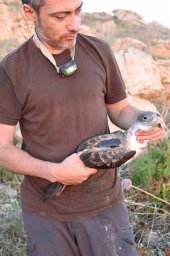 Jacopo G. Cecere合作论文数Department of Biology and Biotechnology Charles Darwin, University of Rome “La Sapienza”,6
 Javier Juste合作论文数Luisa s/n6
 Pere Abelló合作论文数Institut de Ciències del Mar ( CSIC );Passeig Joan de Borbó;Institut de Ciències del Mar ( CSIC )6
 Jose P. Granadeiro合作论文数Ctr Estudos Ambiente & Mar CESAM, Univ Lisbon6
 Maria P. Dias合作论文数BirdLife Int6
 Erkki Korpimäki合作论文数Section of Ecology, Department of Biology, University of Turku6
 Ridha Ouni合作论文数5
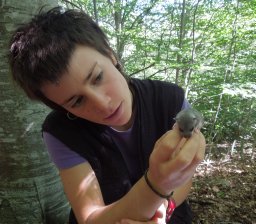 Lidia Freixas合作论文数5
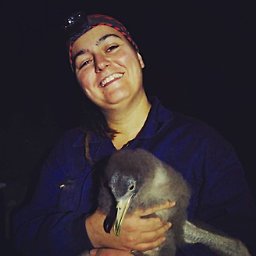 Virginia Morera-Pujol合作论文数Inst Recerca Biodiversitat IRBio, Univ Barcelona UB5
 Ana Payo-Payo合作论文数Sch Biol Sci Zool Bldg5Giacomo Dell'Omo合作论文数Ornis Italica, Piazza Crati 15, 00199 Roma, Italy.5Gómez Juan Antonio合作论文数5Bartolomé Miguel Angel合作论文数5
 Juan Becares合作论文数SEO/BirdLife, Programa marino5




