Abstract. Lycosa praegrandis C.L. Koch, 1836 is reported for the first time from the Republic of Kosovo, three specimens collected allow some discussion and illustration of ontogenetic colour change in this taxon.
Este trabalho tem como objetivo digitalizar e disseminar conhecimento sobre espécimes históricos de licosídeos malgaxes, como base para futuros pesquisadores que queiram revisar de forma abrangente esta fauna. Os tipos de Arctosa atroventrosa (Lenz, 1886), Geolycosa nossibeensis (Strand, 1907), Hippasosa fera (Strand, 1907) e Trochosa urbana hova Strand, 1907 foram examinados e documentados, e suas identidades taxonômicas são discutidas aqui. Arctosa atroventrosa é proposto como um nomen dubium. Geolycosa nossibeensis claramente não pertence a Geolycosa Montgomery, 1904 e é transferido para Trochosa C. L. Koch, 1847 como Trochosa nossibeensis comb. nov. Da mesma forma, H. fera é uma espécie válida, mas está mal alocada em Hippasosa Roewer, 1960 e não pertence a este gênero. Trochosa urbana hova, recentemente sinonimizada com a espécie nominal, é confirmada em sua atual posição taxonômica. Lycosa madagascariensis Vinson, 1863 é tratada como uma species inquirenda, pois os tipos não podem ser localizados, mas a menção de localidades específicas em Madagascar pode permitir que futuros pesquisadores designem um neótipo para reconhecer esta espécie. Lycosa signata Lenz, 1886 é tratada como uma espécie válida, embora uma designação de neótipo seja necessária no futuro, pois o holótipo foi destruído como resultado de bombardeios no Museu de Lübeck durante a Segunda Guerra Mundial e sua vulva nunca foi ilustrada anteriormente.
We reassess the palpal bulb morphology and taxonomy of Neischnocolus Petrunkevitch, 1925 based on the examination of several types of previously described species and the description of three new species (N. moraspungo Cisneros-Heredia, Pe & ntilde;aherrera-R., Guerrero-Campoverde, Le & oacute;n-E., Gabriel & Sherwood sp. nov., N. samonellaacademy Pe & ntilde;aherrera-R., Le & oacute;n-E., Guerrero-Campoverde, Gabriel, Sherwood & Cisneros-Heredia sp. nov., and N. tiputini Guerrero-Campoverde, Pe & ntilde;aherrera-R., Le & oacute;n-E., Gabriel, Sherwood & Cisneros-Heredia sp. nov.) from Ecuador. A new keel structure is named and herein considered as a valid diagnostic feature for the genus, previously identified as a prolateral inferior keel. The rest of the keel identification of Neischnocolus is also relabelled in concordance with Bertani's (2000) keel homology hypothesis. Amended diagnoses of almost all the species are provided, leaving only Neischnocolus obscurus (Ausserer, 1875) since the type material has not been located.
A checklist of the spiders of Ascension Island is given, with new faunistic records for one family, five genera, and three species-level taxa. For the latter, Oecobius marathaus Tikader, 1962 (Oecobiidae), and Scytodes velutina Heineken & Lowe, 1832 and S. univittata Simon, 1882 (both Scytodidae) are recorded. Seven genera recorded from the island by prior workers based on indeterminable immature material are expunged from the list due to lack of evidence. In total, 38 genera and 41 species, accommodated in 22 families, are recognised as valid taxa on Ascension. Of these, only 1 genus and 5 species are considered possibly or probably endemic, meaning 99.97% of genera and 87.81% of species are non-endemic.
The first photographs of preserved material of Andethele huanca Coyle, 1995 are presented based on a specimen collected in 2013 and deposited at the Zoological Institute of the Russian Academy of Sciences, St Petersburg, Russia. Differences in the genitalia of paratypes from disjunct localities are discussed, which may represent separate species and require further investigation. A biogeographic map, including the new locality record herein, is presented of the species under its present composition.
We catalogue the theraphosids of the subfamilies Harpactirinae and Stromatopelminae housed in the Zoological Institute of the Russian Academy of Sciences, Saint Petersburg. The first record of Pterinochulus raygabrieli Gallon, 2009 from Ethiopia is presented with discussion on the bulb morphology of this species, alongside faunistic data on Eucratoscelus constrictus (Gerstaecker, 1873) and Pterinochilus murinus Pocock, 1897 in Kenya, Idiothele nigrofulva (Pocock, 1898) in South Africa, and Stromatopelma calceatum (Fabricius, 1793) in Guinea.
A remarkable new species of Acanthoscurria Ausserer, 1871, is described from Colombia, Acanthoscurria armasi sp. nov., representing the first published record of the genus from this country. New insights into palpal bulb morphology and biogeography of the newly-proposed theraphosoides species-group are provided.
Two new species of Indothele Coyle, 1995 are described from the Western Ghats of India: I. amboli Kadam, Tripathi & Sherwood sp. nov. (♂♀) from Amboli in Maharashtra, and I. silentvalley Tripathi, Kadam & Sherwood sp. nov. (♂♀) from Silent Valley National Park in Kerala. Images of the type material of I. dumicola (Pocock, 1900), the type species, are presented to complement its identification. Additionally, the male of I. mala Coyle, 1995 is described for the first time. We transfer the misplaced Ischnothele indicola Tikader, 1969 to the genus Macrothele Ausserer, 1871 (Macrothelidae), creating the new combination Macrothele indicola comb. nov. A catalogue of Indian Ischnothelidae and their currently known distribution is mapped.
An annotated checklist of non-native spiders historically and contemporaneously known to have been accidently imported into the United Kingdom is given, a total of 35 families, 103 genera, and 131 species are accepted for the checklist. New records, based on material sent to the author over the last decade and further historical museum specimens examined, comprise 35 newly recorded species. Of these, three also represent the first records of their respective genera, and two the first records of their respective families. Five new taxonomic acts are proposed: Clubiona facilis O. Pickard- Cambridge, 1911, stat. rev. (Clubionidae); Bolostromus suspectus O. Pickard-Cambridge, 1911, nomen dubium (Cyrtaucheniidae); Lathys lepida O. Pickard-Cambridge, 1909, nomen dubium (Dictynidae); Orchestina dubia O. Pickard-Cambridge, 1911; nomen dubium (Oonopidae); and Melos bicolor O. Pickard-Cambridge, 1900, nomen dubium (Theridiidae).
Luis F. de Armas (b.1945) is one of Latin America's most esteemed arachnologists.Best known is his work on the scorpions of Latin America, especially those of the Caribbean and Mesoamerica.However, particularly on, but not restricted to, Cuba and the Dominican Republic he has advanced many publications on amblypygids, schizomids, solifugids, thelyphonids, and ricenulids.It is unsurprising given arachnids are Luis' expertise that within these groups he was focused not only on taxonomy but also ecology, teratology, conservation, zoogeography, and several other fields.
 Ray Gabriel合作论文数41Sylvia M. Lucas合作论文数13
 Antonio D. Brescovit合作论文数Lab Especial Colecoes Zool, Inst Butantan12
 Arnaud Henrard合作论文数8
 Liza Fowler合作论文数6Vicky Wilkins合作论文数5Pedro Penaherrera-R.合作论文数5
 Diego F. Cisneros-Heredia合作论文数College of Biological and Environmental Sciences;Universidad;College of Biological and Environmental Sciences, Universidad San Francisco de Quito5
 Yuri M. Marusik合作论文数Institute for Biological Problems5N.Philip Ashmole合作论文数4
 Rudy Jocque合作论文数4
 Shuqiang Li (李枢强)合作论文数Institute of Zoology, Chinese Academy of Sciences;University of Chinese Academy of Sciences3Martina Peters合作论文数2
 Rishikesh Tripathi合作论文数2
 Donard Geci合作论文数University of Prishtina "Hasan Prishtina",, University of Prishtina "Hasan Prishtina"2Peter Jäger合作论文数2
 Duniesky Ríos-Tamayo合作论文数Consejo Nacional de Investigaciones Científicas y Técnicas, Fundación Miguel Lillo Miguel Lillo2Guadanucci José Paulo Leite合作论文数2
 Jason A Dunlop合作论文数Leibniz Institute for Research on Evolution and Biodiversity, Humboldt University2
 Mark S. Harvey合作论文数Département Systématique et Evolution – Malacologie – USM 602, Muséum national d’Histoire naturelle2
 Theo Blick合作论文数Lehrstuhl für Tierökologie, Universität Bayreuth2
 Stuart J. Longhorn合作论文数Department of Entomology, The Natural History Museum2
 Fernando Perez-Miles合作论文数Instituto de Investigaciones;Division Zoologia Experimenta, Biologicas Clemente Establ e;Division Zoologia Experimenta, Instituto de Investigaciones|Biologicas Clemente Establ e2Adam Sharp合作论文数School of Medicine, University of Southampton2
 Dmitri V. Logunov合作论文数Manchester Museum, Univ Manchester2Roberto J. León-E.合作论文数1Karl Questel合作论文数1giraldo alayon garcia合作论文数1Didier Van den Spiegel合作论文数1Alex M. Cubas-Rodríguez合作论文数1
 Gautam Kadam合作论文数1Luis F. de Armas合作论文数1
 Willian Fabiano-da-Silva合作论文数1
 Varsha M. Trivedi合作论文数1
 Ambalaparambil V. Sudhikumar合作论文数Ctr Anim Taxon & Ecol CATE, Christ Coll1
 Taryn Anabelly Ghia合作论文数1Tom Brown合作论文数1
 Robin Casalla合作论文数Dept Quim & Biol, Univ Norte1
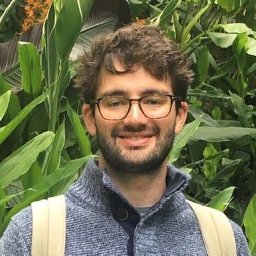 Oliver W White合作论文数Department of Natural Capital and Plant Health, Royal Botanic Gardens1
 Radan Kaderka合作论文数1Paweł Szymkowiak合作论文数1Yejie Lin合作论文数Hebei Key Lab Anim Divers, Langfang Normal Univ1
 John Caleb合作论文数Loyola Coll Autonomous, Entomol Res Inst1
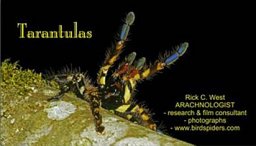 Rick West合作论文数6365 Willowpark Way, Sooke, British Columbia, Canada1
 Andie Claire Hall合作论文数1
 Pradeep Moothedathu Sankaran合作论文数Department of Zoology, Sacred Heart College;Email: pradeepmspala@rediffmail.com.;Department of Zoology, Sacred Heart College1
 Christine Rollard合作论文数1




