This paper aims to show how concepts and analytical methods of systemic functional linguistics can work congruently with other human practices to improve outcomes for those undergoing the suffering around loss of meaning and the absence of purposeful, self-directed experience. Based on a two-decade collaboration between linguists and psychotherapists in Sydney, Australia, and using the tools of text linguistics as developed by Michael A. K. Halliday and Ruqaiya Hasan in systemic functional theory, the paper presents an indicative selection of intense exchanges between traumatized persons and therapists (centrally the experience of ‘Ruth’). The level by level linguistic descriptions of these exchanges offer opportunities for understanding how progress in the clinical interaction might be achieved. The descriptions can also be evaluated against the theoretical claims of psychotherapy in psychiatry – in particular, the emphasis of the Conversational Model of Psychotherapy developed in England and Australia by Robert Hobson and Russell Meares, whose characterization of disorders involves an emphasis on ‘co-ordination’ and ‘cohesion’ within frontal lobe activity of traumatized patients. In this way the paper also explores conceptual parallels and intellectual antecedents shared between the Conversational Model and Systemic Functional Linguistics, contributing to the broader intellectual history of the human sciences.
Michael Halliday’s and Ruqaiya Hasan’s estates have been found to include a large amount of unpublished materials: draft papers, research notes, photographs, comments on student papers and so on. They comprise important elements of their legacy and a potential research resource. In this paper we outline a project to preserve and digitise these materials and to make them readily available internationally. The project is being carried out under the auspices of, and with the support of, the Australian Systemic Functional Linguistics Association Inc. (ASFLA).
The discussion sets out from ten vectors of linguistic endeavour – domains of linguistics that Christian Matthiessen has developed through advances of theory (e.g. in lexicogrammar and rhetorical structure), of tool power (e.g. in computational modelling), and of practical extensions of systemic "mapping" (i.e. in linked networks of speaker "choice"), as well as in his situational or register descriptions (especially in professional discourses). The crucial characteristic of Matthiessen's work is what we might call convergence, namely, the way his depth in a number of cognate disciplines allows him to bring out the relevance of language study to holistic issues, for instance, of human evolution, of learning, of brain sciences, and of semiotic forms that are analogues of language, or which recruit language to cultural innovation. Like his mentor, M.A.K. Halliday, Matthiessen seeks an integration that will enable linguistics to take on a central role in sciences in which the accuracy, range of coverage, and quantification of evidence promote social cohesion and "self" discoveries. The Matthiessonian cartography is here considered through references to stages in his career and by a number of comparisons with the work of other prodigious figures in 20th-century linguistics.
Michael Halliday's and Ruqaiya Hasan's estates have been found to include a large amount of unpublished materials: draft papers, research notes, photographs, comments on student papers and so on. They comprise important elements of their legacy and a potential research resource. In this paper we outline a project to preserve and digitise these materials and to make them readily available internationally. The project is being carried out under the auspices of, and with the support of, the Australian Systemic Functional Linguistics Association Inc. (ASFLA).
AbstractThe paper argues for a semiotic – in fact, a grammatical – origin to a profound dimension of the human psyche: William James (1890,1920[1892]) observed how there were far reaching effects from what he characterised as the “duplex self”. This ME/I relation requires cohesion, or co-ordination, much as first suggested by Hughlings Jackson and Théodule Ribot in the mid nineteenth century. The analysis of grammatical equations (identifying clauses) by the functional linguist M. A. K. Halliday can be called upon to show how many important relationships are enfolded in the apparently simple syntax of BE, and of some other cognate verbs. Through detailed exemplification, the paper shows how a double narrative of the “self” is an inevitable consequence of the first person taking on different combinations of grammatical address. This semiotic aspect of the psyche is also discussed in relation to bilaterian or “doubles” in a number of human sciences.
Linguistics has embraced the functional and contextual turn but, when building tools for systematic contextual description, we have not made as much use as we could of our own functional traditions. Rather, we have largely relied on the metaphors of law and rule, which do not adequately capture tensions between consistency and variability in how language and context relate to each other. Our aim in this paper is to show the economy and practicality of representing context as a pathway through a network, drawing on the network technique for mapping systems of grammatical choice introduced by Michael Halliday, and on its application to other linguistic strata first offered by Ruqaiya Hasan. The paper begins by outlining why alternative frameworks are needed for describing context-language relations. We then present a contextual network for one specific domain of the Systemic Functional Linguistic notion of Tenor, namely social distance , and use this to explore how different configurations of features of social distance influence the way that traditions of practice are passed on as a specialised legacy in two different professional collaborations. While the kind of context modelling discussed here is in a very early phase of development compared to phonetic, morphological and grammatical description, it has many advantages: contextual networks are paradigmatic in orientation; they help display and theorise metastability in language; they are “ad hoc” in Firth’s positive sense; and they constitute a proposal to be tested against observed behaviour within specific cultural and situational settings.
As major world languages - Chinese, Spanish and Portuguese, for instance - become the medium of university networks, it may be the right time to take stock of the influence that English has had over the way the disciplines of humanities and sciences have been shaped, directed and evaluated, in particular in the second half of the 20th century. This paper is an attempt to understand some of the textual, linguistic and historical determinants of Disciplinary English (DE) specifically in the spectrum of technical subjects. DE is now a way of meaning which has become associated with objective authority. From this association, DE has shaped our disciplinary knowledge and spread across to registers of bureaucratic and political subject matter. The discussion also considers innovative potential in disciplinary discourses, in particular what Halliday regarded as the "knight's move" in text: this is the related, analogical effect of Hasan's "symbolic articulation" in verbal art and grammatical metaphor in the language of technical disciplines.
Measuring adherence to a given psychotherapeutic approach has numerous benefits, such as ensuring therapist fidelity in the reporting of patient outcomes, the verification of therapist expertise, and facilitating the training of new psychotherapists by minimizing the cognitive load within a complex skill- set. The Conversational Model Therapy Adherence Scale (CoMTAS) was developed by Russell Meares, one of the founders of Conversational Model Therapy (CMT). Further refinement of the CoMTAS involved consultation with Meares and several workshops with senior clinicians. Pilot testing followed with expert and novice CMT clinicians rating gold standard CMT recordings, more robustly diverse therapy recordings of novice therapists, and also recordings where the raters were blind to the identity of the therapist and patient. The CoMTAS showed consistently high inter-rater reliability and test-retest reliability over a period of 11 weeks. Furthermore, expert clinicians rated similarly with novice clinicians, thereby suggesting that minimal training in CMT is required to make reliably valid judgements of CMT adherence on the CoMTAS.
 John Andrew Cartmill合作论文数16
 Alison Rotha Moore合作论文数Centre for Language in Social Life, Macquarie University15
 Caroline Henderson-Brooks合作论文数8Annabelle Lukin合作论文数6
 Russell Meares合作论文数Faculty of Medicine and Health, The University of Sydney5
 Rebekah K Wegener合作论文数Paris Lodron University Salzburg4Anthony Korner合作论文数4
 Joan Haliburn合作论文数4
 Phyllis Butow合作论文数School of Psychology, Faculty of Science, University of Sydney3Carmel Cloran合作论文数3
 Christian M.I.M. Matthiessen合作论文数Department of English,The Hong Kong Polytechnic University3Kathryn Tuckwell合作论文数2Kim-Chee Phan-Tien合作论文数2K Tucker合作论文数2T Dudding合作论文数2
 Y. J. Doran合作论文数Dept Linguist, Univ Sydney2
 Clara L Gaff合作论文数2
 Alexandra L Barratt合作论文数Faculty of Medicine and Health, The University of Sydney2
 Helen Caple合作论文数School of the Arts and Media, Faculty of Arts, Design & Architecture, The University of New South Wales2
 Frances Christie合作论文数2Ruqaiya Hasan合作论文数Department of Physiology;University of Karachi;New York Medical College;New York Medical College, University of Karachi2
 Jörg Cassens合作论文数Department of Computer Science, University of Hildesheim2
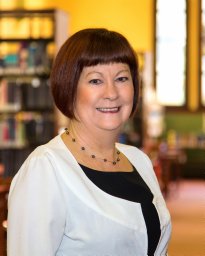 Elizabeth Anne Lobb合作论文数Psychology Research Unit, Medical;Department of Psychology;University of Sydney;Department of Psychology, University of Sydney2
 Jennifer Yameng Liang合作论文数1J Kirk合作论文数1José Luiz Meurer合作论文数1MHN TATTERSALL合作论文数1christopher s nesbitt合作论文数1jodie ellisclarke合作论文数1Michael M. Parr合作论文数1
 Richard F Brown合作论文数1
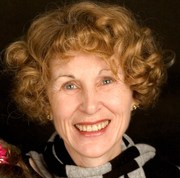 Janine Stevenson合作论文数School of Medicine, Faculty of Medicine and Health, The University of Sydney1
 Loyola Mclean合作论文数School of Medicine, Faculty of Medicine and Health, The University of Sydney1
 Nick Bendit合作论文数1Young L合作论文数1
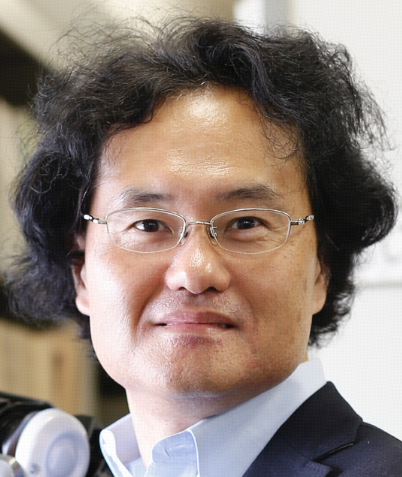 Ichiro Kobayashi (小林一郎)合作论文数Department of Information Sciences, Ochanomizu University1
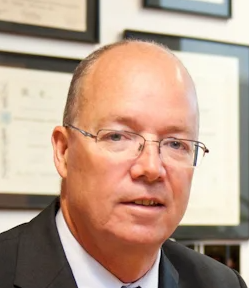 Michael K. Morgan合作论文数Macquarie University1
 M. A. K. Halliday合作论文数The Functional Linguistics Institute, Sun Yat-sen University1Judy Kirk合作论文数1
 Jonathan J. Webster合作论文数Department of Linguistics and Translation,College of Liberal Arts and Social Sciences,City University of Hong Kong1Nancy Santiano合作论文数1
 Shaun Halovic合作论文数1Hany Samir合作论文数1Anthony A. Eyers合作论文数1Canzhong Wu合作论文数Department of Linguistics, Macquarie University1




