Japan is a new country of immigration. While earlier migration research mentioned it, if at all, only as a non-immigration country and a prime example of a negative case, Japan has seen new and significant immigration flows since the late 1980s. Since the major immigration reform of 2018, this new immigration has gained additional momentum, and in the most recent national elections since 2024, immigration has also become a central issue on Japan's political agenda. This transformation into an immigration country and its politicization represent one of the most important aspects of social change in contemporary Japan and will shape the society in its future development as well. As could be expected, parallel to this transformation, immigration research on Japan has emerged as a new field of study in sociology and is gaining increasing momentum. This article discusses several important lines of development and challenges in this new field of research and examines the current state of scholarship. In addition, it proposes new possible approaches and topics for future research that have not yet been sufficiently explored.
This chapter discusses immigrant advocacy groups' influence in Japan's immigration policy. For three decades Japan has been a new immigration country. However, immigration policy has been marked by ideational and institutional fragmentation, resulting in a deadlock lacking bold reforms and immunizing state actors to external pressure. Against this backdrop, civil advocacy has been surprisingly influential. While civic groups have generally not been included in decision-making bodies, they have altered the perception of immigration. By analysing reforms combating human trafficking, this chapter identifies factors that resulted in indirect influence of civic advocacy in this case, allowing us to gain a differentiated understanding of the limited but still significant influence of civic activism on Japan's 'strong' state in immigration policy.
The 2018 reform is a dam break in Japan's immigration policy. Previously, for decades, the opening of the Japanese labour market for lower-qualified foreign workers was discussed without any comprehensive reform despite far-reaching proposals. This article discusses this change from a persistent standstill to comprehensive reform by analysing comparatively the frames and institutional setting in earlier immigration debates around 1970, around 1990, and around 2005 with the debate in the late 2010s. It argues that the persistent stalemate on the most hotly debated issue of immigration policy was due to the diversity of frames with very different policy implications and an institutional fragmentation in policy-making without any pivotal policy entrepreneur. The comprehensive reform of 2018 is the result of a window of opportunity by the conjuncture of a declining security frame as the main counterargument and by the centralization of decision-making in the core executive in the later years of the second term of Prime Minister Abe Shinz & omacr; (2012-20) on the level of institutional setting. Abe and his entourage were reluctant policy entrepreneurs who only realized the 2018 reform because of pressure and the absence of any other policy option. Still, they fundamentally changed the framework in Japanese immigration policy.
This study of teleworking during the COVID-19 pandemic avoids a common self-selection bias by controlling for preferences and whether the introduction of teleworking was voluntary or mandatory. In a survey (n = 1,500) conducted in December 2020, we inquired about working arrangements and agent preferences in January, April, and December 2020. Productivity levels initially did not significantly differ for newly teleworking individuals after correcting for age, gender, marital status, breadwinner and management roles, childcare gap, area, job type, and general awareness, but were negatively affected by a preference mismatch (PM; around -3pp) and cognitive dissonance (not going with one's preference in spite of having a chance to do so, adding another -5pp). By December 2020, individuals with a PM lost as much as 9pp of their productivity levels, but the net effect for those in partially remote work was only about -2pp. Similarly, stress levels initially did not differ for newly teleworking individuals using largely the same controls as before. By December 2020, stress levels for individuals newly undertaking fully remote telework were significantly lower than for the control group of individuals with unchanged working arrangements, but the PM contributed significantly to higher stress levels.
In the early 1980s, the People's Republic of China (PRC) and Japan joined the international refugee regime. This timing similarity is puzzling due to the stark differences between the PRC as a communist and authoritarian state versus Japan as a prime example of capitalist development and democratization. Moreover, although both signed the 1951 Refugee Convention and the 1967 Refugee Protocol without major reservations, neither of them has fully implemented these treaties. Discussions regarding the PRC's and Japan's engagement with the international refugee regime tend to start with the beginning of the Indochina refugee crisis in 1975. However, this article shows that the early decades of their interaction with the international refugee regime are of crucial importance for a full understanding of the timing and form of accession to the international refugee regime. Although the Southeast Asian refugee crisis played an important role as a trigger, it was the changing character of the international refugee regime and the transformations of state identity in both countries that set the ground for the signing of the refugee-related conventions.
What was and what will remain of the Tokyo 2020/2021 Olympic and Paralympic Games? This special issue brings together assessments from different perspectives regarding diverse aspects of the impact and legacy of Tokyo's second Summer Olympics. It is safe to say that Tokyo 2020/2021, as the COVID-19 games, did not fully achieve what the Japanese organizers had hoped it would. On the contrary, the Olympic dream of 2020 was postponed and met quite substantial opposition. This introduction discusses the main findings of the contributions and places them in the larger context. The focus is on four aspects of Tokyo 2020/2021: 1) the Olympics as a political project of the conservative establishment and former Prime Minister Abe Shinzō; 2) critical perspectives on the Olympics as a mega event; 3) social movements and protests against the Olympics; 4) impact of the Olympics on technological innovation and city infrastructure.
Abstract Japan finds itself in a double bind. On the one hand, the United States (US) has been a committed military ally, guaranteeing the national security of Japan since 1952. Any discussion of abandonment by the US sends shockwaves throughout the conservative security establishment of Japan. On the other hand, the rise of the People’s Republic of China (PRC) has transformed it into the most important trade partner of Japan, by far. Japan is interested in a continued expansion of the PRC economy. This paper analyzes the foreign economic policy of Japan and the security policy of the conservative, LDP-led governments under the leadership of Prime Minister Shinzō Abe (2012–2020) and his successors in this complex interplay of international relations and national politics.
Reviewed by: Japan's Living Politics: Grassroots Action and the Crises of Democracy by Tessa Morris-Suzuki David Chiavacci (bio) Japan's Living Politics: Grassroots Action and the Crises of Democracy. By Tessa Morris-Suzuki. Cambridge University Press, 2020. xii, 236 pages. $99.99, cloth; $80.00, E-book. Tessa Morris-Suzuki is well known for her innovative contributions that have given us new perspectives and research topics on Japan and its modern history. She is definitively not somebody who follows well-trodden paths. Her new book, Japan's Living Politics, on grassroots activism in rural Japan [End Page 218] is another fine example of this and a welcome contribution by an excellent and experienced scholar. The main regional focus of the monograph is on activities in the Chikuma River valley in Nagano Prefecture. After a short overview of early thoughts on political autonomy and bottom-up initiatives and their circulation in Japan and abroad, the main part of the book consists of seven chapters in which different case studies of rural grassroots activism in modern Japan are discussed and analyzed. This tour starts with the White Birch (Shirakaba) Movement of alternative education in the early twentieth century in the Chikuma River valley (chapter 3). It continues with a discussion on alternative and experimental forms of community and village organization in the New Village in Kyushu which developed out of the White Birch Movement and still exists today (chapter 4). Then, Morris-Suzuki returns to the Chikuma River valley and presents to her readers three cultural movements (Nōmin Bijutsu Undō [Peasant Art Movement], Jiyūga Undō [Free Drawing Movement], and Jiyū Daigaku [Free University]) that originated there and achieved nationwide influence in interwar Japan (chapter 5). The theme of chapter 6 is the valley's Saku Central Hospital as an example of the role of cooperatives in Japan's health care system and in social movements in general. Youth groups and the construction of autonomous spaces in local societies in postwar Japan are the focus of chapter 7. In the last two case studies, the author analyzes alternative schooling initiatives and environmental movements of the 1980s in the Chikuma River valley (chapter 8) as well as the development of the Citizen Radiation Measuring Stations after the Great East Japan Earthquake and Fukushima nuclear disaster (chapter 9). These new case studies, which have rarely been touched upon in academic work, already make the book an important publication, but what makes Morris-Suzuki's monograph even more appealing and pleasant for the reader is her elegant style of writing. Without overloading the reader or becoming caught up in minute details, she takes us through a journey by intertwining historical sources with the astute observations from her contemporary fieldwork that connect the past with the present. She achieves a very nice balance between giving her analysis empirical substance and keeping her eye on the overall narrative. Despite being an academic work, her book is like a gentle flow through time and space. Especially interesting is the analysis of the transnational exchange and reciprocal influence of new ideas about education, in which Morris-Suzuki shows that the White Birch Movement in Japan was not just an adoption of a Western brainchild but the result of a global circulation of alternative ideas and models in education in the early twentieth century, in which Indian thinkers and reformers such as Rabindranath Tagore played a crucial role (pp. 56–65). Her study reminds us that modernization and industrialization [End Page 219] are truly transformative processes. While cities are generally seen as the driving centers of the fast-changing modern world and its new level of speed and intensity, rural communities might seem to be marked by much more continuity and a kind of coziness. However, rural areas also have to digest modern life and its less beneficial aspects, such as social differentiation and environmental pollution. Like those in the cities, rural residents must address questions of protection and integration, give new meanings to local activities, and recreate forms of autonomy. Still, Morris-Suzuki's new book also has important weaknesses. In order to give her study theoretical foundation, she develops the concept of "informal life politics...
Japanese Journal of SociologyVolume 31, Issue 1 p. 127-130 BOOK REVIEW Social change in Japan, 1989–2019: Social status, social consciousness, attitudes and values. Carola Hommerich, Naoki Sudo, and Toru Kikkawa London: Routledge, 2021. pp. x and 175, £96.00 (hardback ISBN 978-0-367-35377-3) David Chiavacci, Corresponding Author David Chiavacci david.chiavacci@aoi.uzh.ch orcid.org/0000-0002-1747-2907 University of Zurich, Zürich, SwitzerlandSearch for more papers by this author David Chiavacci, Corresponding Author David Chiavacci david.chiavacci@aoi.uzh.ch orcid.org/0000-0002-1747-2907 University of Zurich, Zürich, SwitzerlandSearch for more papers by this author First published: 14 April 2022 https://doi.org/10.1111/ijjs.12131Read the full textAboutPDF ToolsRequest permissionExport citationAdd to favoritesTrack citation ShareShare Give accessShare full text accessShare full-text accessPlease review our Terms and Conditions of Use and check box below to share full-text version of article.I have read and accept the Wiley Online Library Terms and Conditions of UseShareable LinkUse the link below to share a full-text version of this article with your friends and colleagues. Learn more.Copy URL Share a linkShare onFacebookTwitterLinkedInRedditWechat Volume31, Issue1Special Issue: Challenges of COVID-19 Pandemic to Japanese SocietyMarch 2022Pages 127-130 RelatedInformation
eBook: Armstrong, Andrew B.: 24 Bars to Kill. Hip Hop, Aspiration, and Japan’s Social Margins. New York: Berghahn Books, 2019. 193 pp. ISBN 978-1-78920-267-0. (Dance and Performance Studies, 14) Price: $ 120.00 (ISSN0257-9774) von aus dem Jahr 2021
Civil Society and the State in Democratic East Asia: Between Entanglement and Contention in Post High Growth focuses on the new and diversifying interactions between civil society and the state in contemporary East Asia by including cases of entanglement and contention in the three fully consolidated democracies in the area: Japan, South Korea and Taiwan. The contributions to this book argue that all three countries have reached a new era of post high growth and mature democracy, leading to new social anxieties and increasing normative diversity, which have direct repercussions on the relationship between the state and civil society. It introduces a comparative perspective in identifying and discussing similarities and differences in East Asia based on in-depth case studies in the fields of environmental issues, national identities as well as neoliberalism and social inclusion that go beyond the classic dichotomy of state vs ‘liberal’ civil society.
 Julia Obinger合作论文数4
 iris wieczorek合作论文数4
 Christoph Brumann合作论文数Max Planck Institute for Social Anthropology4Raji C. Steineck合作论文数Univ Zurich3
 Carola Hommerich合作论文数University of Cologne Research Institute for Sociology3
 Simona Alba Grano合作论文数3
 Stefania Lottanti von Mandach合作论文数2Verena Blechinger-Talcott合作论文数2
 Georg Blind合作论文数2
 Sebastien Lechevalier合作论文数Ecole des Hautes Etudes en Sciences Sociales2albrecht rothacher合作论文数1julia canstein合作论文数1
 Wilhelm Vosse合作论文数International Christian University (ICU, University of Leiden1
 Elena Soboleva合作论文数Higher Sch Econ, Natl Res Univ1
 Masahiro Kotosaka合作论文数1manfred pohl合作论文数1
 Akihiro Ogawa合作论文数1
 Ming-sho Ho合作论文数1
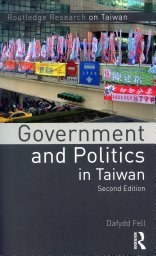 Dafydd Fell合作论文数School of Oriental and African Studies, University of London1
 Mary Alice Haddad合作论文数Government Department, Wesleyan University1
 Naoto Higuchi合作论文数1robert f wittkamp合作论文数1
 Celeste Arrington合作论文数1




