Die meisten Hochschulstudierenden gehören zur Generation der Millennials oder der Generation Z. Diese Generationen konsumieren intensiv die sozialen Medien auf einer Reihe von Plattformen. Es gibt Forschungen über die Nutzung sozialer Medien durch das US-Militär, aber es ist weniger über die alltäglichen Auswirkungen der Nutzung sozialer Medien bekannt und darüber, wie sich die Mitglieder des Militärs in ihrer Nutzung von ihren zivilen Kommilitonen unterscheiden könnten. Anhand von Umfragedaten, die amerikanische zivile College-Studenten, Kadetten des Reserve Officer Training Corps und Kadetten von Militärakademien vergleichen (N = 960), untersuchen wir, wie diese Gruppen soziale Medien nutzen, welche pädagogischen und sozialen Auswirkungen diese Nutzung hat und welche Erfahrungen sie mit Selbstzensur und Angst machen. Wir stellen eine Kluft zwischen Zivilpersonen und Militärs fest, wenn es um die Nutzung und die Erfahrungen mit sozialen Medien geht. Die Nutzung sozialer Medien ist für Zivilpersonen nachteiliger als für Kadetten und Kadettinnen, was die Nutzungsdauer, die Auswirkungen auf die Bildung und die Erfahrungen mit den negativen Aspekten wie Cybermobbing und Belästigung angeht. Zivilpersonen üben auch weniger Selbstzensur bei Beiträgen in sozialen Medien als Kadetten oder Kadettinnen.
Most college undergraduates are Millennials or Generation Z members. These generations are ferocious social media consumers across a range of platforms. Research exists on the U.S. military’s adoption of social media, but less is known about the everyday implications of social media use and how service members might differ in their uses from their civilian peers. Using survey data comparing (N = 960) American civilian college students, Reserve Officer Training Corps cadets, and military academy cadets, we examine how these groups use social media, the educational and social impacts of this usage, and experiences with self-censorship and anxiety. We find a civilian-military gap when it comes to social media uses and experiences. Social media is more adverse for civilians than academy cadets in terms of time usage, impact on education, and experiences with the darker dimensions such as cyber-bullying and harassment. Civilians also practice less self-censorship of social media posts than cadets.
We explore American military academy, Reserve Officers' Training Corps (ROTC) and civilian undergraduate attitudes toward transgender people in general, in the workplace, and in the military. Earlier this decade, the US military experienced both the repeals of the Don't Ask, Don't Tell policy and the exclusion of women from combat, yet transgender people are prohibited from serving openly in the military. This study explores tolerance toward perceived gender nonconformity by military affiliation, race/ethnicity, sex, religious affiliation, and political leaning. Most members of our sample, regardless of military affiliation, do not report that having a transgender person in the workplace would impact their job. At first glance, military academy and ROTC cadets are least tolerant of transgender people in the military and in society more generally. Further analyses shows that the impact of military affiliation is reduced substantially by controlling for background characteristics, especially political ideology and religious affiliation.
The repeal of combat restrictions by gender raises the importance of understanding factors related to the acceptance of women serving in the full range of military jobs. Previous research shows military affiliated cadets, especially males, are substantially less approving of women serving in military jobs, especially those involving exposure to direct combat or command positions, than are other college students. The current study extends these findings by considering political ideology in addition to gender and military affiliation, as related to attitudes toward women's roles in the military overall and in combat roles in particular. Survey data from Service Academy cadets (n = 3,116), Reserve Officer Training Corps (ROTC) cadets (n = 1,367), and nonmilitary affiliated college students (n = 2,648), provided measures of whether a woman should or should not be allowed to serve in 9 different military job areas. In addition to overall approval, a scale for combat jobs was created from a subset of 4 of the jobs. Regression analysis indicated that once gender, political party, political position (left/right), and attitudes toward mothers in the workforce overall were controlled, type of college did not add to the prediction of acceptance of women in various military roles. In general, nonmilitary affiliated respondents, women, and those identifying as Democrat offered higher approval scores. Our findings suggest more aggressive programs, designed to educate and socialize these future leaders about women's roles in the military, may require development.
Sociological social psychology emphasizes the impacts of society on social psychological processes. There are three major perspectives in sociological social psychology: symbolic interaction, social structure and personality, and group processes. The symbolic interactionist perspective emphasizes the ways that individuals construct social reality through social interaction. Alternatively, the social structure and personality perspective emphasizes the relatively stable elements of social structure that impact interactions among people such as roles, statuses, and norms. Finally, the group processes perspective focuses on the ways that societal conditions are recreated in small group environments and how interactions in groups contribute to the maintenance of society. These perspectives are being extended to include the study of sociobiology, the intersection of social and biological conditions that impact social psychological process.
African-Americans in the U.S. military encompass at least two distinct identity groups: a racial status associated with lower support for the wars in Afghanistan and Iraq, and a military status which tends to be more 'hawkish' in perspective. This study examines the intersection of these two status characteristics utilizing survey data of American military academy cadets, Reserve Officer Training Corp (ROTC) cadets, and civilian students (n = 5,051). Majorities of military cadets, regardless of race, supported both of these wars more than their civilian counterparts, but African-Americans are significantly less supportive of the wars relative to their peers within each group. African-American cadets support both wars less so than whites and cadets of other races, but African-American cadets supported both wars more than African-American civilians. It appears that racial and military affiliations combine to yield a unique perspective on war, adapting elements of both statuses. These findings support the concept of intersectionality.
Mattering is a dimension of our self-concept referring to how important we think we are to others. Social interaction is essential to the development of mattering because it provides the opportunity to affirm one's connections with others. I use longitudinal data from a survey of Russian Army officers undergoing organizational downsizing to assess the relative effects of macro-social conditions, measured in terms of distance to urban centers, and micro-social conditions, measured by quantity of social interaction and employment status, on individual sense of mattering. I find that both macroand micro-level social conditions can impact sense of mattering, albeit in different ways. On the individual level, being unemployed is associated with the greatest loss of mattering over time, probably because the unemployed no longer represent a major source of income support for their families, whereas respondents with more social interaction report higher levels of mattering. On the macro level, respondents living in more remote areas report lower levels of mattering than those closer to cities and towns. Additional findings show that the positive effects of social interaction on mattering are particularly strong in more remote areas. [1] --------------[2]
Collective self-esteem refers to individuals’ evaluations of their social identities, their group affiliations. Private collective self-esteem includes assessments of how individuals privately evaluate their social group or groups while public collective self-esteem assesses how individuals believe others evaluate their social group or groups. This study examines the relationships between military cadets’ personal self-esteem, private and public collective selfesteem, and well-being. We find that cadets with higher private and public collective self-esteem also report higher personal self-esteem and lower levels of depression. While both private and public collective self-esteem have direct effects on depression, most of the effects of public collective self-esteem operate through personal self-esteem.
This chapter puts forth how the Millennial generation views the current armed services, future service, and national service in the United States. Explored specifically are the Millennials' views of serving for and in the military, their own willingness to serve, and the factors associated with supporting military service and/or national service across gender lines. Millennial civilians possess a great respect for military service and concomitantly want no part of it. If a military-civilian divide exists, the datum suggests civilians are happy with it. The findings point to a modest gap of sorts that will likely continue to be a challenge and may impact military recruitment from nontraditional groups and sectors in American society.
The authors investigate a gap in attitudes toward homosexuals in the U. S. military among a select group of people-American civilian undergraduates, Reserve Officer Training Corp (ROTC) cadets, and cadets at military academies. Using a subsample (N = 3057) of data from the Biannual Attitude Survey of Students (BASS), being a military academy cadet is associated with the strongest agreement for barring homosexuals from serving in the military, followed by ROTC cadets and civilians. These trends continue when controlling for respondents' sex and political affiliation-the two most significant predictors of agreeing to bar homosexuals from military service. A small reduction in agreement for barring was found among academy cadets over time.
 Morten G. Ender合作论文数Department of Behavioral Sciences and Leadership,United States Military Academy in West Point NY USA25
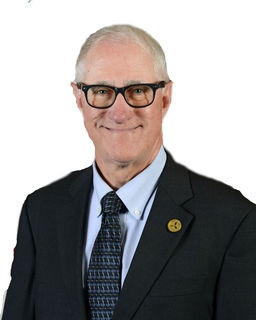 Michael D. Matthews合作论文数United States Military Academy in West Point20
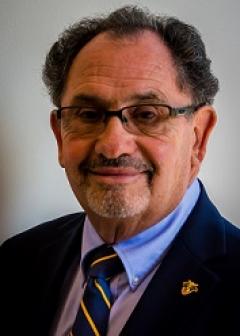 David R. Segal合作论文数Department of Sociology, University of Maryland;Center for Research on Military Organization, University of Maryland4
 Chad Ewing合作论文数2jonathan day合作论文数Western Illinois University2
 Mady Wechsler Segal合作论文数University of Maryland2
 Casey Lafrance合作论文数2
 Janice Laurence合作论文数2
 Ryan Kelty合作论文数2joseph c jones合作论文数1briana milavec合作论文数1Brian J. Reed合作论文数1I. Smith合作论文数1James Martin合作论文数1Elizabeth M Caffrey合作论文数1Angela Manos合作论文数1
 Cliff Brown合作论文数Glenn Research Center1




