chapter Share on Development of Correct Programs Author: David Gries View Profile Authors Info & Claims Edsger Wybe Dijkstra: His Life,Work, and LegacyJuly 2022 Pages 141–168https://doi.org/10.1145/3544585.3544594Published:13 July 2022Publication History 0citation4DownloadsMetricsTotal Citations0Total Downloads4Last 12 Months4Last 6 weeks1 Get Citation AlertsNew Citation Alert added!This alert has been successfully added and will be sent to:You will be notified whenever a record that you have chosen has been cited.To manage your alert preferences, click on the button below.Manage my Alerts New Citation Alert!Please log in to your account Save to BinderSave to BinderCreate a New BinderNameCancelCreateExport CitationPublisher SiteGet Access
Here, the authors strive to change the way logic and discrete math are taught in computer science and mathematics: while many books treat logic simply as another topic of study, this one is unique in its willingness to go one step further. The book traets logic as a basic tool which may be applied in essentially every other area.
NOTE: The first page of text has been automatically extracted and included below in lieu of an abstract CPAS: On the Structure and Usability of a Course Planning and Audit System Abstract We present CPAS, a system that allows students and their advisors to track progress in an academic program. Our design is able to perform a semi-automatic audit of degree requirements; the only human-approved components are ones that require discretion. The underlying mechanism is based on robust propositional logic with extensions that make the entry, interpretation, and audit of complex degree requirements straightforward. The system also includes support for human-approved requirements due to the natural discretion that must be applied when evaluating certain requirements, such as multiple courses with a “cohesive theme”. Additionally, we demonstrate an implementation, which focuses on providing a clear, straightforward interface for all users while maintaining the appropriate level of security and privacy. To the best of our knowledge, CPAS is the first degree audit system that was designed with a web-based, graphical interface from the start. CPAS indicates in simple terms how a student is progressing in the degree and allows students to explore other academic programs offered at their university. We also address several key software engineering research questions, such as the storage of complex major requirements and the design of lucid user interfaces for a variety of users. Considering the number of academic institutions and the variety of academic programs offered, quantifying and collecting correct expressions for major requirements in our system is a nontrivial problem. We explore the possibility of using a collaborative social network, with appropriate security and quality controls, for this purpose. We show how CPAS was used to enter the major requirements of complete academic programs and present a visualization functionality that illustrates such programs. CPAS is a fundamental contribution to education research since it provides a way for academic programs to be mapped out in a generalized ontology. Thus, it allows students to maximally utilize the academic resources of their university, and it allows faculty members and departments to plan and represent programs and to advise students effectively. 1 Introduction Traditionally, course selection and degree audits at Cornell and many other higher education institutions have been performed with paper and pencil tools or individually designed spreadsheets used by both students and departments. A fully automated solution is impossible, since some requirements need approval of the advisor or involve vague guidelines only, for example, that two courses must be “in related disciplines”. Our Course Planning and Audit System (CPAS) integrates automatically auditable requirements with those that must be manually approved in a straightforward way using a simple, well-designed web-based interface. CPAS allows degree requirements to be easily specified by department staff in a very general way. It was used in a prototype system to define the computer science degree requirements in the Engineering and Arts & Sciences colleges at Cornell and several majors at other universities.
One big challenge of teaching discrete mathematics/structures ("discrete math" from here on) is not students' appreciation of the material but the timing of this appreciation. Some (many?) students ask "Why do we have to learn all this?" as they study sequences, mathematical induction, counting, probability, etc., relatively early in their college years. Unfortunately, the most convincing answer comes during the subsequent semesters, and it comes in many iterations. Aside from the courses that obviously depend on this branch of mathematics (i.e. Algorithms, Data Structures, etc.), concepts and notation first introduced in discrete math are utilized in technical treatments of computer networking ([1], [5]), computer organization [2], natural language processing (for probabilistic arguments), web sciences (for network structure arguments [3]), modeling, etc.
There has been debate about whether OO should, or even can, be taught first in CS1 (using Java). We claim that OO can be taught successfully, provided certain principles are followed. These principles lead to the requirement of an appropriate model for classes and objects, which we provide.
Teaching our students how to think about the programming process would increase our effectiveness as teachers and make our curriculum more efficient
 Fred B. Schneider合作论文数Department of Computer Science, Cornell University53
 w m turski合作论文数28
 Frank Dehne合作论文数School of Computer Science, Carleton University22
 Paul Gries合作论文数University of Toronto16
 Paul Young合作论文数School of Chemistry and Molecular Biosciences, Faculty of Science, The University of Queensland9G. Seegmüller合作论文数9Josef Stoer合作论文数9
 Edsger W. Dijkstra合作论文数The University of Texas at Austin7PB Hansen合作论文数6C Moler合作论文数5
 Douglas E. Comer合作论文数Department of Computer Science, Purdue University5
 Jayadev Misra合作论文数Department of Computer Sciences, College of Natural Science, The University of Texas at Austin5
 Susan Owicki合作论文数Strategic Technologies and Architectural Research Laboratory5T. V. Raman合作论文数IBM Research;Almaden Research Center5
 Peter J. Denning合作论文数Cebrowski Institute, Naval Postgraduate School;Computer Science Department, Naval Postgraduate School5
 Allen B. Tucker合作论文数Department of Computer Science, Bowdoin College5
 Niklaus Wirth (尼克劳斯·维尔特)合作论文数Departement Informatik, ETH Zurich5p brinch hansen合作论文数4richard walter conway合作论文数4Dorothy Marsh合作论文数4HR WIEHLE合作论文数4W Brauer合作论文数4N Wirth合作论文数4
 Wilfried Brauer合作论文数Technische Universität München4
 Manfred Hans Bertold Broy合作论文数Department of Software & Systems Engineering, Faculty of Computer Science, Technische Universitat Munchen4
 Cleve Moler合作论文数The MathWorks, Inc.4Michael C. Mulder合作论文数4Joe Turner合作论文数3J Hartmanis合作论文数3
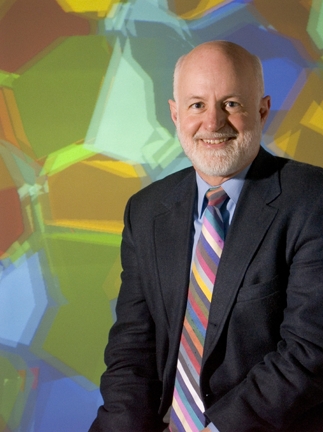 Robert L. Constable合作论文数Computer Science Department, Cornell University3
 Vicki L. Almstrum合作论文数3M. Paul合作论文数3Whj Feijen合作论文数2Van Nguyen合作论文数2Robert Melville合作论文数2G Goos合作论文数2
 Willem-Paul de Roever合作论文数2
 Alexander Ershov合作论文数2Michael G. Hinchey合作论文数2Richard Conway合作论文数Biomedical Electronics Laboratory;Department of Electronic and Computer Engineering;University of Limerick;Biomedical Electronics Laboratory, University of Limerick2
 Jennifer Widom合作论文数School of Engineering, Stanford University2
 Alan J. Demers合作论文数Department of Computer Science, Cornell University2
 Ursula Wolz合作论文数Computer Science and Interactive Multimedia, The College of New Jersey;Riversound Solutions;Eugene Lang College of Liberal Arts, The New School2
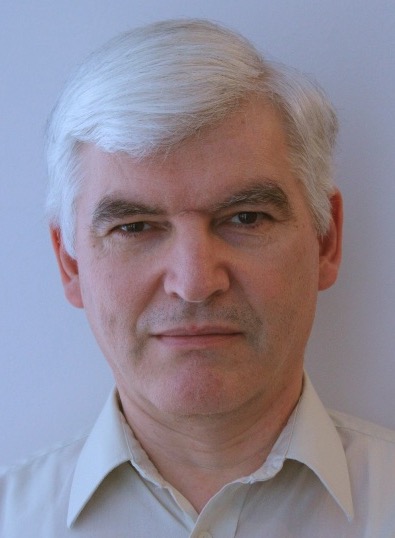 Ivan Stojmenovic合作论文数Department of Energetics, Electronics and Telecommunications, University of Novi Sad2Gary M. Levin合作论文数University of Florida, University of Florida2
 Dennis M. Volpano合作论文数Department of Computer Science2
 Paul Pritchard合作论文数Cornell Univ., Ithaca, NY2
 A. Joe Turner合作论文数College of Information Systems, Zayed University2
 Alan J. Perlis (艾伦·佩利)合作论文数Department of Computer Science, Yale University2




