This paper outlines a novel approach to design a waveguide to microstrip Finline transition, that allows a division by three of the RF power traveling inside a rectangular waveguide. The possibility of obtaining and odd power division of microwave and millimeter wave signals with such Finline transition is completely unexplored yet harbinger of great opportunities. Starting from a 3D CAD model of the structure and continuing with Electromagnetic simulations, the obtained results completely describe a transition able to achieve an almost perfect power splitting by three. Multyphisics simulations, show an intrinsic resistance to vibrations of such transition, allowing it to be installed on aircraft or satellites modules. Thanks to this achievement a total new kind of power devices will come next, exploiting this odd power division in fact, it will be possible to realize different types of microwave amplifiers, increasing the efficiency and decreasing the occupied size. At the Author’s best knowledge it is the first time a divider by three Finline transition is reported in literature.
The design and the fully coupled Thermodynamic and Structural Mechanics simulation of a Spatial Power Amplifier are described in this paper. The amplifier is realized in a WR90 waveguide, employing Fin-Line Transitions and Monolithic Microwave Integrated Circuit Solid State Power Amplifiers. Global performances of active devices and combining structure have a critical dependence to the thermo-mechanical condition of operation. The temperature alterations and thermal expansions, related to the power dissipation of the devices, have been analyzed in order to lead the amplifier at extreme power output, avoiding malfunctions. The proposed analysis accounts for the effects of different distributions of heat flux and stresses as a consequence of the different power consumption of the Driver and Final stage transistors. The amplifier combines 16 active devices of 7.9 W maximum power output with a power dissipation of 20 W, heating the transistor channel to140° and deforming the mechanical structure to 4.9µm with a maximum stress of 0.41 GN/m2. A maximum power output of 112W with a Return Loss greater than 12 dB in the whole X-Band is ensured
This paper describes the design of an X-Band Magnetron to Linear Accelerator (LINAC) High Power Transfer System consisting in an 8 resonant cavities Magnetron connected to a dedicated vacuum Dielectric Window (DW). A main analytical design of devices is shown with compact formulas and is followed by numerical optimization. Electromagnetic and Thermomechanical coupling between these devices is described, particular attention has been given to the Magnetron power coupling and DW matching. A Multiphysics modeling is proposed to consider thermal-structural effects due to the cathode heating for the Magnetron and the Joule effect for the DW. Thermal induced degradation of the device performances are estimated and proper materials and shapes are chosen in order to ensure the desired behavior of the system in operative conditions. The proposed study provided the evaluation of the Magnetron Working Points and DW Scattering parameters in Thermo-mechanical operative conditions. Technological strategies for device coupling are shown.
In this article the new frontier in Spatial Power Amplifiers is shown, with particular attention to the their Space Applications. These amplifiers have in fact the characteristic of High RF Power, Solid State Technology and High Power Density due to the small sizes that can be reached. We will show the performances of three amplifiers employing the spatial combining technique, two prototypes in the X-Band and one in the Ka-Band, with a brief description of the design approach. These amplifiers belong to the Single Waveguide group of the SPC family, thus a WR90 and a WR28 waveguides are employed. Very good performances are obtained from these prototypes, with a very high power density due their small sizes.
This paper deals with the design and realization of a coaxial Wideband Spatial Power Combiner. It is composed by 16 amplifier modules in order to potentially deliver 50dBm in the 3.5-20GHz. New tips have been adopted to reduce reflections and loss and to avoid resonance occurring in the whole operating bandwidth. Only the passive elements have been assembled and characterized.
Recent developments in the design of high-power–high-frequency amplifiers are assessed in this paper by the analysis and measurements of a high power density amplifier operating in the Ka Band. Design procedure is presented and a technical investigation is reported. The proposed device has shown over 23% of useful frequency bandwidth. It is an ensemble of 16 monolithic solid state power amplifiers that employees mixed technologies as spatial and planar combiners. Test performed have given maximum delivered power of 47.2 dBm.
Drones, a technical nickname for unmanned aerial vehicles (UAVs) are gaining more and more interest and popularity. Supported by the miniaturization and cost reduction of electronic components, a new class of UAVs called Nano-air vehicles or NAVs represent the future technology for indoor and outdoor mission. One of the main considerations when building or buying a drone is the flight time and range. The flight time is nowadays a drawback for miniature unmanned aerial vehicles (UAVs). It is limited to a few minutes before requiring a forced recovery to replace exhausted batteries. Currently the batteries are the dominant technology, which possess limited operation in time and energy. The real viability to extending flight time (FT) of NAVs is possibly exploring new and more disruptive alternative solution able either to recharge a battery, or even to directly power the NAVs during the flight. A Plasmonic Nano Energy harvester is an attractive technology to extending the FT extracting the energy in mid-infrared radiation emitted from Earth's surface with Rectenna tuned to mid-infrared wavelengths (7-14 mu m) with a peak wavelength of about 10 mu m. In this review the concepts emerging from this work identify and suggest how this novel harvester can constantly supply these flying objects for the whole day.
A Spatial Power Combiner is proposed using an innovative waveguide to microstrip transition capable to divide the electric field in six equal parts per card. This device can combine 12 MMIC Solid State Power Amplifiers in the whole X Band with 13 dB of return loss and only 2.2 dB losses in a small size, high power and high efficiency system.
This paper proposes a technique to design wide band switched-line (SL) true-time-delay (TTD) networks, commonly used for phased array antenna (PAA) applications. This study investigates the constant-delay behavior of switched-line phase shifters based on single-pole double-throw (SPDT) switches. Circuit sizing starts by considering the effective S-parameters of the switches, to use their non-idealities as an integral part of the phase shift linearly dependent to the frequency and by considering, from the beginning, the possible spatial positioning of elements that allows the circuit feasibility as a design target. The aim of this study is to provide a technique suitable for the design of well-matched TTD networks with a flat delay in wide bandwidth. In this paper, we propose new design formulas for which we show a single-frequency implementation. A computational strategy is used to obtain numerical solutions of the derived equations with this study. Finally, a monolithic X-band TTD circuit example is shown.
Nano Air Vehicles (NAVs), are gaining more and more interest and popularity. Currently, the NAVs are powered by high energy density lithium-ion or lithium polymer batteries. The flight time (FT) is usually limited between 5 and 20 minutes before requiring a forced recovery to replace exhausted batteries. In several scenarios, where the human intervention cannot be performed, e.g., toxic and radiation environments, to replace exhausted batteries might be impossible. The FT is becoming a challenge in the design of these small objects. Nano Energy harvesting is an attractive technology to extend the FT. Infrared emissions can generate a substantial amount of energy, during day and night to constantly supply these flying objects for the whole day. This work reviews some new and efficient approaches to absorb the incident IR radiation, treating it as electromagnetic waves. The key element for harvesting IR energy from the sun is a Rectenna which is a combination of a Nano - Antenna and a rectifier, tuned to mid-infrared wavelengths (7 -14 μm ) with a peak wavelength of about 10 μm.
This paper deals with a broadband TE10 to TE20 mode transformer in a WR90 rectangular waveguide with more than 35 dB suppression of the fundamental mode and only 0.4 dB of maximum transformation loss. Two fin lines are employed with appropriate configuration in order to obtain a broadband mode transformation.
A novel real-time charged particle detector for medical accelerators is proposed in this paper. The system, by means of a passive resonant cavity, performs a non destructive measurement of the beam current and provides a real time monitoring of the absorbed dose delivered to the patient. The system complies with requirements of the relevant International Standards for being used as a Radiation Detector for Charged Particles. The formulated theory allows the system design versus the accelerator features by providing analytical formulas and a development strategy. A prototype has been realized and tested in order to check the compliance with the expected behavior in the operating conditions of the Medical Accelerator. The system has been proved to be equivalent to the standard ionization based monitor chambers, furthermore offering several advantages: the absence of bias high voltage, more compactness, small size and the fact that this system measures the physical observable quantity directly related with the dose, the beam current.
A multiphysics-based modeling design of a low energy electron source using a thermionic cathode is described in this paper. The proposed device produces a narrow beam employable in delicate applications where dimensions are critical. The effects of multiple physics influencing factors due to the cathode heating over the beam dynamics have been predicted through a multiphysics design approach. This paper would provide the needed knowledge for virtual prototyping of such devices. For this aim, several strategies have been adopted to obtain a simple model, which shows clearly the investigated mechanisms. According to this study, the appropriate materials and shapes can be chosen.
An investigation on the power energy injection in a resonator by electron stream is reported in this paper, by documenting the power transfer from an electron beam to a resonant cavity, coupled to an external circuitry. The proposed system has been employed to measure the radiation dose deposed by a medical electron linear accelerator. A prototype has been fabricated and tested through VNA cold measurements and dose deposition measurements. A microcon- troller system has been employed to obtain a digital output, the Monitor Units. The linearity of the Monitor Units for di®erent values of accumulated dose, have allowed to employ this system for the real time dose measurements.
This article describes the complete design of high performances Ka-Band small size Spatial Power Combiner (SPC) Ampli¯er. Several multiple physics aspects are treated in the proposed study as electromagnetic behavior and thermo-mechanical features. The combiner consists of quadruple Fin lines to microstrip (FLuS) transitions inserted into a WR28 waveguide T-junction. In this structure, 16 Monolithic Microwave Integrated Circuit (MMIC) Solid State Power Ampli¯ers (SSPA's) are integrated. In order to drive the active devices at full power, thermal exposition has been controlled by an opportune heat-sinker subjected to a cooling airow. A main design has been followed by FEM simulation using Ansys-Ansoft HFSS and Comsol Multiphysics. Scattering parameters, stresses and strains have been computed together with the temperature and air°ow distributions. A mean insertion loss of 2 dB is achieved with a return loss better the 10 dB in the 31{37 GHz bandwidth while operating at maximum power. In such condition, the transistors present a maximum displacement of 28.7 ¹m caused by the thermal expansion of the material due to a channel temperature of 125±C, and special techniques have to been applied to avoid the MMIC's breakage.
This paper describes a particular design of a thermionic electron gun employable in Sub-millimetric waves vacuum tubes and for spatial environment applications. Design strategies are proposed by providing closed formulas and dimensioning techniques. A multiphysics approach has been employed for studying the effect of multiple physics influencing factors due to the cathode heating over the beam dynamics. Operating temperature, thermal expansion displacements and external environment effects have been considered. This paper would give the academic knowledge for developing electron sources with narrow dimension providing an analytical approach followed by numerical modeling technique for virtual prototypes, which foresee the global behavior of this kind of devices while operating. For this aim, several strategies have been adopted and described in detail to obtain a simple model, which shows clearly these effects and their relations. The proposed modeling can allow for the correct operation in this range of narrow dimensions, where the operation is extremely critical while the cathode heating effects are present. According to this study, the appropriate materials and geometrical shapes for the beam-forming electrodes can be chosen.
The design of the injection and bunching section for a Sub-millimetric klystron is described in this paper. A Carbon nanotube cold cathode is employed to produce the required beam current. An opportune shape of the device has been chosen to allow for the micro-fabrication, while ensuring the correct Buncher excitation. In this range of critical dimensions, multiple physics influencing factors, due to the heating effects and power dissipations over the beam dynamics, may alter the desired behavior of the device. A multiphysics design approach has been employed to ensure the future correct operation selecting appropriate materials and shapes. Several strategies have been adopted to obtain a simple but reliable model.
Dose measurements of a Medical Linear Accelerator (LINAC’s) performed through a passive resonant cavity are shown in this paper. The cavity is coupled through a magnetic loop with a coaxial transmission line loaded on a microwave envelope detector. Output signal has been documented while receiving electron currents ranging from several values. This paper shows the complete equivalency, in terms of global performance, of the current revelation performed by exploiting the cavitybeam interaction principle with the classical technology, based on ionization chambers, without need of high voltage. The most important point is that the resonant cavity system, by measuring the beam current, gives a direct measurement of a physical observable quantity directly related with the dose deposed by the beam.
INTRODUCTION: Simulation and training in surgery are very promising tools for enhancing a surgeon's skill base. Accurate tracking of hand movements can be a strategy for objectively gauging a surgeon's dexterity, although "open" work is much more difficult to evaluate than are laparoscopic tasks. To the authors' knowledge, a system taking into account the movements of each finger joint has never been applied to open surgery simulation. This work intends to make up for this shortcoming and to perform a data analysis of the surgeon's entire gesture.MATERIALS AND METHODS: The authors developed a sensory glove to measure flexion/extension of each finger joint and wrist movement. Totally 9 experts and 9 novices performed a basic suturing task and their manual performances were recorded within 2 days of measurements. Intraclass correlation coefficients were calculated to assess the ability of the executors to repeat and reproduce the proposed exercise. Wilcoxon signed-rank tests and Mann-Whitney U-tests were used to determine whether the 2 groups differ significantly in terms of execution time, repeatability, and reproducibility. Finally, a questionnaire was used to gather operators' subjective opinions.RESULTS: The experts needed a similar reduced execution time comparing the 2 recording sessions (p = 0.09), whereas novices spent more time during the first day (p = 0.01). Repeatability did not differ between the 2 days, either for experts (p = 0.26) or for novices (p = 0.86). The 2 groups performed differently in terms of time (p < 0.001), repeatability (p = 0.01), and reproducibility (p < 0.001) of the same gesture. The system showed an overall moderate repeatability (intraclass correlation coefficient: experts = 0.64; novices = 0.53) and an overall high reproducibility. The questionnaire revealed performers' positive feedback with the glove.CONCLUSIONS: This initial experience confirmed the validity and reliability of the proposed system in objectively assessing surgeons' technical skill, thus paving the way to a more complex project involving open surgery simulation. (C) 2015 Association of Program Directors in Surgery. Published by Elsevier Inc. All rights reserved.
The Multiphysics design of a 130 GHz klystron Buncher cavity is described in this paper. In this high frequency range, dimensions are critical and expose the device to multiple physics effects, due to the power dissipations, affecting the electromagnetic performances. The proposed device is integrated with a carbon nanotube cold cathode in order to reduce thermal expansion and an opportune airflow controls the temperature. The multiphysics design is performed on COMSOL in order to ensure the desired behavior in operative conditions. Electromagnetic fields and scattering parameters have been computed when the Buncher is subjected to multiple physics factors. The appropriate geometries and materials and can be found.
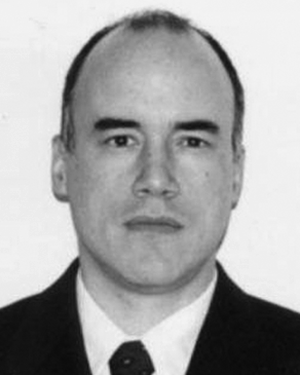 Franco Di Paolo合作论文数35
 Alberto Leggieri合作论文数34
 Antonio Tafuto合作论文数6
 Marco Bartocci合作论文数6
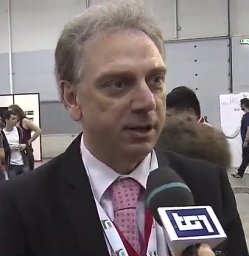 Giovanni Saggio合作论文数Department of Electronic Engineering, University of Rome "Tor Vergata",6
 Rocco Citroni合作论文数Dept Elect Engn, Univ Roma Tor Vergata5
 Giuseppe Felici合作论文数5Silvia De Stefano合作论文数4
 Alessia Ciccotelli合作论文数3Egidio Ciacia合作论文数2Alessio Mattioni合作论文数RINA Consulting SpA, I-00139 Rome, Italy2
 Filippo Marangoni合作论文数2B. Spataro合作论文数Lab Nazl Frascati, INFN2
 Antonio Manna合作论文数2Ciccotelli Alessia合作论文数2Egor Dyunin合作论文数School of Electrical Engineering, Tel-Aviv University2
 Aldo Di Carlo合作论文数Department of Electronic Engineering, University of Rome Tor Vergata;Centre for Hybrid and Organic Solar Energy, University of Rome Tor Vergata2Stefano Fantauzzi合作论文数1
 Lorenzo Valletti合作论文数1G. Felici合作论文数1
 Francesco Maria Carrano合作论文数Busto Arsizio Circolo Hospital ASST-Valle Olona1
 Zappelli, L.合作论文数Dipartimento Ingn Informaz, Univ Politecn Marche1
 Laura Sbernini合作论文数1
 Nicola Di Lorenzo合作论文数Department of General Surgery, University of Rome “Tor Vergata1Alessandra Lazzaro合作论文数1
 Giancarlo Orengo合作论文数1Achille Lucio Gaspari合作论文数1
 Valentina Panetta合作论文数AFaR, Fatebenefratelli Hospital1




