Over its 50-year history, CGIAR has with increasing frequency revisited the question of how best to organize its research to address growing complexity of agricultural, food, and ecological systems, a multiplying set of development goals, changes in global science, increasing diversity of funding, and evolving capacities of partner organizations. We review this evolution over four periods noting inevitable trade-offs and tensions in a system of autonomous centers and sovereign donors, in developing common research strategies, appropriate lines of management, and aligning resources around agreed priorities. As a result, organizational changes have not met expectations and funding has continued to fragment around short-term payoffs at the expense of producing global public goods over the long term. The paper concludes with suggestions for building on the lessons of organizational reform to improve the collective action performance of funders and centers to drive and sustain needed changes.
The West African Rice Development Association (WARDA), created in 1971 as a regional network of rice research stations and governed by member countries, was unique within the system of international agricultural research centers that emerged in the post-colonial era. This paper reviews the actors, the actors, their motives, and the political and organizational debates involves in establishing WARDA. In particular, it traces the roles and interests of the former colonial powers, especially the French, the newly independent countries of the region, international organizations, and US foreign assistance and philanthropic agencies. Although all agreed that rice research was a priority for regional cooperation, the design of WARDA stimulated debates around centralization, governance, and funding of international research that continue until today.
SDG2 recognizes that access to sufficient, nutritious and safe food is arguably the most fundamental necessity for a healthy and productive life. This chapter provides an overview of the many dimensions of hunger and malnutrition and how societies from ancient times—states, civil society, and private philanthropists—have gradually organized collectively to reduce the burden of hunger and malnutrition. The chapter begins with a discussion of famine, the most visible manifestation of hunger throughout history that was once a scourge in most societies but has now largely been eliminated in the twenty-first century. We then discuss how from the early twentieth century the goal of zero hunger became an international cause and a basic human right. The review then moves to the post-Second World War period when foreign assistance programs and countries focused on producing more staples to feed the world’s burgeoning population, narrowly measured in per capita calories supplied. In the 1980s, the focus turned from supply to access to food, and from around 1990 to the multiple dimensions of malnutrition, now including obesity. This has resulted in the move to multi-sectoral approaches including agriculture, the food industry, nutrition policy, public health, and the status of women. Finally, we conclude that although the world has registered impressive achievements on some measures of malnutrition, the continuing presence of hundreds of millions suffering chronic malnourishment in its various dimensions remains a huge challenge but one that with sufficient will and focus can be solved with available resources and knowledge.
Abstract From 1882 to 1910 superphosphate was almost universally adopted by wheat farmers in South Australia. A supply chain perspective is used to link the mining of phosphate rock in distant Pacific islands to the final application of superphosphate in the fields of Australian wheat farmers. Farmers and private manufacturers led the adoption stage in the context of a liberal market regime and the role of the state at this stage was limited although strategic. After 1920, the role of the state in the industry sharply increased in all phases of the industry. A political economy perspective is used to analyse state-ownership of raw material supplies and protectionist policies to manufacturers that resulted in high prices in Australia by 1930. Numerous government reviews pitted the interests of farmers and manufacturers leading to a complex system of tariffs and subsidies in efforts to serve all interests. Overall, the adoption of superphosphate was a critical factor in developing productive and sustainable farming systems in Australia, although at the expense of Pacific Islanders who prior to WWII received token benefits and were ultimately left with a highly degraded landscape.
On the eve of the 50th anniversary of the founding of the CGIAR, this paper revisits the genesis of the international center model for agricultural research (IARC). This model became fashionable in the 1960s and was arguably the major institutional innovation of the 20th century for foreign assistance to agriculture. While the founding of the first IARCs is universally attributed to the Rockefeller and Ford Foundations, we argue that based on new evidence, the creation of the IARCs was a logical conclusion of a process involving many actors that began immediately after World War I. First, we review FAO efforts to build regional and global research networks for the major cereals in the immediate post-WWII period. These networks linked closely to USDA and its legacy of scientific collaboration across US states that together with the Foundations, strongly influenced the design of the first two international centers for the major cereals. In Latin America, the various efforts by the US National Academy of Sciences, the US government and the countries of the region resulted in the creation of three centers for tropical agriculture, (only two of which exist today) with a broader research focus on farming systems and natural resources. Finally, we show how the establishment of four IARCs in Africa in different ways drew on a colonial legacy that had moved toward centralization of research across colonial territories since before WWII. All of these efforts over many decades involved a good deal of experimentation in organization, funding and governance to arrive at the standard IARC model that emerged. By the late 1960s, the genesis of another six IARCs was already in place stimulating the creation of the CGIAR to fund and coordinate the IARCs. The review concludes with a brief reflection on the successes and challenges of the IARC model over 50 years, and its relevance today. (C) 2020 Elsevier Ltd. All rights reserved.
Well before the green revolution in the 1960s, hybrid maize technology that had originally been developed in the USA spread across the world, starting before the Second World War. This article uses a framework that analyses the type of transfer (materials, knowledge, or capacity), the roles of diverse actors, and farmer demand and its market context, to trace the diffusion of hybrid technology to Latin America, Asia, Europe, and Africa up to 1970. The article also highlights the importance of access to diverse germplasm from the Americas provided by indigenous farmers. A handful of US public institutions promoted the spread of hybrid technology, with US private seed companies sometimes playing a secondary role. However, most cases of successful transfer were led by national scientists embedded in local institutions, who were able to link to local seed systems and farmers. By the mid 1970s, the aggregate impacts of these efforts were of the same magnitude as for the well-known and much publicized green revolution wheat varieties. Nonetheless, adoption of hybrid maize across and within countries was very patchy, relating to differences in scientific capacity, type of farmer, agro-ecology, and complementary investments in seed systems and extension. Consequently, impacts were often highly inequitable.
Producer funding of R&D in Africa--an underutilized opportunity to boost commercial agriculture
•The goal of ending hunger was set by the United Nations Hot Springs conference in 1943.•The conference proposed a multisectoral approach that integrates agriculture and nutrition.•In agriculture, the metric focused narrowly on calories.•For many decades, the agriculture and nutrition communities worked largely in isolation.•The SDG2 again emphasizes the multisectoral approach and more complete metrics of malnutrition, that offers a better foundation for accelerating progress in combating hunger in all its forms.
It is designed around five thematic parts: Agricultural Intensification and Technical Change: Political Economy of Agricultural Policies; Community and Rural Institutions: Agriculture. Nutrition, and Health; and Future Relevance of International Institutions. Each chapter presents a detailed but accessible review of the llterature on the specific topic and discusses the frontiers In research and institutional changes needed as societies adapt to the transformation processes. All authors are eminent scholars with international reputations. who have been actively engaged In the contemporary debates around agricultural development and rural transformation.
Property rights regimes governing the expansion of agricultural commodity exports in the tropics have varied widely between and within colonial empires. This article illustrates this diversity within the British Empire from about 1850 to 1920. In British West Africa, indigenous customary rights were recognized and land concessions to plantations excluded. By contrast, colonial governments alienated large land tracts for plantations in Malaya, the Indian Hills and Ceylon that often conflicted with indigenous rights and shifting farming systems in upland forested areas. These differences among colonial policies on land and forest rights in turn led to quite different agrarian structures and strongly influenced the location of export production - differences that have persisted until today. The article explores a range of explanations for policy divergence with respect to land rights, including the initial conditions of population density and pre-existing industries, strategic concerns of the metropolitan power, growing civil society agitation on human rights in Africa, the role of individual champions of human rights and shifting paradigms within the empire with respect to the role of plantations.
 Gregory O. Edmeades合作论文数Pioneer Hi-Bred International Inc19
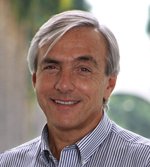 Ruben G. Echeverria合作论文数Reader in Agricultural Economics, University of Reading14
 Paul W. Heisey合作论文数Department13
 Rosamond L. Naylor合作论文数Department of Earth System Science, Center on Food Security and the Environment, Freeman Spogli Institute for International Studies, Stanford University;Department of Economics, Stanford University11
 Walter P. Falcon合作论文数11
 Mywish Maredia合作论文数Michigan State University11l w harrington合作论文数10
 Tony Fischer合作论文数10
 Greg Traxler合作论文数Department of Agricultural Economics and Rural Sociology;Auburn University;Department of Agricultural Economics and Rural Sociology, Auburn University10p r hobbs合作论文数7Carl K. Eicher合作论文数7m p collinson合作论文数6echeverria r g trigo e j byerlee d合作论文数6Ron J. Kopicki合作论文数6
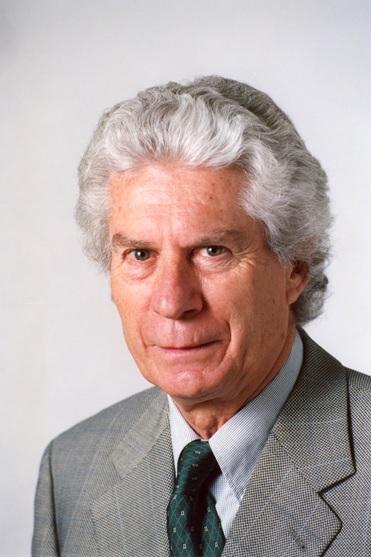 Alain De Janvry合作论文数Department of Agricultural & Resource Economics, College of Natural Resources, University of California Berkeley6Gary Alex合作论文数6Valerie Kelly合作论文数6
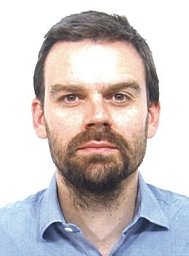 James R. Stevenson合作论文数CGIAR Independent Science and Partnership Council Secretariat, Food and Agriculture Organization;CGIAR Independent Science and Partnership Council Secretariat, Food and Agriculture Organization5
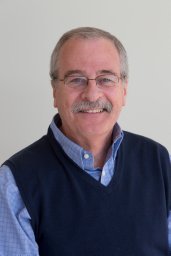 Philip Pardey合作论文数Department of Applied Economics, College of Food, Agricultural and Natural Resource Sciences, University of Minnesota5
 Nelson B. Villoria合作论文数Purdue University5m r akhtar合作论文数4
 Robert M. Townsend合作论文数Department of Economics, Massachusetts Institute of Technology4Mubarik Ali合作论文数Unit and Economic and Nutrition Project;Asian Vegetable Research and Development Center;Unit and Economic and Nutrition Project, Asian Vegetable Research and Development Center4John P. Brennan合作论文数4Akmal Siddiq合作论文数4Rinku Murgai合作论文数Department of Agricultural and Resource Economics;University of California4
 Michael Morris合作论文数CPP , Inc4a majid合作论文数3a d sheikh合作论文数3t r quirino合作论文数3n mateo合作论文数3r e rhoades合作论文数3g sain合作论文数3n w simmonds合作论文数3s d biggs合作论文数3e h gilbert合作论文数3John Lynam合作论文数3jorge armando ardila合作论文数3gesa horstkottewesseler合作论文数3obando guerrero l ramakrishna b合作论文数3Daniel S. Robinson合作论文数3E. Souza合作论文数3jos sijm合作论文数3
 Muhammad Azeem合作论文数3
 Elisabeth Sadoulet合作论文数Agricultural & Resource Economics, College of Natural Resources, University of California, Berkeley3
 Julian M. Alston合作论文数Department of Agricultural and Resource Economics, University of California, Davis3
 Klaus Deininger合作论文数Sustainability and Infrastructure Team, Development Research Group, World Bank;Development Economics Group, World Bank3




