The British theologian and church historian Diarmaid MacCulloch is an internationally respected expert on the Reformation period. In his keynote address, he emphasizes that in his research he was always surprised by how changeable Christianity proved to be through the millennia. His approach is so significant because he understands the history of the Reformation between 1490 and 1700 not as a national, but as a polycentric, cross-denominational process in early modern Europe.
The Samurai and the cross. The Jesuit enterprise in early modern Japan. By M. Antoni J. Ucerler sj. Pp. xviii + 445 incl. 70 ills. Oxford–New York: Oxford University Press, 2022. £25.99. 978 0 19 533543 9 - Volume 74 Issue 2
Places of worship in Britain and Ireland, 1550–1689. Edited by P. S. Barnwell and Trevor Cooper. (Rewley House Studies in the Historic Environment, 10.) Pp. vi + 234 incl. 66 colour and black-and-white ills. Donington: Shaun Tyas, 2019. £45. 978 1 907730 80 1 - Volume 72 Issue 2
An abstract is not available for this content so a preview has been provided. Please use the Get access link above for information on how to access this content.
The Tudor occupation of Boulogne. Conquest, colonization and imperial monarchy, 1544–1550. By Neil Murphy. Pp. xviii + 296 incl. 4 figs and 1 map. Cambridge–New York: Cambridge University Press, 2019. £75. 978 1 108 47201 2 - Volume 71 Issue 2
This chapter looks at the minds of the first two presidents of Corpus Christi College, John Claymond and Robert Morwent, speculating on what might have been their most worrying moments. For Claymond, it is the death of Richard Fox in 1528, which brought the greatest predator of the decade into an uncomfortably intimate relationship with the College, because Fox’s successor at Winchester was none other than Cardinal Thomas Wolsey. Indeed, the two or three years after 1528 would have remained anxious for Claymond. The chapter next looks into the mind of President Morwent, and shows how another perilous moment would have arrived in 1538. By 1538, Cardinal Reginald Pole headed King’s Henry’s list of people who required murdering. It was amid the political turmoil of this debacle that Archbishop Thomas Cranmer let Thomas Cromwell know of dangerously papalist sentiments currently being expressed among the Corpus Fellowship. In the end, Corpus sneaked past this crisis too.
 chuban wanshan (丸善出版)合作论文数7ke bo xiao yuan (克博 小原)合作论文数6Anthony Fletcher合作论文数4Charlotte Methuen合作论文数3Jane Ridley合作论文数1klaus binder合作论文数1bernd leineweber合作论文数1
 Anna Whitelock合作论文数1xiu er jian yuan (秀二 菅原)合作论文数1zhi zhaobo (昭博 指)合作论文数1tai lang jing nei (太郎 井内)合作论文数1yanjing chun (淳 岩井)合作论文数1shanben zheng (正 山本)合作论文数1
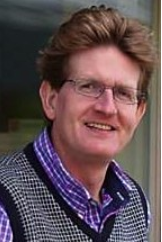 James Nicholas Carleton Paget合作论文数Faculty of Divinity, University of Cambridge1
 Natalie Zemon Davis合作论文数1
 Clive D. Field合作论文数Department of Modern History, University of Birmingham1David Hackett Fischer合作论文数1
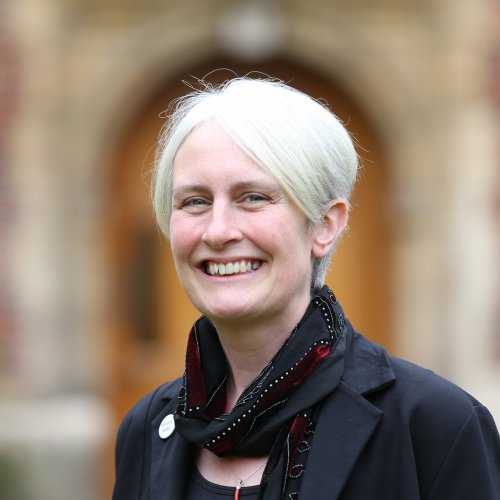 Mary Laven合作论文数Faculty of History, University of Cambridge1Robert M. Calhoon合作论文数1Isabel Rivers合作论文数1Craig Harline合作论文数1Steven G. Ellis合作论文数National University of Ireland1




