Prosocial behavior is a distinguishing characteristic of human nature. Although prosocial behaviors emerge early in development, contextual factors play an important role in how these behaviors are manifested over development. A large body of research focuses on the trajectory of prosocial development across diverse cultures and investigating contexts that foster it. Against this backdrop of developmental research endeavoring to understand and enhance the cooperative side of humanity, is the catastrophic impact of profoundly negative forces on social-emotional development for children forced to flee from violent conflict. Close to half a million Rohingya children, whose families were forced to flee genocide in Myanmar, now live in the largest refugee camp in the world. To examine the resilience of human prosociality in the face of extreme adversity, we documented initial levels of prosociality in Rohingya refugee children living in a mega-camp (Cox's Bazar, Bangladesh) and the extent to which those levels were improved following a multifaceted intervention designed to foster prosociality. The research was a partnership between Rohingya community members with lived experience, humanitarian practitioners, and developmental researchers. A sample of 152 Rohingya children (5–12 years) participated in pre- and postintervention assessments of prosocial behaviors and related cognitive-affective processes. The 10-day collaboration-based intervention was implemented between November 2021 and January 2022 by Rohingya researchers. Birthplace was used as a proxy measure of trauma level. Children born in Myanmar ( N = 88) directly experienced relatively higher levels of trauma (genocide, forced migration) than children who were born in the camp after their families fled from Myanmar ( N = 64). Children were individually tested pre- and postintervention with a task battery, including a helping (Origami) and two sharing tasks (Dictator Game [DG], Forced Choice sharing) measuring prosocial behavior. Assessments of related cognitive-affective processes included measures of empathic responding and emotion perspective-taking in story tasks (Imagine, Judgment) and executive function (EF) skills (Younger: Hearts & Flowers; Older: Dimensional Change Card Sorting). Small group intervention sessions conducted over 10 days targeted these prosocial behaviors and cognitive-affective processes and were based on collaborative activities, emotion perspective taking and EF skills training with the same partner throughout the intervention phase. We used latent change modeling to examine initial levels (preintervention) and intervention-related changes in these measures from pre- to postintervention. Prosocial responding was found across all measures (preintervention) and improvements (pre- to postintervention change) were apparent across most measures. Age and birthplace variables were significant predictors of initial levels and intervention-related change. Initial levels : Regarding age, older children (9–12 years) showed higher levels than younger children (5–8 years) of sharing in the Forced Choice task but lower levels in the DG. Older children also showed higher levels of empathic responding when asked to report how they would feel and respond to another person's misfortune in the Imagine task. Regarding birthplace, prior to the intervention camp-born children showed higher levels than Myanmar-born children of helping in the Origami task and reported more behavioral responses indicating how they would respond to misfortune in the Imagine task. In contrast, Myanmar-born children had higher levels of sharing in the DG and consistently chose equality over inequality in the Forced Choice sharing task, even when their partner would receive more, indicating a pattern of generosity in these children. Myanmar-born children had lower levels than camp-born children on EF measures. Intervention-related change : Regarding age, older but not younger children were more likely to increase choices for equality over inequality on the Forced Choice sharing task following the intervention. Regarding birthplace and helping, camp-born children increased behaviors that helped their partner make origami shapes themselves (“how-to” helping), whereas Myanmar-born children increased behavior that took over folding for their partner (“do-for” helping). For sharing tasks, Myanmar-born but not camp-born children increased sharing in the DG and showed an increased pattern of generosity in Forced Choice sharing task. In the Imagine story task, children born in Myanmar were more likely than those born in camp to increase empathic responding (i.e., imagining how they would feel). Children born in Myanmar showed less improvement on EF measures than children born in the camp. Taken together, these findings provide evidence that in a context of extreme adversity, Rohingya children exhibited prosociality and benefitted from a multifaceted intervention. Our research adds credence to the view that human prosociality is a fundamental characteristic of humanity that not only survives but can be enhanced in even the most adverse of childhood environments. Our multifaceted intervention, which was implemented within a collaborative social context and targeted prosocial behaviors and related cognitive-affective processes, was designed to be easily implemented within existing psychosocial support programs in refugee contexts. As the numbers of children affected by violent conflict and forced migration rise alarmingly worldwide, there is a critical need to expand research partnerships that aim to improve developmental outcomes for these millions of children.
We know little about how parents protect and promote children's prosocial development during humanitarian crises. This qualitative study examined Rohingya refugee parents' psychosocial perspectives and the processes they use to socialize prosocial values and behaviours in their children. Interviews (descriptive and in-depth qualitative) were conducted with 100 parents living in a refugee settlement in India (n = 100 descriptive; n = 5 in-depth) and 4 parents resettled in a mid-sized Canadian city (n = 4 descriptive; n = 4 in-depth). An inductive, 'contextualist' thematic analysis (TA) was conducted on the in-depth interviews to develop three overarching themes: (1) parents' prosocial values and beliefs; (2) environmental conditions influencing parents' available pathways for promoting children's prosocial development; and (3) parents' prosocial socialization and protection practices. The findings indicate that parents' prosocial beliefs and contextual factors inform their parenting decisions and practices. Recommendations are provided for enriching parents' capacity to promote child prosocial development in contexts of adversity.
Prosocial behavior is a distinguishing characteristic of human nature. Although prosocial behaviors emerge early in development, contextual factors play an important role in how these behaviors are manifested over development. A large body of research focuses on the trajectory of prosocial development across diverse cultures and investigating contexts that foster it. Against this backdrop of developmental research endeavoring to understand and enhance the cooperative side of humanity, is the catastrophic impact of profoundly negative forces on social-emotional development for children forced to flee from violent conflict. Close to half a million Rohingya children, whose families were forced to flee genocide in Myanmar, now live in the largest refugee camp in the world. To examine the resilience of human prosociality in the face of extreme adversity, we documented initial levels of prosociality in Rohingya refugee children living in a mega-camp (Cox's Bazar, Bangladesh) and the extent to which those levels were improved following a multifaceted intervention designed to foster prosociality. The research was a partnership between Rohingya community members with lived experience, humanitarian practitioners, and developmental researchers. A sample of 152 Rohingya children (5-12 years) participated in pre- and postintervention assessments of prosocial behaviors and related cognitive-affective processes. The 10-day collaboration-based intervention was implemented between November 2021 and January 2022 by Rohingya researchers. Birthplace was used as a proxy measure of trauma level. Children born in Myanmar (N = 88) directly experienced relatively higher levels of trauma (genocide, forced migration) than children who were born in the camp after their families fled from Myanmar (N = 64). Children were individually tested pre- and postintervention with a task battery, including a helping (Origami) and two sharing tasks (Dictator Game [DG], Forced Choice sharing) measuring prosocial behavior. Assessments of related cognitive-affective processes included measures of empathic responding and emotion perspective-taking in story tasks (Imagine, Judgment) and executive function (EF) skills (Younger: Hearts & Flowers; Older: Dimensional Change Card Sorting). Small group intervention sessions conducted over 10 days targeted these prosocial behaviors and cognitive-affective processes and were based on collaborative activities, emotion perspective taking and EF skills training with the same partner throughout the intervention phase. We used latent change modeling to examine initial levels (preintervention) and intervention-related changes in these measures from pre- to postintervention. Prosocial responding was found across all measures (preintervention) and improvements (pre- to postintervention change) were apparent across most measures. Age and birthplace variables were significant predictors of initial levels and intervention-related change. Initial levels: Regarding age, older children (9-12 years) showed higher levels than younger children (5-8 years) of sharing in the Forced Choice task but lower levels in the DG. Older children also showed higher levels of empathic responding when asked to report how they would feel and respond to another person's misfortune in the Imagine task. Regarding birthplace, prior to the intervention camp-born children showed higher levels than Myanmar-born children of helping in the Origami task and reported more behavioral responses indicating how they would respond to misfortune in the Imagine task. In contrast, Myanmar-born children had higher levels of sharing in the DG and consistently chose equality over inequality in the Forced Choice sharing task, even when their partner would receive more, indicating a pattern of generosity in these children. Myanmar-born children had lower levels than camp-born children on EF measures. Intervention-related change: Regarding age, older but not younger children were more likely to increase choices for equality over inequality on the Forced Choice sharing task following the intervention. Regarding birthplace and helping, camp-born children increased behaviors that helped their partner make origami shapes themselves ("how-to" helping), whereas Myanmar-born children increased behavior that took over folding for their partner ("do-for" helping). For sharing tasks, Myanmar-born but not camp-born children increased sharing in the DG and showed an increased pattern of generosity in Forced Choice sharing task. In the Imagine story task, children born in Myanmar were more likely than those born in camp to increase empathic responding (i.e., imagining how they would feel). Children born in Myanmar showed less improvement on EF measures than children born in the camp. Taken together, these findings provide evidence that in a context of extreme adversity, Rohingya children exhibited prosociality and benefitted from a multifaceted intervention. Our research adds credence to the view that human prosociality is a fundamental characteristic of humanity that not only survives but can be enhanced in even the most adverse of childhood environments. Our multifaceted intervention, which was implemented within a collaborative social context and targeted prosocial behaviors and related cognitive-affective processes, was designed to be easily implemented within existing psychosocial support programs in refugee contexts. As the numbers of children affected by violent conflict and forced migration rise alarmingly worldwide, there is a critical need to expand research partnerships that aim to improve developmental outcomes for these millions of children.
Prosociality is essential for the success of human societies. Children's prosocial development is found to increase in contexts that foster collaboration or emotion perspective taking and is negatively affected by exposure to extreme psychosocial trauma and adversity. Based on these findings, we assessed the effect of collaboration and emotion perspective taking on three types of prosocial behavior-helping, sharing, and comforting-in Rohingya children living in a refugee settlement in India (N = 122; age range = 4-11 years). Half of the children were born in Myanmar (i.e., experienced forced migration from genocide), and half were born in the refugee settlement after their families left Myanmar. We also included a small sample of Rohingya Canadian children (N = 20; age range = 3-12 years) as a within-culture comparison of overall levels of prosocial responding, which were higher in this group relative to children in a refugee settlement. We assigned children in the refugee settlement to one of three conditions-Collaboration, Emotion Perspective Taking (intervention conditions), or Drawing (control condition)-and assessed the three types of prosocial responding following the intervention. Prosocial responding was highest after Collaboration for children born in the refugee settlement and was highest after Emotion Perspective Taking for children born in Myanmar. Overall, these findings point to the potential prosocial benefit in refugee contexts for intervention programs that are responsive to children's lived experience.
This paper explores the types of verbal irony employed by resilient youth in spontaneous conversation and examines how they use this irony to navigate potentially challenging psychosocial terrain. We documented and analyzed instances of irony in the spontaneous speech of adolescent participants in an international, ecological study of resilience using quasi-naturalistic and participatory visual methods. We found irony to be co-constructively utilized by the youths we studied. They spontaneously used many types of irony to mute criticism and avoid embarrassment. These resilient youth, who were thriving under adverse circumstances, used irony in a positive way to facilitate affiliation with their friends and family.
The use of image-based methods in social science research is gaining increasing prominence, with much being written about the implementation of these methods in the field. To date however, little has been published regarding the integration of analysis frameworks and images. Increasingly, images are being used in research with marginalised and historically silenced communities as a means of accessing experiences and processes previously unarticulated, exploring the taken-for-granted, and facilitating participant voice in research. Where data sets centre around both narrative and visual data, and where the subjective construction of experience becomes the focus of analysis, grounded theory analytic techniques that emphasise reciprocity with participants can help to generate explanations for patterns of behaviour. In this article we present an exemplar of image-based data analysis using grounded theory. We discuss the process adopted by the Negotiating Resilience Project (NRP) in five countries, of using a social constructionist approach to grounded theory in the analysis of both visual (i.e. video and photographic) and the resulting narrative data.
An exploratory qualitative study of 16 disadvantaged youth in 5 countries suggests that making both precocious and developmentally appropriate contributions to their families' well-being is advantageous to adolescents coping with chronic adversity. All youth were known to be doing well (as identified by community advisors) and showed patterns of contribution that provided instrumental support to parents, siblings, and extended family members in culturally relevant ways. Data were gathered using in-depth interviews, photo-elicitation, and the filming of 1 full day in the life of each youth. Youth reported that their experiences of precocious (synonymous with processes of adultification) and developmentally appropriate contribution facilitate their access to resources that nurture and sustain their well-being. This process of contribution is discussed as one aspect of resilience. Both youth and their caregivers coconstructed acts of contribution as helpful to young people's psychosocial development in contexts where youth are exposed to multiple risks.
Grounded in the examples of four impoverished, relocated youths (two Sesotho-speaking orphans in South Africa and two Mexican immigrants in Canada), we explore cultural factors as potential roots of resilience. We triangulate rich qualitative findings (visual, dialogical, and observational) to foreground the particular, as well as acknowledge the universal, in explicating resilience in transitional contexts. Resilience-promoting cultural practices rely on adults to function as custodians of protective practices and values and on youth actively to accept their roles as cultural cocustodians. Our findings urge service providers toward forefronting the specific cultural context of young people in their therapeutic interventions and toward purposefully championing resilience-promoting cultural values and practices.
Grounded in the examples of four impoverished, relocated youths (two Sesotho-speaking orphans in South Africa and two Mexican immigrants in Canada), we explore cultural factors as potential roots of resilience. We triangulate rich qualitative findings (visual, dialogical, and observational) to foreground the particular, as well as acknowledge the universal, in explicating resilience in transitional contexts. Resilience-promoting cultural practices rely on adults to function as custodians of protective practices and values and on youth actively to accept their roles as cultural cocustodians. Our findings urge service providers toward forefronting the specific cultural context of young people in their therapeutic interventions and toward purposefully championing resilience-promoting cultural values and practices.
OBJECTIVES:We review the value of using visual data in a dialogue with youth, to reflect, explore and find language to better understand processes of resilience.METHODS:The argument is demonstrated with examples from the Negotiating Resilience Project (NRP): an international study of 16 youth which uses video recording a day in the life of youth participants, photographs produced by youth, and reflective interviews with the youth about their visual data.RESULTS:Three examples from the NRP are used to show the ways that visual methods can capture and elucidate previously hidden aspects of youth's positive psychosocial development in stressful social ecologies.CONCLUSION:Incorporating images as research data can aid in understanding previously unarticulated constructions of youth resilience. When the researcher is reflexive about power dynamics and their role in co-constructing the research environment, visual methods have the potential to reduce power imbalances in the field, meaningfully engage youth in the research process, and help to overcome language barriers.
 Catherine Ann Cameron合作论文数10
 Michael Ungar合作论文数School of Social Work, Faculty of Health, Dalhousie University6
 Julia Gillen合作论文数The Open University Milton Keynes6
 Sombat Tapanya合作论文数6
 John Corbit合作论文数Dept Psychol & Neurosci, Dalhousie Univ4
 Linda Liebenberg合作论文数Resilience Research Center, Dalhousie University4
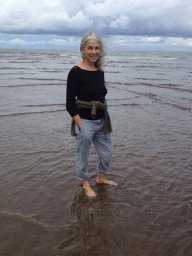 Tara C. Callaghan合作论文数Psychology Department, St. Francis Xavier University4
 Giuliana Pinto合作论文数Department of Psychology, University of Florence4roger hancock合作论文数3
 Linda Theron合作论文数north west university3
 Susan Young合作论文数3Beatrice Accorti Gamannossi合作论文数3w r hancock合作论文数2b accorti gamannossi合作论文数2
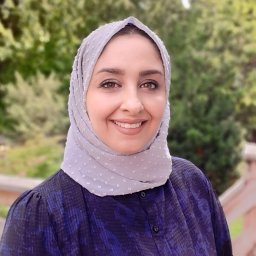 Redab Al Janaideh合作论文数Ontario Inst Studies Educ, Univ Toronto2
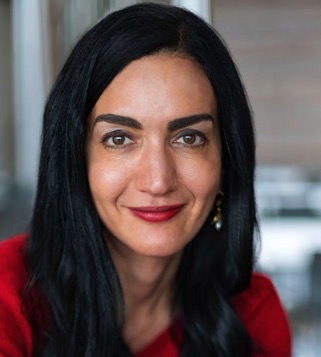 Tina Malti合作论文数Department of Psychology, University of Toronto Mississauga2
 Tyler Colasante合作论文数Department of Psychology, University of Toronto2Cindy Lau合作论文数2Tz-yu Duan合作论文数1
 Bruce D. Homer合作论文数Consortium for Research and Evaluation of Advanced Technologies in Education;New York University;Consortium for Research and Evaluation of Advanced Technologies in Education, New York University1
 E. Leslie Cameron合作论文数1




