Contemporary markets are increasingly structured around fragile and contested value categories, e.g, localness, sustainability, or authenticity. Yet marketing scholarship has paid limited attention to how such categories become operational and durable in decentralised contexts without dominant orchestrators. Drawing on a Market System Dynamics perspective, this study examines how the boundary of localness becomes operational. We investigate the 100% Valposchiavo initiative in a Swiss Alpine Valley, where the distinction between local and non-local is negotiated among several actors. Based on interviews, field observations, and online reviews, we identify three recursive dynamics (boundary work, boundary operationalisation, and boundary materialisation) through which symbolic distinctions are translated into practices. We conceptualise the mechanism sustaining these dynamics as boundary intermediation, a distributed process of market stabilisation under institutional ambiguity.
This article investigates how temporary clusters forge, stabilize, and sometimes erode symbolic associations between places and industries, focusing on the lifecycle of Italy's first international fashion shows, the Pitti shows in Florence (1951-84). Bridging research on geographic (dis)associations and temporary and cyclical clusters, we develop a framework linking knowledge spillovers to image spillovers. We argue that knowledge generated within temporary clusters translates into durable geographic associations only when selectively mediated, narratively anchored, and sustained by high-status participants. Drawing on longitudinal archival research combining participation data and systematic trade press coverage, we reconstruct how the Florence shows initially consolidated Italian fashion as an exportable category, yet later experienced symbolic hollowing. We demonstrate, first, that spillover capacity within temporary clusters is structurally asymmetric: A small number of elite actors disproportionately shape both knowledge release and symbolic value. Second, we show that these actors perform a metonymic function, standing in for broader geographic imaginaries. Third, we theorize temporary clusters as status arenas embedded in hierarchical cyclical event circuits, where centrality is dynamically renegotiated and participant mobility unevenly distributed. Fourth, we highlight the role of symbolic governance and curatorial selectivity, showing how growth without coherence can dilute credibility and accelerate reputational decline. Conceptually, the study advances cultural economic geography by theorizing temporary clusters as historically contingent sites of knowledge and symbolic value production, central to geographic associations yet reliant on fragile alignment among organizers, cultural intermediaries, and high-status participants. Methodologically, we show how historical-geographic reconstruction reveals slow symbolic dynamics obscured in cross-sectional analyses.
Religions and spiritual movements have specific doctrines related to sexuality that prescribe (mandate or encourage) or proscribe (forbid or discourage) numerous forms of sex-related consumer behavior. These norms create conditions of privilege or discrimination, stigma, oppression, and marginalization for specific sexual identities. Following recent calls for intersectional consumer research, in this chapter we look at the specific manners in which religious/spiritual doctrines can affect consumer sexuality. We analyze the theologies of sexuality of a religion characterized by strong central institutions, Roman Catholicism, and a more loosely organized religious movement, Wicca, to discuss their broader role in shaping consumer sexual behavior and identities. We then provide a mapping of the various manners religion/spirituality and sexuality intersect in consumer research and suggest future avenues of inquiry at this intersection. While most consumer research on sexuality on one hand, and on spirituality and religion on the other hand, have so far evolved without intersecting, the times are ripe for work taking into consideration the mutual influences religion and sexuality have on marketplace structures and consumers' lives.
During a roundtable discussion at the 2022 GENMAC Conference, a group of researchers specializing in religiosity and spiritual consumption, using examples from their own fieldwork, reflected on how (i) researchers’ subject positioning—including their gender and sexuality—shape fieldwork in multifaceted manners; (ii) investigations of religious/spiritual fields would benefit from a heightened sensitivity to issues of gender and sexuality; and (iii) greater sensitivity to aspects of religion and/or spirituality can help gender and sexuality scholars better understand consumers and markets. Based on the above, in this commentary paper, we call for intersectional reflexivity, attention to vulnerability and discomfort during fieldwork, and critical sensitivity to the religious “context of context” during theorization. Furthermore, we argue that specific spiritual/religious imaginaries can foster new research approaches that can contribute to more nuanced fieldwork and theorization in marketing and consumer research.
Purpose Once the domain of theologians, sociologists and (religion) anthropologists, we have seen more recently how consumer researchers have enriched the study of spirituality and religion. Researching the sacred can be fraught with challenges, in and out of the field. Russell Belk, Samuelson Appau and Diego Rinallo address key questions, issues and conceptualisations in the scholarship on sacred consumption, contemplating the past and mapping future research avenues. A reading list is also included for those interested in joining the authors in this collective discovery of the sacred. Design/methodology/approach Contributors answered the following four questions: How has the study of sacred consumption evolved since you started researching the field? What would be the critical methodological issues that researchers need to consider when approaching the “sacred”? What are some of the key authors that have influenced your thinking? What do you think will be the key questions that researchers will need to focus on? Findings Rinallo, Belk and Appau’s reflections on studying the sacred provide food for thought for both novice and weathered researchers alike. Researching the sacred both shapes and is shaped by our positionality: by our insider/outsider status, our gender and race and our cosmovisions as believers or sceptics. Researchers should be mindful and reflective of their subject positionings as they approach, enter and leave the field. Researching the sacred requires an open mind as we broaden our vision of what constitutes the sacred. Such research calls for scholarly as well as phenomenological curiosity. Reading widely and across disciplines to better familiarise ourselves with our sacred context helps to craft novel and meaningful research. Originality/value This paper provides a multivocal genealogy of consumer culture work on religion and spirituality, methodological advice and reading resources for researchers.
Although previous research has investigated consumer mythopoesis (consumers' identity work using marketplace myths), little is known about its enactment involving ambiguous myths. Here, we investigate the myth of the witch (predominantly depicted by dominant mythmakers as a villain but recently repositioned more positively) and describe how consumers reclaim the empowering and heroic aspects of the ambiguous witch myth. Based on a qualitative study using archival data and in-depth interviews with self-proclaimed witches, we argue that the witch's ambiguity originates in different mythopoetic cycles. Then, we describe the following processes through which consumers reclaim positive cycles: incarnating the myth, coming out to selected others and practising myth-related craft. Finally, we show that reclaiming results in new forms of heroic agency that amplify the myth's ambiguity and identity value. Our results reveal that consumers cope with market-wide paradoxical injunctions, stressful situations and marginalisation by transforming these pressures into acts of self-heroism.
This commentary section presents a dialogical discussion on Appau's (2021) 'Toward a divine economic system', an article in which he explores religious exchanges in the context of a Pentecostal Church in Ghana and proposes 'the divine economy' as an alternative economic system to interrogate and extend scholarship on the relationship between the market and religion. In a thought-provoking conversation, four commentators (including Appau) engage in a critical discussion aimed at generating new ideas on theorizing the complex relationship between the market, consumption, and religion.
In the popular imagination sex sells. Yet, marketing theory has relatively little to say about sexuality per se. Drawing on Žižek’s metaphor of critical theory as ‘short-circuiting’ the dominant discourse, we conceptualise marketing as a field that theorises sexuality only in a series of ‘closed circuits’. Knowledge becomes hierarchical when some topics, such as sexuality, are denied the theoretical freedom to roam in wider open circuits alongside other ‘mainstream’ marketing topics. We identify four ways in which certain topics are enclosed: theoretical, empirical, institutional and neo-colonial. We then seek to short-circuit this state of affairs by bringing together a heterogeneous group of scholars interested in sexuality. By crossing their critical insights like unexpected connections in a circuit, we create sparks of inspiration that challenge the contents, contexts and concepts that relate to marketing theories of sexuality. Our paper makes a specific theoretical contribution in arguing for sexuality to be treated as a phenomenon worth studying and theorising in its own right. However, it also makes a wider methodological and epistemological contribution in showing how various topics within marketing theory might be short-circuited to help flatten the hierarchies of knowledge created by closed and open circuits.
 Francesca Golfetto合作论文数Business Management Department, Bocconi University28
 Harald Bathelt合作论文数Department of Geography & Planning, Faculty of Arts & Science, University of Toronto;Department of Geography, University of Toronto16
 Stefania Borghini合作论文数Business Management Department11
 Valentina Pitardi合作论文数Surrey Business School4
 Russell W. Belk合作论文数Schulich School of Business, York University4
 Christian A. Eichert合作论文数3Valeria Pinchera合作论文数3
 Jannsen Santana合作论文数Lifestyle Res Ctr, EMLYON Business Sch3
 Samuelson Appau合作论文数Melbourne Business Sch3
 Jack Waverley合作论文数Department of Materials, School of Natural Sciences, Faculty of Science and Engineering, The University of Manchester3
 Lorna Stevens合作论文数University of Ulster3
 Cristian Chizzoli合作论文数3
 Mona Moufahim合作论文数3
 Luciana Walther合作论文数2
 Maria Carolina Zanette合作论文数Corresponding author.2Lisa Peñaloza合作论文数Kedge Business Sch2Victoria Rodner合作论文数Marketing, Business School, University of Edinburgh2Harriet Deacon合作论文数University of Cambridge2
 Shona Bettany合作论文数2
 J. Ostberg合作论文数Department of Surgery, State University of New York at Buffalo2Darach Turley合作论文数2
 Pauline Maclaran合作论文数Sch Management, Royal Holloway Univ London2
 Suman Basuroy合作论文数Florida Atlantic University2
 Robert V. Kozinets合作论文数Annenberg School for Communication and Journalism, University of Southern Caljifornia/Marshall School of Business, University of Southern Caljifornia2
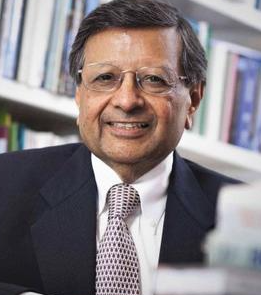 Jagdish Sheth合作论文数Goizueta Business School, Emory University;Sheth Leadership Academy2Richard Kedzior合作论文数1AM Lindridge合作论文数1
 Hounaida El Jurdi合作论文数Amer Univ Beirut1
 Laetitia Mimoun合作论文数Bayes Business Sch, City Univ London1
 Mathieu Alemany Oliver合作论文数Social & Innovat Mkt Lab, TBS1
 Hyo Jin (Jean) Jeon合作论文数Coll Business, Univ Nevada Reno1Katharina C. Husemann合作论文数1Ananya Bhattacharya合作论文数1Charlotte Waelde合作论文数1Mara Bergamaschi合作论文数Management, Univ Bergamo1
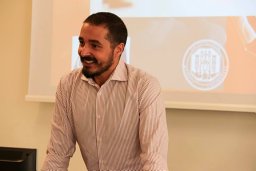 Giuseppe Pedeliento合作论文数Mkt & Management, Univ Bergamo1
 Giana M Eckhardt合作论文数King’s Business School, King’s College London1
 Daniela Andreini合作论文数1Andrew Lindridge合作论文数1
 Thomas C. O'Guinn合作论文数University of Texas USA1
 Robert Salle合作论文数1Gillian K. Oakenfull合作论文数1Ruhai Wu合作论文数1
 Luca M. Visconti合作论文数1
 Aliakbar Jafari合作论文数Univ Strathclyde1
 Gary Bamossy合作论文数1




