Grain boundaries are critical for determining the functionality of polycrystalline materials. Here we investigate and present the structural and transport properties of grain boundaries in the unconventional superconductor CeCoIn5. We provide a detailed recipe for the fabrication of isolated grain-boundary devices from as-grown polycrystalline samples of CeCoIn5. Electron backscattered diffraction imaging of polycrystalline CeCoIn5 samples reveals an abundance of 90 degrees misorientation grain boundaries, suggesting a preferential nucleation of CeCoIn5 grains with 90 degrees misorientation over a random distribution of grain orientations. Transport measurements across grain-boundary devices establish coherence of superconductivity and allow us to establish a lower bound on the critical current density for the grain boundaries. Our work opens possibilities for fabrication of quantum devices such as Josephson junctions out of bulk unconventional superconducting materials.
The pseudogap state of high-temperature superconducting cuprates, known for its partial gapping of the Fermi surface above the superconducting transition temperature, is believed to hold the key to understanding the origin of Planckian relaxation and quantum criticality. However, the nature of the Fermi surface in the pseudogap state has remained a fundamental open question. Here we report the observation of the Yamaji effect, which appears as a peak in the c-axis resistivity at a specific angle of the applied magnetic field, in angle-dependent magnetoresistivity measurements above the critical temperature in the cuprate HgBa2CuO4+delta. The observation of the Yamaji peak is evidence for small Fermi-surface pockets in the normal state of the pseudogap phase. The small size of the pockets, each estimated to occupy only 1.3% of the Brillouin zone area, is not expected given the absence of long-range broken translational symmetry.
We report 73Ge nuclear quadrupole resonance (NQR) and magnetic resonance (NMR) spectroscopy in the heavy-fermion quantum-critical ferromagnet CeRh6Ge4. NQR and NMR spectral measurements at the two nonequivalent Ge sites reveal electric field gradient tensors and the directions of their principal axes relative to the hexagonal basal plane. The spin-lattice relaxation rate 1/T1 experiments reveal a clear critical slowing down approaching the ferromagnetic transition. 1/T1 in the paramagnetic state is found to be predominantly caused by fluctuating 4f-local moments. The Knight shift shows Curie-Weiss behavior at high temperature and a deviation from this below T & lowast; 25 K possibly due to a mixture of crystalline electric field effects and Kondo screening. Order-parameter-like behavior of hyperfine fields at the Ge sites and ferromagnetic signal enhancement are observed in Zeeman-perturbed NQR, with uniform ferromagnetic order and a small ordered moment of 0.26 mu B/Ce confined within the ab plane. The ordered moment shows a notable in-plane magnetic stiffness against out-of-plane radio-frequency fields and has an (XY-type) in-plane isotropic nature. Our results reveal a strong easy-plane anisotropy of 4f-electron moment and suggest an involved interplay of hybridization and local moment physics in this quantum critical heavy-fermion ferromagnet.
The skyrmion lattice (SkL) in MnSi was studied using small-angle neutron scattering and under the influence of a radial electric current in a Corbino geometry. In response to the applied current, the SkL undergoes an angular reorientation with respect to the MnSi crystal lattice. The reorientation is non-monotonic with increasing current, with the SkL rotating first in one direction and then the other. The SkL reorientation was studied at different sample locations and found to depend on the local current density as inferred from a finite element analysis. The non-monotonic response indicates the presence of two competing effects on the SkL, most likely due to the presence of both radial electric and thermal currents. Such a scenario is supported by micromagnetic simulations, which show how these effects can act constructively or destructively to drive the SkL rotation, depending on the direction of the electric current. In addition, the simulations also suggest how the direction of the skyrmion flow may affect the SkL orientation.
We report temperature dependent X-Band (nu approximate to 9.5 GHz) Electron Spin Resonance (ESR) on the GdCuBi2 intermetallic compound. This compound presents a metallic Curie-Weiss paramagnetic behavior at high temperatures and orders antiferromagnetically at T-N = 14.3 K. Well above T-N (T > 250 K), the ESR experiments revealed temperature independent g-values spectra composed of a single Dysonian Gd3+ ESR line for the studied compound. Within the same temperature range, the Gd3+ ESR linewidth Delta H presents a linear broadening temperature dependence known as Korringa behavior. The obtained Korringa rate (Delta H/Delta T) and g-shift (Delta g) from the ESR measurements, along with the study of the macroscopic properties of GdCuBi2 (e.g. specific heat data and magnetic susceptibility) made it possible to explore Gd3+ spin dynamics in this system based on evaluation of the exchange parameters between the Gd3+ ESR probes and the conduction-electrons (ce) in this compound. Our results indicate that the exchange bottleneck effects and a q-dependent exchange interaction (J(fs)(q)) between the Gd(3+)4f and the ce are likely to be present in GdCuBi2. Disregarding the bottleneck effects in the simplest approximation, we extract the exchange parameters J(fs)(q=0) approximate to 380 meV and (1/2)approximate to 3.0 meV for the Gd3+ spin dynamics in GdCuBi2. These values of J(fs)(q) and (1/2) are typical of Gd3+ local moments in intermetallic materials and the small ratio [/J(fs)(2)(0)] approximate to 0.008 suggests a strongly anisotropic (or quasi-2D) Fermi surface for GdCuBi2.
Flat-band (FB) materials have emerged as promising platforms for exploring exotic quantum phases. While numerous candidates have recently been identified through spectroscopic techniques such as angle-resolved photoemission spectroscopy, central challenges remain on how to tune FBs towards the Fermi level E_F and to understand their impact on low-energy excitations probed in electronic transport experiments. Here, we show that, by attributing the temperature dependence of the electrical resistivity at elevated temperatures to electron-phonon interband scattering, one can infer the position of FBs near E_F across diverse material classes. As charge carriers scatter off phonons, interband transitions into FB states lead to distinctive sub- or superlinear resistivity at elevated temperatures, governed by the proximity of the FB to E_F. Our phenomenological model captures these universal transport behaviors observed across several recently studied FB compounds and offers a simple, broadly applicable method for detecting flat bands.
UTe2 is a newly discovered unconventional superconductor, where electron Cooper pairs combine into a spin-triplet ground state. Here we report the specific heat C(H,T) of a high-quality single crystal of UTe2 with a single specific heat anomaly at the superconducting transition temperature T_c {\approx} 2 K and a small zero-field residual Sommerfeld coefficient {\gamma}_0 = C/T (T=0) = 10 mJ/mol-K^2. We applied magnetic field up to 12 T along the three principal crystallographic axes of UTe2 to probe the nature of the superconducting state. The evolution of the residual Sommerfeld coefficient as a function of magnetic field, {\gamma}_0 (H), is highly anisotropic and reveals distinct regions. In magnetic field up to 4 T applied along a, b, and c axes, we find {\gamma}_0{\approx}{\alpha}_i {\square}H, with i=a,b,c, as expected for an unconventional superconductor with nodes (zeros) of the superconducting order parameter on the Fermi surface. A pronounced kink in {\gamma}_0(H), however, is observed at roughly 4 T for field applied along both a and b axes, whereas a smooth change from square-root to linear behaviour is observed at 4 T for H//c. These results strongly indicate that a zero-field ground state is stable up to 4 T and undergoes a field-induced evolution above 4 T. {\alpha_c} > {\alpha_a} > {\alpha_b}, indicating that the nodes in the low-field state are predominantly located in the vicinity of the a-b plane. The modification of the order parameter is strongest when field is applied in the a-b plane, which causes nodes to move away from the direction of the applied field. Both d_(B_2u)+id_(B_1u) and d_(B_2u)+id_(A_u) two-component order parameters can account for our observations, with d_(B_2u)+id_(B_1u) a more likely candidate. In either scenario, our measurements indicate that B_2u is the primary superconducting order parameter in UTe2.
The tetragonal 4 f -electron intermetallic ErB 4 is characterized by strong Ising anisotropy along the tetragonal c axis. The magnetic moments on the erbium sites can be mapped onto a Shastry-Sutherland lattice, resulting in geometrical frustration. At zero magnetic field ErB 4 exhibits collinear columnar antiferromagnetic (CAFM) order below T N = 15.4 K . In the presence of a magnetic field parallel to the c axis, ErB 4 exhibits a plateau at 1 / 2 of the saturation magnetization M S , which arises at a spin-flip transition at H 1 = 1.9 T. Fractional magnetization plateaus and other exotic spin phases are a well-established characteristic feature of frustrated spin systems. Monte Carlo simulations propose that ErB 4 is an ideal candidate to feature a spin supersolid phase in close vicinity of H 1 between the CAFM and M / M S = 1 / 2 plateau (HP) phase. Here, we combine single-crystal neutron diffraction and inelastic neutron scattering to study the magnetic phase diagram and the crystal electric-field (CEF) ground state of ErB 4 . Our measurements as a function of magnetic field find no signature of the spin supersolid phase but allow us to determine the magnetic structure of the HP phase to be of the up-up-up-down (uuud) type consistent with an Ising material. The magnetic moment μ CEF = 8.96 µ B expected from the CEF configuration determined by our inelastic neutron-scattering measurements is also consistent with the ordered moment observed in neutron diffraction, showing that the moments are fully ordered and close to the Er 3 + free ion moment (9.6 µ B ).
Plutonium-based correlated electron materials host exotic physical phenomena ranging from unconventional heavy-fermion superconductivity to topological Kondo insulating states. Self-irradiation damage can influence many properties of such radioactive materials. Structural disorder effects due to alpha radiation have been frequently studied using techniques such as transport, thermodynamics, and x-ray diffraction. Here, we use 239Pu nuclear magnetic resonance (NMR) to study the long-term influence of self-damage on the lattice and local electronic structures in a single crystal of the candidate topological insulator plutonium tetraboride (PuB4). We first characterize the anisotropy of the 239Pu resonance and confirm the local axial-site symmetry inferred from previous polycrystalline measurements. Aging effects are then evaluated over the time frame of six years. We find that, though the static 239Pu NMR spectra show a slight modulation in their shape, their field-rotation pattern reveals no change in 239Pu local site symmetry over time, suggesting that aging has a surprisingly small impact on the spatial distribution of the static hyperfine field. Further, ligand-site 11B NMR finds little time-dependent change in the size of electric field gradient around 11B sites. By contrast, aging has a prominent impact on the 239Pu NMR relaxation processes and signal intensity. Specifically, aging-induced damage manifests itself as an increase in the spin-lattice relaxation time T1, an increased distribution of T1, and a signal intensity that decreases linearly by 20% per year. An effective spin-spin relaxation time T2, eff in the aged sample shortens drastically towards lower temperature, suggesting growth of slow fluctuations of the hyperfine field that are linked to radiation-damage-induced inhomogeneity. Our NMR study sheds light on the interplay of radiation damage and local magnetic interactions in correlated insulators.
We study the Hall effect, AC magnetic susceptibility ( χ ac ), and magnetic force microscopy of the uniaxial ferromagnet CeRu 2 Ga 2 B with a centrosymmetric crystal structure. We observe a finite topological Hall effect (THE) within the ordered phase, before the magnetization is polarized by applied field. By comparing the field dependences of the area fraction of the magnetic bubbles, the derivative of χ ac , and the THE signal, we deduce that the magnetic bubbles in CeRu 2 Ga 2 B evolve from the trivial to topological spin texture with field. Our findings enable the expansion of the search for magnetic materials hosting topological spin textures to include uniaxial ferromagnets and open a new possibility to tailor the topological spin texture.
The interplay between superconductivity and magnetism has been a subject of significant interest for decades. While extensive research has focused on modifying the superconducting state through a magnetic domain as an independent variable, the manipulation of magnetic domains by the superconducting state has been relatively unexplored, primarily due to their higher stiffness compared to the energy associated with superconducting vortices. In this Letter, we demonstrate the manipulation of magnetic domains by thermally activated superconducting vortices in a ferromagnet/superconductor hybrid. We observe a reversible domain transition between metastable magnetic stripes and bubbles in a Nb/CeRu2Ga2B hybrid induced by vortex motion and the trapped field within the Nb superconducting film. The comparable Curie and superconducting critical temperatures and the presence of magnetic metastable states enable the magnetic domain changes driven by superconducting vortices in this hybrid system.
We study the magnetic heat capacity of a series of magnetically ordered Ce-based heavy-fermion materials, which show an anomalous T3 heat capacity in excess of the phonon contribution in many materials. For compounds for which magnon models have been worked out, we show that the local-moment magnon heat capacity derived from the measured magnon spectra underestimates the experimental specific heat. The excess heat capacity reveals increasing density of states with increasing energy, akin to a pseudogap. We show that this anomalous temperature-dependent term is not associated with proximity to a quantum critical point, but is strongly correlated with TN, indicating the anomalous excitations are governed by the magnetic exchange interaction. This insight may hold key information for understanding magnetically ordered heavy fermions.
The optical conductivity sigma(omega, T) of CeRhSn was studied by broadband infrared spectroscopy. Temperaturedependent spectral weight transfer occurs over high energy (0.8 eV) and temperature (similar to 500 K) scales, classifying CeRhSn as a mixed-valent compound. The optical conductivity reveals a substantial anisotropy in the electronic structure. Renormalization of sigma(omega, T) occurs as a function of temperature to a coherent Kondo state with concomitant effective mass generation. Associated spectroscopic signatures were reproduced remarkably well by the combination of density functional theory and dynamical mean-field theory using a momentum-independent self-energy. The theory shows that the anisotropy for energies >10 meV is mainly driven by the bare three-dimensional electronic structure that is renormalized by local electronic correlations. The possible influence of magnetic frustration and quantum criticality is restricted to lower energies.
We present the ab initio supported discovery of two new Pu based intermetallic compounds, PuNiSn and PuPtSn. Using density functional theory, the formation energies within the relevant ternary phase diagrams were calculated to predict the stability of both compounds. Simultaneously, Pu-Ni-Sn and Pu-Pt-Sn materials were arc-melted and subsequently characterized with magnetization, specific heat, and resistivity measurements from 2-300 K. Magnetization measurements show that PuNiSn and PuPtSn order antiferromagnetically at TN = 11 K and TN = 15 K, respectively. Specific heat measurements show an enhanced residual electronic specific heat that is indicative of strong electron correlations. Resistivity measurements are indicative of Kondo behavior for PuNiSn while crystal field effects may play a role in the observed temperature dependence for PuPtSn.
Recent advances enabled the discovery of heterometallic molecules for many metals: main group, d-block, lanthanides, and some actinides (U, Th). These complexes have at least two different metals joined by bridging ligands or by direct metal-metal bonding interactions. They are attractive because they can enable chemical cooperativity between metals from different parts of the periodic table. Some heterometallics provide access to unique reactivity and others exhibit physical properties that cannot be accessed by homometallic species. We envisioned that transuranic heterometallics might similarly enable new transuranic chemistry, though synthetic routes to such compounds have yet to be developed. Reported here is the first synthesis of a molecular transuranic complex that contains plutonium (Pu) and cobalt (Co). Our analyses of PuCl3{CoCp[OP(OEt)(2)](3)} showed Pu(IV) and Co(III) were present and suggested that the Pu(iv) oxidation state was stabilized by the electron donating phosphite ligands. This synthetic method - and the demonstration that Pu(iv) can be stabilized in a heterobimetallic molecular setting - provides a foundation for further exploration of transuranic multimetallic chemistry.
We investigate the topological superconductor candidate UTe$_2$ using high-resolution valence-band resonant inelastic x-ray scattering at the U $M_{4,5}$-edges. We observe atomic-like low-energy excitations that support the correlated nature of this unconventional superconductor. These excitations originate from the U $5f^2$ configuration, which is unexpected since the short Te2-Te2 distances exclude Te2 being 2-. By utilizing the photoionization cross-section dependence of the photoemission spectra in combination with band structure calculations, we infer that the stabilization of the U $5f^2$ configuration is due to the U $6d$ bonding states in the U-dimers acting as a charge reservoir. Our results emphasize that the description of the physical properties should commence with a $5f^2$ $ansatz$.
We report the temperature-pressure phase diagram of a UTe2 single crystal that does not undergo a bulk superconducting transition but shows filamentary superconductivity with a critical transition temperature of 1 K at ambient pressure. Electrical -resistivity measurements reveal that the evolution of the filamentary superconducting state under pressure resembles the behavior observed in previous reports on bulk superconducting samples. AC calorimetry, however, does not show evidence for either bulk superconductivity or magnetism for pressures up to 1.6 GPa. Our results highlight the role of inhomogeneity in chemical -vapor -transport -grown UTe2 samples and serve as a cautionary tale when probing electrical resistivity alone.
Across the cerium (Ce)-indium (In) binary phase diagram, there are five line compounds including Ce3In, Ce2In, Ce3In5, CeIn2 and CeIn3. So far, CeIn3 is the only compound whose high-pressure structural behavior and elastic properties have been studied in detail. In this work, we investigated the compression behavior of Ce3In and Ce2In at pressures up to 26.2 GPa using in situ high-pressure angle dispersive synchrotron powder X-ray diffraction (XRD). Our results indicate that Ce3In retains its Cu3Au-type structure in the pressure range investigated, whereas Ce2In undergoes a phase transformation from the Ni2In-type structure to an unidentified phase at similar to 4.6 GPa. Unit-cell parameters as a function of pressure were obtained by Rietveld analysis of XRD data. Unit cell volumes were fitted to a second order Birch-Murnaghan equation of state (EOS). The experimentally determined bulk moduli (K-0) of the two cerium indides are 50 +/- 3 GPa for Ce3In and 39.2 +/- 1.6 GPa for Ce2In. The zero-pressure compressibilites of the a-axis (beta(a,0)) for Ce3In is 6.67 (+/- 0.36) x 10(-3) GPa(-1) and of the a- and c-axis for Ce2In are beta(a,0) = 8.85 (+/- 0.39) x 10(-)(3) GPa(-1) and beta(c,0) = 9.26 (+/- 0.51) x 10(-3) GPa(-1), respectively. These results are in general agreement with those calculated by density functional theory (DFT + U) and open-source machine learning algorithms.
The thermal conductivity of heavy-fermion superconductor CeCoIn$_5$ was measured with a magnetic field rotating in the tetragonal a-b plane, with the heat current in the anti-nodal direction, $J$ || [100]. We observe a sharp resonance in thermal conductivity for the magnetic field at an angle $\theta$ $\sim$ 12$^{\circ}$, measured from the heat current direction [100]. This resonance corresponds to the reported resonance at an angle $\theta'$ $\sim$ 33$^{\circ}$ from the direction of the heat current applied along the nodal direction, $J$ || [110]. Both resonances, therefore, occur when the magnetic field is applied in the same crystallographic orientation in the two experiments, regardless of the direction of the heat current, proving conclusively that these resonances are due to the structure of the Fermi surface of CeCoIn$_5$. We argue that the uncondensed Landau quasiparticles, emerging with field, are responsible for the observed resonance. We support our experimental results with density-functional-theory model calculations of the density of states in a rotating magnetic field. Our calculations, using a model Fermi surface of CeCoIn$_5$, reveal several sharp peaks as a function of the field direction. Our study demonstrates that the thermal-conductivity measurement in rotating magnetic field can probe the normal parts of the Fermi surface deep inside the superconducting state.
We investigate the antiferromagnetic heavy fermion superconductor UPd$_2$Al$_3$, employing angle-resolved photoemission spectroscopy to unravel the complex electronic structure of its U 5f electrons. We observe unexpected characteristics that challenge the conventional temperature-dependent behavior of heavy fermion systems, revealing unexpected characteristics. At temperatures above the anticipated coherence temperature (T$^*$), we observe itinerant U 5f electrons at temperatures higher than previously postulated. Additionally, a previously unidentified dispersionless band emerges around 600 meV below the Fermi energy, potentially linked to spin-orbit splitting within the U 5f states. Hybridization between the 5f electrons and conduction band was observed with an energy dispersion of 10 meV at low temperatures, suggesting that U 5f electrons near and at the Fermi surface have an itinerant nature. Temperature-dependent 5d-5f resonance spectra reveal that the 5f electron spectrum weight increases with lowering temperature and begins to decrease at temperatures significantly higher than the Neel temperature (T$_N$). We further show that the competition between the Kondo effect and Ruderman-Kittel-Kasuya-Yosida (RKKY) interactions may be responsible for the relocalization of 5f electrons, making relocalization a precursor to the establishment of magnetic order at lower temperatures. Our experiments also provide evidence that 5f electrons with the same orbital are involved in both the Kondo effect and RKKY interactions, suggesting that the two coexist at lower temperatures.
 Filip Ronning合作论文数Institute for Materials Science, Los Alamos National Laboratory386
 Joe D. Thompson合作论文数Los Alamos National Laboratory378
 JL Sarrao合作论文数138
 M. Brian Maple合作论文数Jacobs School of Engineering, University of California San Diego;Department of Physics, University of California San Diego99Roman Movshovich合作论文数Los Alamos National Laboratory91Paul H. Tobash合作论文数91
 Priscila F. S. Rosa合作论文数Los Alamos National Laboratory83S. M. Thomas合作论文数Los Alamos Natl Lab, Los Alamos, NM 87545 USA59
 Corwin Booth合作论文数Chemical Sciences Division, Lawrence Berkeley National Laboratory58
 Zachary Fisk合作论文数Department of Physics and Astronomy, University of California, Irvine55
 Jianxin Zhu合作论文数Theoretical Division, Los Alamos National Laboratory;Center for Integrated Nanotechnologies, Los Alamos National Laboratory50
 Tuson Park合作论文数Department of Physics, College of Science, Sungkyunkwan University;Center for Quantum Materials and Superconductivity (CQMS), Sungkyunkwan University49
 Jeremy N. Mitchell合作论文数Materials Science and Technology Division, Los Alamos National Laboratory43
 Tomasz Durakiewicz合作论文数Institute of Physics, Maria Curie-Sklodowska University42
 Philip J. W. Moll合作论文数Max Planck Institute for the Structure and Dynamics of Matter39Brian L. Scott合作论文数Los Alamos National Laboratory38
 Marc Janoschek合作论文数Laboratory for Neutron and Muon Instrumentation, Center for Neutron and Muon Sciences, Paul Scherrer Institute;Department of Physics, University of Zurich;Division ad interim, Research with Neutrons and Muons, Paul Scherrer Institute38Jon M. Lawrence合作论文数35
 Krzysztof Gofryk合作论文数Institute of Low Temperature and Structure Research, Polish Academy of Sciences35
 N J Curro合作论文数Department of Physics and Astronomy, University of California, Davis33
 Nirmal J Ghimire合作论文数Stavropoulos Center for Complex Quantum Matter, Department of Physics, College of Science, University of Notre Dame;Department of Physics and Astronomy, University of Notre Dame32
 Yongkang Luo (罗永康)合作论文数School of Electrical and Electronic Engineering, Huazhong University of Science and Technology;Wuhan National High Magnetic Field Center, Huazhong University of Science and Technology32
 Ryan Baumbach合作论文数Physics Department, University of California, Santa Cruz;Physical & Biological Sciences Division, University of California, Santa Cruz;The National High Magnetic Field Laboratory32J. D. Thompson合作论文数31
 Baumbach Ryan合作论文数30
 Vivien Zapf合作论文数National High Magnetic Field Laboratory, Los Alamos National Laboratory30
 John Sarrao合作论文数SLAC National Accelerator Laboratory29
 Neil Harrison合作论文数The National High Magnetic Field Laboratory;Los Alamos National Laboratory29
 Ross McDonald合作论文数The National High Magnetic Field Laboratory, Los Alamos National Laboratory28
 V.A. Sidorov合作论文数26
 Shizeng Lin (林士增)合作论文数Theoretical Division, Los Alamos National Laboratory/Center for Nonlinear Studies, Los Alamos National Laboratory25
 John J. Joyce合作论文数Energy Research Group, University of Illinois at Urbana-Champaign25
 Michael Hundley合作论文数Los Alamos National Laboratory24
 Andrew Christianson合作论文数Oak Ridge National Laboratory24N. Wakeham合作论文数23
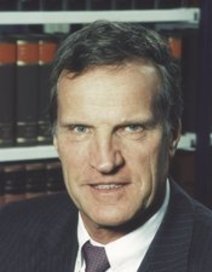 Frank Steglich合作论文数TU Dresden;Center for Correlated Matter, Zhejiang University;Max-Planck-Institute for Chemical Physics of Solids23
 Pascoal José Giglio Pagliuso合作论文数Laboratório de Propriedades Ópticas e Magnéticas de Sólidos, Instituto de Física Gleb Wataghin, Universidade Estadual de Campinas23
 Svilen Bobev合作论文数Department of Chemistry and Biochemistry, University of Notre Dame23
 Han-Oh Lee合作论文数Center for Correlated Matter, Zhejiang University22
 Y. Tokiwa合作论文数Adv Sci Res Ctr, Japan Atom Energy Agcy22
 Xin Lu (路欣)合作论文数School of Physics, Zhejiang University22H. Sakai合作论文数21
 Maja D. Bachmann合作论文数Max Planck Inst Chem Phys Solids, D-01187 Dresden, Germany21
 Tomasz Klimczuk合作论文数Division of Strongly Correlated Electronic Systems, Institute of Nanotechnology and Materials Engineering, Faculty of Applied Physics and Mathematics, Gdańsk University of Technology20
 Brad Ramshaw合作论文数Department of Physics, College of Arts & Sciences, Cornell University;Canadian Institute for Advanced Research20Cigdem Capan合作论文数Dept Phys & Astron, Univ Calif Irvine19
 Mun K Chan合作论文数Los Alamos National Laboratory, University of Minnesota;National High Magnetic Field Laboratory18
 Kent R. Shirer合作论文数UC Davis, University of California18R.H. Heffner合作论文数18




