We develop a controlled diagrammatic framework for periodic Anderson models,and apply it to heterostrained magic-angle twisted bilayer graphene (MATBG) at charge neutrality using the topological heavy-fermion formulation. Building on arXiv:2604.14278, we organize self-energy insertions and perform a Dyson resummation to any order in the small parameter s^2 – the fraction of the moiré Brillouin zone with nontrivial quantum geometry. For strained MATBG, the expansion remains controlled down to arbitrarily low temperatures as long as the strain induced energy scale is not too small. In the flat-chiral limit, an emergent approximate U(1) symmetry forbids the leading scattering channel and leaves the Mott bands sharp at order s^2. This is in stark contrast to the unstrained case, where the linewidth is of order N_f s^2 U with U the on-site f-f Hubbard interaction and N_f the number of f states per site. Away from the chiral limit, the linewidth is non-zero at order s^2 but more than an order of magnitude smaller than in the unstrained case. The strain-induced energy scale also imprints itself directly on the spectrum: as an electron-phonon-like kink in the dispersion, and as an additional flat “trion” band – a single-particle excitation bound to a local f particle-hole pair. We use the framework to predict the Quantum Twisting Microscope spectrum at one-loop order for both strained and unstrained MATBG, and compare with recent experiments.
We study the phase diagram of twisted bilayer graphene at charge neutrality as a function of twist angle θ, uniaxial heterostrain ε, and temperature T using sign-problem-free quantum Monte Carlo simulations. At T=0 and zero strain, we find a continuous transition from a Dirac semimetal to a gapped Kramers inter-valley coherent (KIVC) phase as θ decreases toward the magic angle. With finite strain, the KIVC phase undergoes a further continuous transition at smaller θ into an anisotropic semimetal with gapless excitations near the center of the moiré Brillouin zone. In the KIVC regime, the entropy rises sharply with temperature and plateaus at 15 K≲ T ≲ 40 K near the value expected from a Mott-like regime of localized electrons with nearly uncorrelated spin, valley, and orbital degrees of freedom, despite the topological obstruction preventing a localized tight-binding description of the active bands. The spectral function evolves continuously with θ: at low T, a gap opens at the K points and the minimal gap shifts to Γ as θ decreases; at intermediate T, the spectral function smoothly interpolates between a Dirac semimetal spectrum with coherent K-point quasiparticles and a spectrum with gapless Γ-centered quasiparticles near the magic angle. The later can be a anisotropic or a Mott semimetal and we discuss how to distiguish them in experiment.
Large language models (LLMs) have demonstrated remarkable progress in coding and mathematical problem-solving; however, evaluation on advanced research-level problems in the hard sciences remains scarce. To fill this gap, we present \cmt, a dataset of 50 original problems covering condensed matter theory (CMT) at the level of an expert researcher. The topics cover analytical and computational approaches commonly used in quantum many-body physics as well as classical statistical mechanics. This dataset was designed and verified by a panel of expert researchers from around the world. We built the dataset through a collaborative environment that challenges the panel to write and refine difficult problems that the panel would like their research assistants to be able to solve, with topics including Hartree-Fock mean-field theory, exact diagonalization, quantum Monte Carlo, density matrix renormalization group, quantum statistical mechanics, classical statistical mechanics, and model building. We evaluate different LLMs by programmatically checking LLM-generated solutions against expert-supplied ground truth. For this, we developed machine-grading mechanisms that are suitable for advanced physics research problems. For example, we handle non-commuting operators that are essential for quantum many-body problems by symbolic manipulation and normal ordering. Our evaluations show that frontier models struggle with all of the problems in the dataset, highlighting a gap in the physical reasoning skills of current LLMs. Notably, experts identified strategies for creating increasingly difficult problems by interacting with the LLMs and exploiting common failure modes. While the highest-performing model, GPT5, correctly solves 30\% of the problems, average performance across 17 models (GPT, Gemini, Claude, DeepSeek, and Llama classes) is only 11.4$\pm$2.1\%. Moreover, our benchmark contains 18 problems that {\it not a single one} of the 17 models can correctly solve, and 26 problems that are solved by {\it at most} one model. These currently unsolvable problems span the fields of Quantum Monte Carlo, Variational Monte Carlo, and Density Matrix Renormalization Group. The answers sometimes violate fundamental symmetries or have unphysical scaling dimensions. We believe that this benchmark set provides valuable guidance for the future development of language models, aiming to achieve the goal of AI research assistants and tutors.
We study a model of mesoscale superconducting puddles in a metal, represented as dynamical impurities interacting with a finite number of electronic channels via Andreev and normal scattering. We identify conditions under which the collection of puddles make a T-linear contribution to the resistivity and a Tln(1/T) to the specific heat and thermopower. This behavior emerges in an intermediate temperature range that extends from an upper energy scale set by the renormalized charging energy of the puddles, and down to an exponentially small scale associated with a charge-Kondo crossover, provided that the number of electronic channels interacting with the puddle is large. The phenomenology of our model resembles the apparent extended strange metal regime observed in overdoped cuprates which exhibits T-linear resistivity at low T over a finite range of doping. We also propose to engineer a strange metal from suitably designed superconducting grains in a metallic matrix.
We develop a controlled theoretical framework for the topological heavy fermion model relevant to magic-angle twisted bilayer graphene, where low density conduction electrons hybridize with a lattice of strongly interacting f-sites. By tracing out the localized electrons, we derive an effective action for the conduction electrons with long-range in time effective interactions, built from correlators of the single f-site problem. We identify a small hybridization-phase-space parameter resulting in a controlled loop expansion, enabling the derivation of nonperturbative results in either the interaction or the hybridization strength. To tree-level, the results are equivalent to the Hubbard I approximation. At higher loop order, we derive two key results applicable to temperatures above the flavor ordering temperature and below the on-site charging energy: 1) the quasi-particle lifetime, 2) the flavor susceptibility of the system. Remarkably, despite being strongly interacting, we find the susceptibility to accurately obey a Curie-Weiss law parametrically close to the Curie temperature.
We report the observation of the Meissner effect in a rhombohedral graphene superconductor, realized via direct imaging of the static fringe magnetic field. In our few-micron sample, the onset of superconductivity manifests as a diamagnetic response that screens only ∼ 100 ppm of the applied magnetic field. Tracking the evolution of the resulting nanotesla-scale fields in real space allows us to observe the entry of superconducting vortices and map the local superfluid stiffness, ρ_s. Correlating fringe field signals from both Meissner screening and magnetically ordered states, we show that superconductivity onsets in the midst of a continuous quantum phase transition to a canted spin ferromagnet. Within the superconducting state, we find the temperature dependence of ρ_s to be incompatible with isotropic Bardeen-Cooper-Schrieffer theory and the zero-temperature stiffness ρ_s^0 to be linearly proportional to T_c, constraining future theoretical models of superconductivity in this system.
The hallmark of two-dimensional chiral topological phases is the existence of anomalous gapless modes at the spatial boundary. Yet, the manifestation of this edge anomaly within the bulk ground-state wavefunction itself remains only partially understood. In this work, we introduce a family of multipartite entanglement measures that probe chirality directly from the bulk wavefunction. Our construction involves applying different permutations between replicas of the ground state wavefunction in neighboring spatial regions, creating "permutation defects" at the boundaries between these regions. We provide general arguments for the robustness of these measures and develop a field-theoretical framework to compute them systematically. While the standard topological field theory prescription misses the chiral contribution, our method correctly identifies it as the chiral conformal field theory partition function on high-genus Riemann surfaces. This feature is a consequence of the bulk-edge correspondence, which dictates that any regularization of the theory at the permutation defects must introduce gapless boundary modes. We numerically verify our results with both free-fermion and strongly-interacting chiral topological states and find excellent agreement. Our results enable the extraction of the chiral central charge and the Hall conductance using a finite number of wavefunction replicas, making these quantities accessible to Monte-Carlo numerical techniques and noisy intermediate-scale quantum devices.
Recent quantum twisting microscopy experiments [1] have provided unprecedented momentum- and energy-resolved imaging of magic-angle twisted bilayer graphene, revealing a stark dichotomy between the heavy and light electronic characters of its narrow bands. In this work, we provide a sharp distinguishing criterion between the two most likely candidate states that exhibit spectroscopic features consistent with the experimental results. Focusing on charge neutrality, these states are 1) the 'Mott semimetal', governed by strong dynamical correlations, and 2) the 'strain-induced anisotropic semimetal', characterized by weak Hartree-Fock effects. We demonstrate that an out-of- plane magnetic field serves as a sharp discriminating probe based on the expected Landau level gap size hierarchy. We find that the strain-induced anisotropic semimetal has a robust gap hierarchy where the Chern C gaps, Δ_C , decrease in order Δ_±4 > Δ_±8 > Δ_±12. In contrast, for the Mott semimetal, Δ_±4 remains the largest gap, while the relative magnitude of the C = ±8, ±12 gaps depends sensitively on the applied magnetic field. We test the robustness of these results against strain orientation and lattice relaxation finding consistency between the gap hierarchy of the strained semimetal and previous incompressibility measurements at finite magnetic field [2].
We propose modifying topological quantum error correcting codes by incorporating space-time defects, termed “time vortices,” to reduce the number of physical qubits required to achieve a desired logical error rate. A time vortex is inserted by adding a spatially varying delay to the periodic measurement sequence defining the code such that the delay accumulated on a homologically non-trivial cycle is an integer multiple of the period. We analyze this construction within the framework of the Floquet color code and optimize the embedding of the code on a torus along with the choice of the number of time vortices inserted in each direction. Asymptotically, the vortexed code requires less than half the number of qubits as the vortex-free code to reach a given code distance. We benchmark the performance of the vortexed Floquet color code by Monte Carlo simulations with a circuit-level noise model and demonstrate that the smallest vortexed code (with 30 qubits) outperforms the vortex-free code with 42 qubits.
A Thouless pump describes a system in which a quantized amount of charge is transported by one lattice spacing per cycle when the parameters of a Hamiltonian are varied slowly and periodically. In the standard case, this quantization requires the system to remain in its ground state with vanishing thermodynamic entropy throughout the pumping process. Here, we introduce a class of Mott-Thouless pumps, which operate in highly entropic, spin-incoherent Mott states. We show analytically that these states exhibit exponentially protected quantized transport despite their extensive entropy, because the pumped charge resides in a gapped sector that remains dynamically decoupled from the hot spin degrees of freedom. By contrast, motivated by a recent experimental realization, we identify other classes of Mott-Thouless pumps that lack this protection. In these systems, spin excitations can efficiently generate charge excitations, leading to a rapid breakdown of quantized transport. Our analytical results are supported by numerically exact real-time simulations of finite systems.
We study a single component (i.e., single valley, spin-polarized) two-dimensional electron gas with C_3v symmetry tuned to a Van-Hove (VH) singularity. Generically, there may be either three or six VH points at the Fermi level, related to each other by symmetry. Using a renormalization group analysis, we show that when the effective interactions between electrons at the VH points are positive, the system is stable. In contrast, if the effective interactions are negative, the system develops an instability toward either pair density wave (PDW) or charge density wave (CDW) orders, depending on the anisotropy of the dispersion at the VH points. The PDW may have either a single wavevector or multiple wavevectors. The PDW phase with three coexisting wavevectors can support fractional h6e vortices. The interplay between the geometry of the Fermi surface and the singularity of the density of states is the key that enables PDW formation.
The properties of a two-dimensional electron gas (2DEG) in a semiconductor host with two valleys related by an underlying C_4 rotational symmetry are studied using Hartree-Fock (HF) and various other many-body approaches. A familiar artifact of the HF approach is a degeneracy between the valley polarized - “Ising nematic” - and spin polarized - ferromagnetic - phases, which is inconsistent with recent variational Monte Carlo (VMC) results. Correlation effects, computed either within the random phase approximation (RPA) or the T-matrix approximation, enhance the valley susceptibility relative to the spin susceptibility. Extrapolating the results to finite interaction strength, we find a direct first-order transition from a symmetry-unbroken state to a spin unpolarized Ising nematic fluid with full valley polarization, in qualitative agreement with VMC. The RPA results are also reminiscent of experiments on the corresponding 2DEG in AlAs heterostructures.
Multilayer rhombohedral graphene offers a rich platform for strong electron interactions without a moire superlattice. The in situ tunable band structure and nontrivial topology lead to a variety of novel correlated electronic states with isospin order dictated by the interplay of spin-orbit coupling and Hunds exchange interactions. However, versatile methods for mapping local isospin textures and determining the exchange energies are currently lacking. Utilizing a nanoscale superconducting quantum interference device in a vector magnetic field, we image the magnetization textures in tetralayer rhombohedral graphene. We reveal sharp magnetic phase transitions marking spontaneous time reversal symmetry breaking. In the quarter metal phase, the spin and orbital moments align closely, providing a bound on the spin-orbit coupling energy. The half metal phase is shown to have a very small magnetic anisotropy, providing the first experimental lower bound on the intervalley Hunds exchange interaction energy, which is found to be close to its theoretical upper bound. By contrasting to magnetotransport measurements, we show that high-field electronic states are governed by unique topological magnetic band reconstruction. The ability to resolve the local isospin texture and the different interaction energies, paves the way to a better understanding of the phase transition hierarchy and the numerous correlated electronic states arising from spontaneous and induced isospin symmetry breaking in graphene heterostructures.
The tunable band structure and nontrivial topology of multilayer rhombohedral graphene lead to a variety of correlated electronic states with isospin orders-meaning ordered states in the combined spin and valley degrees of freedom-dictated by the interplay of spin-orbit coupling and Hunds exchange interactions. However, methods for mapping local isospin textures and determining the exchange energies are currently lacking. Here, we image the magnetization textures in tetralayer rhombohedral graphene using a nanoscale superconducting quantum interference device. We observe sharp magnetic phase transitions that indicate spontaneous time-reversal symmetry breaking. In the quarter-metal phase, the spin and orbital moments align closely, providing a bound on the spin-orbit coupling energy. We also show that the half-metal phase has a very small magnetic anisotropy, which provides an experimental lower bound on the intervalley Hunds exchange interaction energy. This is found to be close to its theoretical upper bound. The ability to resolve the local isospin texture and the different interaction energies will allow a better understanding of the phase transition hierarchy and the numerous correlated electronic states arising from spontaneous and induced isospin symmetry breaking in graphene heterostructures.
We propose a mechanism which can generate supercurrents in spin-orbit coupled superconductors with charged magnetic inclusions. The basic idea is that through spin-orbit interaction, the in-plane electric field near the edge of each inclusion appears to the electrons as an effective spin-dependent gauge field; if Cooper pairs can be partially spin polarized, then each pair experiences a nonzero net transverse pseudo-gauge field. We explore the phenomenology of our mechanism within a Ginzburg-Landau theory, with parameters determined from a microscopic model. Depending on parameters, our mechanism can either enhance or reduce the total magnetization upon superconducting condensation. Given an appropriate distribution of inclusions, we show how our mechanism can generate superconducting vortices without any applied orbital magnetic field. Our mechanism can produce similar qualitative behavior to the "magnetic memory effect" observed in 4Hb-TaS2 1. However, the magnitude of the effect in that material seems larger than our model can naturally explain.
We introduce a variational approach for preparing low energy states of arbitrary target Hamiltonians. The protocol is defined in terms of a repeated cycle consisting of p layers of unitary gates applied to the system and ancilla "bath" qubits, followed by reset of the bath qubits. The gate parameters within each cycle are optimized such that the steady state achieved after many cycles has a low energy expectation value with respect to the target Hamiltonian, and that the energy converges toward the steady state value in as few cycles as possible. We illustrate the protocol for the transverse field Ising model, and study its systematic behaviors with respect to system size, model parameters, and noise using tensor network based classical simulations. We then experimentally demonstrate its operation on IBM's ibm_kingston quantum processor for up to 28 system qubits coupled to 14 bath sites. Classical training on small system sizes and with few unitary layers per cycle gives robust results that transfer well to larger system sizes and to noisy hardware.
We consider two-dimensional periodically driven systems of fermions with particle-hole symmetry. Such systems support non-trivial topological phases, including ones that cannot be realized in equilibrium. We show that a space-time defect in the driving Hamiltonian, dubbed a “time vortex,” can bind π Majorana modes. A time vortex is a point in space around which the phase lag of the Hamiltonian changes by a multiple of 2π. We demonstrate this behavior on a periodically driven version of Kitaev's honeycomb spin model, where ℤ_2 fluxes and time vortices can realize any combination of 0 and π Majorana modes. We show that a time vortex can be created using Clifford gates, simplifying its realization in near-term quantum simulators.
Quantum electronic fluids with spin and valley degrees of freedom have a correlation driven tendency to flavor polarization (generalized ferromagnetism). To first order in the long-range Coulomb interactions – i.e. in the Hartree-Fock approximation – spin and valley polarization exhibit a spurious degeneracy. We show that to second order – or more generally in the random-phase approximation – this degeneracy is lifted in a way that depends only on the underlying symmetry relating the two valleys. In two spatial dimensions, if the valleys are related by an n-fold rotation (n>2) or by mirror reflection and each valley is invariant under C_2 or time reversal (as is the case in AlAs quantum wells) then valley polarization is preferred. If the valleys are related by time reversal or by C_2 rotation symmetry (as in multilayer graphene systems) then spin order is selected.
We address the problem of identifying a 2+1D topologically ordered phase using measurements on the ground-state wave function. For nonchiral topological order, we describe a series of bulk multipartite entanglement measures that extract the invariants ∑_{a} d_{a}^{2}θ_{a}^{r} for any r≥2, where d_{a} and θ_{a} are the quantum dimension and topological spin of an anyon a, respectively. These invariants are obtained as expectation values of permutation operators between 2r replicas of the wave function, applying different permutations on four distinct regions of the plane. Our proposed measures provide a refined tool for distinguishing topological phases, capturing information beyond conventional entanglement measures such as the topological entanglement entropy. We argue that any operator capable of extracting the above invariants must act on at least 2r replicas, making our procedure optimal in terms of the required number of replicas. We discuss the generalization of our results to chiral states.
Simulating many-body systems is one of the most promising applications of near-term quantum computers. An important open question is how to efficiently prepare the ground states of arbitrary fermionic Hamiltonians, especially those with nontrivial topology. Here, we propose an efficient protocol for preparing low-energy states of fermionic Hamiltonians on a noisy bosonic quantum simulator by adiabatic cooling using a simulated bath. We arrange the couplings such that the simulated system and bath together obtain a local fermionic description in which fermionic excitations can be extracted individually, via coherent hopping to the bath, rather than in pairs as would otherwise be required by fermion parity conservation. This approach thus achieves a linear (rather than quadratic) scaling of the cooling rate vs. excitation density at low densities. We show that certain topological phases such as the chiral (non-Abelian) phase of the Kitaev honeycomb model can be prepared efficiently using our protocol. Our protocol performs favorably in the presence of noise, making it suitable for execution on near-term quantum devices.
 Steven Kivelson合作论文数Department of Physics, Stanford University;Stanford Institute for Materials and Energy Sciences, Stanford University49
 Mark Rudner合作论文数Department of Physics, College of Arts & Sciences, University of Washington;Niels Bohr Institute, The Niels Bohr International Academy, University of Copenhagen32
 Ady Stern合作论文数Department of Condensed Matter Physics, Faculty of Physics, Weizmann Institute of Science30
 Netanel Lindner合作论文数Physics Department, Technion – Israel Institute of Technology30
 Yuval Oreg合作论文数Department of Condensed Matter Physics, Weizmann Institute of Science;Goldschleger Center for Nanophysics, Weizmann Institute of Science28
 Yoni Schattner合作论文数SLAC Natl Accelerator Lab, Stanford Inst Mat & Energy Sci20
 Debanjan Chowdhury合作论文数Departments of Physics, College of Arts & Sciences, Cornell University17
 Kenji Watanabe (渡邊賢司)合作论文数Research Center for Electronic and Optical Materials, National Institute for Materials Science17
 Samuel Lederer合作论文数Dept Phys, Cornell Univ14
 Ehud Altman合作论文数Department of Physics, University of California, Berkeley14
 Takashi Taniguchi (谷口尚)合作论文数Research Center for Materials Nanoarchitectonics, National Institute for Materials Science;Graduate School of Science, Faculty of Science, Tohoku University13
 Subir Sachdev合作论文数Department of Physics, Harvard University;Perimeter Institute for Theoretical Physics12
 Tobias Holder合作论文数Dept Condensed Matter Phys, Weizmann Inst Sci11
 Rafael M. Fernandes合作论文数Ames Laboratory;Department of Physics and Astronomy;Iowa State University;Ames Laboratory, Iowa State University11
 Jiewen Xiao合作论文数Department of Condensed Matter Physics, Weizmann Institute of Science10
 Keselman Anna合作论文数Department of Condensed Matter Physics, Weizmann Institute of Science10yochai werman合作论文数9
 Andrea Young合作论文数Department of Physics, University of California, Santa Barbara9Xiaoyu Wang合作论文数8Evyatar Tulipman合作论文数Dept Condensed Matter Phys, Weizmann Inst Sci8
 Felix von Oppen合作论文数Dahlem Center for Complex Quantum Systems, Freie Universitat Berlin8Yaar Vituri合作论文数7
 Haoxin Zhou (周昊欣)合作论文数University of California, Berkeley7
 Eugene Demler合作论文数Institut für Theoretische Physik, Department of Physics, Eidgenössische Technische Hochschule Zürich7
 Shahal Ilani合作论文数Faculty of Physics, Weizmann Institute of Science7Tian Xie合作论文数6
 Jörg Schmalian合作论文数Institute for Quantum Materials and Technologies, Karlsruhe Institute of Technology;Institute for Theory of Condensed Matter, Karlsruhe Institute of Technology6
 Haim Arbel合作论文数Department of Condensed Matter Physics, Weizmann Institute of Science6
 Eduardo Hector Fradkin合作论文数Department of Physics, The Grainger College of Engineering, University of Illinois at Urbana-Champaign6
 Johannes Hofmann合作论文数Condensed Matter Theory Center and Joint Quantum Institute, University of Maryland6Ari M. Turner合作论文数6
 Takuya Kitagawa合作论文数Department of Aeronautics and Astronautics;School of Engineering;Tokai University;School of Engineering, Tokai University6Gilad Kishony合作论文数5
 Jonathan Ruhman合作论文数MIT, Dept Phys, Cambridge, MA 02139 USA5
 Candice Thomas合作论文数Purdue Univ, Dept Phys & Astron, W Lafayette, IN 47907 USA5
 Frederik Nathan合作论文数Dept Phys, CALTECH5
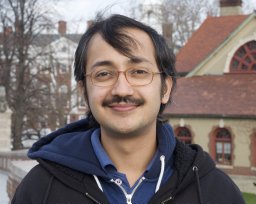 Shubhayu Chatterjee合作论文数Department of Physics, University of California5M. E. Huber合作论文数5
 Frank Pollmann合作论文数Department of Physics, Technische Universität München5
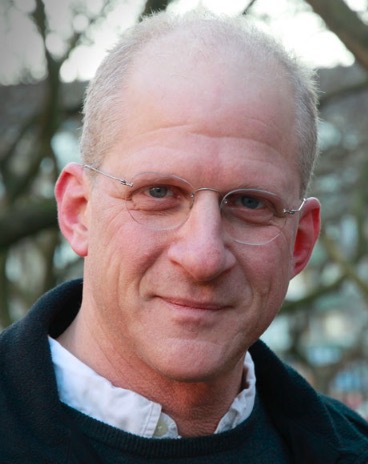 Charles Marcus合作论文数Department of Materials Science and Engineering, University of Washington;Pacific Northwest National Laboratory;Niels Bohr Institute, University of Copenhagen5
 Michael J. Manfra合作论文数Department of Physics and Astronomy, College of Science, Purdue University;Birck Nanotechnology Center, Purdue University;Microsoft5
 Dmitry Abanin合作论文数Department of Physics, Princeton University5
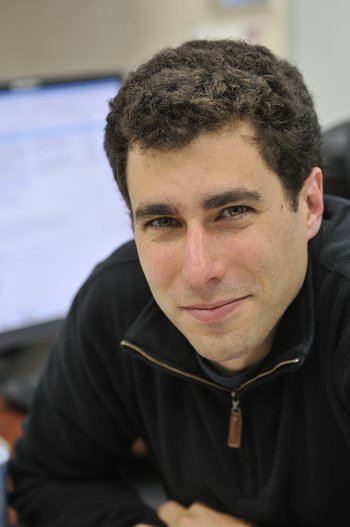 Gil Refael合作论文数The Division of Physics, Mathematics and Astronomy, California Institute of Technology5
 Bertrand I. Halperin合作论文数Department of Physics, Harvard University5
 Andrey Chubukov合作论文数William I. Fine Theoretical Physics Institute, School of Physics and Astronomy, College of Science and Engineering, University of Minnesota;Department of Physics, University of Minnesota5
 Simon Trebst合作论文数Institute for Theoretical Physics, University of Cologne5Caitlin L. Patterson合作论文数4Ori Grossman合作论文数4
 Ludwig Holleis合作论文数4




