The recently proposed spontaneous disentanglement hypothesis is formulated using a modified Schrödinger equation having an added nonlinear term. The hypothesis is motivated by some outstanding issues in the foundations of quantum mechanics, including the problem of quantum measurement. Spontaneous disentanglement is explored in the current study for the macroscopic limit. This is done using some many–body models having known exact solutions. For the under–study models, it is found that non–local entanglement becomes unstable in the macroscopic limit. On the other hand, stability in the macroscopic limit of local entanglement is not excluded. These findings demonstrate that the spontaneous disentanglement hypothesis can bridge between the quantumness of the microscopic realm, and the classicalness of the macroscopic one.
The spontaneous disentanglement hypothesis is motivated by some outstanding issues in standard quantum mechanics, including the problem of quantum measurement. The current study compares between some possible methods that can be used to implement the hypothesis. Disentanglement is formulated using a nonlinear operator, which can be used to modify both the Schr & ouml;dinger equation for the quantum state vector, and the master equation for the density operator. Two types of nonlinear disentanglement operators are explored. The first one gives rise to matrix deranking, and the second one to correlation suppression. Both types are demonstrated using a two spin system that is driven close to the Hartmann-Hahn double resonance. It is shown that limit cycle steady state solutions, which are excluded by standard quantum mechanics, become possible in the presence of disentanglement.
The spin dynamics of the negatively charged nitrogen-vacancy (NV-) centers in diamond are highly sensitive to quantum electromagnetic fluctuations arising from optical excitation, chemical interactions, and thermal processes. Here we investigated the optical and spin properties of ensembles of NV- centers in diamond under continuous-wave (CW) and nanosecond pulsed laser excitation. Optical detection of magnetic resonance (ODMR) is employed to monitor laser induced shifts of the zero-field splitting parameter D under ambient and high-vacuum conditions. Increasing CW laser power results in a systematic downshift of the resonance frequency due to laser-induced heating. The effect is significantly enhanced under vacuum, where the shift in D reaches up to similar to 17 MHz, compared to similar to 5 MHz in air, emphasizing the role of environmental thermal dissipation. Under nanosecond pulsed excitation, increasing the pulse repetition rate similarly leads to resonance shifts and reduced ODMR contrast, consistent with cumulative thermal effects. Spectroscopy confirms power dependent modifications of NV emission. Time resolved photoluminescence measurements showed that the excited-state lifetime (similar to 6 ns) remains nearly constant across the investigated excitation range, indicating that in this regime the dominant limitation is thermal loading of the spin resonance rather than a change in intrinsic radiative decay dynamics. These results provide a comprehensive characterization of thermal effects in high power optical excitation of NV ensembles and are directly relevant for high intensity NV-based sensing and spectroscopy, particularly in vacuum environments.
We study the response of a spin to two crossed magnetic fields: a strong and fast transverse field, and a weak and slow longitudinal field. We characterize the sideband response at the sum and the difference of driving frequencies over a broad range of parameters. In the strong transverse driving regime, the emission spectrum has a characteristic volcano lineshape with a narrow central transparency region surrounded by asymmetric peaks. Next, we couple the spin to a nonlinear cavity that both drives and measures it. In a sufficiently slow longitudinal field, the emission spectrum exhibits anomalous behavior, where the resonances in both the right and left sidebands lie on the same side of the central resonance. The theoretical results are compared to the experimental measurement of the emission of substitutional nitrogen P1 and nitrogen-vacancy NV^- defects in diamond.
The current study is motivated by a difficulty in reconciling between particle number conservation and superconductivity. An alternative modeling, which is based on the hypothesis that disentanglement spontaneously ocuurs in quantum systems, is explored. The Fermi-Hubbard mode is employed to demonstrate a disentanglement-induced quantum phase transition into a state with a finite superconducting order parameter. Moreover, the effect of disentanglement on Josephson junction's current phase relation is explored.
Multi-stability in the response of a ferrimagnetic spin resonator to an externally applied driving is experimentally studied. The observed multi-stability cannot be derived from any master equation that linearly depends on the spins' reduced density operator. Traditionally, the nonlinearity that is required in order to theoretically account for the observed multi-stability is introduced by implementing the method of Bosonization. Here, an alternative explanation, which is based on the hypothesis that disentanglement spontaneously occurs in quantum systems is explored. According to this hypothesis, time evolution is governed by a master equation having an added nonlinear term, which deterministically generates disentanglement. Experimental results are compared with predictions derived from both competing theoretical models. It is found that better agreement with data is obtained from the disentanglement-based model. This finding, together with a difficulty to justify the Bosonization-based model, indirectly support the spontaneous disentanglement hypothesis.
The response of a ferrimagnetic sphere resonator to an externally applied parametric excitation is experimentally studied. Measurement results are compared with predictions derived from a theoretical model, which is based on the hypothesis that disentanglement spontaneously occurs in quantum systems. According to this hypothesis, time evolution is governed by a modified master equation having an added nonlinear term that deterministically generates disentanglement. It is found that the disentanglement–based model is compatible with the experimental results. In particular, the model can qualitatively account for an experimentally observed instability in the system under study, which cannot be derived from any theoretical model that is based on a linear master equation.
A master equation containing a nonlinear term that gives rise to disentanglement has been recently explored. Here, a modified version, which is applicable for indistinguishable particles, is proposed, and studied for both the Bose-Hubbard and the Fermi-Hubbard models. It is found for both Bosons and Fermions that disentanglement can give rise to quantum phase transitions.
The problem of quantum measurement can be partially resolved by incorporating a process of spontaneous disentanglement into quantum dynamics. A modified master equation is proposed, which contains a nonlinear term giving rise to both spontaneous disentanglement and thermalization. It is found that the added nonlinear term enables limit cycle steady states, which are prohibited in standard quantum mechanics. This finding suggests that an experimental observation of such a limit cycle steady state can provide an important evidence supporting the spontaneous disentanglement hypothesis.
Multistability cannot be derived from any theoretical model that is based on a monostable master equation. On the other hand, multistability is experimentally observed in a variety of quantum systems. A master equation having a nonlinear term that gives rise to disentanglement has been recently proposed. The dynamics governed by this master equation is explored for a quantum system made of coupled spins. It is found that the added nonlinear term can give rise to multistability. The spins' response to an externally applied magnetic field is evaluated, and both a phase transition and a dynamical instability are found. These findings, which originate from disentanglement-induced multistability, indirectly support the hypothesis that spontaneous disentanglement occurs in quantum systems.
A coherent optical spectrum analyzer is integrated with a rotating quarter wave plate polarimeter. The combined polarimeter optical spectrum analyzer (POSA) allows the extraction of the state of polarization with high spectral resolution. The POSA is used in this work to study two optical systems. The first is an optical modulator based on a ferrimagnetic sphere resonator. The POSA is employed to explore the underlying magneto–optical mechanism responsible for modulation sideband asymmetry. The second system under study is a cryogenic fiber loop laser, which produces an unequally spaced optical comb. The polarization measurements provide insights into the nonlinear processes responsible for comb creation. Characterizations extracted from the POSA data provide guidelines for the performance optimization of applications based on the systems under study.
We experimentally study an unequally-spaced optical comb (USOC), which is generated by a unidirectional fiber loop laser operated at low temperatures. The underlying mechanism responsible for USOC formation is explored using both close and open loop measurements. The role played by dispersion is investigated using radio frequency spectrum measurements. By integrating a saturable absorber into the loop, a lasing state is revealed, in which mode locking coexists with the USOC.
We study a recently proposed modified Schrödinger equation having an added nonlinear term, which gives rise to disentanglement. The process of quantum measurement is explored for the case of a pair of coupled spins. We find that the deterministic time evolution generated by the modified Schrödinger equation mimics the process of wavefunction collapse. Added noise gives rise to stochasticity in the measurement process. Conflict with both principles of causality and separability can be avoided by postulating that the nonlinear term is active only during the time when subsystems interact. Moreover, in the absence of entanglement, all predictions of standard quantum mechanics are unaffected by the added nonlinear term.
Frequency mixing processes in spin systems have a variety of applications in meteorology and in quantum data processing. Spin spectroscopy based on frequency mixing offers some advantages, including the ability to eliminate crosstalk between driving and detection. We experimentally explore nonlinear frequency mixing processes with negatively charged nitrogen-vacancy defects in diamond at low temperatures, and near level anti crossing. The experimental setup allows simultaneously applying magnetic driving in the longitudinal and transverse directions. Magnetic resonance detection is demonstrated using both Landau Zener St\"uckelberg interferometry and two-tone driving spectroscopy. The experimental results are compared with predictions of a theoretical analysis based on the rotating wave approximation.
A nonlinear extension to quantum theory giving rise to deterministic partial disentanglement between pairs of subsystems is explored. The extension is based on a modified Schrödinger equation having an added nonlinear term. To avoid conflicts with the principles of causality and separability, it is postulated that disentanglement is active only during the time when particles interact. A butterfly‐like effect is found near highly entangled multipartite vector states.
We study a recently proposed modified Schrödinger equation having an added nonlinear term. For the case where a stochastic term is added to the Hamiltonian, the fluctuating response is found to resemble the process of thermalization. Disentanglement induced by the added nonlinear term is explored for a system made of two coupled spins. A butterfly-like effect is found near fully entangled states of the spin–spin system. A limit cycle solution is found when one of the spins is externally driven.
Fiber-based multi-wavelength lasers have a variety of important applications in telecommunication and meteorology. We experimentally study a fiber loop laser with an integrated Erbium doped fiber (EDF). The output optical spectrum is measured as a function of the EDF temperature. We find that below a critical temperature of about 10 K the measured optical spectrum exhibits a sequence of narrow and unequally-spaced peaks. An intriguing connection between the peaks' wavelengths and the sequence of prime numbers is discussed. An hypothesis, which attributes the comb formation to intermode coupling, is explored.(c) 2022 Elsevier B.V. All rights reserved.
The problem of quantum measurement is considered as one of the most important open questions in physics. The paper explores an alternative to the collapse postulate, which is based on a modified Schrodinger equation having a nonlinear term that gives rise to disentanglement. The image, which displays the level of disentanglement in a three-spin system, demonstrates a fractal pattern generated by the proposed nonlinear Schrodinger equation. More details can be found in article number 2300103 by Eyal Buks.
We experimentally study a fiber loop laser with an integrated Erbium doped fiber (EDF). The output optical spectrum is measured as a function of the EDF temperature. We find that below a critical temperature of about 10K the measured optical spectrum exhibits a sequence of narrow and unequally-spaced peaks. Externally injected light and filtering are employed for tuning the peaks' wavelengths. Operation of the device as an optical memory having storage time of about 20 ms is demonstrated. The multimode lasing tunability can be exploited for novel applications in the fields of sensing, communication, and quantum data storage.
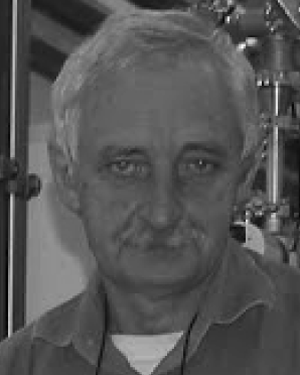 Oleg Shtempluck合作论文数56
 Eran Segev合作论文数Microelectronics Research Center;Department of Electrical Engineering;Department of Electrical Engineering, Microelectronics Research Center22
 Baleegh Abdo合作论文数Microelectronics Research Center;Department of Electrical Engineering;Department of Electrical Engineering, Microelectronics Research Center21
 Oren Suchoi合作论文数18Sergei Masis合作论文数13
 D. Yuvaraj合作论文数11Stav Zaitsev合作论文数11
 Gil Bachar合作论文数Department of Electrical Engineering10
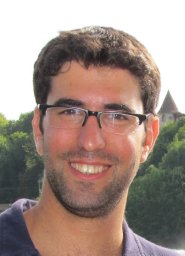 Alfasi Nir合作论文数Raymond and Beverly Sackler School of Physics and Astronomy, Tel Aviv University9
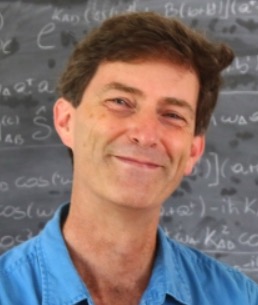 Miles P. Blencowe合作论文数Department of Physics and Astronomy, Dartmouth College9Lior Ella合作论文数Dept Condensed Matter Phys, Weizmann Inst Sci7
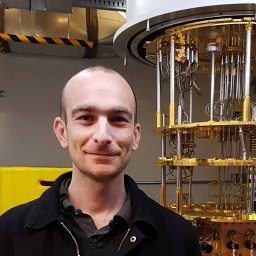 Winik Roni合作论文数MIT, Res Lab Elect, 77 Massachusetts Ave, Cambridge, MA 02139 USA7Baskin Ilya合作论文数6
 Shlomi Keren合作论文数6
 Moty Heiblum合作论文数Department of Condensed Matter Physics, Faculty of Physics, Weizmann Institute of Science6oleg shtempluk合作论文数5Banoj Kumar Nayak合作论文数Dept Elect Engn, Technion Israel Inst Technol5
 Cijy Mathai合作论文数Dept Elect Engn, Technion5
 Demitry Farfurnik合作论文数Raymond and Beverly Sackler School of Physics and Astronomy, Tel-Aviv University5
 Hadas Shtrikman合作论文数Nangowires Lab., Department of Condensed Matter Physics, Faculty of Physics, Weizmann Institute of Science5
 Nir Bar-Gill合作论文数Weizmann Institute of Science5
 Michael L. Roukes合作论文数Division of Biology and Biological Engineering, California Institute of Technology5
 Vladimir Y. Umansky合作论文数Department of Condensed Matter Physics, Weizmann Institute of Science5D. Mahalu合作论文数4Roei Levi合作论文数4Rolf Schuster合作论文数4
 O. Gottlieb合作论文数Mechanical Engineering, Technion – Israel Institute of Technology4
 Eran Arbel-Segev合作论文数4Ronen Almog合作论文数3
 Fei Xue (薛飞)合作论文数合肥工业大学物理学院物理系3
 Bernie Yurke合作论文数Micron School of Materials Science and Engineering, Boise State University3
 Paul D. Nation合作论文数3
 Ashok Pandey合作论文数3Y. Hovav合作论文数2
 Martin Otto合作论文数2
 Sergey Hazanov合作论文数2
 Chunqing Deng合作论文数2
 Mohammed Attrash合作论文数Schulich Fac Chem, Technion Israel Inst Technol2
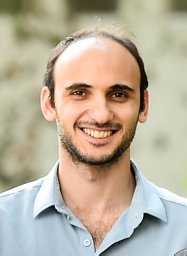 Yaroslav Don合作论文数Department of Physics, Technion2
 Hui Wang (王辉)合作论文数Shanghai Institute for Advanced Studies, University of Science & Technology of China2Livneh Nitzan合作论文数The Benin School of Computer Sciences and Engineering, Hebrew University2
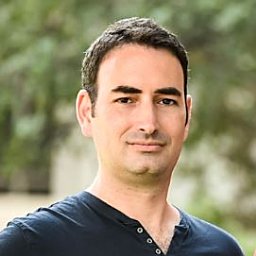 Dan Cogan合作论文数2
 Emma Schmidgall合作论文数2
 Ido Schwartz合作论文数Dept. of Phys., Technion - Israel Inst. of Technol.;c;Dept. of Phys., Technion - Israel Inst. of Technol.2Romach Y合作论文数The Racah Institute of Physics, The Hebrew University of Jerusalem2
 Ivar Martin合作论文数Argonne National Laboratory2
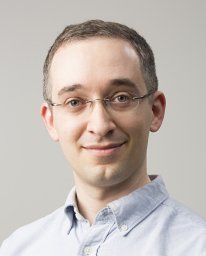 Orgiazzi Jean-Luc合作论文数2
 David Gershoni合作论文数Physics Department, Technion - Israel Institute of Technology;Solid State Institute, Technion - Israel Institute of Technology2
 David Sprinzak合作论文数Center for Submicron Research, Braun;Department of Condensed Matter Physics;Weizmann Institute of Science;Braun Center for Submicron Research, Weizmann Institute of Science2




