Monitoring of sentinel species provides insight into the ecosystems in which they live. In the Southern Ocean, penguins are one such indicator species, where only a limited number of colonies have been monitored extensively for decades around Antarctica. As the Southern Ocean warms and commercial fishing continues, the need for expansion of population monitoring has become paramount. Using Adélie penguins (Pygoscelis adeliae) as a model species, we reviewed methods to estimate colony size including ground and aerial (occupied and unoccupied aircraft) assessment and satellite imagery, with an aim of understanding costs and benefits of each method to inform their future use. Ground assessment includes physically taxing field counts of individuals or nests and was historically the only method used to count penguins in Antarctica. Aerial assessments via occupied and unoccupied aircraft have expanded the spatial extent of monitoring for remote and logistically challenging environments such as Antarctica. Combined with aerial assessment, the more recent use of very high-resolution satellite imagery (VHR) has further expanded Adélie penguin monitoring into previously inaccessible areas. Adélie penguin breeding colonies can be monitored using VHR imagery through the area of their guano stain as a proxy for the number of breeding pairs. Our review provides an overview of the monitoring techniques for Adélie penguins in Antarctica and provides direction for future use and development.
Human landscape modification is amongst the greatest drivers of biodiversity loss. Measuring faecal glucocorticoid metabolites (FGM) in wildlife is of great value to measure the impact of human activities on local biodiversity because FGM offer a non-invasive way of measuring an animal’s response to changes in its environment in the form of adrenocortical activity. Here, we measure the concentration of FGM in three native Australian mammal species belonging to different trophic levels: the Tasmanian devil (Sarcophilus harrisii) and the spotted-tailed quoll (Dasyurus maculatus), both carnivores, and an omnivore that is primarily an arboreal folivore, the brushtail possum (Trichosurus vulpecula), and compare the FGM concentrations across three major land uses: agricultural, plantation and National Parks. We find that land use influences the FGM concentration in all three species and that general patterns emerge in FGM concentrations across multiple species and trophic levels in relation to land use. Specifically, plantation landscapes are associated with the lowest median and range of variation of FGM concentration in all species with several plausible explanations depending on the species. Our results suggest that measuring FGM in multiple species can offer a time- and cost-efficient snapshot of how different animals experience the same environment, potentially simplifying FGM interpretation. This study is the first to apply a community approach to understand how multiple species of different trophic levels respond collectively, and separately, to different land use types.
Maternal condition is influenced by multiple variables that individuals experience at seasonal and local levels, and thus condition‐dependent sex allocation is likely also multifactorial. Here, we test the Trivers‐Willard Hypothesis (TWH) using a multivariable approach on a dataset of thoroughbred mare breeding records. There is no sex ratio variation when examined at univariable level, mirroring the usual approach to test condition‐dependent sex allocation. Conversely, the multivariate model shows multiple variables interact to influence the likelihood of producing a male. Mare and management variables that represent better body condition is associated with an increase in likelihood of a male offspring. The magnitude and direction of sex ratio skew correspond closely with predicted mare energy balance, consistent with TWH predictions. Our findings therefore support the TWH and show that, while sex allocation is multifactorial, maternal energy status emerges as the dominant driver. The additive and agonistic interactions of different variables demonstrate that a multifactorial approach should be a key consideration in sex allocation studies.
Journal of ZoologyEarly View Editorial Journal of Zoology: The year in review Elissa Z. Cameron, Corresponding Author Elissa Z. Cameron [email protected] School of Biological Sciences, University of Canterbury, Christchurch, New Zealand Correspondence Elissa Z. Cameron, School of Biological Sciences, University of Canterbury, 20 Kirkwood Avenue, Upper Riccarton, Christchurch 8041, New Zealand. Email: [email protected]Search for more papers by this author Elissa Z. Cameron, Corresponding Author Elissa Z. Cameron [email protected] School of Biological Sciences, University of Canterbury, Christchurch, New Zealand Correspondence Elissa Z. Cameron, School of Biological Sciences, University of Canterbury, 20 Kirkwood Avenue, Upper Riccarton, Christchurch 8041, New Zealand. Email: [email protected]Search for more papers by this author First published: 12 December 2023 https://doi.org/10.1111/jzo.13141Read the full textAboutPDF ToolsRequest permissionExport citationAdd to favoritesTrack citation ShareShare Give accessShare full text accessShare full-text accessPlease review our Terms and Conditions of Use and check box below to share full-text version of article.I have read and accept the Wiley Online Library Terms and Conditions of UseShareable LinkUse the link below to share a full-text version of this article with your friends and colleagues. Learn more.Copy URL Share a linkShare onEmailFacebookTwitterLinkedInRedditWechat No abstract is available for this article. References Birkhead, T. R. (2010). How stupid not to have thought of that: Post-copulatory sexual selection. Journal of Zoology, 281, 78–83. 10.1111/j.1469-7998.2010.00701.x Web of Science®Google Scholar Monaghan, P., & Ivimey-Cook, E. R. (2023). No time to die: Evolution of a post-reproductive life stage. Journal of Zoology, 321, 1–21. 10.1111/jzo.13096 Web of Science®Google Scholar Riebel, K., Odom, K. J., Langmore, N. E., & Hall, M. L. (2019). New insights from female bird song: Towards an integrated approach to studying male and female communication roles. Biology Letters, 15, 59. 10.1098/rsbl.2019.0059 Web of Science®Google Scholar Smiley, K. O., Lipshutz, S. E., Kimmitt, A. A., DeVries, M. S., Cain, K. E., George, E. M., & Covino, K. M. (2022). Beyond a biased binary: A perspective on the misconceptions, challenges, and implications of studying females in avian behavioral endocrinology. Frontiers in Physiology, 13, 970603. 10.3389/fphys.2022.970603 Web of Science®Google Scholar Tang-Martínez, Z. (2020). The history and impact of women in animal behaviour and the ABS: A north American perspective. Animal Behaviour, 164, 251–260. 10.1016/j.anbehav.2019.12.011 Web of Science®Google Scholar Early ViewOnline Version of Record before inclusion in an issue ReferencesRelatedInformation
Recreational activities such as jet boating have the potential to disturb native birds that rely on braided river habitats. To examine whether jet boating affects levels of glucocorticoid hormones, which can increase in animals under stress, we compared concentrations of corticosterone in the faeces of nesting black-backed gulls (Larus dominicanus) between days with differing levels of jet boat activity and to a nearby braided river site with no jet boating. The corticosterone titers of gull faeces sampled on the weekends (when jet boating activity was high) were almost twice that collected in the same area during the week (when jet boating activity was low). Corticosterone titers were also lower in the site without jet boating. Corticosterone levels were not significantly related to whether faeces were sampled in the centre or margin of the colony, nor did they vary significantly with number of birds in the colony. It is not known if increased concentrations of corticosterone have any negative effects on the survival or reproductive success of black-backed gulls, but our results suggest that the disturbance created by jet boating has the potential to alter hormone levels in this and perhaps other species that occur in braided river habitats.
Context There has been a contraction within the New Zealand Thoroughbred racing industry and there are limited data demonstrating how this has affected, or been reflected, within the breeding industry that supplies horses for the racing industry. A reduction in the breeding industry, to a greater extent in the sector servicing domestic rather than export market has been speculated. Aim To describe the demographics, breeding pattern, reproductive career and workload of New Zealand Thoroughbred stallions between 2005 and 2015. Methods The breeding records of all Thoroughbred stallions covering >10 mares during 2005/2006–2015/2016 breeding seasons and the lifetime breeding records of all the mares covered by these stallions were extracted from the New Zealand Thoroughbred Racing website. The demographics, population numbers, career pattern, and 10-year trend in market share of stallions in different stud fee categories were examined using descriptive analysis. The stallion’s reproductive workload was modelled deterministically. Results The breeding population reduced over the 10 years examined (mares by 20%, sires by 32%). This industry consolidation was almost entirely due to the 50% reduction in the number of mares mated to the low-priced stallions, which generated horses for the domestic market. The relative proportion of mares sent to medium- and high-priced stallions (breed to sell and export sector) doubled. The commercial breeding career of low- and medium-priced stallions and shuttle stallions was short (4–5 years). The number of mares covered by a stallion increased with stud fee category. Stallions covered a greater number of mares in October and November than in September and December because of the restricted opportunity to cover foaled mares early in the season, caused by the long gestation length of mares and the need to cover mares before December. Conclusions Findings in this study support that the contraction in the New Zealand Thoroughbred breeding industry was due to a reduction in the industry sector that focuses primarily on supplying horses for domestic racing. Commercial pressure and biological constraints heavily influenced the reproductive management of the breeding industry. The breeding management of stallions during the season is heavily influenced by stallion service fee category, which reflects his book size and the commercial appeal of the resultant progeny. Implications The contraction within the domestic sector of the breeding industry was reflected in the concurrent contraction within New Zealands domestic racing population and fewer colts and geldings entering racing. Industry breeding trends demonstrate that economic viability and optimisation of revenue depend on the breeding industry focusing on the export rather than domestic market.
Plastic has infiltrated every ecosystem on the planet, making encounters between this anthropogenic pollutant and fauna inevitable. Abiotic environmental breakdown involving light, oxygen, temperature and mechanical forces is well-characterized, while biotic degradation mechanisms are less well-understood. Reports of the role of macrofauna in the fragmentation of plastic debris are increasing. This review explores the driving factors for macrofaunal fragmentation, as well as the physiological mechanisms by which plastic items are fragmented. The presence, and access to plastic within an organism’s habitat are the key determinants of macrofaunal plastic degradation. Foraging strategies, along with burrowing and nesting behaviors increase the likelihood of macrofauna interacting with plastics. Though this type of fragmentation can occur externally, it often follows ingestion, which in itself can be driven by resemblance to food. Four physical mechanisms of macrofaunal plastic fragmentation were identified, namely biting, drilling, grazing and grinding. Biting, restricted to the mouthparts of an organism, was the most common form of macrofaunal fragmentation reported in literature. Similarly, the use of specialized mouthparts for drilling or grazing can produce secondary plastic particles. Lastly, grinding, through manipulation by the gizzard or gastric mill following ingestion can significantly reduce the size of the plastic material. Prolonged and/or repeated interactions with plastics pose the risk of increased wear on the mouthparts and digestive organs involved. Through mechanisms that directly affect the plastic’s structural integrity, physical fragmentation by macrofauna can amplify overall plastic degradation rates and the formation of micro- and nanoplastics in the environment, while long internal retention times can contribute to their dispersal, trophic transfer, and the organism’s exposure to plastic additives. To more fully understand the extent of macrofaunal plastic fragmentation and allow predictive modeling, we suggest the reporting of evidence in a unified and systematic way. Our findings further highlight the urgency for the implementation of a global plastic waste management system to reduce the burden of micro- and nanoplastics.
Captivity can alter the stress physiology and behaviour of an animal in both the short- and long-term through repetitive exposure to novel stressors and, subsequently, may reduce the success of conservation efforts such as translocation and reintroduction. The Tasmanian devil (Sarcophilus harrisii) is threatened with extinction from a fatal facial tumour disease which has led to the establishment of an insurance meta-population designed for future reintroductions of disease-free devils. The meta-population is comprised of intensive captive and free-range captive environments; however, no study has yet examined the long-term physiological implications of captivity on devils. We used non-invasive faecal glucocorticoid metabolite (FGM) monitoring to determine if there were any differences in adrenal activity among intensive captive, free-range captive and wild devils. FGM levels were not age or sex dependent, and we found that all population types had similar intra-population variability and mean FGMs. In conclusion, both types of captive environment appear to maintain stress profiles similar to wild devils.
Complete table of model comparison results for the model of active courtship display durations. If the fixed effect was not included in the model, it has an NA. The table is sorted by the AICc values, which were used for comparisons. The full model structure is also shown, along with the degrees of freedom.
In species with sex-specific signalling traits that appear to be ornamental (i.e. are conspicuous and with no obvious natural selection benefit), the ornamented sex typically initiates courtship and is most active in courtship. Here, we report for the first time courtship displays in the extremely sexually dimorphic, female-ornamented wide-bodied pipefish (Stigmatopora nigra), revealing unexpected behaviours. Females use their sex-specific ornament during courtship displays, as expected, but rarely in female-female interactions. Surprisingly, males initiated 61% of reciprocated courtship bouts and chased females in 17% of the bouts. This chasing behaviour could be a form of male harassment or be indicative of female disinterest in ardent males, either of which was unexpected to be found in this female-ornamented species. Our results highlight the need to study the details of species' behaviours in considering the potential roles of sexual selection and sexual conflict in shaping sexual dimorphism.
Sperm competition results from postcopulatory continuation of male-male competition for paternity. The level of sperm competition is predicted to be highest in species with greater polyandry and weakest in monogamous pairs. Sperm competition levels can be indexed using traits that reflect male investment in fertilization, particularly relative testes mass (RTM). However, the relationship between RTM and levels of sperm competition may also be influenced by precopulatory competition selecting for higher levels of testosterone, also produced by the testes. To test the relationship between RTM and both pre- and postcopulatory male-male competition we compared two bathyergid mole-rat species, the promiscuous Georychus capensis and the monogamous eusocial Fukomys damarensis. The promiscuous species had not only larger RTM, but also a greater proportion of spermatogenic tissue, maximizing germ cell production as well. Conversely, the eusocial species had smaller testes, but a higher proportion of interstitial tissue (which contains the androgenic Leydig cells) and higher levels of testosterone. Consequently, testicular traits as well as testes mass may be under selection, but these are not normally measured. More research is required on relative investment in different testicular traits in relation to both pre- and postcopulatory selection pressures.
Social learning can reduce the costs associated with trial-and-error learning. There is speculation that social learning could contribute to trap and bait avoidance in invasive species like the common brushtail possum (Trichosurus vulpecula)—a marsupial for which social learning has not previously been investigated. In large outdoor pens, we presented wild-caught ‘demonstrator’ possums with puzzle devices containing an attractive food reward; 2 of 8 demonstrators accessed the reward the first night the puzzle was presented and another three succeeded on later nights. Meanwhile, ‘observer’ possums in adjacent pens watched the demonstrators for five nights and then were given the opportunity to solve the puzzle themselves; 15 of 15 succeeded on their first night (a highly significant improvement). This experiment thus provides strong evidence of social learning by common brushtail possums. Future research should investigate whether information about aversive stimuli (such as traps and toxic baits) can similarly be transmitted between possums by social learning; if so, this could have important implications for possum pest control.
Effective planning for species conservation often requires an understanding of habitat use. The resources an animal selects within the landscape relate to its behavioral state and, therefore, incorporating behavior into habitat selection analyses can help inform management of threatened species. Here we present an approach for developing behavior-specific spatial habitat-use models using large quantities of GPS telemetry data. Using hidden Markov models, we first characterize 231,478 GPS fixes from 22 recently fledged endangered Tasmanian wedge-tailed eagles (Aquila audax fleayi) as reflective of either perching, short-distance flight, or long-distance flight. We then use a multivariate habitat selection ratio to develop spatial models predicting where these behavioral states occur. Recently fledged Tasmanian wedge-tailed eagles selected for areas close to forest edges during perching and short distance flights, whereas they selected more strongly for areas with steep topography (slopes > 15 degrees) and further from forest edges for longer flights. Models using distance to forest edge and topo-graphic slope effectively predicted where eagles engaged in long flights (R2 > 0.91, rs > 0.90) in each of six regions, whereas the performance varied by region for models describing perching (R2 = 0.43-0.97, rs = 0.80-0.97) and short flights (R2 = 0.34-0.93, rs = 0.63-1.00). Our study provides a detailed understanding of habitat use by young Tasmanian wedge-tailed eagles, which has multiple applications in the ongoing conser-vation of the population. Our method illustrates a framework for spatially explicit and behavior-specific habitat selection analyses that can be applied to other species of conservation concern.
Individual identification (individual-ID) of free-ranging animals has become a central tenet of studying many dimensions of animal behavior and ecology.It is often achieved through photographic means (photo-ID), where a photograph of an individually recognizable animal constitutes the sighting and marking-recapture event.This provides a powerful means of investigating animal sociality and various aspects of their population ecology.The adaptiveness of this approach in conjunction with its minimal intrusiveness makes it a tool of choice in many field studies, both marine and terrestrial.It has been applied across species and habitats, gathering a large variety of information, such as population parameters, processes and trends (e.g.,
Proclaimed in 1907, Etosha National Park in northern Namibia is an iconic dryland system with a rich history of wildlife conservation and research. A recent research symposium on wildlife conservation in the Greater Etosha Landscape (GEL) highlighted increased concern of how intensification of global change will affect wildlife conservation based on participant responses to a questionnaire. The GEL includes Etosha and surrounding areas, the latter divided by a veterinary fence into large, private farms to the south and communal areas of residential and farming land to the north. Here, we leverage our knowledge of this ecosystem to provide insight into the broader challenges facing wildlife conservation in this vulnerable dryland environment. We first look backward, summarizing the history of wildlife conservation and research trends in the GEL based on a literature review, providing a broad-scale understanding of the socioecological processes that drive dryland system dynamics. We then look forward, focusing on eight key areas of challenge and opportunity for this ecosystem: climate change, water availability and quality, vegetation and fire management, adaptability of wildlife populations, disease risk, human-wildlife conflict, wildlife crime, and human dimensions of wildlife conservation. Using this model system, we summarize key lessons and identify critical threats highlighting future research needs to support wildlife management. Research in the GEL has followed a trajectory seen elsewhere reflecting an increase in complexity and integration across biological scales over time. Yet, despite these trends, a gap exists between the scope of recent research efforts and the needs of wildlife conservation to adapt to climate and land-use changes. Given the complex nature of climate change, in addition to locally existing system stressors, a framework of forward-thinking adaptive management to address these challenges, supported by integrative and multidisciplinary research could be beneficial. One critical area for growth is to better integrate research and wildlife management across land-use types. Such efforts have the potential to support wildlife conservation efforts and human development goals, while building resilience against the impacts of climate change. While our conclusions reflect the specifics of the GEL ecosystem, they have direct relevance for other African dryland systems impacted by global change.
Anticoagulant rodenticides (ARs) used to control mammalian pest populations cause secondary exposure of predatory species throughout much of the world. It is important to understand the drivers of non-target AR exposure patterns as context for assessing long-term effects and developing effective mitigation for these toxicants. In Australia, however, little is known about exposure and effects of ARs on predators. We detected AR residues in 74% of 50 opportunistically collected carcasses of the Tasmanian wedge-tailed eagle (Aquila audax fleayi), an endangered apex predator. In 22% of birds tested, or 31% of those exposed, liver concentrations of second generation ARs (SGARs) were >0.1 mg/kg ww. Eagles were exposed to flocoumafen, a toxicant only available from agricultural suppliers, at an exceptionally high rate (40% of birds tested). Liver SGAR concentrations were positively associated with the proportion of agricultural habitat and human population density in the area around where each eagle died. The high exposure rate in a species not known to regularly prey upon synanthropic rodents supports the hypothesis that apex predators are vulnerable to SGARs. Our results indicate that AR exposure constitutes a previously unrecognized threat to Tasmanian wedge-tailed eagles and highlight the importance of efforts to address non-target AR exposure in Australia.
The endangered Tasmanian Wedge-tailed Eagle (Aquila audax fleayi) is the focus of continued research and conservation efforts. A tool for accurate and efficient identification of the sex of individuals would be a valuable aid to research and management. However, plumages are monomorphic between the sexes, making sex identification difficult without molecular analyses. Our aim was to assess whether Tasmanian Wedge-tailed Eagles of different age classes could be sexed accurately using morphological measurements. We took measurements of 25 live late-stage eagle nestlings and 108 carcasses of free-flying birds found opportunistically throughout Tasmania. Sex of all individuals was confirmed via genetic analyses. Free-flying birds were larger than nestlings; thus, we used age-specific statistical tools to distinguish the sexes. For both nestlings and free-flying birds, females were significantly larger than males, but overlap between the sexes prevented accurate sex identification using any single measurement. We used stepwise linear discriminant function analyses to select morphometric measurements necessary for accurate sex identification. Free-flying birds could be sexed with 97.6% accuracy using a combination of measurements of the forearm length, tarsus width (i.e., lateromedial width), and hallux length. Late-stage nestlings (9-10 wk old) could be sexed with 95.4% accuracy using measurements of the hallux width (i.e., lateromedial width), hallux breadth (i.e., anteroposterior width of hallux), and tarsus breadth (i.e., anteroposterior width of the tarsometatarsus at the narrowest point). The discriminate functions we present also allow the identification of sex in cases where morphological sex identification may be in doubt and molecular analyses should be prioritized. These equations provide a valuable research tool for studies of sexual differences in behavior and causes of mortality of this endangered subspecies.
 Wayne L Linklater合作论文数School of Biological Sciences, Victoria University of Wellington25
 K J Stafford合作论文数17
 Fredrik Dalerum合作论文数Department of Zoology;Stockholm University;Department of Zoology, Stockholm University14
 Edward O. Minot合作论文数Ecology Group;Institute of Natural Resources;Massey University;Institute of Natural Resources, Massey University11
 Amy M Edwards合作论文数School of Zoology, University of Tasmania10
 Angela M. White合作论文数Program in Ecology, Evolution and Conservation Biology, University of Nevada-Reno7
 Menna E. Jones合作论文数School of Natural Sciences, University of Tasmania7P. W. Bateman合作论文数5
 Johan T. Du Toit合作论文数Department of Wildland Resources, The S.J. & Jessie E. Quinney College of Natural Resources, Utah State University5
 Nigel Bennett合作论文数Department of Zoology and Entomology, Faculty of Natural and Agricultural Sciences, University of Pretoria5Matthew Green合作论文数5
 Dawn M. Scott合作论文数University of Exeter Hatherly Laboratories5
 Andre Ganswindt合作论文数Faculty of Veterinary Science, University of Pretoria5
 Stewart C. Nicol合作论文数Division of Anatomy and Physiology, University of Tasmania5Michelle Thorn合作论文数5
 Tim Clutton-Brock合作论文数Department of Zoology, University of Cambridge5
 Clare E. Hawkins合作论文数Naamal De Silva;Bibhab;Naamal De Silva5Jason M. Wiersma合作论文数4brotherton pnm合作论文数4
 James M. Pay合作论文数Sch Nat Sci, Univ Tasmania4
 Rachel L. Harris合作论文数Department of Geosciences, Princeton University4Gray Meeghan E合作论文数4
 Todd E. Katzner合作论文数National Aviary Department of Conservation and Field Research, Allegheny Commons4Lydia E. Belton合作论文数4William E Brown合作论文数3
 Peter Banks合作论文数School of Life and Environmental Sciences, Faculty of Science, The University of Sydney3
 Wayne M. Getz合作论文数Department of Environmental Science, Policy and Management, College of Natural Resources, University of California, Berkeley3
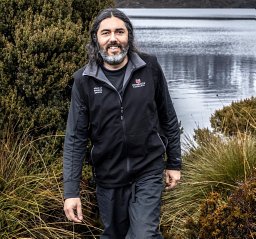 Rodrigo Hamede合作论文数School of Zoology, University of Tasmania;School of Zoology, University of Tasmania3
 Noel Davies合作论文数Central Science Laboratory, University of Tasmania3
 Scott Carver合作论文数Department of Biology, Montana Tech of the University of Montana3
 Erik Wapstra合作论文数School of Zoology;University of Tasmania;School of Zoology, University of Tasmania3
 Craig J Tambling合作论文数Centre for African Conservation Ecology, Nelson Mandela Metropolitan University3Amelia J. Koch合作论文数3
 Michael J. Somers合作论文数Centre for Wildlife Management, University of Pretoria3Lynda L. Sharpe合作论文数3
 Christian Pirk合作论文数Department of Zoology & Entomology, Faculty of Natural and Agricultural Sciences, University of Pretoria3David G. Hamilton合作论文数2G. M. McIlrath合作论文数2J. Low de Vries合作论文数2J. C. Pereira合作论文数2Scott Y. S. Chui合作论文数2Elisa Sparrow合作论文数2Y. Y. Chin合作论文数2
 Stephen C.Y. Chan合作论文数2
 Sarah Flanagan合作论文数2
 Daniel Blumstein合作论文数Department of Ecology and Evolutionary Biology, College of Life Sciences, University of California, Los Angeles;Institute of the Environment and Sustainability, University of California, Los Angeles2
 Paul Hohenlohe合作论文数Department of Biological Sciences, College of Science, University of Idaho2
 Stephanie Periquet-Pearce合作论文数CNRS UMR 5558 LBBE, Université Claude Bernard Lyon 12Mooney Nick J合作论文数2




