Researchers have studied the effects of common, subtle forms of discrimination called microaggressions among various marginalized groups. We conducted three experimental studies (Ns = 45, 61, and 90) on microaggressions toward transgender individuals, connecting the microaggression and social exclusion literatures. Specifically, we hypothesized that microaggressions would have similar negative psychological effects as other forms of social exclusion (e.g., interpersonal rejection and ostracism). In Studies 1 and 2, we used an adapted recall paradigm in which participants recalled and wrote about either a control or a microaggression autobiographical event. In Study 3, we added an explicit social exclusion condition. Participants then reported how they felt during the event on measures of perceived pain, feelings of being excluded/ignored, perceived relational value, and basic need satisfaction. All three studies provide converging evidence that participants recall experiencing microaggressions similarly to how individuals typically experience social exclusion, suggesting theoretical and empirical benefits to connecting these two areas and offering avenues for future research. Public Significance Statement Transgender individuals recalled experiencing microaggressions similar to being socially excluded (e.g., rejected or ostracized). Researchers should continue connecting studies on microaggressions with social exclusion to broaden the theoretical and practical implications of both areas.
This entry provides a platform for researchers in personality science to be cognizant of how the internet has improved not only data collection but also how it has changed the study of personality itself through social media. Now online everyday interactions permit automatic personality assessment. Smart electronic devices are also new venues to conduct personality research. Examples of such studies are discussed.
We examined two forms of social exclusion toward Afro-Brazilians commonly found in the United States, ostracism and racial microaggressions. We utilized a mixed-method (quantitative-experimental and qualitative) approach to investigate ostracism and a qualitative focus group approach to study racial microaggressions. In Study 1 (n = 29), we experimentally investigated ostracism through a recall paradigm in which participants wrote about being either included or ostracized. An independent t test showed that participants in the ostracized condition reported significantly worse psychological outcomes than those in the included condition (p < .001). We coded participants’ written responses by whether they included attributions of racial bias by experimental condition. A Pearson chi-square analysis (p = .017) revealed that racial bias was mentioned in 75% of the cases in the ostracized condition. Studies 2a and 2b (ns = 6 and 8, respectively) consisted of two focus groups in different regions of Brazil that asked participants about their experiences with racial microaggressions. We found similarities to previous microaggression categories identified in the United States, extending our understanding of how microaggressions evoke feelings of social exclusion, which also occur when someone is ostracized.
Workplace discrimination, harassment, exclusion, and incivility incidents are often subtle in nature but can nonetheless have deleterious impacts on targets (Zurbrugg and Miner, 2016). Additionally, there are often few (if any) clearly defined social norms regarding these types of behaviors in organizations (DeSouza, 2011). Interventions targeting the subtle aspects of workplace mistreatment may not only be a fruitful avenue for reducing or eliminating the development of these types of mistreatment, but may also prevent more overt forms of negative workplace interactions (Jones et al., 2017). Because organizational leaders are sometimes bystanders to mistreatment, we propose that organizations should develop leaders into allies who are trained to intervene as well as to develop and clarify workplace norms prohibiting subtle forms of targeted workplace mistreatment. We generalize specifically from research on discrimination against LGBT employees, because they have received little legal protection until recently, as well as on best practices for providing support to these employees and propose that initiatives used recently by both unions and universities can provide insights into the effectiveness of allies in creating organizational climate change.An ally is typically defined as someone who supports the reduction of homophobia and actively provides support and equality for LGBT individuals. More generally, we extend this term to involve someone who is identifiable by their commitment to challenging interpersonal and institutional forms of workplace mistreatment against a member of any minority group. When allies are bystanders to subtle mistreatment, they can use this commitment to challenge perpetrators and illuminate biases.
Research has indicated that age is a significant predictor of tolerance toward sexual minorities. However, outdated measures and social desirability may hinder attempts to accurately detect bias. This study explores attitudes toward gay males among a sample of students in the Midwestern United States. We investigate the influence of gender, religiosity, and political orientation on students’ attitudes. Students’ political orientation was found to be the strongest predictor of attitudes. In contrast to previous research emphasizing the relationship between age and tolerance, our study suggests that socio-cultural factors have the greatest influence on bias. This has critical implications for social work educators working with students from conservative cultures.
Sexual minorities (lesbian, gay, bisexual, and transgender individuals; LGBT) experience workplace discrimination that leads to decreased physical and emotional well-being, and negative job outcomes. LGBT individuals may also experience microaggressions and ostracism in the workplace. Microaggressions are brief and subtle slights or insults that can be either conscious or unconscious, which have negative consequences similar to direct “old-fashioned” forms of discrimination. Ostracism, being ignored and excluded, has similar negative outcomes. Microaggressions and ostracism are often ambiguous and difficult to substantiate legally, whereas other forms of discrimination can be observed directly. We review the literature on microaggressions and ostracism, which have recently been investigated with LGBT populations, suggesting future research directions. We suggest practices for encouraging an organizational climate of acceptance. Copyright © 2017 ASAC. Published by John Wiley & Sons, Ltd.
Although narcissism has long been researched in relation to anger, previous research examined narcissistic anger toward negative feedback that had already occurred. In this study, we investigated the effects of anticipation of evaluation (present vs. absent) and negative feedback (present vs. absent), using a creativity task paradigm, on state anger scores among 231 U.S. undergraduates (76% White, 60% women). We also measured undergraduates' narcissistic tendencies and impressions of the creativity task. Multiple regression analyses revealed a significant interaction between narcissism and negative feedback on total anger scores, with narcissists responding with more anger than non-narcissists in the condition of negative feedback. We also found a significant two-way interaction between narcissism and anticipation of evaluation on total enjoyment scores. Anticipation of feedback inhibited narcissist-prone individuals from enjoying the task in the anticipation condition, but this pattern was not present in the no-anticipation condition. Implications and recommendations to better understand the nature of narcissism are discussed.
Aggression and Peace Survey (PAIRTAPS). Participants' descriptions of what they would want to do if directly exposed to 3 specific human rights violations (torturing a prisoner, bombing civilians, and beating antiwar protestors) were coded for personal agency (prosocial or nonprosocial). In addition, their arguments concerning whether countries have a right to invade other countries and torture suspects, and whether civilians have a right to protest, were coded for moral disengagement and engagement. As predicted, moral engagement was positively correlated with prosocial agency and with belief in a right to protest, and negatively correlated with nonprosocial agency and with beliefs in the acceptability of state-perpetrated invasion and torture. When scores for activists versus nonactivists were compared, activists showed more prosocial agency on behalf of human rights, lower nonprosocial agency on behalf of those rights, and more moral engagement regarding the right to protest than nonactivists.
We examined perceptions of spirituality and meaning among 192 employees (77% female) from a non-profit organization in a mid-sized Midwestern city in the United States. We hypothesized that employees' values related to workplace spirituality would be positively related to various measures of job satisfaction and general meaning in life. We also examined employees' perceptions of the fit of their co-workers' values with the agency mission and predicted that these perceptions would act as a moderator of the relationship between employees' workplace spirituality and job satisfaction. Our hypotheses were generally supported. Spirituality predicted work contributing to the meaning of life and various facets of job satisfaction. Implications of the importance of employees' perceptions of organizational fit related to spirituality and the perceived fit of co-workers' values with the organizational mission are discussed.
Religion and spirituality have been mainstay topics in psychology and many eminent psychologists, as far back as Williams James (1902), have written about them. Although there are debates about if ...
Abstract During most of the twentieth century, masculinity‐femininity (MA) followed a trait‐based approach. In the first half of the century, the one‐dimensional perspective dominated the field, so that the more masculine one was, the less feminine one would also be. However, in the second half a shift occurred, giving way to a two‐dimensional perspective in which masculinity and femininity were two independent dimensions. For example, both the Personal Attributes Inventory and the Bem Sex Role Inventory defined the dimension of masculinity in terms of instrumental or agentic traits (e.g., independence and assertiveness), whereas they defined femininity in terms of communal or expressive traits (e.g., nurturing and caring). Bem also introduced the concept of androgyny (i.e., individuals with high levels of both masculinity and femininity) and viewed it as the key to optimal mental health. shifted from a trait‐based approach to schemas, so that androgynous individuals were aschematic (i.e., they did not categorize the social environment strictly in terms of maleness or femaleness), showing much more flexibility in their lives than gender‐schematic individuals. meta‐analytic studies showed that masculinity was much more strongly linked to psychological wellbeing and adjustment than femininity. Thus, the claim of androgyny as the index of mental health was not supported.
 Michael J. Stevens合作论文数Krannert School of Management, Purdue University12
 amanda clinton合作论文数9
 Sherri McCarthy-Tucker合作论文数9
 Luciana Karine De Souza合作论文数Universidade Federal de Minas Gerais9ricardo angelino合作论文数8eddy carillo合作论文数8rodrigo barahona合作论文数8
 Eric D. Wesselmann合作论文数Department of Psychological Sciences, Purdue University7
 John R Baldwin合作论文数Micro-economic Analysis Division4Francisco Heitor da Rosa合作论文数3tristyn campbell合作论文数3
 Claudio Simon Hutz合作论文数universidade federal do rio grande do sul3Kimberly T. Schneider合作论文数3Michael E. Mills合作论文数2laura marcucci合作论文数2Ekin Eremsoy合作论文数2Jennifer J. Halpern合作论文数2Heather Hoffmann合作论文数2
 Astrid Schuetz合作论文数2Francis Sichona合作论文数2Regina Estuar合作论文数2jose anazagasty合作论文数2
 Dora Herrera合作论文数2B Lubin合作论文数2rouba youssef合作论文数2
 Tomasz Szlendak合作论文数Inst Sociol, Nicolaus Copernicus Univ2
 Mary Anne Lauri合作论文数Fac Social Well Being, Univ Malta2
 Frank Van Overwalle合作论文数Brain Body and Cognition Department, Vrije Universiteit Brussel2Kevin Gibson合作论文数2
 Nebojsa Petrovic合作论文数2
 Phillip Shaver合作论文数Department of Psychology, University of California, Davis2
 John B. Pryor合作论文数Department of Psychology, Illinois State University2
 Khoury Brigitte合作论文数2
 Voracek Martin合作论文数Fakultät für Psychologie, Universitat Wien2
 Todd K. Shackelford合作论文数Department of Psychology, Oakland University;Center for Evolutionary Psychological Science, Oakland University2
 Jüri Allik合作论文数Department of Psychology, University of Tartu2
 Willibald Ruch合作论文数Psychologisches Institut, Universität Zürich2
 Ulf Dietrich Reips合作论文数Faculty of Sciences, University of Konstanz2Lisa Terre合作论文数2Franco Simonetti合作论文数Snam Progretti, L.S.R.2
 Miroslav Popper合作论文数2
 Kenneth Locke合作论文数University of Idaho2
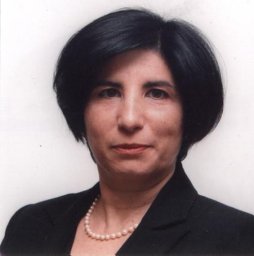 Ruth Falzon合作论文数2
 Nebi Sumer合作论文数Department of Psychology, Middle East Technical University2
 Silvia H. Koller合作论文数Universidade Federal do Rio Grande do Sul2
 J. Keith Murnighan合作论文数Kellogg School of Management, Northwestern University2Lidia Alcalay合作论文数2
 Liesbeth Woertman合作论文数2
 Adrian Opre合作论文数2




