OsH5(SiHPh2)(PiPr3)2 (1) catalyzes the monoalcoholysis of diphenylsilane with a variety of alcohols. Density functional theory (DFT) calculations suggest that the reactions occur via a highly ordered transition state resulting from the nucleophilic attack of the alcohol to the silane coordinated to the osmium center in an η1-H-SiHPh2 fashion. The alcoholysis or aminolysis of the Si-H bond of 1 with 2-hydroxypyridine or 2-aminopyridine affords OsH3{κ2-Si,N-(SiPh2-E-py)}(PiPr3)2 (E = O (4), NH (5)). Analogously, OsH4(SiH2Ph)2(PiPr3)2 (2) reacts with 2-hydroxypyridine and 2-aminopyridine to give OsH3{κ2-Si,N-(SiPh(Epy)-E-py)}(PiPr3)2 (E = O (6), NH (7)), as a result of the alcoholysis or aminolysis, respectively, of both Si-H bonds of one of the phenylsilyl ligands. Additionally, 1 catalyzes the tandem hydrosilylation/dehydrogenative silylation of salicylaldehydes with diphenylsilane to afford silacycles. DFT calculations suggest that this process happens via an outer-sphere hydrogenation of the aldehyde moiety to give a diol and tetrahydride-silylene OsH4(=SiPh2)(PiPr3)2. Next, the silylative dehydrogenation of the Ph-OH function affords a silyl-O-functionalized pentahydride, which, upon the nucleophilic intramolecular attack of the benzylic OH group, gives the silacycle and intermediate OsH4(η2-H2)(PiPr3)2, which reacts with diphenylsilane, giving H2 and regenerating OsH5(SiHPh2)(PiPr3)2.
Complex OsH6(PiPr3)2 releases H2 at 50 °C. The resulting tetrahydride OsH4(PiPr3)2 promotes head-to-head reductive dimerization of phenylacetylenes to give the 1,4-dibranched-butenediyl derivatives OsH2{η4-[C4H4R2]}-(PiPr3)2 (R = C6H5, C6H4-CF3, C6H4-NMe2). DFT calculations suggest that the formation of these compounds proceeds via five-coordinate unsaturated bis-(alkenyl)-osmium-(II)-(Kubas-type dihydrogen) intermediates, which evolve by alkenyl coupling and H-H cleavage of the dihydrogen. The reactions are sensitive to temperature and the amount of alkyne used. At higher temperatures and excess alkyne, the reductive coupling is accompanied by two dehydrogenation reactions, one at the metal center and the other involving an isopropyl substituent of a phosphine. As a result, mixtures of the dihydrides and Os-{η4-[C4H4R2]}-(PiPr3)-{η2-C,C;κ1-P-[(CH2CMe)-PiPr2]}-(PiPr3) (R = H, CF3, NMe2) are formed. Both families react with H2 to regenerate OsH6(PiPr3)2 and release the corresponding 1,4-diarylbutane. According to these reactions, 1,4-diarylbutanes have been obtained in approximately 20% yield, by stirring phenylacetylenes with 5 mol % of OsH6(PiPr3)2, in toluene, under 1 atm of H2.
Hexahydride OsH6(PiPr3)2 (1) releases H2 to form the isomeric tetrahydrides 2 a and 2 b of general formula OsH4(PiPr3)2. Tetrylenes E{N(SiMe3)2}2 (E=Ge, Sn) are able to selectively trap these isomers distinguishing between them. Tetrylene Ge{N(SiMe3)2}2 catches 2 b to generate OsH4{Ge[N(SiMe3)2]2}(PiPr3)2 (3), which has a piano stool geometry, while Sn{N(SiMe3)2}2 captures 2 a to give OsH4{Sn[N(SiMe3)2]2}(PiPr3)2 (4) with the donor atoms defining a pentagonal bipyramid around the osmium center.
Alkynyl ligands are versatile building blocks in the design of luminescent iridium(III) complexes due to their ability to support postcoordination functionalization that gives rise to ligands non available through conventional coordination chemistry. Here, we report the synthesis and characterization of a new family of heteroleptic iridium(III) green emitters based on cyclometalated 2-p-tolylpyridine as main ligands and new C,N-chelating units as the auxiliary ligand that yield iridaimidazole structures. The alkynyl bridging dimer cis-[Ir(μ-C≡CtBu){κ2-C,N-(MeC6H3-py)}2]2 (1) reacts with amine-substituted five-membered heterocycles bearing two heteroatoms, such as 1-methyl-1H-imidazol-2-amine, 1-methyl-1H-benzo[d]imidazol-2-amine, 4-methyloxazol-2-amine, benzo[d]oxazol-2-amine, 4-methylthiazol-2-amine, and benzo[d]thiazol-2-amine, giving the iridaimidazole derivatives Ir{κ2-C,N-(MeC6H3-py)}2{κ2-C,N-[C(CH2tBu)N-im]} (im = imidazole, 2), Ir{κ2-C,N-(MeC6H3-py)}2{κ2-C,N-[C(CH2tBu)N-bzim]} (bzim = benzimidazole, 3), Ir{κ2-C,N-(MeC6H3-py)}2{κ2-C,N-[C(CH2tBu)N-oxazol]} (4), Ir{κ2-C,N-(MeC6H3-py)}2{κ2-C,N-[C(CH2tBu)N-bzoxazol]} (5), Ir{κ2-C,N-(MeC6H3-py)}2{κ2-C,N-[C(CH2tBu)N-thiazol]} (6), and Ir{κ2-C,N-(MeC6H3-py)}2{κ2-C,N-[C(CH2tBu)N-bzthiazol]} (7), respectively. The iridium center in these complexes is in an octahedral environment with nitrogen and carbon atoms in a facial disposition. Complexes 2, 4, and 6 feature one five-membered heteroaromatic ring fused to the iridaimidazole cycle whereas 3, 5, and 7 additionally contain a benzo group fused to the organic heterocycle. All complexes are green phosphorescent emitters (474-558 nm) upon photoexcitation, with high quantum yields (0.55-0.92) in poly(methyl methacrylate) films and 2-MeTHF at 298 K.
OsH6(PiPr3)2 (1) reacts with phenylsilane to afford OsH5(SiH2Ph)(PiPr3)2 (2), which reacts with additional phenylsilane to give OsH4(SiH2Ph)2(PiPr3)2 (3). The reaction of 1 with diphenylsilane affords OsH5(SiHPh2)(PiPr3)2 (4), which in the presence of diphenylsilane and traces of water leads to OsH4{κ2-Si,Si-(Ph2Si–O–SiPh2)}(PiPr3)2 (5). Complex 4 promotes the hydrosilylation of aldehydes with H2SiPh2 to give silyl ethers, while for ketones mixtures of hydrosilylation and dehydrogenative silylation products are obtained. The reactions of 4 with benzaldehyde and acetone afford OsH5{Si(OR)Ph2}(PiPr3)2 (R = CH2Ph (6), iPr (7)), which undergo a metathesis between a Si–Ph bond and a C(sp3)–H bond of one methyl group of one phosphine to give OsH4{κ1-P,η2-SiH-[iPr2PCH(Me)CH2Si(OR)PhH]}(PiPr3) (R = CH2Ph (8), iPr (9)). The combination of experimental findings and density functional theory calculations has permitted to establish the mechanism for the hydrosilylation processes. The key intermediate is the tetrahydride-silylene OsH4(=SiPh2)(PiPr3)2, formed by an outer-sphere hydrogenation of the carbonyl group promoted by a trihydride(dihydrogen) isomer of 4. For enolyzable ketones, this pathway competes with one where the enol form directly attacks the Si atom of 4, affording silyl enol ethers and a tetrahydride(dihydrogen) isomer of 1, that reacts with diphenylsilane to release hydrogen and close the cycle.
The C-C triple bond of phenylacetylene undergoes the anti-Markovnikov addition of the Rh-H bond of RhH-{κ3-P,O,P-[xant-(PiPr2)2]} (1; xant-(PiPr2)2 = 9,9-dimethyl-4,5-bis-(diisopropylphosphino)-xanthene) to give Rh-{(E)-CHCHPh}-{κ3-P,O,P-[xant-(PiPr2)2]} (2), which reacts with a second alkyne molecule to produce Rh-(CCPh)-{κ3-P,O,P-[xant-(PiPr2)2]} (3) and styrene before the transformation from 1 to 2 is complete. The metal center of 3 undergoes the oxidative addition of the C-(sp)-H bond of another alkyne molecule to produce RhH-(CCPh)2{κ3-P,O,P-[xant-(PiPr2)2]} (4), which also reacts with more phenylacetylene before completing the transformation from 3 to 4. The reaction leads to Rh-{(E)-CHCHPh}-(CCPh)2{κ3-P,O,P-[xant-(PiPr2)2]} (5), which reductively eliminates (E)-1,4-diphenyl-1-buten-3-yne to regenerate 3. Complexes 3, 4, and 5 constitute a cycle for head-to-head dimerization of phenylacetylene. Consequently, complex 1 promotes the catalytic homocoupling of terminal alkynes to (E)-enynes, including the dimerization of α-hydroxyacetylenes to (E)-enyne-diols. The rate-determining step of the couplings depends on the nature of the alkyne, being the insertion of the C-C triple bond into the Rh-H bond of a bis-(acetylide)-rhodium-(III)-hydride intermediate for phenylacetylenes and the reductive elimination of the product (E)-enyne-diol for α-hydroxyacetylenes. In support of the latter, complex Rh-{(E)-CHCHC-(OH)-Ph2}-{CCC-(OH)-Ph2}2{κ3-P,O,P-[xant-(PiPr2)2]} (6) has been isolated and characterized by X-ray diffraction analysis. Complex 1 also effectively promotes the formation of compounds of the type (E)-5-phenyl-2-penten-4-yn-1-ol, by cross-coupling between phenylacetylenes and α-hydroxyacetylenes. These reactions take place through two cycles similar to the cycle that produces the homocouplings, the rate-determining step being the reductive elimination of (E)-enyn-ol for both. The catalytic performance of 1 provides good efficiency in homocoupling and cross-coupling reactions involving progestin-type compounds such as ethisterone.
Reactions of RhH{kappa(3)-P,O,P-[xant((PPr2)-Pr-i)(2)]} (xant((PPr2)-Pr-i)(2) = 9,9-dimethyl-4,5-bis(diisopropylphosphino)xanthene) with 2 equiv of tert-butylacetylene and phenylacetylene lead to the acetylide derivatives Rh(C CR){kappa(3)-P,O,P-[xant(PiPr(2))(2)]} (R = tBu, Ph). The C-C triple bond of these compounds undergoes the B-H anti-addition of pinacolborane (HBpin) to produce Rh{(E)-C(Bpin)=CHR-Pro-Z}{kappa(3)-P,O,P-[xant((PPr2)-Pr-i)(2)]} (R = tBu, Ph), which regenerate Rh(C CR){kappa(3)-P,O,P-[xant((PPr2)-Pr-i)(2)]} in the presence of a new alkyne molecule, releasing the respective (Z)-borylolefin. Complex Rh{(E)-C(Bpin)=CHPh-Pro-Z}{kappa(3)-P,O,P-[xant((PPr2)-Pr-i)(2)]} is unstable in toluene. Initially, the C-C double bond of the borylalkenyl ligand undergoes a E to Z isomerization to produce Rh{(Z)-C(Bpin)=CHPh-Pro-E}{kappa(3)-P,O,P-[xant((PPr2)-Pr-i)(2)]}, which subsequently evolves to the aryl derivative Rh{C6H4-2-[E-CH=CH(Bpin)]}{kappa(3)-P,O,P-[xant((PPr2)-Pr-i)(2)]}. The latter reacts with a new phenylacetylene molecule to produce Rh(C CPh){kappa(3)-P,O,P-[xant((PPr2)-Pr-i)(2)]} and the (E)-borylolefin. According to this reactivity, the complex RhH{kappa(3)-P,O,P-[xant((PPr2)-Pr-i)(2)]} is an effective catalyst precursor for the hydroboration of terminal alkynes to mixtures of (Z)- and (E)-borylolefins. The molar ratio between isomers depends on the substituent of the alkyne; para-substituted aryl substituents with electron-withdrawing groups favor Z-borylolefin.
Polyhydride IrH5(PiPr3)2 (1) activates an ortho-CH bond of acetophenone and an ortho-CF bond of 2,3,4,5,6-pentafluoroacetophenone to give IrH2{κ2-C,O-[C6H4C(O)CH3]}(PiPr3)2 (2) and IrH2{κ2-C,O-[C6F4C(O)CH3]}(PiPr3)2 (3). When the phenyl group contains ortho-CH and ortho-CF bonds, ortho-CH bond activation is kinetically favored. Thus, complexes IrH2{κ2-C,O-[C6H3FC(O)CH3]}(PiPr3)2 (4) and IrH2{κ2-C,O-[C6H4C(O)C6H3F2]}(PiPr3)2 (5) are obtained from the reactions of 1 with 2-fluoroacetophenone and 2,6-difluorobenzophenone. Complex 1 also activates an ortho-CH bond of the 4-fluorophenyl group of 2-(4-fluorophenyl)pyridine. The reaction leads to IrH2{κ2-C,N-[C6H3F-py]}(PiPr3)2 (6). Replacement of the hydrogen atom of one of the ortho-CH bonds with a fluorine accelerates orthometalation, while the ortho-CH and ortho-CF bonds compete for the metal center. Thus, 2-(2,4-difluorophenyl)pyridine produces a 1:9 mixture of 6 and IrH2{κ2-C,N-[C6H2F2-py]}(PiPr3)2 (7). Complex 1 activates in a competitive manner ortho-CH and ortho-CF bonds of 2,6-bis(2,4-difluorophenyl)pyridine to give mixtures of IrH{κ3-C,N,C-[C6H2F2-py-C6H2F2]}(PiPr3)2 (8) and IrH{κ3-C,N,C′-[C6H2F2-py-C6H3F]}(PiPr3)2 (9). H/D Isotopic exchange experiments indicate that these orthometalations are thermodynamically assisted by chelating effect resulting from coordination of carbonyl or pyridyl groups. However, the activation of other C(sp2)–H bonds less sterically hindered is kinetically favored. The distribution of deuterium atoms in the orthometalated phenyl ring also shows kinetic preference for the activation of bonds located ortho to fluorine.
Complex IrH5((PPr3)-Pr-i)(2) (1) activates two different sigma-bonds of 3-phenoxy-1-phenylisoquinoline, 2-(1H-benzimidazol-2-yl)-6-phenylpyridine, 2-(1H-indol-2-yl)-6-phenylpyridine, 2-(2-hydroxyphenyl)-6-phenylpyridine, N-(2-hydroxyphenyl)-N '-phenylimidazolylidene, and 1,3-di(2-pyridyl)-4,6-dimethylbenzene to give IrH{kappa(3)-C,N,C-[C6H4-isoqui-O-C6H4]}((PPr3)-Pr-i)(2) (2), IrH{kappa(3)-N,N,C-[NBzim-py-C6H4]}((PPr3)-Pr-i)(2) (3), IrH{kappa(3)-N,N,C-[Ind-py-C6H4]}((PPr3)-Pr-i)(2) (4), IrH{kappa(3)-C,N,O-[C6H4-py-C6H4O]}((PPr3)-Pr-i)(2) (5), IrH{kappa(3)-C,C,O-[C6H4-Im-C6H4O]}((PPr3)-Pr-i)(2) (6), and IrH{kappa(3)-N,C,C-[py-C6HMe2-C5H3N]}((PPr3)-Pr-i)(2) (7), respectively. The activations are sequential, with the second generally being the slowest. Accordingly, dihydride intermediates IrH2{kappa(2)-C,N-[C6H4-isoqui-O-C6H5]}((PPr3)-Pr-i)(2) (2d), IrH2{kappa(2)-N,N-[NBzim-py-C6H5]}((PPr3)-Pr-i)(2) (3d), IrH2{kappa(2)-N,N-[Ind-py-C6H5]}((PPr3)-Pr-i)(2) (4d), and IrH2{kappa(2)-N,C-[py-C6HMe2-py]}((PPr3)-Pr-i)(2) (7d) were characterized spectroscopically. Complexes 3 and 5 are green phosphorescent emitters upon photoexcitation, exhibiting good absorption over a wide range of wavelengths, emission quantum yields about 0.70 in solution, long enough lifetimes (10-17 mu s), and reversible electrochemical behavior. In agreement with these features, complex 3 promotes the photocatalytic alpha-amino C(sp(3))-H arylation of N,N-dimethylaniline and N-phenylpiperidine with 1,4-dicyanobenzene and 4-cyanopyridine under blue LED light irradiation. The C-C coupling products are isolated in high yields with only 2 mol % of photocatalyst after 24 h.
Complex OsH4{kappa(1)-P,eta(2)-GeH-[(Pr2PCH)-Pr-i(Me)CH2GeEt2H]}((PPr3)-Pr-i) (1) breaks down formic acid into H-2 and CO2. The decomposition is catalytic with complex 1 being the main metallic species detected spectroscopically during the process. The kinetic analysis of the catalysis reveals that the decomposition rate is first order in the catalyst and independent of the concentration of formic acid, with the calculated activation parameters being: Delta H double dagger = 23 +/- 2 kcal mol(-1), Delta S double dagger = -1 +/- 5 cal mol(-1) K-1, and (298)Delta G double dagger = 23 +/- 3 kcal mol(-1). Complex 1 also shows stoichiometric reactivity with benzoic and acetic acids. The reactions lead to OsH2{kappa(2)-O,O-[O2CR]}{kappa(2)-P,Ge-[(Pr2PCH)-Pr-i(Me)CH2GeEt2]}((PPr3)-Pr-i) (R = Ph (9), Me (10)). On the basis of these findings and DFT calculations, the following mechanism for the decomposition is proposed: complex 1 releases one molecule of H-2 to produce an osmium(IV)-trihydride unsaturated intermediate, which promotes heterolytic activation of the O-H bond of formic acid. The metal fragment of the resulting osmium(IV)-(kappa(1)-O-formate)-saturated derivative slides along the formate group, following the O-C-H pathway. The displacement is assisted externally by a molecule of formic acid and generates an osmium(IV)-(kappa(1)-H-formate) species, which releases CO2 to regenerate 1 and close a cycle. The dissociation of H-2 from the latter is the rate-determining step of catalysis.
A bare lead atom is a sigma-donor ligand capable of linearly bonding and stabilizing two units of a classical polyhydride complex, with a high-valent metal center. As a proof of concept, we have prepared and characterized the mu(2)-tetrylide complex (PiPr(3))(2)H4Os=Pb=OsH4(PiPr(3))(2) in the reaction of OsH6(PiPr(3))(2) with Pb{N(SiMe3)(2)}(2). Although the Pb-Os bonds exhibit electrostatic interaction, the main orbital interactions result from two dative sigma bonds from the lead atom to the osmium centers. The latter also provide much weaker pi-backdonations.
Deprotonation of the thioamidate group of [OsH{κ2-N,S-[NHC(CH3)S]}(≡CPh)(IPr)(PiPr3)]OTf [1; IPr = 1,3-bis(2,6-diisopropylphenyl)imidazolylidene; OTf = CF3SO3] results in the release of acetonitrile and formation of the terminal sulfide complex OsH(S)(≡CPh)(IPr)(PiPr3) (2), which has been transformed into the hydrosulfide [OsH(SH)(≡CPh)(IPr)(PiPr3)]OTf (3) and the methylsulfide [OsH(SMe)(≡CPh)(IPr)(PiPr3)]OTf (4) through protonation and methylation reactions, respectively. The structure, spectroscopic characteristics, and reactivity of these compounds are compared. Reactions of 3 and 4 with 2-hydroxypyridine and 2-mercaptopyridine afford [OsH{κ2-X,N-[X-py]}(≡CPh)(IPr)(PiPr3)]OTf [X = O (5), S(6)].
Precursors PtCl{kappa(3)-N,C,N-[py-C6HMe2-py]} (1), PtCl{kappa(3)-N,C,N-[py-O-C6H3-O-py]} (2), Pt(OH){kappa(3)-N,C,N-[py-C6HMe2-py]} (3), and Pt(OH){kappa(3)-N,C,N-[py-O-C6H3-O-py]} (4) were used to prepare d(8)-platinum bimetallic complexes. Precursors 1 and 2 react with AgBF4 and 7-azaindole (Haz) to give [Pt{kappa(3)-N,C,N-[py-C6HMe2-py]}{kappa(1)-N-[Haz]}]BF4 (5) and [Pt{kappa(3)-N,C,N-[py-O-C6H3-O-py]}{kappa(1)-N-[Haz]}]BF4 (6) and 3 and 4 with indolo[2,3-b]indole (H(2)ii) to generate Pt{kappa(1)-N-[Hii]}{kappa(3)-N,C,N-[py-C6HMe2-py]} (7) and Pt{kappa(1)-N-[Hii]}{kappa(3)-N,C,N-[py-O-C6H3-O-py]} (8). Subsequent addition of 3 and 4 to 5-7 affords bimetallic derivatives [{Pt[kappa(3)-N,C,N-(py-C6HMe2-py)]}(2){mu-N,N-[az]}]BF4 (9), [{Pt[kappa(3)-N,C,N-(py-O-C6H3-O-py)]}(2){mu-N,N-[az]}]BF4 (10), and {Pt[kappa(3)-N,C,N-(py-C6HMe2-py)]}(2){mu-N,N-[ii]} (11). X-ray structures of 9-11 reveal separations between the metals in sequence 9 (3.0515(4) & Aring;) < 10 (3.2689(9) & Aring;) < 11 (3.2949(2) & Aring;). DFT calculations support sigma overlap of the dz(2) orbitals of platinum atoms, for 9 and 10. Accordingly, their absorption spectra show a MMLCT transition. Complex 9 is a red emitter. The excited state has (MMLCT)-M-3 characteristics and a Pt-Pt separation of 2.763 & Aring;. Complex 11 is a dual emitter in the red and NIR regions, in solid. Both excited states have a (LC)-L-3/LMCT characteristic and platinum-platinum separations of 3.290 and 3.202 & Aring;. Intermediate 5 is a green emitter that achieves quantum yields close to unity, when diluted in PMMA and 1,2-dichloroethane at low concentrations.
An entry from the Cambridge Structural Database, the world’s repository for small molecule crystal structures. The entry contains experimental data from a crystal diffraction study. The deposited dataset for this entry is freely available from the CCDC and typically includes 3D coordinates, cell parameters, space group, experimental conditions and quality measures.
Iridium centers of [Ir(μ-Cl)(C8H14)2]2 (1) activate the Cβ(sp2)-H bond of benzylideneacetone to give [Ir(μ-Cl){κ2-C,O-[C(Ph)CHC(Me)O]}2]2 (2), which is the starting point for the preparation of the spiro iridafurans IrCl{κ2-C,O-[C(Ph)CHC(Me)O]}2(PiPr3) (3), [Ir{κ2-C,O-[C(Ph)CHC(Me)O]}2(MeCN)2]BF4 (4), [Ir(μ-OH){κ2-C,O-[C(Ph)CHC(Me)O]}2]2 (5), Ir{κ2-C,O-[C(Ph)CHC(Me)O]}2{κ2-C,N-[C6MeH3-py]} (6), and Ir{κ2-C,O-[C(Ph)CHC(Me)O]}2{κ2-O,O-[acac]} (7). The five-membered rings are orthogonally arranged with the oxygen atoms in trans in an octahedral environment of the iridium atom. Spiro iridafurans are aromatic. The degree of aromaticity and the negative charge of the CH-carbon of the rings depend on ligand trans to the carbon directly attached to the metal. Aromaticity has been experimentally confirmed by bromination of iridafurans with N-bromosuccinimide (NBS). Reactions are sensitive to the degree of aromaticity of the ring and the negative charge of the attacked CH-carbon. Iridafurans can be selectively brominated, when different ligands lie trans to metalated carbons. Bromination of 3 occurs in the ring with the metalated carbon trans to chloride, whereas the bromination of 6 takes place in the ring with the metalated carbon trans to pyridyl. The first gives IrCl{κ2-C,O-[C(Ph)CBrC(Me)O]}{κ2-C,O-[C(Ph)CHC(Me)O]}(PiPr3) (8), which reacts with more NBS to form IrCl{κ2-C,O-[C(Ph)CBrC(Me)O]}2(PiPr3) (9). The second yields Ir{κ2-C,O-[C(Ph)CBrC(Me)O]}{κ2-C,O-[C(Ph)CHC(Me)O]}{κ2-C,N-[C6MeH3-py]} (10). The origin of the selectivity is kinetic, with the rate-determining step of the reaction being the NBS attack. The activation energy depends on the negative charge of the attacked atom; a higher negative charge allows for a lower activation energy. Accordingly, complex 7 undergoes bromination in the acetylacetonate ligand, giving Ir{κ2-C,O-[C(Ph)CHC(Me)O]}2{κ2-O,O-[acacBr]} (11).
Replacement of the chloride ligand of PtCl{κ3-N,C,N-[py-C6HR2-py]} (R = H (1), Me (2)) and PtCl{κ3-N,C,N-[py-O-C6H3-O-py]} (3) by hydroxido gives Pt(OH){κ3-N,C,N-[py-C6HR2-py]} (R = H (4), Me (5)) and Pt(OH){κ3-N,C,N-[py-O-C6H3-O-py]} (6). These compounds promote deprotonation of 3-(2-pyridyl)pyrazole, 3-(2-pyridyl)-5-methylpyrazole, 3-(2-pyridyl)-5-trifluoromethylpyrazole, and 2-(2-pyridyl)-3,5-bis(trifluoromethyl)pyrrole. The coordination of the anions generates square-planar derivatives, which in solution exist as a unique species or equilibria between isomers. Reactions of 4 and 5 with 3-(2-pyridyl)pyrazole and 3-(2-pyridyl)-5-methylpyrazole provide Pt{κ3-N,C,N-[py-C6HR2-py]}{κ1-N1-[R'pz-py]} (R = H; R' = H (7), Me (8). R = Me; R' = H (9), Me (10)), displaying κ1-N1-pyridylpyrazolate coordination. A 5-trifluoromethyl substituent causes N1-to-N2 slide. Thus, 3-(2-pyridyl)-5-trifluoromethylpyrazole affords equilibria between Pt{κ3-N,C,N-[py-C6HR2-py]}{κ1-N1-[CF3pz-py]} (R = H (11a), Me (12a)) and Pt{κ3-N,C,N-[py-C6HR2-py]}{κ1-N2-[CF3pz-py]} (R = H (11b), Me (12b)). 1,3-Bis(2-pyridyloxy)phenyl allows the chelating coordination of the incoming anions. Deprotonations of 3-(2-pyridyl)pyrazole and its substituted 5-methyl counterpart promoted by 6 lead to equilibria between Pt{κ3-N,C,N-[pyO-C6H3-Opy]}{κ1-N1-[R'pz-py]} (R' = H (13a), Me (14a)) with a κ-N1-pyridylpyrazolate anion, keeping the pincer coordination of the di(pyridyloxy)aryl ligand, and Pt{κ2-N,C-[pyO-C6H3(Opy)]}{κ2-N,N-[R'pz-py]} (R' = H (13c), Me (14c)) with two chelates. Under the same conditions, 3-(2-pyridyl)-5-trifluoromethylpyrazole generates the three possible isomers: Pt{κ3-N,C,N-[pyO-C6H3-Opy]}{κ1-N1-[CF3pz-py]} (15a), Pt{κ3-N,C,N-[pyO-C6H3-Opy]}{κ1-N2-[CF3pz-py]} (15b), and Pt{κ2-N,C-[pyO-C6H3(Opy)]}{κ2-N,N-[CF3pz-py]} (15c). The N1-pyrazolate atom produces a remote stabilizing effect on the chelating form, pyridylpyrazolates being better chelate ligands than pyridylpyrrolates. Accordingly, reactions of 4-6 with 2-(2-pyridyl)-3,5-bis(trifluoromethyl)pyrrole yield Pt{κ3-N,C,N-[py-C6HR2-py]}{κ1-N1-[(CF3)2C4(py)HN]} (R = H (16), Me (17)) or Pt{κ3-N,C,N-[pyO-C6H3-Opy]}{κ1-N1-[(CF3)2C4(py)HN]} (18), displaying κ1-N1-pyrrolate coordination. Complexes 7-10 are efficient green phosphorescent emitters (488-576 nm). In poly(methyl methacrylate) (PMMA) films and in dichloromethane, they experience self-quenching, due to molecular stacking. Aggregation occurs through aromatic π-π interactions, reinforced by weak platinum-platinum interactions.
An osmathiazole skeleton has been generated starting from the cation of the salt [OsH(OH)(≡CPh)(IPr)(PiPr3)]OTf (1; IPr = 1,3-bis(2,6-diisopropylphenyl)imidazolylidene; OTf = CF3SO3) and thioacetamide; its aromaticity degree was compared with that of thiazole, and its aromatic reactivity was confirmed through a reaction with phenylacetylene. Salt 1 reacts with the thioamide to initially afford the synthetic intermediate [OsH{κ2-N,S-[NHC(CH3)S]}(≡CPh)(IPr)(PiPr3)]OTf (2). Thioamidate and alkylidyne ligands of 2 couple in acetonitrile at 70 °C, forming a 1:1 mixture of the salts [OsH{κ2-C,S-[C(Ph)NHC(CH3)S]}(CH3CN)(IPr)(PiPr3)]OTf (3) and [Os{κ2-C,S-[CH(Ph)NHC(CH3)S]}(CH3CN)3(IPr)]OTf (4). Treatment of 3 with potassium tert-butoxide produces the NH-deprotonation of its five-membered ring and gives OsH{κ2-C,S-[C(Ph)NC(CH3)S]}(IPr)(PiPr3) (5). The osmathiazole ring of 5 is slightly less aromatic than the osmathiazolium cycle of 3 and the purely organic thiazole. However, it is more aromatic than related osmaoxazoles and osmaoxazoliums. There are significant differences in behavior between 3 and 5 toward phenylacetylene. In acetonitrile, the cation of 3 loses the phosphine and adds the alkyne to afford [Os{η3-C3,κ1-S-[CH2C(Ph)C(Ph)NHC(CH3)S]}(CH3CN)2(IPr)]OTf (6), bearing a functionalized allyl ligand. In contrast, the osmathiazole ring of 5 undergoes a vicarious nucleophilic substitution of hydride, by acetylide, via the dihydride OsH2(C≡CPh){κ2-C,S-[C(Ph)NC(CH3)S]}(IPr)(PiPr3) (7), which releases H2 to yield Os(C≡CPh){κ2-C,S-[C(Ph)NC(CH3)S]}(IPr)(PiPr3) (8).
The preparation and photophysical properties of new phosphorescent iridium(III) emitters are reported. The metal center is encapsulated by a hexadentate ligand made up of three different bidentate fragments: orthometalated 2-phenylpyridine, orthometalated 2-benzylpyridine, and metalated 2-ethylpyridine. Their formation involves activation reactions of C(sp2)-H and C(sp3)-H bonds assisted by pyridyl groups.
Anorthometallated 1-naphthylketone has been generated on osmiumby coupling of & gamma;-hydroxyalkynyl and diphenylallenylidene ligands.Treatment of Os{C C-C(OH)Ph-2}(2)(C C CPh2){& kappa;(3)-P,O,P-[xant((PPr2)-Pr-i)(2)]}(1) with HBF4 leads to [Os{& kappa;(2)-O,C-[O C(CHPh2)-naphthyl-Ph]}(C-CH CPh2){& kappa;(3)-P,O,P-[xant((PPr2)-Pr-i)(2)]}](BF4)(2) (2), which gives [Os{& kappa;(2)-O,C-[O C(CHPh2)-naphthyl-Ph]}(C C CPh2){& kappa;(3)-P,O,P-[xant((PPr2)-Pr-i)(2)]}]BF4 (3) by deprotonation with (piperidinomethyl)polystyrene. The formationof the ketone of 2 and 3 is an HF-catalyzedprocess. The H+ and F- fragments of HFare introduced sequentially with two different HBF4 molecules.The first molecule delivers H+, while the second providesF(-). The proton from the first molecule adds to theC(& beta;) atom of the diphenylallenylidene ligand of 1 to form [Os{C C-C(OH)Ph-2}(2)(C-CH CPh2){& kappa;(3)-P,O,P-[xant((PPr2)-Pr-i)(2)]}]BF4 (4). Thehydroxide group from a & gamma;-hydroxyalkynyl of 4 isremoved with the proton of the second HBF4 molecule, whereasthe osmium center abstracts a fluoride of [BF4](-), to give [OsF{C[-C C-C(OH)Ph-2]-CH CPh2}(C C CPh2){& kappa;(3)-P,O,P-[xant((PPr2)-Pr-i)(2)]}]BF4 (5). Once both fragments of HF arestrategically located, the alkenyl-(& gamma;-hydroxyalkynyl)alkylideneligand experiences a Rupe-type rearrangement intercepted by a Diels-Aldercycloaddition, in two steps. A dehydration intercepted by Diels-Aldercycloaddition initially occurs, which affords the fluoroalkenylnaphthylderivative [Os{& kappa;(2)-F,C-[FC(CPh2)-naphthyl-Ph]}(C C CPh2){& kappa;(3)-P,O,P-[xant((PPr2)-Pr-i)(2)]}]BF4 (7). The subsequent reaction of thelatter with water yields the orthometallated 1-naphthylketone of 3, releasing HF. The protonation of 3 with HBF4 leads to 2.
Two complementary procedures are presented to prepare cis-pyridyl-iridium(III) emitters of the class [3b+3b+3b′] with two orthometalated ligands of the 2-phenylpyridine type (3b) and a third ligand (3b′). They allowed to obtain four emitters of this class and to compare their properties with those of the trans-pyridyl isomers. The finding starts from IrH5(PiPr3)2, which reacts with 2-(p-tolyl)pyridine to give fac-[Ir{κ2-C,N-[C6MeH3-py]}3] with an almost quantitative yield. Stirring the latter in the appropriate amount of a saturated solution of HCl in toluene results in the cis-pyridyl adduct IrCl{κ2-C,N-[C6MeH3-py]}2{κ1-Cl-[Cl–H-py-C6MeH4]} stabilized with p-tolylpyridinium chloride, which can also be transformed into dimer cis-[Ir(μ-OH){κ2-C,N-[C6MeH3-py]}2]2. Adduct IrCl{κ2-C,N-[C6MeH3-py]}2{κ1-Cl-[Cl–H-py-C6MeH4]} directly generates cis-[Ir{κ2-C,N-[C6MeH3-py]}2{κ2-C,N-[C6H4–Isoqui]}] and cis-[Ir{κ2-C,N-[C6MeH3-py]}2{κ2-C,N-[C6H4-py]}] by transmetalation from Li[2-(isoquinolin-1-yl)-C6H4] and Li[py-2-C6H4]. Dimer cis-[Ir(μ-OH){κ2-C,N-[C6MeH3-py]}2]2 is also a useful starting complex when the precursor molecule of 3b′ has a fairly acidic hydrogen atom, suitable for removal by hydroxide groups. Thus, its reactions with 2-picolinic acid and acetylacetone (Hacac) lead to cis-Ir{κ2-C,N-[C6MeH3-py]}2{κ2-O,N-[OC(O)-py]} and cis-Ir{κ2-C,N-[C6MeH3-py]}2{κ2-O,O-[acac]}. The stereochemistry of the emitter does not significantly influence the emission wavelengths. On the contrary, its efficiency is highly dependent on and associated with the stability of the isomer. The more stable isomer shows a higher quantum yield and color purity.
 Miguel A. Esteruelas合作论文数Consejo Superior de Investigaciones Científicas322
 Montserrat Olivan合作论文数103
 Ana M. López合作论文数102Maria L. Buil合作论文数42Fernando J. Lahoz合作论文数28Jui-Yi Tsai合作论文数25
 Cristina Garcia-Yebra合作论文数25
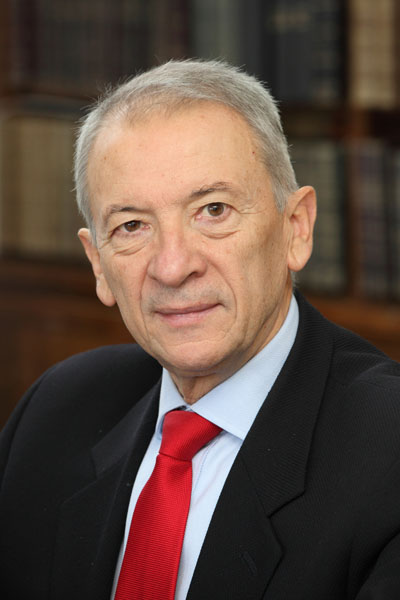 Luis Antonio Oro Giral合作论文数Departamento de Quimica Inorga nica, Facultad de Ciencias, Universidad de Zaragoza20
 Israel Fernández López合作论文数Department of Organic Chemistry, Universidad Complutense de Madrid20
 Ricardo Castarlenas合作论文数Instituto de Ciencia de Materiales de Aragón, Universidad de Zaragoza-CSIC20
 Andrea Velez合作论文数18
 Agustí Lledós合作论文数Unitat de Química Física Edifici C.n Universitat Autònoma de Barcelona17
 Sheila G. Curto合作论文数16Pierre-Luc T. Boudreault合作论文数15
 Natividad Ruiz合作论文数Department of Microbiology, College of Arts and Sciences, The Ohio State University14Tamara Bolaño合作论文数14Susana Izquierdo合作论文数13
 Miguel Angel Sierra合作论文数Universidad Complutense de Madrid12Juan Carlos Babon Molina合作论文数11Beatriz Eguillor合作论文数11chuanjun xia合作论文数10Ruth Castro-Rodrigo合作论文数10Jose L. Mascarenas合作论文数9carmen larramona合作论文数9
 Jaime Martin合作论文数Dept Chem, Univ Zurich9
 Malka Mora合作论文数9AV Gomez合作论文数9Sonia Bajo合作论文数8Manuel L. Poveda合作论文数8
 Alba Collado合作论文数8Pilar Barrio合作论文数8M Baya合作论文数7
 Adrian Palacios合作论文数7
 Fernando López合作论文数7Verónica Salazar-Pereda合作论文数7
 Francisco J. Fernandez-Alvarez合作论文数7
 Margarita Paneque合作论文数7
 Marta Valencia合作论文数7Javier Modrego合作论文数7Silvia Mozo合作论文数7Miguel Baya合作论文数7vadim adamovich合作论文数6MA Tajada合作论文数6Virginia Lezáun合作论文数6
 Laura Andrea de Las Heras Martin合作论文数6Llorenç Benavent合作论文数6
 López-Serrano Joaquín合作论文数Instituto de Investigaciones Químicas, Universidad de Sevilla6
 Arian Espinosa Roa合作论文数Instituto de Investigaciones Químicas (IIQ),, Universidad de Sevilla6
 Marta Martin合作论文数6




