Real crystals are not perfect but contain defects. These defects can be crucial to the properties and hence the uses of the crystals. The crystals may have missing atoms or atoms moved from their position in the ideal crystal, and atoms of elements other than those in the bulk crystal may be added or replace an existing atom (point defects); there may be faults in the growth of the crystal (extended defects). Point defects can be intrinsic, for example Schottky and Frenkel defects or extrinsic (involving atoms other than those in the perfect crystal, for example chromium ions in alumina to produce rubies). The chapter considers point defect concentrations and Kröger–Vink notation. This chapter then looks at extended defects.
Methods for synthesising solids cover a wide variety and there is not room here to cover them all. Consequently this chapter looks at a selection of such methods including sol-gel, ball milling, microwave- and ultrasound-assisted synthesis, hydrothermal methods, chemical vapour deposition. Techniques for synthesising porous solids and nanostructures are given in later chapters of this book. For most of the methods described, an example of a reaction for which they have been used with details of the preparation is given. The rules of green chemistry are stated and examples of their application given. The chapter ends by asking students to consider the factors they should take into account when planning a synthesis.
This chapter introduces the basics of crystal structure. It defines crystal lattices and unit cells and describes the Bravais lattices. Symmetry properties of crystals are introduced and how these can be used to categorize solids. Illustrations and descriptions of common types of crystal structures, mainly of ionic solids, but also of representative covalent structures are given. Close packing of spheres is introduced and how crystal structures can be described in terms of close-packed ions as well as the conventional picture of unit cells. Included also is a discussion of lattice energy and ways in which this quantity can be estimated or calculated: Born–Landé equation, Kapustinskii equation, and a brief look at computational methods using classical mechanics.
The defect structure, hyperfine and magnetic properties of Mn2+-doped Fe3O4 of the composition MnxFe3-yO4(y=2/3x) are modeled using atomistic and DFT calculations. The atomistic simulations show the substitution of the Mn2+ ions for Fe3+ ones at the tetrahedral sites to be energetically favorable than their substitution at the octahedral sites. These Mn2+ impurities are charge-balanced by the occupation of either Mn2+ or Fe 3+ ions of interstitial tetrahedral sites. The method of GGA with on-site Coulomb interaction approximation for the exchange-correlation potential is used to calculate the electronic structure, hyperfine and magnetic moments of the structurally most preferred models. The results obtained show the model in which all the Mn2+ ions substitute for tetrahedral Fe 3+ ions with Fe3+ ions expelled to interstitial tetrahedral sites to be consistent with the observed experimental trends of the hyperfine and magnetic properties.
Peter Styring opened discussion of the introductory lecture by Volker Sick: If you were talking to a key politician/decision maker, what would you say to convince them that CO2 utilisation was an area on which they should focus attention? Volker Sick replied: It will be important
George Dowson opened a general discussion of the paper by Alexander J. Cowan: You cite in the presentation how low the gas diffusion rates through ionic liquids can be, where it can take days or weeks for gases to permeate through a bulk ionic liquid. Since this may be a function of the viscosi
We report on the structure and surface composition of Nd0.33Eu0.67Fe1-xCrx O-3 (x = 0.0, 0.3, 0.5, 0.7, 0.9 and 1.0) nanoparticles (similar to 30 nm) mechanosynthesized at temperatures that are similar to 470-700 degrees C lower than those at which the pure and doped pristine materials conventionally form. XRD Rietveld and FT-IR analyses show that with increasing x the lattice parameters decrease and the bond lengths and angles vary in a way that reduces crystalline distortion. Whilst the majority of the Eu3+/Nd3+ and Fe3+/Cr3+ cations occupy their normal perovskite-related A- and B-sites, respectively, similar to 5 % of them exchange sites. Fe-57 Mossbauer spectroscopy favours the presence of these antisites and reveals a superparamagnetic behaviour at 298 K that enhances with increasing x. XPS measurement reveals a complex surface composition of the nanoparticles with traces of Eu2O3, Nd2O3, Cr2O3 and Fe2O3 as well as partial O2--deficiency.
This chapter is about the optical properties of solids. These properties can arise from defects in the solid, from the electronic structure of the solid as a whole, or from the structure of the solid. Examples are used to illustrate the effects. Defects are involved in ruby lasers, phosphors for LEDs, and colour centers. Absorption and emission of radiation by electrons in bands are exemplified by GaAs lasers, LEDs, and photovoltaic (solar) cells. Carbon-based conducting polymers which can be used in LEDs and photovoltaic cells are described. As well as absorption and emission of radiation, the chapter also considers its refraction and how this affects calcite crystals and optical fibers. The properties of photonic crystals depend on the arrangement of two materials of different refractive index. The refractive index of metamaterials depends on their structure. Metamaterials with negative refractive indices find use as superlenses and cloaks of invisibility.
Solids with cavities and channels (porous solids) have many uses, particularly as catalysts and absorbents. This chapter looks at the structure, synthesis, and use of several classes of micro- and mesoporous solids. Naturally occurring zeolites have been known for centuries, but many artificial zeolites have been prepared and are widely used in industry. Metal-organic frameworks (MOFs) are formed from metal ions or clusters linked by organic ligands. Covalent organic frameworks (COFs) are a recent development. These have the advantages of lighter mass and the stability provided by covalent bonds. Other types of porous solids—mesoporous aluminosilicates and organosilicas and clays are touched upon.
Much work has been done on cation substitution of manganese perovskites, but less on anion substitution. Recently there have been reports on fluorination of these compounds, generally leading to double perovskite structures. This work explores the effect of fluorine substitution on the magnetic and electrical properties of the perovskite cubic strontium manganite using first principles DFT calculations. Results on fluorine-doped strontium manganite with one or two fluoride ions surrounding each iron are presented. The ground state of Sr2Mn2O5F is found to be a small band gap spin-biased semiconductor. This is the first proposal that a fluorinated manganite could be a ferromagnetic spin-polarised semiconductor.
It is generally recognized that insect odorant binding proteins (OBPs) mediate the solubilisation and transport of hydrophobic odorant molecules and contribute to the sensitivity of the insect olfactory system. However, the exact mechanism by which OBPs deliver odorants to olfactory receptors and their role, if any, as selectivity filters for specific odorants, are still a matter of debate. In the case of Anopheles gambiae, recent studies indicate that ligand discrimination is effected through the formation of heterodimers such as AgamOBP1 and AgamOBP4 (odorant binding proteins 1 and 4 from Anopheles gambiae). Furthermore, AgamOBPs have been reported to be promiscuous in binding more than one ligand simultaneously and repellents such as DEET (N,N-diethyl-3-toluamide) and 6-MH (6-methyl-5-hepten-2-one) interact directly with mosquito OBPs and/or compete for the binding of attractive odorants thus disrupting OBP heterodimerisation. In this paper, we propose mechanisms of action of DEET and 6-MH. We also predict that ligand binding can occur in several locations of AgamOBP1 with partial occupancies and propose structural features appropriate for repellent pharmacophores.
The defect structures when Y3Fe5O12 is doped with either Al3+ or Cr3+, and evenly co-doped with both, which have been a matter of controversy in the literature, are modeled using atomistic and ab initio DFT methods. When Y3Fe5O12 is doped with Al3+, the defect reaction energy obtained marginally favors the preferential substitution of Al3+ for Fe3+ at the tetrahedral sites as opposed to octahedral ones. This is indicative that for Al3+-doped samples processed at elevated temperatures, or containing undetected impurities, the substitution of Al3+ for octahedral Fe3+ is likely. To model the defect structure of the Cr3+-doped Y3Fe5O12, it was essential that the Cr3+ ions crystal field stabilization energy (CFSE) and the Fe3+ -O2-- Cr3+ spin-spin coupling derived from the ab initio DFT calculations, be taken into account. The results show the substitution of the Cr3+ ion for an octahedral Fe3+ ion to be energetically favorable relative to its substitution for a tetrahedral Fe3+ one. It is also shown that the antisite defect, where the Cr3+ ion substitutes for Y3+ at a dodecahedral site with the expelled Y3+ ion substituting for an octahedral Fe3+ ion, is possible under certain processing conditions. For the Al3+/Cr3+ codoped Y3Fe5O12, the Al3+ and Cr3+ ions were found to, respectively, substitute for the tetrahedral and octahedral Fe3+ ions. The energy values obtained suggest this defect structure to be insensitive to the processing conditions and/or the presence of undetected impurities. The structural and magnetic implications of these defect structures are discussed.
The effect of S-substitution on the O6 guanine site of a 13-mer DNA duplex containing a G:T mismatch is studied using molecular dynamics. The structure, dynamic evolution and hydration of the S-substituted duplex are compared with those of a normal duplex, a duplex with S-substitution on guanine, but no mismatch and a duplex with just a G:T mismatch. The S-substituted mismatch leads to cell death rather than repair. One suggestion is that the G:T mismatch recognition protein recognises the S-substituted mismatch (GS:T) as G:T. This leads to a cycle of futile repair ending in DNA breakage and cell death. We find that some structural features of the helix are similar for the duplex with the G:T mismatch and that with the S-substituted mismatch, but differ from the normal duplex, notably the helical twist. These differences arise from the change in the hydrogen-bonding pattern of the base pair. However a marked feature of the S-substituted G:T mismatch duplex is a very large opening. This showed considerable variability. It is suggested that this enlarged opening would lend support to an alternative model of cell death in which the mismatch protein attaches to thioguanine and activates downstream damage-response pathways. Attack on the sulphur by reactive oxygen species, also leading to cell death, would also be aided by the large, variable opening.
The position of magnesium ions in Mg2+-doped lithium ferrite of the composition Li0.5−0.5xMgxFe2.5−0.5xO4, which has been a matter of uncertainty among some experimentalists, is investigated using interatomic potential and ab initio DFT calculations. Among possible 19 defect structure models, some of which have been reported experimentally to be the most favorable, the lowest energy is found for Mg2+ ions evenly replacing Li+ and Fe3+ ion on octahedral sites. This gives a decrease in magnetisation for the Mg2+-doped ferrite relative to the un-doped lithium ferrite. The results suggest that some experimental observations of increased magnetisation of spinel lithium ferrite on Mg2+-doping could be due to substitution of Mg2+ or Li+ on tetrahedral sites at the high temperatures used in preparation of the solid and/or the presence of undetected defects in the initial precursors.
Nanocrystalline EuCrO3 particles (∼25 nm) have been prepared by pre-milling a 1 : 1 molar mixture of Eu2O3 and Cr2O3 for 60 h followed by sintering at 700 °C (12 h). This temperature is ∼500–600 °C lower than those at which the material, in bulk form, is conventionally prepared. Rietveld analysis of the x-ray powder diffraction pattern of the EuCrO3 nanoparticles favours a structural model involving a slight degree of cationic exchange where ∼11% of the Eu3+ and Cr3+ ions exchange their normal dodecahedral A- and octahedral B-sites, respectively, in the perovskite-related structure. This cationic site exchange, which is unusual in a perovskite structure, has been well supported by the corresponding room-temperature 151Eu Mössbauer spectrum of the nanoparticles that in addition to displaying a distribution in the principal component of the EFG tensor (V zz ) at the usual A-sites of the 151Eu nuclei, also revealed the presence of a subcomponent with ∼11% area fraction and a considerably increased |V zz | value that was associated with Eu3+ ions at octahedral B-sites. X-ray photoelectron and Auger electron spectroscopic techniques reveal a complex surface structure where extremely thin layers of un-reacted Eu2O3 and Cr2O3 cover most of the EuCrO3 nanoparticles' surfaces together with some traces of elemental Cr. The binding energies associated with Eu3+ 3d5/2, Eu3+ 4d3/2, Cr3+ 2p3/2 and O2− 1s core-level electrons in EuCrO3 are estimated from the x-ray photoelectron data for the first time.
Fluorination of the parent oxide, BaFeO3−δ, with polyvinylidine fluoride gives rise to a cubic compound with a=4.0603(4)Å at 298K. 57Fe Mössbauer spectra confirmed that all the iron is present as Fe3+. Neutron diffraction data showed complete occupancy of the anion sites, indicating a composition BaFeO2F, with a large displacement of the iron off-site. The magnetic ordering temperature was determined as TN=645±5K. Neutron diffraction data at 4.2K established G-type antiferromagnetism with a magnetic moment per Fe3+ ion of 3.95μB. However, magnetisation measurements indicated the presence of a weak ferromagnetic moment that is assigned to the canting of the antiferromagnetic structure. 57Fe Mössbauer spectra in the temperature range 10–300K were fitted with a model of fluoride ion distribution that retains charge neutrality of the perovskite unit cell.
 Lesley Smart合作论文数25Michael Mortimer合作论文数22
 Frank J. Berry合作论文数School of Chemistry, University of Birmingham20rob janes合作论文数18Hisham M. Widatallah合作论文数Department of Physics, Sultan Qaboos University12O Helgason合作论文数8Alberto Bohorquez合作论文数7Neil F. Peirson合作论文数6
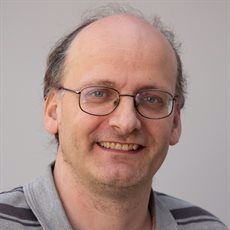 Peter Raymond Slater合作论文数School of Chemistry, University of Birmingham5
 Mohamed E Elzain合作论文数Sultan Qaboos University College of Science5Mak Williams合作论文数4
 Michael Frank Thomas合作论文数4C Johnson合作论文数4
 Andrew Healy合作论文数4Xiaolin Ren合作论文数Shanghai Jiao Tong University, Shanghai Jiaotong Univ.4David C. Apperley合作论文数Department of Chemistry, University of Durham4RE MOSS合作论文数3Clive Johnson合作论文数3Joan Mason合作论文数3
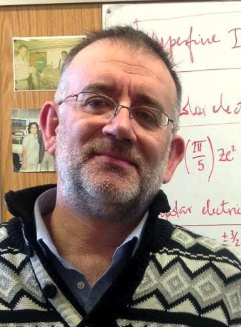 Jose F. Marco合作论文数Instituto de Química Física Blas Cabrera, Consejo Superior de Investigaciones Cientificas3Julia Mcmanus合作论文数3Steen Mørup合作论文数Technical University of Denmark3
 Richard Heap合作论文数3
 Michael F. Thomas合作论文数Department of Physics, University of Liverpool3
 Abbasher M. Gismelseed合作论文数Institut für Physik, Medizinische Universität Lübeck3
 Adrian Wright合作论文数2K. S. Al-Rashdi合作论文数2
 George R M Dowson合作论文数2Xl Ren合作论文数2
 Jonathan Ruiz Esquius合作论文数2Ollie Thomas合作论文数2
 Xiangkun (Elvis) Cao合作论文数DNV2
 Stephen Mccord合作论文数UK Ctr Carbon Dioxide Utilisat, Univ Sheffield2
 Mzamo L. Shozi合作论文数Sch Chem & Phys, Univ KwaZulu Natal2
 Volker Sick合作论文数Department of Mechanical Engineering, University of Michigan, Ann Arbor2
 J Frederick Willem Mosselmans合作论文数2Said Mohd Albarwani合作论文数2
 Jeffrey Poon合作论文数Physical and Theoretical Chemistry Laboratory, University of Oxford2
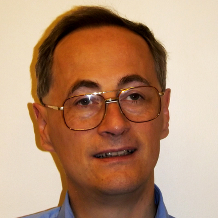 Michael North合作论文数Department of Chemistry, University of York2
 Jianzhong Jiang (蒋建中)合作论文数International Center For New-Structured Materials, School of Materials Science and Engineering, Zhejiang University;International Center for New-Structured Materials, The Sci-Tech Academy of Zhejiang University2
 Peter Styring合作论文数Department of Chemical and Biological Engineering, Faculty of Engineering, The University of Sheffield2
 Ali Reza Kamali (阿里·卡马里)合作论文数Energy and Environmental Materials Research Centre, School of Metallurgy, Northeastern University2Ibrar Ayub合作论文数2
 Haresh G. Manyar合作论文数Chemical Research & Development, IPCA Laboratories Ltd.2
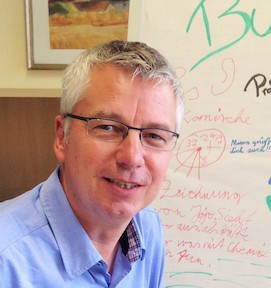 Walter Leitner合作论文数Max-Planck-Institute for Chemical Energy Conversion;Max-Planck-Institute for Coal Research;Institute of Technical and Macromolecular Chemistry, RWTH Aachen University2
 Keith Whiston合作论文数2G. Oates合作论文数2
 Deepak Pant合作论文数Flemish Institute for Technological Research2Paul G. Wynn合作论文数2




