The impact of generative artificial intelligence (AI) on creative production in industry and education is just beginning to be experienced and understood. This impact is likely to accelerate and become even more significant as the computational potential of generative AI grows through training on more diverse and more extensive language models and data sets. Emerging research in this new field suggests that previous models of understanding the interactions between machine and human may no longer be sufficient in a world of generative AI. The significant question is how emerging generative AI technologies will relate to and be a part of human creativity and creative outputs. In this article, we adopt a posthuman stance and conceive of creative output involving generative AI and humans in terms of a yet-to-be-fully-realised and emergent relationship that will likely become more integrated and complex. To investigate and experiment with this relational notion, each of us (as part of an autoethnographic approach) developed a creative output using ChatGPT: a poem and a multimodal narrative. We then employed the idea of alterity relations from the American philosopher of technology, Don Ihde, to conceive of the possibilities and limitations in working relationally and productively with generative AI. As two academics working in teacher education, we applied our learning from this exploration to possibilities in educational contexts. In this article, we offer several important implications and provocations for practitioners, researchers, educators and policymakers, not only in terms of practical concerns but also for rethinking the nature of the creative output.
Creativity in education is universally valued, but the diversity of theories and directions in the field of creativity studies is challenging for practitioners to understand and apply in classrooms. In this conceptual article and position paper, we propose a unified educational approach to creativity based on the philosophical ideas of Alfred North Whitehead and John Dewey. Whitehead’s notion of concrescence—where diverse experiences and resources are integrated into a coherent whole—alongside Dewey’s pragmatic emphasis on experiential learning, provides a robust foundation for enabling creativity in educational settings. Drawing upon these stances, we offer a set of three principles derived from the integration of Whitehead’s and Dewey’s thoughts, aimed at enhancing the practical application of creativity in education. These principles focus on designing learning environments that foster creativity and align with learners’ natural developmental tendencies, and the processual nature of learning. As a plausible practice example, we apply these principles within Science, Technology, Engineering, Arts, and Mathematics (STEAM) education, showcasing a practical thought experiment that applied the three integration principles and merges experiential learning and the integration of varied experiences and resources. This approach emphasizes the role of teachers as designers of learning environments that foster creativity. A design-based approach can inform curriculum development, teaching methods, and classroom management, influencing research, practice, and policy. By rethinking creativity through the integration of Whitehead and Dewey, educators, researchers, and policymakers can develop more coherent strategies that promote creativity more centrally in the educational process, addressing the need for innovative and adaptive thinking in students.
This article addresses a critical gap in international research concerning digital literacies and empowerment among adults who are English as an additional language (EAL) learners. In the Australian context, where digital communication and services are embedded in all aspects of life and work, proficiency in digital literacies, including advanced technologies like generative artificial intelligence (AI), is vital for working and living in Australia. Despite the increasing prevalence and significance of generative AI platforms such as ChatGPT, there is a notable absence of dedicated programs to assist EAL learners in understanding and utilising generative AI, potentially impacting their employability and everyday life. This article presents findings from a larger study conducted within training providers, spanning adult educational institutions nationwide. Through analysis of data gathered from surveys and focus groups, the article investigates the knowledge and attitudes of students, educators, and leaders regarding integrating generative AI into the learning program for adult EAL learners. The results reveal a hesitance among educators, particularly concerning beginning language learners, in incorporating generative AI into educational programs. Conversely, many adult learners demonstrate enthusiasm for learning about its potential benefits despite having limited understanding. These disparities underscore the pressing need for comprehensive professional development for educators and program leaders. The findings also highlight the need to develop the AI literacy of learners to foster their understanding and digital empowerment. The article concludes by advocating for a systemic approach to include generative AI as an important part of learning programs with students often from adult migrant and refugee backgrounds.
This article provides a critical thematic literature review that explores the intersection of generative artificial intelligence (GenAI) and social-emotional learning (SEL), analyzing its implications for teacher education. GenAI offers promising applications for enhancing SEL competencies such as self-awareness, empathy, and social skills through tools like real-time emotional feedback and personalized learning experiences. However, the integration of GenAI into SEL also presents significant challenges, including risks of depersonalization, algorithmic bias, and privacy concerns. This paper introduces a conceptual framework designed to prepare both pre-service and in-service teachers to navigate these complexities, emphasizing ethical considerations, human oversight, and cultural sensitivity. The framework highlights strategies to operationalize cultural sensitivity within AI systems, recognizing the limitations of current technologies in accounting for diverse social and emotional norms. By addressing both opportunities and risks, we aim to provide a balanced analysis of GenAI’s potential in SEL as well as guidance for teacher education programs.
This article contributes to the growing interest in academic literature regarding the creative practices of older adults, with a particular focus on the creative poetry writing of older poets. Our qualitative research is framed within existing perceptions about creativity in later life, challenging stereotypes and highlighting the potential for creative growth and expression in older age. The study was conducted within a University of the Third Age (U3A) group in Melbourne, Australia, providing a unique opportunity to understand creative practices directly within an established poetry class. In this study we used reflective post-class data from participants. We analysed the data using Csikszentmihalyi’s concepts of creative action, flow, and the individual’s role within systemic constraints and freedoms. Our findings challenge a common narrative that associates ageing with decline in general and in creativity. Instead, we demonstrate that older adults possess a remarkable capacity for creative writing and poetic expression. Far from diminishing, creativity in older adults is enriched by life experiences, emotional depth, and a profound understanding of life’s complexities. These results contribute to a strengths-based discourse on ageing, suggesting that later life can be a time of creative flourishing. This study contributes to the literature on self-perceptions of creativity amongst older poets and encourages a re-evaluation of societal perceptions of ageing and creativity.
In this article we investigate the role of generative AI in education with a focus creativity, metaphorically utilising relevant features from Augusto Boal's Forum Theatre as part of a participatory qualitative inquiry. Presenting three distinct perspectives- Gatekeeper, Evangelist, and Diplomat-our article explores emotional and intellectual responses to AI and creativity, utilising theatrical forms to offer personal insights about the intricate balance between AI's benefits and risks. Adopting a post-qualitative approach, we avoid forced consensus, instead weaving individual viewpoints with reflective commentary that seeks to elucidate and critically engage with the ideas presented. The adoption of Forum Theatre as a metaphor for our inquiry serves deepen our understanding of AI's transformative potential in educational settings highlights the need for a collaborative, dialogic and critical approach to AI in education in a time of global change, one that honours the diversity of opinions in this evolving domain.
This autoethnographic study with critical friends explores a teacher's - commitment to inclusive education in the context of disability. Decades of global developments, advocacy, academic research and legislation to protect the rights of people with disabilities and ensure access to equal education opportunities, whilst reassuring, reveal undeniable challenges and struggles. There is a clear lack of attention to the situatedness and ethical basis of inclusive practices. In this article, we examine the professional practice and pedagogical understandings of the first author, a secondary school teacher, college in Victoria, Australia. Autoethnographic methodology allowed a personal interrogation of episodes of encountering disability and inclusion, as Author 1 explores examples from her own teaching practices. Martin Buber's notion of 'I and Thou' fuels our reflections on the ethical and relational basis of teaching inclusively. Two vignettes reveal lived experiences, used as the ground for a fruitful dialogic exchange. These result in a set of reflexive pieces of writing from the first author and two colleagues. Findings suggest that the relational and ethical basis of educational practices in regard to disability and inclusion need to be re-examined in light of Buber's relational category of I-Thou, which suggests focus on the person, rather than the label, 'disability'.
This critical autoethnographic article with academic friends explores the complex territory of disability from a strengths-based, inclusive perspective. The article centres on the experiences of a mother and educator (the lead author), who continues to navigate the disability landscape, which is encumbered with deficit views. The curated narratives (or vignettes) presented hereafter, focus on specific educational experiences and challenges related to perceptions of disability and "othering" that threaten to exclude. Each narrative reveals the lead author's direct experiences of alienation and her need to develop a strong sense of fierceness to protect and secure the right to an equitable, inclusive education for her "othered" child. The authors analyse each story using emic and etic perspectives utilising ideas drawn from Levinas' notion of alterity and his ethics of encounter, as well as critical discourse analysis to bring attention to the deficit language. Collectively, the narratives and the analyses aim to bring critical awareness to the lived experiences of this mother and educator and identify the deficit mindsets that affected her so profoundly.
In this article we explore the relationship between silence and literacy, employing autoethnography and poetry as inquiry, highlighting how silence enhances meaning making in literacy practices. Silence is positioned not merely as an absence of sound or words but as a dynamic element integral to textual engagement and interpretation. Through an analysis of personal poetic texts, using Heidegger’s concept of dwelling thinking and Barthes's idea of Work and Text, we demonstrate how silence operates on multiple levels, coexisting with words and resonating in the learner’s contemplative spaces. In poetry, silence compels readers to navigate the spaces between words, fostering deeper comprehension and appreciation of the language. We argue that recognising these silences is crucial for literacy learning and has an important part as a teaching and learning approach in education. The study further discusses the pedagogical implications of teaching with silence, offering ideas for where it might be employed.
In this editorial for the special issue on Beyond Western Notions of Creativity in Education, we provide an overview of six articles that challenge the normative ontological, epistemological, and methodological underpinning of creativity research and practice in education. This special issue aimed to interrogate and problematize the notion of creativity as a Western conception, to expand it toward developing a more global, diverse, inclusive, and decolonized vision. Articles in this issue contribute to a more expanded conception beyond traditional Western ways of knowing and point to new areas for research within existing understandings of creativity. We explore creative practices and conceptualizations, as well as diverse research paradigms beyond Western traditions to present a more holistic understanding. We share implications for future research and practice for educators and scholars interested in expanding beyond the Western conceptualizations of creativity.
The importance of digital literacies for adult language learners from migrant and refugee backgrounds has been widely recognized. However, there is relatively limited conceptual and practical guidance for practitioners. To address this concern, we developed a pedagogical framework and a practical guide for teachers in the Adult Migrant English Program in Australia. The conceptual framework brought together four well‐established bodies of scholarly work and formed the four principles for teaching digital literacies: (1) authentic learning contexts, (2) problem‐based learning, (2) strengths‐based approaches, and (4) multidimensional practices. To unpack the framework for practical use, we then developed a guide, which reflected these principles and offered teaching ideas. This paper describes the conceptualization of the pedagogical framework and reports on a multiple case study which sought to gain insight from five English as an Additional Language (EAL) teachers on the efficacy of the framework and guide. The findings suggest that while there was a reasonable level of understanding of the framework and guide and many rich learning experiences were created , in practice some teachers experienced challenges in actuating some principles of the framework. The article concludes with implications for teachers' self‐directed learning with the help of this resource and future research.
Digital literacies are critical for adults from migrant and refugee backgrounds as they settle in a new country. However, institutions, leaders, and teachers often feel uncertain about how to teach digital literacies. Using the notions of digital literacy practices and assemblages, this article reports on a qualitative case study and explores how 30 adults from migrant and refugee backgrounds navigated challenging digital literacy practices related to settlement in Australia. This research found that to deal with challenges, the participants brought together different personal, social, material, symbolic, temporal, and spatial resources. However, sometimes the required resources were not available, which constrained the participants' practices. Some participants were aware of the need to find new solutions but they often did not know how this might be done. In contrast, some participants were reluctant to take a risk. The article concludes with implications for EAL practice by suggesting strengths-based pedagogies for digital literacies.
This position paper explores the impact of generative AI on creativity and creative production in higher education, with focus also on initial teacher education. Creative outputs are an essential part of the business of higher education across different disciplinary areas, along with pedagogical and assessment practices matched to these outputs. However, the advent of generative AI has sparked a reconsideration of how we think about creativity, creative output, and the hybridity of relationships between generative AI and humans in creative endeavours. This emergent technology also has significant implications for teacher education and for the develop of new teachers who need confidence with using AI in learning contexts. We suggest that new thinking and critical dialogue are essential in developing educational futures in which generative AI is understood for its affordances, limitations, and dangers.
With the emergence of Western posthuman understandings, new materialism, artificial intelligence (AI), and the growing acknowledgment of Indigenous epistemologies, an ongoing rethinking of existing assumptions and meanings about creativity is needed. The intersection of new technologies and philosophical stances that upend human-centered views of reality suggests that creativity is not an exclusively “human” activity. This opens new possibilities and assemblages for conceiving of creativity, but not without tensions. In this article, we connect multiple threads, to reimagine creativity in light of posthuman understandings and the possibilities for creative emergence beyond the Anthropocene. Creativity is implicated as emerging beyond non-human spaces, such as through digitality and AI or sources in the natural world. This unseats many understandings of creativity as positioned in Euro-Western literature. We offer four areas of concern for interrogating tensions in this area, aiming to open new possibilities for practice, research, and (re)conceptualization beyond Western understandings.
The global pandemic of 2020 has changed the ways that university academics do their work and manage their time, including teaching, engaging with graduate students, conducting research, and working with colleagues. The mode of delivery of higher education has substantially moved to the digital, and workspaces have shifted to home. Having to work from home has placed unique demands on academics, including adapting to working entirely on ascreen and adjusting their work/life balance. Despite much anecdotal evidence that the well-being of academics is being adversely affected during this global pandemic, there is currently little published research about this issue. As five academics who work in an education faculty at an Australian university, we present our collaborative autoethnographic reflections of this time. We share these experiences of being academics in 2020 through curated narrative vignettes, with analysis of the meaning of these vignettes. Employing aphenomenological approach, we craft understandings of our experiences and explore the immediate world of these experiences, constituted in our practices as academics and our personal lives in this challenging time of unexpected change. We note the phenomenon of feeling unsettled, distracted, overwhelmed and lacking focus, and being conflicted between various roles.
The move to online learning triggered by COVID-19 lockdowns in 2020 and 2021 necessitated a rapid movement to effectively design synchronous digital learning environments. In such environments research suggests that a flipped approach to teaching and learning is most appropriate in learning environments mediated by technologies. This article examines the experiences of two teacher educators in dealing with online learning environments in a time of change and examines the shift to a flipped approach in teaching literacy units that are part of a postgraduate initial teacher education degree at a university in Melbourne, Australia. The article presents a collaborative autoethnography of the experiences of the teacher educators, shared as a set of curated narrative vignettes, and analyses the thinking that supports the implementation of flipped learning. These practice narratives are understood through the lens of collaborative learning theory which emphasises negotiated meanings and knowledge creation within groups. In post-COVID times this article points to future possibilities for a flipped learning approach in hybrid or mixed learning environments and offers a conceptual process model for designing learning in response to change. Implications for practice or policy: Teacher educators may need to reconsider learning design for online and hybrid environments. Universities may need to be more open to student-centred pedagogies such as flipped learning. Leaders and policymakers in higher education should give more attention to student agency and active learning in educational delivery.
Prompted by the wide-spread impact of the global pandemic on the higher education sector in Australia, this study explores the wellbeing and mental health of university academics who were caught in this altering landscape. This mixed-methods study has three objectives. Firstly, the study involved the design and development of an instrument to measure the wellbeing of university teachers. Secondly, the new instrument was administered to a randomly drawn sample of university academics, in order to validate its use. Thirdly, the study sought to identify possible strategies utilized by participants during times of high pressure, conflict and stress. As an initial validation study, the project involved scale design, generating a tool which measures the wellbeing of university academics, especially during times of crisis. The measurement tool was constructed in four parts drawing on the established formula of academic workload: Teaching, Research, Service/Engagement, with Part 4 seeking out demographic variables for analysis. Findings suggested that most academics were concerned about the maintenance of their research output and teaching workloads. Maintaining responsibilities as care-givers and parents of school-going children proved challenging. Many conceded that maintaining equilibrium was complex. It is anticipated that the scale will be an effective means of quantifying academic wellbeing especially during a crisis, thereby offering a valid instrument to university leaders, when considering staff security and comfort, in the contemporary context.
Compared with other age groups, the literacy practices and creative outputs of older adults (50+ years) have been seldom researched. Generally, research about older adults has tended to focus on decline and agential passivity, rather than potentiality. In this article, we report on a small ethnographic study of older Australians who were part of a University of the Third Age (U3A) poetry group in Melbourne, Australia. We examine the literacy practices of the group in writing poetry, especially focusing on the triggers for poetry ideas and the beginning processes of poetry writing. The reported research centres on a session of the group conducted online in 2020. Employing ideas from David Hume, particularly his notion of the empirical basis for the development of concepts, as well as the idea of dialogism from Mikhail Bakhtin, the transcript of the focus group was analysed using themes that the participants discussed. Results suggest that the older adults in the study employed sensory images together with imagination, life memories and feeling states to create and form highly individual poetry of significance to their lives in the context of the positive rapport and dialogic engagement that developed within the poetry group.
 Danah Henriksen合作论文数Arizona State Univ18
 Michael Henderson合作论文数Centre for Learning Analytics, Faculty of Information Technology, Monash University18
 Jane Southcott合作论文数School of Education, Culture and Society, Faculty of Education, Monash University12
 Peter Waterhouse合作论文数School of Education, Culture and Society, Faculty of Education, Monash University10
 Katrina Tour合作论文数School of Curriculum, Teaching and Inclusive Education, Faculty of Education, Monash University7
 Punya Mishra合作论文数Mary Lou Fulton Teachers College, Arizona State University5
 Stella Laletas合作论文数Faculty of Education, School of Psychological Sciences, Monash University4
 Alina Kewanian合作论文数3
 Rohit Mehta合作论文数Calif State Univ3
 Renee Crawford合作论文数School of Curriculum, Teaching and Inclusive Education, Faculty of Education, Monash University3
 Miroslava Cernochova合作论文数3
 Natalie Gruber合作论文数Arizona State Univ2
 Jo-Anne Raphael合作论文数2
 Erkko Sointu合作论文数School of Educational Sciences and Psychology, Philosophical Faculty, University of Eastern Finland;University of Lapland2Damien Lyons合作论文数School of Curriculum, Teaching and Inclusive Education, Faculty of Education, Monash University2
 Trina J Davis合作论文数College of Education, Texas A&M University2Pearl Subban合作论文数Faculty of Education, School of Psychological Sciences, Monash University2
 Julianne Moss合作论文数The University of Melbourne2
 Venesser Fernandes合作论文数School of Education, Culture and Society, Faculty of Education, Monash University2Ana Amélia Carvalho合作论文数1ana amelia amorim carvalho合作论文数1Kelly Carabott合作论文数1
 Luke Creely合作论文数1Xuan Pham合作论文数1
 Jennifer K Miles合作论文数1
 Paolo Tosato合作论文数Foscari University1
 Deepshikha Dash合作论文数Indian Institute of Technology Kharagpur1
 Melissa Barnes合作论文数Sch Educ Culture & Soc, Monash Univ1Sona Ceretkova合作论文数1
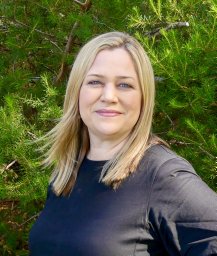 Melanie C. Brooks合作论文数Sch Educ Culture & Soc, Monash Univ1Ben Whitburn合作论文数School of Education, Deakin University1
 Marc Pruyn合作论文数School of Curriculum, Teaching and Inclusive Education, Faculty of Education, Monash University1
 Christopher H. Tienken合作论文数1
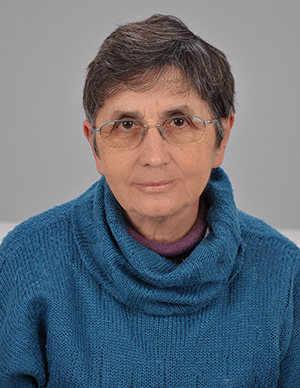 Evgenia (Jenny) Sendova合作论文数Institute of Mathematics and Informatics, Bulgarian Academy of Sciences1
 Dat Bao合作论文数School of Education, Culture and Society, Faculty of Education, Monash University1
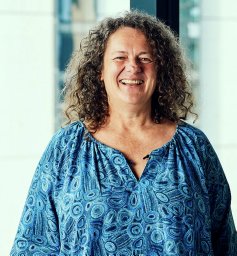 Joanne O’Mara合作论文数1
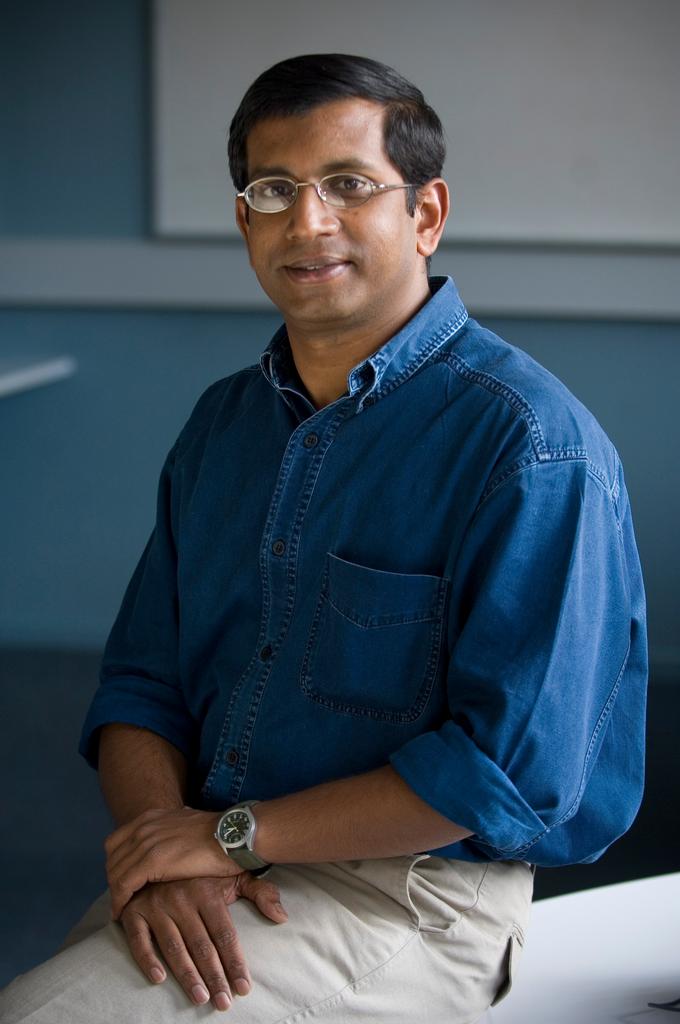 Raqib Chowdhury合作论文数School of Curriculum, Teaching and Inclusive Education, Faculty of Education, Monash University1




