While facilitating communication services, cellular mobile networks also provide real-time and large-scale observations of individual mobility, offering significant potential far beyond their traditional connectivity role. This paper proposes a mobility-aware epidemiological framework that integrates the Susceptible-Exposed-Infectious-Recovered (SEIR) model with mobility data derived from cellular mobile networks to improve predictive accuracy and applicability. By incorporating fine-grained, cell-level mobility data, our approach captures localized movement patterns and their impact on epidemic dynamics in urban environments. Simulation results show that areas with high mobility and density reach infection peaks 66–70% earlier and over 2.5 times higher than predictions obtained using a standard SEIR model, while low-mobility regions exhibit minimal deviation from baseline behavior. These findings illustrate that network-level mobility indicators are effective tools for identifying localized epidemic risks, supporting targeted and real-time public health interventions.
In this article, we present a simple performance bound for the greedy scheme in string optimization problems. Our approach generalizes the family of greedy curvature bounds established by Conforti and Cornuejols (1984). Specifically, we examine three bounds they introduced for evaluating the performance of the greedy scheme in maximizing monotone submodular set functions. We first generalize two of these bounds to string optimization problems in a manner that includes maximizing monotone submodular set functions as a special case. Next, we derive a simpler and more computable bound that applies to a broader class of functions with string domains. We then prove that our bound is superior to two of their bounds and provide a counterexample to show that the third bound is incorrect under the assumptions in the work of Conforti and Cornuejols (1984). We demonstrate our results through two applications. First, we apply our bound to sensor coverage problems with both monotone set and string submodular objective functions. The second application is a social welfare maximization problem involving a monotone nonsubmodular black-box utility function.
The solutions to many sequential decision-making problems are characterized by dynamic programming and Bellman's principle of optimality. However, due to the inherent complexity of solving Bellman's equation exactly, there has been significant interest in developing various approximate dynamic programming (ADP) schemes to obtain near-optimal solutions. A fundamental question that arises is: how close are the objective values produced by ADP schemes relative to the true optimal objective values? In this paper, we develop a general framework that provides performance guarantees for ADP schemes in the form of ratio bounds. Specifically, we show that the objective value under an ADP scheme is at least a computable fraction of the optimal value. We further demonstrate the applicability of our theoretical framework through two applications: data-driven robot path planning and multi-agent sensor coverage.
We propose a Bayesian co-optimization framework for robust integrated photonic lattice-filter demultiplexers, jointly optimizing device placement and design parameters under fabrication and thermal variations. Results show 75
Integrating non-terrestrial networks (NTNs) with terrestrial networks (TNs) is vital for seamless global connectivity in 5G/6G communications. This integration supports the growing demand for connectivity across a wide range of devices, from conventional handheld user equipment (UE) and connected vehicles to Internet-of-Things (IoT) applications in smart cities, extending even to small IoT devices embedded within the human body. However, this integration introduces significant challenges, particularly because of the dynamic nature of satellite-based NTN radio coverage. The coexistence of TNs and NTNs complicates mobility and handover (HO) management, which is vital for wireless service continuity as UE/IoT devices encounter rapidly changing wireless mobile coverage. This paper explores the complexities and challenges of HO management in TN-NTN integration, focusing on issues such as the dynamic nature of NTN radio coverage and the limitations of traditional HO decision metrics, like reference signal received power (RSRP). Additionally, it examines the increased power consumption of UE/IoT devices because of the need for frequent RSRP measurements, the swiftly changing radio conditions that lead to higher HO rates, where devices switch back and forth between radio cells.
This paper introduces an Artificial Intelligence (AI)-driven framework for optimizing Three-Dimensional Integrated Circuit (3D-IC) manufacturing through a System of Systems (SoS) approach. Our framework integrates defect detection, process optimization, and electrical failure prediction using advanced methodologies, notably Convolutional Neural Networks (CNNs), Random Forest Classifiers, and Long Short-Term Memory (LSTM) networks. By dynamically aligning subsystem outputs with global manufacturing objectives, our framework addresses key challenges in Through-Silicon Via (TSV) formation, defect reduction, and yield enhancement. Adaptive optimization techniques—including simulated annealing and dual annealing—are employed to refine critical parameters such as TSV depth, deposition rate, and etching temperature. Achieving a global yield of 58.48%, the proposed approach demonstrates its scalability and effectiveness in reducing defect rates while ensuring high manufacturing reliability. This research establishes a foundation for advancing AI-driven decision-making in complex manufacturing systems, bridging theoretical innovations and practical implementation.
This paper presents a Multi-Agent Reinforcement Learning (MARL) framework designed to optimize coordination within a System-of-Systems (SoS) composed of six heterogeneous healthcare entities: hospitals, clinics, telemedicine platforms, wearable monitoring devices, rural health centers, and virtual triage hubs. These entities are organized into four distinct constituent systems—Directed, Acknowledged, Collaborative, and Virtual—each reflecting a unique coordination model that governs control, autonomy, and communication. Within each constituent system, agents independently learn optimal policies using Q-learning to enhance resource allocation, inter-agent cooperation, and service efficiency. We describe simulation experiments that span 1000 episodes, with evaluation metrics including cumulative rewards, resource utilization, and system-level efficiency. The results show that Acknowledged and Collaborative coordination models achieve faster policy convergence and superior operational outcomes, while the Virtual model provides flexibility with reduced coordination overhead. Our framework demonstrates the potential of MARL to enable adaptive, decentralized decision-making in Artificial Intelligence of Medical Things (AIoMT)-enabled healthcare environments, particularly under dynamic and resource-constrained conditions. Importantly, this approach can help improve care access in remote and underserved regions and enable more dynamic, responsive triage and resource allocation in real-world healthcare delivery.
Wireless mobile networks have become vital for daily communication, but their potential extends far beyond. In this paper, we leverage their functions in a novel way for pandemic prediction. We use real-time mobility data extracted from cellular networks—existing functions used to track user movements between network cells to ensure seamless service continuity—into the Susceptible-Exposed-Infectious-Recovered (SEIR) model, a widely used epidemiological framework, aiming to improve its accuracy, applicability, and predictive performance. To the best of our knowledge, no existing SEIR models have integrated real-time mobility data from cellular networks for pandemic forecasting. Our findings show that mobility-driven transmission causes a 50% relative increase in infection rates and contributes to over 73% of new exposures, significantly reducing the time required for disease propagation. Our approach offers real-time epidemic surveillance and intervention for improved public health response.
We propose a design framework based on Bayesian optimization to optimize the design parameters of silicon photonic Mach-Zehnder Interferometers (MZIs) for enhanced robustness against fabrication-process variations. The optimized MZIs show up to an 80 % reduction in frequency response shift compared to unoptimized designs.
This paper presents a novel framework for optimizing smart cities as System of Systems (SoS) by integrating Multi-Agent Reinforcement Learning (MARL) with traditional systems engineering methodologies. Constituent systems-modeled as agents across domains such as transportation, energy, public safety, and communication, operate autonomously under diverse control modes (e.g., Acknowledged, Directed) while aligning with overarching SoS objectives. The proposed framework leverages decentralized policy learning and augmented reward mechanisms to improve coordination, adaptability, and system-wide efficiency. Simulation results demonstrate a 14.3% increase in system efficiency, a 12.5% improvement in adaptability, and a 25.0% enhancement in coordination effectiveness. These findings underscore the potential of AI-driven decision-making to manage emergent behavior and complexity in dynamic, large-scale urban environments.
Small businesses in the semiconductor industry face unique challenges in optimizing low-volume, highly customized production. Our study introduces an optimization framework that integrates system-dynamics modeling, linear programming, and predictive analytics to streamline supply chain networks and improve manufacturing efficiency. By leveraging Python-based simulations, our approach enhances cost-effectiveness, supports rapid prototyping, and utilizes cross-validated machine learning for predictive modeling to optimize production outcomes. Through statistical validation including correlation analysis and ANOVA, plus comparative analysis with alternative optimization techniques, our framework demonstrates significant improvements in both theoretical efficiency and practical application. The framework not only advances the theoretical foundation for specialized semiconductor manufacturing but also provides practical insights tailored to the constraints and implementation challenges faced by Small and Medium Enterprises (SMEs).
Single-pixel imaging (SPI) is a novel imaging technique that applies to acquiring spatial information under low light, high absorption, and backscattering conditions. The existing reconstruction techniques, such as pattern analysis and signal-recovery algorithms, are inefficient due to their iterative behaviors and substantial computational requirements. In this paper, we address these issues by proposing a hybrid convolutional-transformer network for efficient and accurate SPI reconstruction. The proposed model has a universal pre-reconstruction layer that can reconstruct the single-pixel measurements collected using any SPI method. Moreover, we utilize the hierarchical encoder-decoder network in U-Net architectures and employ the proposed CONText AggregatIon NEtwoRk (Container) as the adaptive feature refinement module to adaptively leverage the significance of globally and locally enhanced features in SPI reconstruction. As such, we can improve the conventional SPI methods in terms of reconstruction speed and accuracy. Extensive experiments show that the proposed model achieve a significant performance improvement as compared to traditional SPI methods digitally and experimentally while increasing the reconstruction frame rates by threefold. Moreover, the proposed model also outperforms state-of-the-art deep learning models in performing single-pixel imaging reconstruction.
This article explores beamforming in 5G/6G radio coverage, with a focus on satellite-based non-terrestrial networks (NTNs). It discusses the challenges of applying phased-array antenna technologies, which are vital for achieving narrow beamforming in both 5G/6G terrestrial networks (TNs) and NTNs. We highlight advancements in material technologies that enable the creation of compact and powerful massive Multi-Input Multi-Output (mMIMO) antennas, introducing nano-antenna arrays (e.g., $1024 \times 1024$ elements) that occupy $1 \mathrm{~mm}^{2}$ at terahertz frequencies ($1-10 \mathrm{THz}$). We also detail how applying mMIMO antenna arrays in space offers new potential for achieving narrow beamforming in satellite-based 5G/6G NTNs. We investigate the ongoing efforts in deploying such mMIMO in space to replicate the cellular radio coverage of TNs.
This article investigates the application of text analytics for defect detection and characterization in electronics manufacturing of printed circuit board assembly by analyzing structured and unstructured textual data from circuit board and packaged chip testing. Traditional defect detection methods often overlook the valuable insights found in unstructured textual observations recorded by technicians and engineers during manufacturing processes. This research leverages text analytics to transform these descriptive narratives into structured, actionable data, thereby improving the precision and efficiency of defect identification. A Na & iuml;ve Bayes model was employed for classification, and natural language processing (NLP) techniques were utilized to extract meaningful patterns from defect descriptions. The results indicate high classification accuracy for components, such as "capacitor," "FPGA," and "resistor," while also identifying challenges in distinguishing "capacitor" from "transistor." The expected outcomes of this research include the enhancement of defect detection precision and efficiency, leading to more effective quality control processes in electronics manufacturing. This study highlights the integration gap in real-time text analytics and demonstrates the potential of machine learning algorithms in manufacturing defect characterization, offering actionable insights for optimizing quality control strategies.
We present a novel technique for pruning called activation-based pruning to effectively prune fully connected feedforward neural networks for multi-object classification. Our technique is based on the number of times each neuron is activated during model training. We compare the performance of activation-based pruning with a popular pruning method: magnitude-based pruning. Further analysis demonstrated that activation-based pruning can be considered a dimensionality reduction technique, as it leads to a sparse low-rank matrix approximation for each hidden layer of the neural network. We also demonstrate that the rank-reduced neural network generated using activation-based pruning has better accuracy than a rank-reduced network using principal component analysis. We provide empirical results to show that, after each successive pruning, the amount of reduction in the magnitude of singular values of each matrix representing the hidden layers of the network is equivalent to introducing the sum of singular values of the hidden layers as a regularization parameter to the objective function.
Mobility management is a critical and challenging requirement for 5G networks and their successors, as numerous highly mobile user equipment (UE), including massive Internet-of-Things (IoT) devices, generate extreme traffic volumes. In the integration of non-terrestrial networks (NTNs) with 5G, mobility management is of utmost importance to track these highly mobile UE/IoT throughout the network coverage area for the purpose of data-packet delivery. In this context, we thoroughly discuss the integration of satellite-based NTNs with 5G technology, which has become increasingly active in recent years, and studies are still ongoing to develop innovative frameworks to provide seamless connections to the extremely increasing density of high-mobility UE/IoT. The goal of this integration is to extend coverage and improve reliability beyond current 5G networks, enabling ubiquitous connectivity in remote areas and delivering high-speed data to UE/IoT. However, this integration poses numerous challenges in terms of mobility management, especially concerning the power constraints and signaling overhead of UE/IoT, as these devices are limited in battery power and processing capabilities. Handling these challenges is crucial to ensure successful integration and provide seamless connectivity to UE/IoT. In this paper, we highlight recent research efforts and potential solutions in these areas, contributing to the ongoing development of non-terrestrial 5G networks and improving global connectivity. To the best of our knowledge, this paper is the first study to emphasize and critically assess different mobility management solutions for satellite-based 5G NTNs, evaluating their impact on UE/IoT battery power consumption and signaling overhead, with implications extending to 6G networks.
This study assesses the application of artificial intelligence (AI) algorithms for optimizing resource allocation, demand-supply matching, and dynamic pricing within circular economy (CE) digital marketplaces. Five AI models—autoregressive integrated moving average (ARIMA), long short-term memory (LSTM), random forest (RF), gradient boosting regressor (GBR), and neural networks (NNs)—were evaluated based on their effectiveness in predicting waste generation, economic growth, and energy prices. The GBR model outperformed the others, achieving a mean absolute error (MAE) of 23.39 and an R2 of 0.7586 in demand forecasting, demonstrating strong potential for resource flow management. In contrast, the NNs encountered limitations in supply prediction, with an MAE of 121.86 and an R2 of 0.0151, indicating challenges in adapting to market volatility. Reinforcement learning methods, specifically Q-learning and deep Q-learning (DQL), were applied for price stabilization, resulting in reduced price fluctuations and improved market stability. These findings contribute a conceptual framework for AI-driven CE marketplaces, showcasing the role of AI in enhancing resource efficiency and supporting sustainable urban development. While synthetic data enabled controlled experimentation, this study acknowledges its limitations in capturing full real-world variability, marking a direction for future research to validate findings with real-world data. Moreover, ethical considerations, such as algorithmic fairness and transparency, are critical for responsible AI integration in circular economy contexts.
We consider the celebrated bound introduced by Conforti and Cornuéjols (1984) for greedy schemes in submodular optimization. The bound assumes a submodular function defined on a collection of sets forming a matroid and is based on greedy curvature. We show that the bound holds for a very general class of string problems that includes maximizing submodular functions over set matroids as a special case. We also derive a bound that is computable in the sense that they depend only on quantities along the greedy trajectory. We prove that our bound is superior to the greedy curvature bound of Conforti and Cornuéjols. In addition, our bound holds under a condition that is weaker than submodularity.
Single-pixel imaging (SPI) is an imaging technique that uses modulated light patterns and knowledge of the scene under view to obtain spatial information of the object. The combination of SPI and compressive sensing (CS) has enabled image reconstruction with fewer measurements. Typically, the reconstruction algorithm, such as basis pursuit, relies on the sparsity assumption in images. In this paper, we propose a SPI system based on block compressive sensing (BCS) and UNet-based convolutional neural network (CNN). Results show that our approach outperforms other competitive reconstruction algorithms. Moreover, by incorporating BCS, we can reconstruct images of any size above a certain smallest image size. In addition, we show that our model can reconstruct images obtained from an SPI setup while being priorly trained on natural images, which can be vastly different from the SPI images. This opens up opportunities for pretrained deep-learning models for BCS reconstruction of images from various domains.
 Ali Pezeshki合作论文数Department of Electrical and Computer Engineering, Colorado State University30
 Ness B. Shroff合作论文数Department of Electrical Engineering, The Ohio State University22
 Stanislaw H. Żak合作论文数Purdue University20
 Anthony A. Maciejewski合作论文数Department of Electrical and Computer Engineering, Walter Scott, Jr. College of Engineering, Colorado State University19
 Louis Scharf合作论文数Colorado State University18
 Howard Jay Siegel合作论文数Department of Electrical and Computer Engineering, Colorado State University17
 I-Jeng Wang合作论文数Institute for Assured Autonomy, Whiting School of Engineering, Johns Hopkins University Applied Physics Laboratory;Milton S. Eisenhower Research Center, Johns Hopkins University Applied Physics Laboratory13
 Shankarachary Ragi合作论文数Dept. of Electr. & Comput. Eng., Colorado State Univ.;c;Dept. of Electr. & Comput. Eng., Colorado State Univ.12
 Rick Sturdivant合作论文数Radar & Commun. Sector, Hughes Aircraft Co.;c;Radar & Commun. Sector, Hughes Aircraft Co.11
 Bob Givan合作论文数Elmore Family School of Electrical and Computer Engineering, Purdue University11
 Alaa A. R. Alsaeedy合作论文数Colorado State Univ, Dept Elect & Comp Engn, Ft Collins, CO 80523 USA10
 Yugandhar Sarkale合作论文数Colorado State Univ, Dept Elect & Comp Engn, Ft Collins, CO 80523 USA10
 Lucas W. Krakow合作论文数Colorado State Univ, Colorado State Univ.;c;/Colorado State Univ, Colorado State University10
 Stephen D. Howard合作论文数10
 Jan Hannig合作论文数Department of Statistics and Operations Research, College of Arts and Sciences, The University of North Carolina at Chapel Hill10
 Zhenliang Zhang合作论文数Frontier Research Center, Beijing Institute for General Artificial Intelligence10
 Saeed Nozhati合作论文数Colorado State Univ, Dept Civil & Environm Engn, Ft Collins, CO 80523 USA9
 Junshan Zhang (章君山)合作论文数School of Electrical, Computer and Energy Engineering, Arizona State University;Department of Electrical and Computer Engineering, University of California Davis9
 Sanjeev R. Kulkarni合作论文数Department of Electrical and Computer Engineering, School of Engineering and Applied Science, Princeton University;The Operations Research and Financial Engineering Department, Princeton University8
 Yajing Liu合作论文数8
 Ramin Zahedi合作论文数Electrical & Computer Engineering;Colorado State University;Colorado State University8Uday Savagaonkar合作论文数8
 Bruce R. Ellingwood合作论文数Department of Civil & Environmental Engineering, Walter Scott, Jr. College of Engineering, Colorado State University7
 William Moran合作论文数Department of Electrical and Electronic Engineering, University of Melbourne7
 Junyi Li (厉隽怿)合作论文数Qualcomm7Jung-Min Park合作论文数6
 Christopher Robbiano合作论文数6
 Peter J. Ramadge合作论文数Department of Electrical and Computer Engineering, School of Engineering and Applied Science, Princeton University6
 Hua Li (李华)合作论文数College of Computer Science-College of Software, Inner Mongolia University6
 Suresh Kalyanasundaram合作论文数The working group where he is active appear to be netlmm6
 Donald Estep合作论文数Department of Mathematics;Colorado State University;Department of Mathematics, Colorado State University6
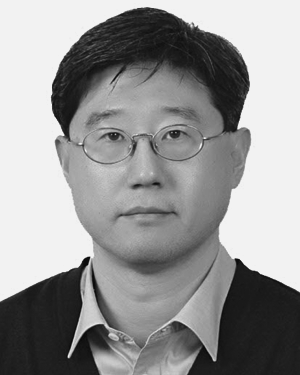 Yong-Seok Park合作论文数6
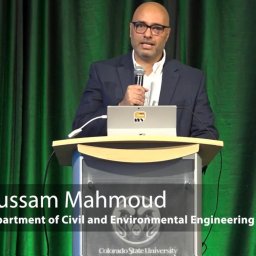 Hussam Mahmoud合作论文数Department of Civil Engineering, University of Minnesota6
 Xin Liu (刘昕)合作论文数Department of Computer Science, University of California, Davis5
 Tay Wee Peng合作论文数School of Electrical & Electronic Engineering, Nanyang Technological University5
 Hyeong Soo Chang合作论文数Department of Computer Science & Engineering, College of Computing, Sogang University;System Modeling and Optimization Lab, Sogang University5Scott A. Miller合作论文数5Patricia R. Barbosa合作论文数5
 Yang Zhang合作论文数4Pranav U Damale合作论文数4Mahsa Ghorbani合作论文数4
 Christopher M. Eaton合作论文数Department of Systems Engineering, Colorado State University4
 Xin Wang合作论文数Sch Engn, Monash Univ Malaysia4
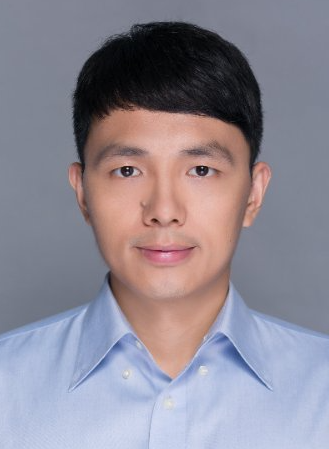 Yijie Peng (彭一杰)合作论文数School of Management and Engineering, Nanjing University4
 Jay Smith合作论文数4
 Mingbo Xiao合作论文数Department of Communications Engineering, Xiamen University4
 Catherine Rosenberg合作论文数Department of Electrical and Computer Engineering, University of Waterloo4




