Although the Israeli right holds an equal - if not superior - position of power within the Israeli bi-polar political cleavage, its leaders and spokespersons continue to nurture a group identity of an excluded, marginalized and oppressed ideological movement. This study examines the discursive practice of 'self-othering' in Israeli right-wing discourse. Focusing on a particular case study - op-ed articles and commentaries published by right-wing opinion makers during the military crisis of summer 2006 - the study analyzes the Israeli right's rhetoric of polarization in terms of movement-countermovement competitive framing process. Drawing on frame theory and historical discourse approach, the analysis shows how victimage discourse is employed by the Israeli right to delegitimize the left as being an oppressive elite, and to frame right-wing affiliation as a social identity of a popular movement whose members are mobilized to a continuous struggle against the 'hegemonic control' of the left.
This article examines the discourse of the Israeli Left in the years preceding the succession of general elections in 2019-21, with a focus on claims of the purported threats to democracy presented by the right-wing government. Rhetorical analysis of opinion pieces and political commentary in the press on issues relating to education, science, and culture shows recurrent use of appeals to fear - such as comparisons with totalitarian regimes and invocation of other dystopian spectres resulting from nationalist indoctrination and processes of 'religionization'. This article defines the appeal to fear and other forms of the Left's identity claims making during this period as moral panic discourse, around which the Left sought to revive its relevance in the public debate at a time when it was viewed as a marginal political force in ideological decline. The article's main argument is that while the labelling of the Right as a 'danger to democracy' has been entrenched in leftist discourse since the 1977 'Upheaval', during the period in discussion it became the principal - almost sole - theme in leftist publicist discourse, serving as a flag issue around which the Left reorganised its identity as the 'democratic camp'.
This study explored the relevancy of internet discourse among football fans and real-life stadium violence. Our hypothesis implies that there are positive correlations between violent utterances in fans’ social networks prior to games and football stadium violence. The study sample included 6 football clubs who participated in the Israeli Premier League in the 2015–2016 season. The traffic in the social networks was automatically collected into the MySQL database. The content of the traffic includes various forms of discursive interactions within social networks susceptible of predicting, provoking or expressing social tension, aggression or violent behavior. We focused on three discursive functions which reflect a dynamic of discursive construction of tension: exclamation; incitement; and verbal aggression. The results indicate a build-up of tension 3 days before the game and such build-up is correlated with stadium violence of both fans and players. The correlation of content and timing of traffic was also found when controlling the level of violence of the football club. Violent traffic was also correlated with the results of the previous game. The theoretical and practical consequences of these results are discussed.
This article explores the rhetoric of auto-victimization in political discourse. While "victimization" is generally defined as the process by which individuals or group as culturally constructed or socially acknowledged as victim, "auto-victimization" is the discursive practice by which a speaker constructs his or her own image or identity as victim. Drawing on the theoretical framework of the interactionalist approach to victimology in social sciences, the study examines three constitutive dimensions of a political leader, i.e, Benjamins Netanyahu's rhetoric of auto-victimization in response to corruption charges: emotional mobilization, cultural resonance, and appeal to collective identity. The analysis shows that Netanyahu projects an image of a victim of persecution, while assimilating his personal story to the constitutive narrative of the Israeli right, self-perceived as a historically marginalized and oppressed by the Israeli left. Netanyahu's auto-victimization thus transforms into a symbolic figure of the Israeli right's tradition of victimization, and constitutes an emergency call to defend Netanyahu in order to protect the entire political camp. The results of the analysis correspond to the discursive practices observed by cultural victimology, but they also echo some of the rhetorical strategies associated with contemporary populist political discourse.
This article investigates the feasibility of monitoring data obtained from comments posted by basketball fans on their Facebook pages to predict players' aggression in Israeli basketball matches. The results revealed that aggressive behaviors of players were correlated with negative and positive utterances of fans that were collected 24 hours before the game. Negative utterances increased the level of aggression and positive utterances decreased the level of aggression. The location of the game moderates the correlations between fans' traffic and players' aggression. The bulk of the significant results were found in away games. The results are discussed as a possible explanation for the nexus of social media discourse and stadium aggression.
This article analyzes the image repair discourse of the Israeli right during the military crisis in the summer of 2006, which took place shortly after an electoral campaign in which the ideological right suffered a significant defeat. Using the analytical model of image repair rhetoric, this analysis is located at the intersection of two theoretical trends: the analysis of polemical discourse, as developed by the French school of discourse analysis and argumentation, and discursive and rhetorical approaches in the study of social movements. Based on a corpus of opinion articles, I will explore an aspect that has received little attention in the practice of image repair: the roles of the polarization and reworking of the ethos of a collective speaker, and the way that this practice functions as an instrument to strengthen a social group’s self-perception.
This article explores the modalities by which referring to past discursive performance of adversaries within a continuous polemical exchange is used in ad hominem attacks. Our starting point holds that in the context of lengthy debates, participants and third-party listeners share a rhetorical memory, which, dynamic and subjective as it may be, allows for the evaluation of participants’ characters based on their perceived discursive performances. By analysing opinion articles related to the Israeli political debate, this study shows how drawing inference from adversaries’ prior statements and conduct is used to compromise their credibility as participants in the polemical exchange. It is found that, alongside supporting arguments from inconsistent commitment, previous discursive performance is mobilized to discredit speakers’ epistemic authority (by demonstrating how the adversary’s prior statements were false) and their moral legitimacy (by demonstrating that the adversary failed to act as a fair interlocutor).
In recent decades (the ‗post-heroic' condition) - threats of widespread selective conscientious objection have become a political tool to advance opposing political agendas in Israel. This article examines attitudes amongst the Israeli public concerning the legitimacy of demands that different groups of soldiers be exempted from military operations to which they are ideologically opposed (such as serving in the occupied territories or, conversely, participating in evacuation of settlements). The results point to a multi-cultural model embracing diversity management not as a neo-liberal ideal but rather as a strategy for co-option, containment and inclusion, with a view to preserving the "people's army" model.
This study analyses verbal aggression in cyberbullying against social workers in Israel. Given the particular nature of this type of aggressive behaviour, namely its repeated and public dimensions, the study focuses on the content of offensive messages. Drawing on examples from multiple anti-social workers' weblogs and Facebook pages, the study employs constructionist social problems methodology in order to extract the logical structure of anti-social workers' discourse as claims-making activity. The analysis demonstrates that, far from constituting isolated or momentary outbursts of anger or frustration, cyberbullying against social workers contains messages which share similarities in content and style, comprise a persistent set of claims against social workers and employ rhetorical means in order to enhance public support. The article holds that understanding the specificity and content of offensive messages against social workers in new-media saturated societies is crucial for understanding current shifts in social workers' conflict environment and the formation of public opinion concerning social workers and social services.
Cet article se propose d’analyser le discours de réparation d’image de la droite israélienne durant la crise militaire de l’été 2006, qui se déroule peu après une campagne électorale où la droite idéologique subit une défaite importante. Utilisant le modèle analytique de la rhétorique de réparation d’image, l’analyse s’effectue à l’intersection de deux courants théoriques : l’analyse du discours polémique, telle que développée dans l’école française de l’argumentation et de l’analyse du discours, et les approches discursive et rhétorique dans l’étude des mouvements sociaux. À partir d’un corpus d’articles d’opinion, nous explorons ici un aspect peu étudié de la pratique de réparation d’image : les rôles de la polarisation et du retravail d’ ethos d’un locuteur collectif, et la façon dont cette pratique fonctionne comme instrument de renforcement de la perception de soi qu’a un groupe social.
This article analyses the reactions of Israel's academic elite to the 1977 political upheaval. Some of Israel's leading scholars in humanities and social sciences framed the new political situation as a grave ideological and moral crisis, reflecting the triumph of fundamentalist, nationalist, emotional and messianic trends over the rational, moderate, responsible political tradition that they had favoured and claimed to represent. The political change triggered a heated debate about the role of intellectuals in the ideological rehabilitation of the Labour party, as well as on the critical function of universities in the political arena. In the wake of what it perceived as a sharp deviation from the proper development of the traditional Zionist programme, the academic elite came to be perceived, in its own eyes as well as those of the public, as a faithful representative of the 'old regime', as an opponent to the new governmental elite and, for the first time, as an ideological opposition to Israel's political hegemony.
The Israeli demobilized reservists' protest after the Yom Kippur War is historically renowned for accelerating the emergence of civil criticism with regard to military and strategic affairs and for enabling the formation of peace movements in Israel. This article argues that this movement's largest contribution was its ability to restructure the rigid cultural division of protest. In the political culture of the early 1970s in Israel, any form of street protest was associated with marginal groups engaging in a disruptive revolt against the established order. The demobilized reservists' protest recruited members of mainstream social categories for a series of large-scale peaceful demonstrations, which concluded with the resignation of the Israeli government. This precedent blurred the traditional association of street protest with counter-hegemonic movements, and liberated the Israeli repertoire of contention for new social actors and issues. Analyzing the dialectic relations between the cultural division of protest and tactical selection in the demobilized reservists' protest, this article shows that when members of the mainstream society employ tactics affiliated with marginal or radical groups, they legitimize these tactics as standard forms of political participation and expand their society's modular repertoire of contention.
Peuple et ethos collectif dans la rhétorique de l'action collective : l'exemple du mouvement de l'été 2011 en Israël Eithan Orkibi Introduction 1Le mouvement social qui s'est développé en Israël durant l'été 2011 a été l'une des plus grandes et des plus longues mobilisations qu'a connues la société israélienne.Partiellement influencé par l'agitation globale -du printemps arabe jusqu'aux mobilisations des « indignés » en Europe -, il a donné lieu pour la première fois à des rassemblements de masse récurrents dans les rues de plusieurs villes israéliennes, pour une série de manifestations et d'actions collectives de grande ampleur autour des questions économiques et sociales.
Este artigo explora o recurso à violência nos discursos de protesto, definido como um tipo específico do discurso polêmico. Colocando-se, do ponto de vista teórico-metodológico, entre a análise do discurso polêmico – assim como ela se desenvolve nas tendências francesas da análise do discurso – e uma perspectiva Retórica dos Movimentos Sociais – tal como é desenvolvida nos Estados Unidos –, este estudo trata da especificidade do discurso que acompanha a agitação social. Explorando o recurso a “instrumentos” como os insultos e os ataques pessoais aos adversários, a palavra grosseira e as obscenidades, ou o uso de ameaças e agressões, o artigo examina os desafios éticos, estratégicos e hermenêuticos da palavra de protesto. Com a ajuda de exemplos variados, mostra que a agressividade e a rudeza da linguagem militante não constituem somente uma expressão espontânea da cólera e da indignação das massas, mas sobretudo um comportamento discursivo cuja lógica se explica na situação única em que se situa a ação coletiva.
The Journal of Popular CultureVolume 49, Issue 3 p. 541-563 Original Article The Pop-Culturization of Political Dissent: Humor and Rhetoric as Protestainment in the French "Anti-Sarko" Movement (2007–2012) Eithan Orkibi, Eithan OrkibiSearch for more papers by this author Eithan Orkibi, Eithan OrkibiSearch for more papers by this author First published: 13 June 2016 https://doi.org/10.1111/jpcu.12419Citations: 4Read the full textAboutPDF ToolsRequest permissionExport citationAdd to favoritesTrack citation ShareShare Give accessShare full text accessShare full-text accessPlease review our Terms and Conditions of Use and check box below to share full-text version of article.I have read and accept the Wiley Online Library Terms and Conditions of UseShareable LinkUse the link below to share a full-text version of this article with your friends and colleagues. Learn more.Copy URL Share a linkShare onFacebookTwitterLinkedInRedditWechat Citing Literature Volume49, Issue3June 2016Pages 541-563 RelatedInformation
This article explores the rhetorical dimensions of electronic campaigns and particularly focuses on the specificity of candidate images construction on social networks. The analysis of Facebook activity of three prominent candidates during the 2013 Israeli Elections, uncovers three discursive strategies: informality, meta-textuality and narrativity. These discursive strategies transform the campaign microblogs into personal “campaign diaries” used by the candidates to account for “behind the scenes” anecdotes, subjective impressions and private insights. The analysis shows that candidates used personal Facebook microblogs to strengthen their image as “authentic” and complex characters, which differs, and in some respect contrasts their public persona as was engineered by the campaign managers in the mainstream campaign. This article argues that such political images were strategically designed in order to support the campaigns’ promise to break from the “old politics” and warrant the candidates’ commitment to the “new politics.”
 Moti Zwilling合作论文数2
 Moshe Levy合作论文数2
 Amit Dvir合作论文数Ben-Gurion University of the Negev2
 Udi Lebel合作论文数2
 Nadav Gabay合作论文数University of California , San Diego2
 Uzi Ben-Shalom合作论文数Department of Psychology, Bar-Ilan University2
 Jurgen Siess合作论文数1
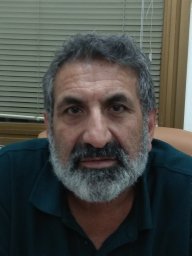 Uri Cohen合作论文数Sociol, Tel Aviv Univ1
 Maya Kagan合作论文数Sch Social Work, Ariel Univ1
 Ofir Pele合作论文数School of Computer Science, The Hebrew University of Jerusalem1
 Ruth Amossy合作论文数1
 Dominique Maingueneau合作论文数1
 Ester Zychlinski合作论文数1




