This longitudinal narrative case study examines the leadership identity development of Kayla, a female high school physics teacher, across five years of participation in a community of practice (CoP). Drawing on multiple data sources, we trace how her participation evolved from classroom-level practice to broader institutional influence. Four interconnected dimensions of leadership identity development were identified: personal, social, practice, and institutional culture change. Findings show how CoP membership provided collective legitimacy and relational support that enabled Kayla to move beyond identity negotiation toward transformation , successfully advocating for an AP Physics course and increasing female student participation. This study contributes to teacher professional learning literature by demonstrating the value of an identity lens for understanding teacher leadership as a gradual, socially enabled process. The longitudinal design reveals transformative conditions that cross-sectional studies often obscure, highlighting narrative case study as a productive methodology for capturing teacher leadership identity development over time.
Two field experiments with psychologically threatened undergraduates in introductory physics tested whether mindfulness promotes adaptive meaning-making about learning setbacks (Experiment 1) and unpleasant learning emotions (Experiment 2). Participants were randomly assigned to receive five consecutive days of 20-minute audio guided mindfulness training or to a no-training audiobook control (Experiment 1) or an active relaxation training (Experiment 2). In Experiment 1 (N=149), students completed experience sampling and longitudinal surveys assessing interpretations of difficult physics experiences. In Experiment 2 (N=303), students completed daily diaries of interpretations of negative physics emotions for 15 consecutive weekdays before, during, and after training. In both experiments, preregistered analyses showed that mindfulness students reported more adaptive interpretations, and in Experiment 2, meaning-making changes mediated improvements in both challenge-type stress appraisals and physics motivation. Though mindfulness is about non-elaborative observation of the present, our findings suggest its practice can be used to internalize adaptive meaning-making about learning struggles.
Many college students experience introductory physics as psychologically threatening. In a preregistered RCT, we applied the biopsychosocial model of challenge-threat to describe patterns of threat in introductory physics and test whether a 5-d mindfulness training could reduce threat and increase engagement among undergraduates. Course-wide surveys (N = 954) screened students for the RCT and revealed roughly half of students experience psychological threat. Students identified with systemically excluded groups were more likely to experience psychological threat while systemically advantaged students were more likely to experience psychological challenge in their introductory physics course. In the RCT (N = 149), mindfulness training reduced psychological threat and fostered greater engagement in introductory physics, and, consistent with our theory of change, mindfulness training was associated with greater physics engagement through reductions in threat. The results demonstrate that mindfulness can help students manage stress more effectively by reducing psychological threat and fostering engagement in contexts like introductory physics.
The current work aims to better understand student course experiences for those who reported negative perceptions in introductory physics. We conducted semistructured interviews with 24 students who reported negative perceptions of their class on a screening survey. Participants were asked to share general reflections on challenges and successes they experienced, as well as their reflections on specific aspects of the course (e.g., experiences with instructors and peers). Interview transcripts were then coded to identify the types of experiences students reported, whether they were experienced as positive or negative, as well as the themes and features associated with those experiences. Experiences with the classroom, course structure, instructors, and exams were most frequently reported as negative. Experiences with peers, help-seeking, course curriculum, and specific learning activities were the most positive, although only experiences with peers had more positive than negative reports. We then used a resources vs demands framework [M. D. Seery, The biopsychosocial model of challenge and threat: Using the heart to measure the mind, Soc. Pers. Psychol. Compass. 7, 637 (2013)] to interpret the common instructional, cognitive, and motivational themes and features reported across multiple contexts. We discuss the implications of the results for theory and practice.
Introductory physics instruction emphasizes fluency with routine problem-solving procedures. However, even when applying these procedures, students frequently encounter challenges. This paper investigates how students navigate such moments when answering qualitative electricity and magnetism problems in interviews. Students frequently noted they had partially forgotten a key equation on a problem involving RC circuits. We present focal cases that show how coherence-seeking approaches were employed to overcome this problem-solving challenge. In attempts to reconstruct these equations, participants identified and chained qualitative dependencies and sought coherence between qualitative and mathematical understanding of the physical system. These moments of forgetting and reconstructing equations are a useful site for studying broader physics learning goals. While prior work investigates the use of mathematical sensemaking by examining how students respond to explicit prompts, our cases illustrate how students can spontaneously use mathematical sensemaking strategies. We reflect on these cases to consider how such adaptive reasoning can be a target for instruction and assessment.
In instructional settings involving social interactions, emotions such as discomfort, embarrassment, and shame can be induced by social comparison of competence, judgment from peers, and conflict with other students. As part of the special issue Centering Affect and Emotion Toward Justice and Dignity in Science Education, this paper presents a case study of how four university engineering students in an introductory physics course addressed the emotional discomfort that arose when a hierarchy of competence emerged among group members, to demonstrate two points. First, local hierarchical positionings of who is more or less competent can create vulnerabilities and discomfort, which students can cope with by sharing and relating to each other's negative emotional experiences as engineering majors. This "emotional resonance" can be a resource for helping students locally reposition to find common ground and resist hierarchical positionings. Second, the local construction of hierarchical positioning among students, and the resulting emotional discomfort, can be supported by larger institutional structures and hierarchies within STEM culture. Although emotional resonance can locally alleviate discomfort and help students avoid hierarchical positionings, the legitimacy of positioning some students as "smarter" than others based on institutional labels and other markers of success can be left unchallenged. Therefore, efforts to support student emotions in STEM education should look beyond local interventions and critically examine pathways through which institutional structures and STEM culture can create hierarchical and competitive relations between students, generate feelings of not being "smart" enough, and increase the socioemotional risks of learning.
Although most teachers recognize the importance of taking investigative, open-ended approaches to students’ learning experiences, implementing them in high school classes can be challenging for teachers. In this work, we analyzed data from multiple sources from a teaching Community of Practice (CoP) to investigate (a) barriers to taking an open-ended approach in teaching labs in physics classes, (b) shifts in teachers’ beliefs about taking an open-ended approach during their engagement in a physics teaching CoP in a partnership program, and (c) a case study of one teacher whose shifts in perceptions about taking an open-ended approach in teaching labs led to her successful implementation in her class. The findings confirm the existence of well-known psychological and structural barriers that can prevent teachers from adopting investigative approaches in teaching physics labs. Moreover, we learned how the interaction of these barriers further complicates the adoption of open-ended approaches in physics classes. The study also revealed a significant gap between teachers’ current practices and their desired methods of conducting labs, particularly in terms of structured versus open-ended approaches. The case study offered deeper insights into how shifts in teaching practices occur through changes in perceptions within a supportive CoP.
Creating learning environments that can accommodate teachers' diverse needs is challenging because responsive elements are not clearly defined or identified. This study identified responsive teacher professional development (PD) elements by taking a phenomenological approach. Using surveys and interviews with 13 high school physics teachers in a PD program at a Midwestern university, we identified responsive features such as practicality, flexibility, and accessibility core to the enactment of a responsive PD. Other features were opportunities for community engagement, pedagogical support, and professional growth, which were aligned with the benefits of engagement in a Community of Practice model incorporated in this work.
In teacher professional development (PD), grouping teachers with varying levels of experience can be a productive and empowering way to stimulate the exchange and co-generation of content and pedagogical knowledge. However, less experienced teachers can face socio-emotional risks when engaging in collaborative science content reasoning tasks with more experienced colleagues, and these risks may impact the collaborative experience of both parties and the learning environment in teacher PD. This exploratory case study examines the process of productively navigating socio-emotional risks and interpersonal tensions encountered by a veteran and pre-service physics teacher during one episode of discussing physics content. We use a single term, comfort-building, to encapsulate discursive moves that result in increased feelings of comfort and safety by the participants. Comfort-building includes moves that serve to mitigate social risk, ease tension, and avoid discomfort, as well as those geared toward finding common ground and co-navigating challenges. These moves can carve out conversational space for teachers to more confidently face risks associated with being accountable to the physics content knowledge and engage in discipline-based conversations more deeply. The presented case was followed by video-stimulated individual interviews to determine how consciously the teachers connected their participation to explicit risk and comfort. This case study highlights an affective dimension for consideration in the continued study and facilitation of science teacher PD, especially programs that bring together teachers with a variety of backgrounds and skill sets.
Although most teachers acknowledge the importance of taking investigative approached in students' science learning experiences, implementing them in high-school classes can be challenging for teachers. In this work, we analyzed data from multiple sources from a teaching Community of Practice (CoP) to investigate (a) barriers to using open-ended labs in physics classes, (b) shifts in teachers' beliefs about the use of open-ended labs in their classes during teachers' engagement in a physics teacher CoP in a partnership program, and (c) a case study of one teachers whose shifts in perceptions about open-ended labs led to her successful implementation of an open-ended lab in her class. The findings confirm the existence of well-known psychological and structural barriers that can prevent teachers from adopting investigative approaches in teaching physics labs. Moreover, we learned how the interaction of these barriers further complicates the adoption of open-ended approaches in physics classes. The study also revealed a significant gap between teachers' current practices and their desired method for conducting labs, particularly in terms of structured versus open-ended approaches. The case study offered deeper insights into how shifts in teaching practices occur through changes in perceptions within a supportive CoP.
Many college students view introductory physics as demanding, psychologically threatening contexts. We use the challenge-threat model to demonstrate mindfulness training helps students see they have the resources to overcome their physics demands. Two experiments (Ns = 27, 149; 1 pre-registered RCT) explored the distribution of psychological threat within introductory physics and tested whether mindfulness training could alter students’ appraisals and psychological threat. In screening data, over half of students reported threat. Historically excluded group students were more likely to report threat (vs. challenge) and dominant group students were more likely to report challenge (vs. threat). Further, mindfulness training increased perceived momentary resources and reduced monetary threat during the intervention. Mindfulness buffered against escalating thread and declining resources three months later. The results demonstrate the benefits of mindfulness in academic contexts where stress can be adaptive by changing appraisals and reducing threat in introductory physics.
By taking a responsive approach to the design and enactment of teacher professional development (PD), PD instruction can be tailored to teachers' needs, interests, and concerns. This is of considerable importance in the high school physics teacher PD space, wherein teacher needs turn out to be particularly complex and diverse due to differences in teacher preparation within the discipline. More generally, understanding the degree to which PD programs are responsive to their teachers' needs can support increased responsiveness. To this end, having a validated survey can assist in measuring the criteria for this responsiveness. This study presents the initial development of a responsive professional development (RPD) survey based on interviews with 13 high school physics teachers. Nine responsive codes were identified through thematic analysis of teacher interviews, and the resulting survey has been administered to 33 teachers for piloting purposes. In this work, the initial survey development process is presented.
Recent critiques of physics education research (PER) studies have revoiced the critical issues when drawing causal inferences from observational data where no intervention is present. In response to a call for a “causal reasoning primer” in PER, this paper discusses some of the fundamental issues in statistical causal inference. In reviewing these issues, we discuss well-established causal inference methods commonly applied in other fields and discuss their application to PER. Using simulated data sets, we illustrate (i) why analysis for causal inference should control for confounders but not control for mediators and colliders and (ii) that multiple proposed causal models can fit a highly correlated dataset. Finally, we discuss how these causal inference methods can be used to represent and explain existing issues in quantitative PER. Throughout, we discuss a central issue in observational studies: A good quantitative model fit for a proposed causal model is not sufficient to support that proposed model over alternative models. To address this issue, we propose an explicit role for observational studies in PER that draw statistical causal inferences: Proposing future intervention studies and predicting their outcomes. Mirroring the way that theory can motivate experiments in physics, observational studies in PER can predict the causal effects of interventions, and future intervention studies can test those predictions directly.
In teacher professional development (PD), grouping teachers with varying levels of experience can be a productive and empowering way to stimulate the exchange and co-generation of content and pedagogical knowledge. However, less experienced teachers can face socio-emotional risks when engaging in collaborative science content reasoning tasks with more experienced colleagues (Finkelstein, Jaber, & Dini, 2018), and these risks may impact the collaborative experience of both parties and the learning environment in teacher PD. This descriptive case study examines the process of productively navigating socio-emotional risks and interpersonal tensions encountered by a veteran and pre-service physics teacher during one episode of discussing physics content. We use a single term, comfort-building, to encapsulate discursive moves that result in increased feelings of comfort and safety by the participants. Comfort-building includes moves that serve to mitigate social risk, ease tension, and avoid discomfort, as well as those geared toward finding common ground and co-navigating challenges. These moves can carve out conversational space for teachers to more confidently face risks associated with being accountable to the physics content knowledge and engage in discipline-based conversations more deeply. The presented episode in this study was followed by video-stimulated individual interviews to determine how consciously the teachers connected their participation to explicit risk and comfort. This case study highlights an affective dimension for consideration in the continued study and facilitation of science teaching communities of practice, especially ones that bring together teachers with a variety of backgrounds and skill sets.
Recent critiques of Physics Education Research (PER) studies have revoiced the critical issues when drawing causal inferences from observational data where no intervention is present. In response to a call for a "causal reasoning primer", this paper discusses some of the fundamental issues underlying statistical causal inference. In reviewing these issues, we discuss well-established causal inference methods commonly applied in other fields and discuss their application to PER. Using simulated data sets, we illustrate (i) why analysis for causal inference should control for confounders but not control for mediators and colliders and (ii) that multiple proposed causal models can fit a highly correlated data set. Finally, we discuss how these causal inference methods can be used to represent and explain existing issues in quantitative PER. Throughout, we discuss a central issue: quantitative results from observational studies cannot support a researcher's proposed causal model over other alternative models. To address this issue, we propose an explicit role for observational studies in PER that draw statistical causal inferences: proposing future intervention studies and predicting their outcomes. Mirroring a broader connection between theoretical motivating experiments in physics, observational studies in PER can make quantitative predictions of the causal effects of interventions, and future intervention studies can test those predictions directly.
Designing physics courses that support students' activation and development of expert-like physics epistemologies is a significant goal of Physics Education Research.However, very little research has focused on how physics students' interactions with course structures resonate with different epistemological views.As part of a course redesign effort to increase student success in introductory physics, we interviewed introductory physics students about their experiences with course structures and their learning and belonging beliefs.We present here a case from this broader data corpus in which a student, Robyn, discusses his epistemological views of physics problem solving and his experiences with physics lectures, office hours, and discussion sections.We find that Robyn's physics epistemology manifests consistently across his interactions with each of these different course structures, suggesting a possible resonance between students' beliefs and their experiences with course structures and the value of further investigation into the potential merits of comprehensive course design.
Self-efficacy and achievement goals represent two extensively researched motivational factors in education and have been related to numerous academic outcomes. However, little is known about how they relate to different types of problem-solving. Furthermore, while prior work has found these motivational factors are related, less work has examined them over time, during learning, and controlling for prior knowledge. The current study investigated the relations between these motivational constructs and procedural and conceptual problem-solving in middle school science. Sixth-grade science students' self-efficacy and achievement goals were surveyed along with procedural and conceptual problem-solving before and after instruction. Results revealed students' self-efficacy was positively correlated with both procedural and conceptual posttest performance. However, controlling for prior knowledge, self-efficacy only predicted conceptual performance. No relations were found between achievement goals and procedural or conceptual problem-solving. Additionally, results found that changes in mastery-approach goals were positively related to changes in self-efficacy beliefs.
This chapter organizes physics problem-solving research into two threads and discusses how each thread relates to problem-solving expertise and the transfer of problem-solving skills. One thread focuses on classifying and (re)producing expert solution methods. Rooted in the information-processing tradition from cognitive science, this thread has brought a focus to expert-novice differences and learning problem-solving production rules. A second thread focuses on physics problem solving as a part of the practice of learning and making sense of physics. In contrast to the emphasis on the solution production process in thread 1, thread 2 investigates how problem solvers make sense of, either formally or informally, the meaning of their problem solving. Thread 2 has understood physics problem solving in terms of dynamical accounts of problem solving, the non-procedural role of mathematics, and learning concepts through problem solving. Each thread relates to one component of adaptive problem-solving expertise, either routine efficiency or innovation. The expert solution methods thread attends to routine efficiency, which focuses on the use of known procedures in familiar contexts, whereas the practice of learning and making sense of physics thread connects to the capacity for innovation and new insights.
Understanding the nature of causality is a key component of conceptual understanding in science.The hypothesis of this study is that certain types of causal inference are more challenging than others.If correct, particularly challenging causal inferences may provide a unified explanation for different conceptual difficulties across physics content areas.This paper investigates two aspects of a simple, qualitative force-andmotion problem that may impact the difficulty of the causal inferences required.The first aspect is the type of causal inference required: cause-to-effect (CE), effect-to-cause (EC), or cause-to-cause (CC).The second aspect is information about an alternative cause, which can be explicitly constant, explicitly unknown, or ambiguous.To test the impact of these two problem aspects on participants inference accuracy we conducted an on-line experiment in which participants were randomly assigned to one of thirty-six conditions that systematically varied these two aspects across conditions.The results show that (i) for explicitly constant alternative causes, CC inferences are more difficult than CE or EC inferences, (ii) inferences given explicitly unknown alternative cause information are more difficult than inferences given explicitly constant alternative causes, and (iii) ambiguous alternative cause information is treated as implying the alternative causes are explicitly constant, which is in line with conversational assumptions rather than a formal, logical perspective.These results hint at the potential fruitfulness of understanding the causal inferences underlying conceptual difficulties in physics.
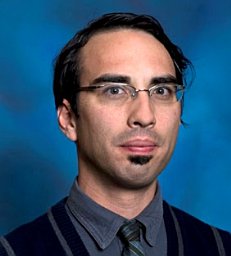 Timothy Nokes-Malach合作论文数Department of Psychology, The Dietrich School of Arts & Sciences, University of Pittsburgh;Learning Research & Development Center11
 M. F. V. Lundsgaard合作论文数Niels Bohr Institute, University of Copenhagen8
 Hamideh Talafian合作论文数University of Illinois at Urbana‐Champaign7
 Tim Stelzer合作论文数Department of Physics, The Grainger College of Engineering, University of Illinois at Urbana-Champaign7Michael M. Hull合作论文数6
 Andrew R. Elby合作论文数Department of Teaching and Learning, Policy and Leadership, College of Education, University of Maryland College Park6
 Ayush Gupta合作论文数University of Maryland6
 Rottman Benjamin Margolin合作论文数Department of Psychology, Yale University5Devyn Shafer合作论文数4
 Nicole Hallinen合作论文数Coll Educ, Temple Univ4
 Luke David Conlin合作论文数4
 Tanner Lebaron Wallace合作论文数4Weinlader Nolan K.合作论文数3
 Engin Bumbacher合作论文数Stanford University3Carl E. Wieman合作论文数Department of Physics|University of Colorado , Boulder3
 Kelly Boden合作论文数2Katherine Gifford合作论文数2
 Vidushi Adlakha合作论文数2Sara Jaramillo合作论文数2Galla Brian M合作论文数Graduate School of Education and Information Studies, University of California, Los Angeles2
 M. Good合作论文数2
 Muhsin Menekse合作论文数Arizona State University2Jose P. Mestre合作论文数1Quentin King-Shepard合作论文数1Katherine Ansell合作论文数1
 Michael J. Tumminia合作论文数School of Education, University of Pittsburgh1
 Muxin Zhang合作论文数Phys Dept, Univ Illinois1
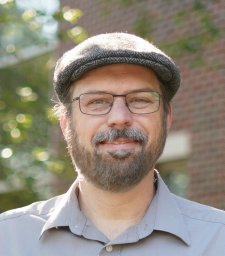 Jason W Morphew合作论文数Sch Engn Educ, Purdue Univ1
 Christina Krist合作论文数Department of Curriculum & Instruction, College of Education, University of Illinois at Urbana-Champaign1
 Joe Redish合作论文数Department of Physics, University of Maryland1
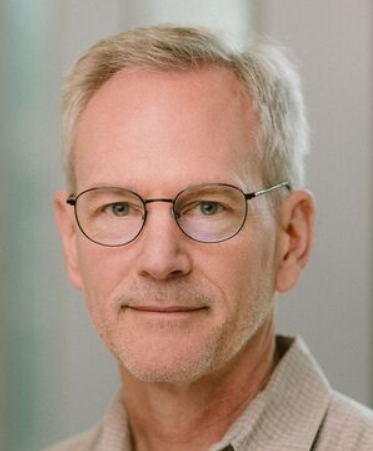 Andrew F. Heckler合作论文数Department of Physics, College of Arts and Sciences, The Ohio State University1Carol M. Greco合作论文数1
 Angela W. Little合作论文数University of London Institute of Education1




