An abstract is not available for this content so a preview has been provided. Please use the Get access link above for information on how to access this content.
LIST OF FIGURES ix ACKNOWLEDGMENTS xi INTRODUCTION 1 PART I: THE JEWISH "RACE" IN AMERICA, 1875-1895 CHAPTER 1: "Different Blood Flows in Our Veins": Race and Jewish Self-Definition in Late-Nineteenth-Century America 11 PART II: JEWS IN BLACK AND WHITE, 1896-1918 CHAPTER 2: The Unstable Other: Locating Jews in Progressive Era American Racial Discourse 35 CHAPTER 3: "Now Is the Time to Show Your True Colors": The Jewish Approach to African Americans 51 CHAPTER 4: "What Are We?":Jewishness between Race and Religion 86 PART III: CONFRONTING JEWISH DIFFERENCE, 1919-1935 CHAPTER 5: Race and the "Jewish Problem" in Interwar America 119 CHAPTER 6: "A White Race of Another Kind"? 138 CHAPTER 7: Wrestling with Racial Jewishness 165 PART IV: FROM OLD CHALLENGES TO NEW, 1936-1950 CHAPTER 8: World War II and the Transformation of Jewish Racial Identity 189 EPILOGUE: Jews, Whiteness, and "Tribalism" in Multicultural America 209 NOTES 241 INDEX 293
This article explores family networks as an understudied yet crucial feature of the social life of small-town Jews in the Russian Empire, focusing in particular on the Lithuanian town of Darbenai. Family networks allowed Jews to function successfully in the "frontier" environment of the small-town setting, enabling them both to pursue economic opportunity across entire regions and to protect themselves against the challenges of living at a distance from large urban centers. Jews of different classes and genders all relied on family networks, albeit in ways that reflected their varied interests and positions within small-town societies. By revealing the geographical mobility, interaction among cultures, and constant social and economic change that characterized Jewish life in small towns, the study of family networks powerfully challenges the mythology of the "shtetl" that has frequently informed our understanding of these locales.
Rabbis from Isaac Mayer Wise and Louis Ginzberg to Morris N. Kertzer have had a major impact on their Jewish followers and on American society, but the fact that most readers will not know their names or anything about the nature of their influence testifies to the limited notice that the public culture of American Jews has received in historical scholarship. These two studies, one by a veteran scholar of the American Jewish experience and one by a rising star in the field, help fill the gap by together documenting more than a century of public discourse and self-presentation by Jews, assessing the role that rabbis—and in the case of Lila Corwin Berman, the social scientists who ultimately supplanted them as shapers of Jewish public identity—played in both the American and American Jewish worlds. Naomi W. Cohen's What the Rabbis Said focuses on the public discourse of American rabbis during the six decades after 1840, when the rabbinate first emerged as a recognizable profession in the United States. While figures such as Wise, Isaac Leeser, David Einhorn, and Sabato Morais are well known to students of American Jewish history and many of them have been subjects of full-length biographies, no previous scholar had explored them collectively to assess the roles they played, the influence they wielded, and the rhetorical strategies they employed. Cohen is particularly well suited for this task, having written some of the seminal works on nineteenth-century American Jewish life. This book brings together many strands of her previous work, since she presents the rabbi as a “pivotal figure” who guided and shaped the multifaceted communal life of American Jewry in its formative stages (p. 1).
Firefighters (FF) routinely perform arduous work in extreme environmental temperatures, thus they require protective clothing. However, the weight and encapsulating nature of the clothing can add to the thermal and cardiovascular strain of a firefighter. PURPOSE: The purpose of this study was to examine the effect of fire fighting gear on the physiological and perceptual responses to an acute bout of fire fighting activity. METHODS: Male FF (N=50) between the ages of 18-50 yrs who were free of known cardiovascular disease participated in 18 minutes of simulated fire fighting activity (stair climbing, forcible entry, searching, advancing a line) in a training structure that contained live fires. Participants were assigned to one of two gear ensembles: standard (n=25) or enhanced (n=25), both of which meet NFPA 1971 standards. The standard gear (avg. wt. 11 kg) consisted of bunker gear with a spun Nomex® lining, a Kevlar fully-encapsulating hood, leather gloves, rubber boots and a traditional-style helmet. The enhanced gear (avg. wt. 8.6 kg) consisted of bunker gear with an Indura FR cotton lining, which circulated exhaled air from the firefighter to the coat's inner lining, a Nomex® hood, a low-profile helmet, leather gloves, and lightweight leather boots. Physiological and perceptual measures were obtained immediately before and after fire fighting activities. RESULTS: There was no significant difference between the descriptive measures (age, ht, wt, BMI) of fire fighters assigned to the two gear ensembles. Performing fire fighting activity resulted in significant increases in HR (~80 b·min-1), Tco (~1.2oC), and Tskin-arm (~5.1oC), but there were no significant differences between the increases observed in the two gear ensembles. Perceptions of temperature (using a thermal sensations scale) and respiration (using a respiratory distress scale) increased significantly as a result of fire fighting activity, but there was no difference between post firefighting values, nor were there any differences in RPE post firefighting, as a function of gear ensemble. CONCLUSION: Fire fighting resulted in significant physiological and perceptual changes; however, the effects of the gear ensemble were small compared to the effects of the fire fighting activity itself. This study was supported by DHS AFG EMW-2006-FP-02459
Journal Article Jews and the American Soul: Human Nature in the Twentieth Century Get access Jews and the American Soul: Human Nature in the Twentieth Century. By Heinze Andrew R.. (Princeton: Princeton University Press, 2004. xviii, 438 pp. $29.95, isbn0-691-11755-1.) Eric L. Goldstein Eric L. Goldstein Emory UniversityAtlanta, Georgia Search for other works by this author on: Oxford Academic Google Scholar Journal of American History, Volume 94, Issue 1, June 2007, Pages 238–239, https://doi.org/10.2307/25094803 Published: 01 June 2007
on February 21, 1954, a distinguished group of scholars and laypeople gathered at dropsie college in downtown Philadelphia for the fifty-second annual meeting of the American Jewish Historical society (AJHs). As luminaries such as salo W. Baron and Jacob rader Marcus sat listening, a young speaker named saul Viener delivered a paper on “the Political career of isidor straus,” distilled from a Master’s thesis he completed seven years earlier at the University of West Virginia.1 Few of the people in the room could have imagined the important role that relatively unknown speaker would come to play over the next half century in their organization and in the study and preservation of the American Jewish past. By the time of saul Viener’s death in Atlanta on July 25, 2006, he had not only become one of the major figures in the history of the AJHs, but was also considered the founding father of its daughter organization, the southern Jewish Historical society. saul Viener was born on March 2, 1921, in charles town, West Virginia, where his Lithuanian immigrant parents were engaged in the scrap metal business. His hometown, where George Washington’s brother had lived and where abolitionist John Brown had been tried for treason, provided a setting that encouraged Viener’s early fascination with American history. At the same time, the rigors of maintaining Jewish customs and social ties in a small community like charles town impressed upon him the importance of preserving his Jewish heritage.2 Viener received his B.A. from shepherd state college in shepherdstown, West Virginia, where he majored in education. From 1942 to 1945, he served the U.s. navy as a staff communications officer in Brisbane, Australia, where he married Jaqueline Wolman, the daughter of the local rabbi. After returning with his wife to the United states and finishing his military service in Florida, Viener continued his education, entering a graduate program in American history at the University of West Virginia. His faculty adviser, political historian Festus P. summers, encouraged him to work on a Jewish topic, suggesting that he write his thesis about isidor straus, the U.s. congressman and Macy’s department
The Politics and Public Culture of American Jews. By Arthur A. Goren. Bloomington, IN: Indiana University Press, 1999. xi + 274 pp.
"Every culture is haunted by its other," explains Jacques Derrida, suggesting, as theorists have before him, that the formation of national and cultural identities has always entailed the drawing of a line between those who belong and those who do not. According to Derrida and other theorists of identity, the process of alterity—of marking one's own group off from those who are seen as different—is a central component of group self-definition. By marginalizing and excluding the "other," the shape and boundaries of a group's own identity come into focus. As a binary opposition to the "self," the "other" becomes the symbol for all of the fears, anxieties and negative images from which the dominant group wishes to disassociate itself and thereby reinforce its own positive identity. 1 This understanding of "otherness" is compelling from a philosophical standpoint because it unmasks the ideological nature of the rigid hierarchies that have shaped Western thought and determined the power relations between dominant and oppressed groups. It allows us to see that negative projections of marginalized groups—constructions of "otherness"—actually tell us far more about the dominant society and its efforts to maintain hegemony than they do about the social "reality" of the subject group. 2 In using the notion of otherness as a model for historical research and writing, however, one must keep in mind that a strict binarism—in this case, the notion that each society has its one defining "other"—is too simplistic to effectively convey the complex ways in which marginalization has functioned. In diverse societies, there are usually multiple "others" onto which the dominant group projects its fears and anxieties and against which they construct their own self-understanding. In the United States, for example, where "race" has often been one of the central arbiters of "otherness," there have been a multiplicity of groups—Native Americans, Asians, Latinos, and European immigrant [End Page 383] groups in addition to African Americans—who have been constructed, in different ways, as racially different from the majority society. Unfortunately, however, despite the actual diversity of these racial "others," much of the writing of American historians on marginalized racial and ethnic groups tends to employ a binary understanding of race that emphasizes the black-white dichotomy exclusively. This approach not only fails to capture the diversity of groups against which native-born, white Americans constructed their identities, but it also misses the important interconnections that existed between the marginalization of these various "others." 3 Thus, in order to rescue the study of otherness and identity formation from oversimplification, historians must examine the constantly shifting ways in which the societies they document produced their "others" (in the plural). In recent years, there has been growing attention focused on the way in which Irish, Italians, Jews and other immigrant groups who arrived in the United States during the nineteenth and early twentieth centuries were often considered distinct "races" and were not always classified as white. While this new focus of American historiography should serve to underscore the shortcomings of a model that understands racial otherness in America as purely a matter of color, regrettably, even the few scholars who have broken new ground in this direction have not been able to move beyond the categories of black and white as the main criteria in defining what "otherness" means. Rather than identifying the distinctive reasons these groups were judged to be racially different and exploring the particular anxieties they themselves raised for native-born Americans, these writers simply argue that immigrants were deemed "other" because they resembled African Americans in important ways. David Roediger's inventory of anti-Irish sentiments in the nineteenth century, for example, focuses on images of the Irish as "niggers turned inside out" (and conversely the notion of African Americans as "smoked Irishmen"), but downplays those anti-Irish images that do not fit neatly into a black-white understanding of...
Necrology: John J. Appel, 1921–1998 Eric L. Goldstein In January 1956, Jacob Rader Marcus, editor of American Jewish Archives, placed a brief notice in that journal asking readers to help a young scholar who was interested in collecting material on the Jews as characters in American fiction and drama. The scholar was John J. Appel, an instructor at the University of Miami, who had just published his first major article—a piece dealing with the image of the Jew in the works of Henry Wadsworth Longfellow—in the Publications of the American Jewish Historical Society. 1 Over the next four decades, Appel built a career based on the belief that images of Jews and other ethnics in American literary and cultural production were key sources for understanding the impact of the immigrant experience. As an historian with a folklorist’s nose for innovative source material and an interest in a broad range of immigrant groups, Appel was recognized at the time of his death on April 6, 1998 as a leading authority in the field of ethnic representation in American culture. John J. Appel was born in Weimar, Germany on August 11, 1921. He immigrated to the United States at the age of sixteen, leaving behind a family that would perish in the Holocaust. Appel embraced his adopted country, fighting with the United States Army in the Pacific during World War II, and then delving into the study of American history and literature at the University of Miami, where he received his BA (1949) and MA (1951) degrees. After graduation, he taught at both his alma mater and in the Dade County (Fla.) public schools, and later at Essex Community College in Maryland. He also served as director of adult education at the Jewish Community Center in Baltimore. Having decided on a career in teaching and scholarship, Appel completed his doctoral work in American Civilization at the University of Pennsylvania in 1960, specializing in the history of American ethnic groups. His dissertation, completed under the direction of Prof. Thomas C. Cochran, explored the founding of the first American immigrant historical societies—including the American Jewish Historical Society—during the late nineteenth century. Appel challenged immigration historian Marcus Lee Hansen’s assertion that immigrant historical [End Page 445] societies were part of a third-generation return to an ethnic identity cast off by the second generation in their quest for Americanization. Instead, he argued, the founders of immigrant historical societies were primarily concerned with revising exclusive definitions of American nationality and improving their own image in American society, rather than with constructing particularist histories of their ethnic communities. 2 By critically examining the motives of these early immigrant historical societies, Appel identified with a new breed of ethnic historian that eschewed filiopietism and hoped to bring the study of ethnicity into the mainstream of American historical scholarship. As an active member of the American Jewish Historical Society, he helped to professionalize the organization, planning and participating in several of the joint sessions between the Society and the American Historical Association during the 1960s. In 1962, Appel began his long career at Michigan State University, serving as a professor of American Thought and Language for almost thirty years and establishing himself as an important scholar in the field of immigration and ethnic history. While he frequently focused on the experience of American Jews, he wrote with equal authority on groups such as the Irish and African Americans, sometimes using his wide expertise as the basis for comparative analysis. His 1971 source reader, The New Immigration, brought together an impressive array of original documents on immigration history for use in the college classroom. 3 In an era increasingly dominated by social scientific scholarship, Appel’s approach was that of a cultural historian. With his sensitivity to the importance of popular sources and the use of language and visual representations by both immigrant groups and the dominant society, he anticipated in many ways the cultural studies methodologies of today’s academy. As a result, Appel enlivened American Jewish history with explorations of unconventional topics such as the nicknames Jewish immigrants gave to their Irish counterparts, the role Christian Science [End Page 446] played...
“Different Blood Flows in Our Veins”: Race and Jewish Self-Definition in Late Nineteenth Century America Eric L. Goldstein (bio) In the modern world Jews have been preoccupied with finding proper terms to describe their Jewishness. During the centuries when they were isolated from social contact with gentiles they had little reason to reflect on the nature of Jewish identity. But as Jews integrated into the societies of Europe and America, questions concerning their group status arose with greater frequency. Without the “ghetto” walls to define them they had to rely on their own power of articulation to clarify who they were and how they were different from their non-Jewish neighbors. While Jews responded to these challenges in different ways, one thing is certain: Jewishness no longer remained an all-encompassing way of life as it had been in premodern days. Instead, it became only one component of the identity of modern Jews, and Jewish loyalties were emphasized or obscured under the pull of other vital commitments. Whether Jews described themselves as a nation, a race, or merely a religious group depended upon the opportunities and pressures presented by their participation in the wider world. 1 The present essay examines how American Jews employed the language of race in defining Jewishness during the last three decades of the nineteenth century. By “race” nineteenth-century Jews meant something different from “ethnicity” in its present usage. Their conception of Jewish distinctiveness was one rooted not only in cultural particularity but in biology, shared ancestry and blood. Such overt racial discourse has usually been treated by modern Jewish historians as the province of anti-Semites; few studies have explored the ways that Jews themselves used [End Page 29] racial language as a positive form of self-expression. 2 But American Jews drew comfort from a racial self-definition during the late nineteenth century because it gave them a sense of stability at a time when many familiar markers of Jewish identity were eroding. In addition, despite its strong biological thrust, the racial definition of Jewishness did not impede Jews’ identification with American society and institutions. Racial categories were well accepted in America, and the often respectable ranking Jews received made them feel comfortable expressing their communal bonds in terms of race. Race, then, fit the needs of Jews to define themselves in a changing social landscape, allowing for emotional security and a degree of communal assertiveness while also conforming to American conventions. The Setting: Shifting Social Boundaries The social conditions which promoted the use of race in defining Jewishness in America did not emerge until the 1870s. Before that decade American Jews preferred a self-description which furthered their unimpeded acculturation into American life. During the nineteenth century American Jews—largely immigrants from Central Europe—enjoyed a level of inclusion in society unparalleled in Jewish history. While Jews in many European countries had obtained the same rights as other citizens, their exclusion from certain national institutions often prevented them from being seen as authentic Germans, Frenchmen or Englishmen. By contrast, America had no royal family, no established church, no landed aristocracy; its national culture was more fluid, diverse, and open to new influences. Under these circumstances Jews felt themselves to be an integral part of American society and adopted American ways with zeal. They changed their habits of dress, their language, their dietary and leisure practices, and even their mode of worship to conform to American styles. They described themselves as a religious community because they felt such a description would ease their adaptation to a country that respected religious diversity. Rabbi Isaac Mayer Wise, a champion of Americanization and the emerging spokesman for the [End Page 30] country’s Jews, expressed this sentiment in 1859: “We are Jews in the synagogue and Americans everywhere.” 3 If Jews were anxious for Americanization, they did not pursue it with a rigidly ideological consistency. As Hasia Diner had explained, in the minds of average Jews, ‘“American’ and ‘Jewish,’ ‘modern’ and ‘traditional,’ ‘religious’ and ‘secular’ did not represent antithetical forces.” While publicly Jews stressed their identity as a religious group, they continued to spend their leisure hours with other Jews, marry other Jews, and express...
Volume I: A Time for Planting: The First Migration, 1654-1820 In the autumn of 1654, twenty-three Jews aboard the bark Sainte Catherine landed at the town of New Amsterdam to establish the first permanent Jewish settlement in North America. In A Time for Planting, Eli Faber recounts these earliest days of Jewish life in America, as Jews from Lisbon to Amsterdam to London extended the wanderings of their centuries-old diaspora.
 Eli Faber合作论文数1
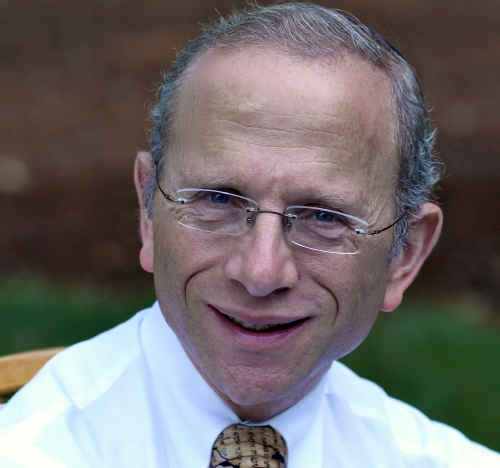 Jonathan D. Sarna合作论文数Department of Near Eastern & Judaic Studies, Brandeis University;National Museum of American Jewish History;Jacob Rader Marcus Center of the American Jewish Archives1David S. Koffman合作论文数1
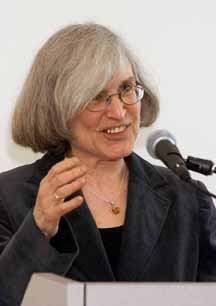 Hasia R. Diner合作论文数Department of Religious Studies, College of Arts & Science, New York University1
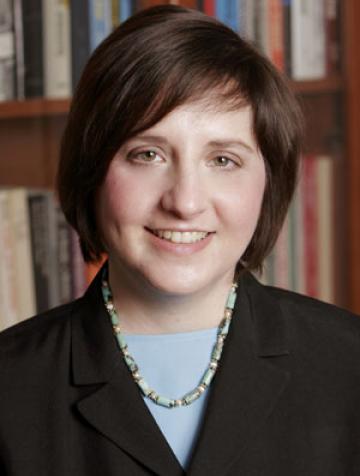 Beth S. Wenger合作论文数Department of History, School of Arts & Sciences, University of Pennsylvania1
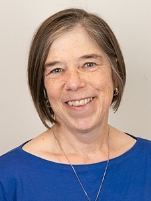 Denise L. Smith合作论文数First Responder Health and Safety Laboratory, Skidmore College;Health and Human Physiological Sciences Department, Skidmore College1Gavin Horm合作论文数1Steve Petruzello合作论文数1




