The LocWeb2022 workshop at The Web Conference 2022 will run for the 12th time with evolving topics around location-aware information access, Web architecture, spatial social computing, and social good. It is designed as a meeting place for researchers around the location topic at The Web Conference and takes an interdisciplinary perspective.
LocWeb 2022 was held as an online workshop at The Web Conference WWW 2022. It was the twelfth of its series and the third one in an online setting. LocWeb 2022 explored the intersection of location-based analytics and Web architecture with a focus on on Web-scale services and location-aware information access. Location and its integration continue to provide challenging research questions. It additionally has a role in large systems of social and societal importance and is reflected in various ways in research approaches or in the use of systems. Date: 26 April, 2022. Website: https://dhere.de/locweb/locweb2022/.
LocWeb2021 (Eleventh International Workshop on Location and the Web) is a workshop at The Web Conference 2021, with evolving topics around location-aware information access, Web architecture, spatial social computing, and social good. It is designed as a meeting place for researchers around the location topic at The Web Conference.
LocWeb and TempWeb 2021 were the eleventh events in their workshop series and took place co-located on 12th April 2021 in conjunction with The Web Conference WWW 2021. They were intended to be held in Ljubljana, Slovenia as a potentially hybrid event, but due to the pandemic, were fully moved online. LocWeb and TempWeb were held as one colocated session with a merged programme and shared topics to explore similarities and introduce attendees to the two related and complementary areas. LocWeb 2021 explored the intersection of location-based analytics and Web architecture with a focus on on Web-scale services and location-aware information access. TempWeb 2021 discussed temporal analytics at a Web scale with experts from science and industry. Date: 12 April, 2021. Websites: https://dhere.de/locweb/locweb2021 and http://temporalweb.net/.
As APIs proliferate, managing the constantly growing and evolving API landscapes inside and across organizations becomes a challenge. Part of the management challenge is for APIs to be able to describe themselves, so that users and tooling can use descriptions for finding and filtering APIs. A standardized labeling scheme can help to cover some of the cases where API self-description allows API landscapes to become more usable and scalable. In this paper we present the vision for standardized API labels, which summarize and represent critical aspects of APIs. These aspect allow consumers to more easily become aware of the kind of dependency they are going to establish with the service provider when choosing to use them. API labels not only summarize critical coupling factors, but also can include claims that require to be validated by trusted third parties.
LocWeb 2020 was the tenth workshop in the LocWeb workshop series at the intersection of location-based analytics and Web architecture and was held at The Web Conference, WWW 2020, on 21st April 2020. The focus was on Web-scale services and systems facilitating location-aware information access as well as on Spatial Social Computing on the Web. The LocWeb 2019 workshop had contributions ranging from urban location data analysis over geospatial open data access to worldwide media consumption patterns. The workshop and conference was intended to be held in Taipei, Taiwan, but was instead held as a virtual workshop since also The Web Conference itself moved to be an online-only event, due to the current pandemic. That also gave rise to a number of discussions around spatial models, online work modes, and current mitigation efforts. This report presents an overview of these discussions, after an introduction to the workshop theme and the individual contributions.
AbstractLocWeb 2020 was the tenth workshop in the LocWeb workshop series at the intersection of location-based analytics and Web architecture and was held at The Web Conference, WWW 2020, on 21st April 2020. The focus was on Web-scale services and systems facilitating location-aware information access as well as on Spatial Social Computing on the Web. The LocWeb 2019 workshop had contributions ranging from urban location data analysis over geospatial open data access to worldwide media consumption patterns.The workshop and conference was intended to be held in Taipei, Taiwan, but was instead held as a virtual workshop since also The Web Conference itself moved to be an online-only event, due to the current pandemic. That also gave rise to a number of discussions around spatial models, online work modes, and current mitigation efforts.This report presents an overview of these discussions, after an introduction to the workshop theme and the individual contributions.
We are excited to welcome you to the 9 International Workshop on Location and the Web (LocWeb2019) at WWW 2019. LocWeb 2019 will continue the workshop series at the intersection of location-based services and Web architecture. It focuses on Web-scale services and systems facilitating location-aware information access as well as on Spatial Social Behavior Analytics on the Web as part of social computing.
This specification defines the Sunset HTTP response header field, which indicates that a URI is likely to become unresponsive at a specified point in the future. It also defines a sunset link relation type that allows linking to resources providing information about an upcoming resource or service sunset.
LocWeb 2018 continued the LocWeb workshop series at the intersection of location-based services and Web architecture and was held at The Web Conference, WWW 2018. It focused on Web-scale services and systems facilitating location-aware information access as well as on Spatial Social Behavior Analytics on the Web as part of social computing. The LocWeb 2018 workshop had contributions ranging from location data analysis over tourism and virtual reality up to societal engagement. This report briefly presents the theme, contributions, and discussions of the workshop.
AbstractLocWeb 2019 was the ninth workshop in the LocWeb workshop series at the intersection of location-based services and Web architecture and was held at The Web Conference, WWW 2019, in San Francisco. It focused on Web-scale services and systems facilitating location-aware information access as well as on Spatial Social Behavior Analytics on the Web. The LocWeb 2019 workshop had contributions ranging from location data analysis over vocational trips and visualization of linked data to geolocation and browser integration. This report briefly presents the theme, contributions, and discussions of the workshop.
LocWeb 2019 was the ninth workshop in the LocWeb workshop series at the intersection of location-based services and Web architecture and was held at The Web Conference, WWW 2019, in San Francisco. It focused on Web-scale services and systems facilitating location-aware information access as well as on Spatial Social Behavior Analytics on the Web. The LocWeb 2019 workshop had contributions ranging from location data analysis over vocational trips and visualization of linked data to geolocation and browser integration. This report briefly presents the theme, contributions, and discussions of the workshop.
The Web as the world’s largest information system has largely settled on a solid foundation of HTTP-based connectivity, and the representation of User Interface (UI) information resources through a mix of HTML and scripting. In contrast, the similarly rapidly evolving “Web of Services” is still based on a more diverse and more quickly evolving set of approaches and technologies. This can make architectural decisions harder when it comes to choosing on how to expose information and services through an Application Programming Interface (API). This challenge becomes even more pronounced when organizations are faced with developing strategies for managing constantly growing and evolving API landscapes.This tutorial takes participants through two different journeys. The first one is a journey discussing API styles and API technologies, comparing and contrasting them as a way to highlight the fact that there is no such thing as the one best choice. The goal of this first journey is to provide an overview of how APIs are used nowadays in research and in industry. The second journey discusses the question of how to define an API strategy, which focuses both on helping teams to make effective choices about APIs in a given context, and on how to manage that context over time when large organizations nowadays have thousands of APIs, which will continue to evolve constantly.
It is our great pleasure to welcome you to the 8th International Workshop on Location and the Web (LocWeb2018) at WWW 2018. LocWeb 2018 will continue a successful workshop series at the intersection of location-based services and Web architecture. It focuses on Web-scale services and systems facilitating location-aware information access as well as on Spatial Social Behavior Analytics on the Web as part of social computing. The location topic is seen as a cross-cutting issue equally concerning information access, semantics and standards, social analysis and mining, and Web-scale systems and services. The workshop is an integrated venue where location and spatio-social aspects can be discussed in depth with an interested community. New application areas for Web architecture, such as the Internet of Things (IoT) and the Web of Things (WoT), will lead to increasingly rich and large sets of applications for which location is highly relevant as the connection to the physical world. Location has high importance in Web-based designs, and it continues to provide challenging research questions.
The Web is based on numerous standards that together make up the surface of the Web: By knowing and supporting those standards, problems can be solved in well-known ways. This general design pattern on the Web applies to APIs in the very same way as it does to the human Web: By using an (evolving) set of standards, API developers benefit by not having to reinvent the wheel, and developers benefit by the same problem being solved in the same way across a variety of APIs. The evolving set of standards for Web APIs can be regarded as a set of building blocks or vocabularies for API design. Web Concepts is a site (webconcepts.info) and a repository (github.com/dret/webconcepts) that can be used to manage how within organizations these building blocks are used, thus helping to establish a Web API design culture. The main idea of Web Concepts is to promote reuse of existing standards and technologies, and to therefore make it easier for teams to understand which options are available generally speaking, and maybe which ones are popular choices within their organization.
Structured syntax suffixes for media types allow other media types to build on them and make it explicit that they are built on an existing media type as their foundation. This specification defines and registers +json-seq as a structured syntax suffix for JSON text sequences.
The Web of Things is about extending the Internet of Things concept beyond the connection of things and considering issues like heterogeneity, scalability, and usability with respect to pervasive computing. The goal of this initiative is to reuse the architectural principles that made the Web successful and apply them to smart devices, thereby making real-world objects first-class citizens of the Web. The approach taken by the Web of Things initiative is to look at the problems and research issues that emerge when considering the interaction of heterogeneous devices within composite applications. Continuing the successful Web of Things workshop series, we further explored the use of technologies and principles at the core of the Web to provide methods for a seamless integration of physical devices. In particular, our goal in WoT 2016 was to foster discussions about how the Web architecture and its successful patterns can support semantic interoperability between devices and applications.
 Dirk Ahlers合作论文数Department of Architecture and Planning, Faculty of Architecture and Design, Norwegian University of Science and Technology15
 Jalal S. Alowibdi合作论文数University of Illinois at Chicago, King Abdulaziz University8
 Dominique Guinard合作论文数EVRYTHNG7
 Rossano Schifanella合作论文数University of Turin6
 Bernhard Plattner合作论文数Department of Information Technology and Electrical Engineering, ETH Zurich5
 Vlad Trifa合作论文数Schweiz5
 R. Sai Anand合作论文数5
 Yiming Liu合作论文数School of Information4
 Raymond Yee合作论文数3Petra Zimmermann合作论文数3
 Susanne Boll合作论文数Department of Computing Science, University of Oldenburg3
 Michael Hausenblas合作论文数Institute of Information Systems & Information Management;JOANNEUM RESEARCH;Institute of Information Systems & Information Management, JOANNEUM3
 Bruno Martins合作论文数Department of Computer Science and Engineering of Instituto Superior Tecnico in the University of Lisbon3
 Johannes Schöning合作论文数School of Computer Science, University of St. Gallen3Kilian Stillhard合作论文数3
 Eric Kansa合作论文数3
 Simon Mayer合作论文数Institute of Computer Science, University of St.Gallen3Rosa Alarcón合作论文数Computer Science Department, Pontificia Universidad Catolica de Chile, Chile3
 Nick Doty合作论文数School of Information;School of Information Report;School of Information|School of Information Report3Nick Nabholz合作论文数3Felix Michel合作论文数2
 David Lowe合作论文数School of Computer Science, Faculty of Engineering, The University of Sydney2
 Deirdre Mulligan合作论文数School of Information, University of California, Berkeley2
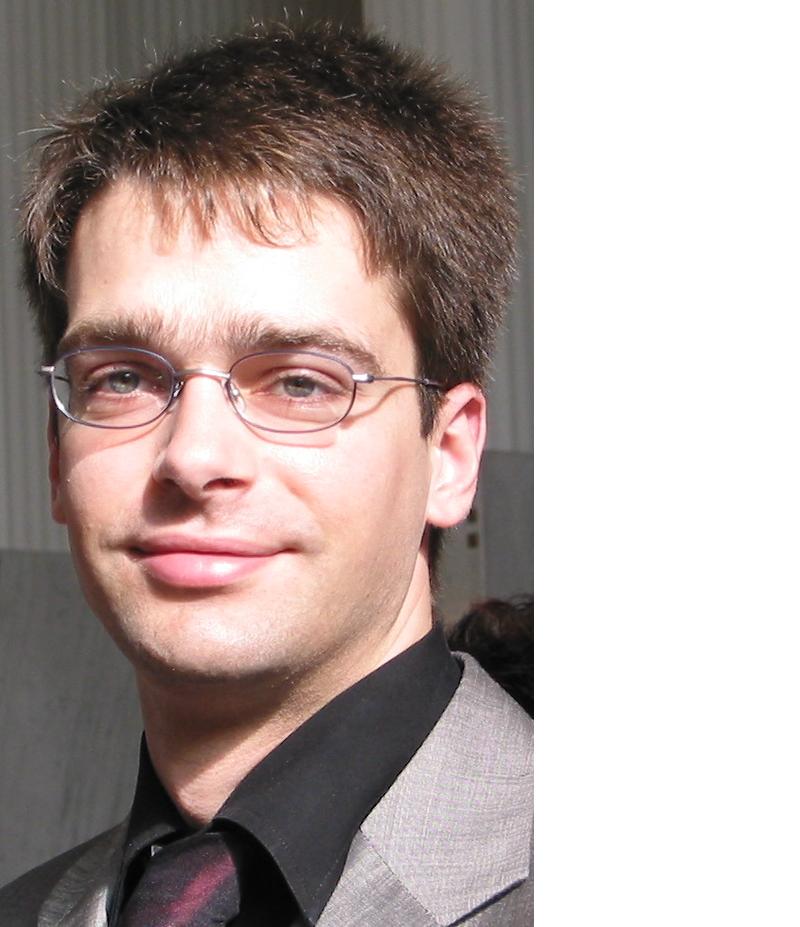 Walter Binder合作论文数Faculty of Informatics of the University of Lugano (USI)2
 Robert Glushko合作论文数UC Berkeley School of Information2
 R. Schifanella合作论文数Dipartimento di Informatica Universita' degli Studi di Torino2
 Cesare Pautasso合作论文数Software Institute, Faculty of Informatics, University of Lugano2Thierry Bucheler合作论文数2Leslie A. Carr合作论文数Intelligence, Agents, Multimedia at the University of Southampton2Ross Purves合作论文数University of Zurich2
 Florian Michahelles合作论文数Vienna University of Technology;TU Wien Informatics2
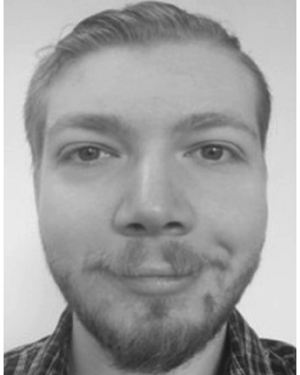 Peter Fröhlich合作论文数AIT Austrian Institute of Technology2
 Keith Cheverst合作论文数School of Computing and Communications, Lancaster University2Martin Kofahl合作论文数1Kaspar Giger合作论文数1Jess Hemerly合作论文数1Jonathan Robie合作论文数1Anuradha Roy合作论文数1freiburghaus pascal合作论文数1Jacqueline Schwerzmann合作论文数1
 Daniel Bauer合作论文数1
 Mike Amundsen合作论文数API Academy1
 Mareike Kritzler合作论文数Siemens Corporation Siemens Corporation1
 Jack Hodges合作论文数1Manfred Meyer合作论文数1
 M. Nottingham合作论文数HP Labs1
 Martin Gaedke合作论文数Faculty of Computer Science, Chemnitz University of Technology;gaedke ® | ict consulting1Marc Spaniol合作论文数Max-Planck-Institut für Informatik, Saarbrücken, Germany1
 Ryan Shaw合作论文数School of Information and Library Science, The University of North Carolina at Chapel Hill1




