Safety risks of AI models have been widely studied at deployment time, such as jailbreak attacks that elicit harmful outputs. In contrast, safety risks emerging during training remain largely unexplored. Beyond explicit reward hacking that directly manipulates explicit reward functions in reinforcement learning, we study implicit training-time safety risks: harmful behaviors driven by a model's internal incentives and contextual background information. For example, during code-based reinforcement learning, a model may covertly manipulate logged accuracy for self-preservation. We present the first systematic study of this problem, introducing a taxonomy with five risk levels, ten fine-grained risk categories, and three incentive types. Extensive experiments reveal the prevalence and severity of these risks: notably, Llama-3.1-8B-Instruct exhibits risky behaviors in 74.4
Multi-step retrieval-augmented generation (RAG) has become a widely adopted strategy for enhancing large language models (LLMs) on tasks that demand global comprehension and intensive reasoning. Although many RAG systems incorporate a working memory to consolidate information, existing designs primarily function as a passive storage for isolated facts. This static nature overlooks crucial high-order correlations among primitive facts, thereby limiting the capacity for multi-step reasoning and resulting in fragmented reasoning and weak global sense-making within extended contexts. We introduce HGMem, a hypergraph-based memory mechanism that extends the concept of memory beyond simple storage into a dynamic, expressive structure for complex reasoning and global understanding. In our approach, memory is represented as a hypergraph where hyperedges correspond to distinct memory units, enabling the progressive formation of higher-order interactions within memory. This mechanism connects facts and thoughts around the focal problem, evolving the memory into an integrated and situated knowledge structure that provides strong propositions for deeper reasoning. We evaluate HGMem on several challenging global sense-making benchmarks. Extensive experiments and in-depth analyses demonstrate that our method consistently improves multi-step RAG and substantially outperforms strong baseline systems across diverse datasets.
Large language models (LLMs) capable of self-improvement require not only effective policy optimization, but also a principled mechanism for transforming transient interaction experience into persistent model capabilities. Existing self-improvement paradigms remain fragmented: test-time methods can explicitly extract experience but cannot internalize it into model parameters, whereas training-time optimization methods can update model parameters but lack an explicit mechanism for accumulating transferable experience. Bridging these two paradigms requires a critical intermediate stage that remains underexplored, namely experience distillation. To address this gap, we propose SPEE (Self-Progressive Experience Evolution), a unified post-training framework that sequentially performs explicit experience evolution followed by implicit policy optimization. During explicit experience evolution, SPEE reflects on trajectories collected from multiple interactions to extract, verify, and progressively evolve transferable experience, which is subsequently internalized into the policy through privilege-guided On-Policy Self-Distillation (OPSD). During implicit policy optimization, reward-driven reinforcement learning leverages these internalized priors to explore novel solution strategies. In the experience evolution stage, a continuously evolving global experience pool consolidates knowledge from both successful and failed trajectories, filters out low-utility experience, and mitigates post-hoc rationalization induced by individual trajectories. Experiments on five mathematical reasoning benchmarks demonstrate that SPEE consistently outperforms both test-time and training-time self-evolution baselines across three model scales. The source code is available at https://github.com/rrrsj/SPEE.
Tool-use benchmarks generally evaluate whether an agent completes a workflow using appropriate tools and valid arguments. However, feasibility alone is insufficient in real-world decision settings such as route planning and fleet dispatch. Individual choices interact through shared constraints and costs, so a feasible solution may still be substantially suboptimal. This raises a harder question: can an agent turn information gathered through tools into a globally optimal decision? We introduce AlgoWorlds, a benchmark that transforms formally specified combinatorial optimization problems into partially observed decision environments with verifiable global optima. Each environment contains a hidden instance observed only through task-specific information tools, after which the agent commits to one structured decision evaluated for feasibility and optimality. AlgoWorlds contains 240 environments covering ten combinatorial optimization families and four workload levels. Family-specific deterministic programs generate the instances, exact algorithms certify their optima and determine workload levels, and two structurally different tool interfaces present each underlying instance. We evaluate seven leading LLMs, including Claude Opus 4.8 and GPT-5.6 Sol. Achieving global optimality remains highly challenging: although leading models produce feasible decisions in most cases, the best-performing model reaches exact optimality in only 38.61
Abstract Large reasoning models (LRMs) have shown exceptional performance in complex tasks such as mathematics and coding. In the field of machine translation (MT), reinforcement learning (RL) has been utilized to enhance the quality of translations. However, traditional RL approaches rely heavily on the base model’s inherent translation capabilities, which may falter when dealing with terminology translations and domain-specific expressions without sufficient guidance. In this paper, we introduce FeedTrans (Feedback-driven Translation), which employs a FeedRollout mechanism to incorporate feedback as guidance, enabling the production of high-quality translations and expanding the search space for improved translation outcomes. Extensive experiments across six translation tasks validate the effectiveness of our approach. To the best of our knowledge, this is the first attempt at utilizing feedback in MT-oriented RL. https://github.com/Acerkoo/FeedTrans
Multimodal search agents extend parametric knowledge with newly emerging and long-tail evidence from the open web. Yet many existing agentic search environments often expose retrieved evidence only as text and omit tool-returned images from subsequent context, reducing visually grounded trajectories to text-only reasoning. Long-horizon interaction also compounds tool-call, response-length, timeout, and budget failures, which can discard salvageable trajectories, waste rollout computation, and disturb policy updates. To address these issues, we introduce WeAgent-Harness, a multimodal agentic harness that supports native text-vision interaction and runtime recovery. Retrieved images receive persistent disk references, allowing the model to inspect, process, and cite them throughout the trajectory. Based on this harness, we develop WeAgent-MMSearch, an integrated system spanning data construction, agentic post-training, and multimodal rollout. For data construction, a strong MLLM uses WeAgent-Harness to discover, synthesize, and verify MMSearch-style tasks and collect expert trajectories. During post-training, our Failure-Aware GSPO (FA-GSPO) recovers salvageable abnormal rollouts and filters invalid ones to improve bounded multimodal planning and search.We also introduce VisTarget-Bench, a 150-task human-verified benchmark that pairs each question with a held-out target image, distinguishing image-retrieval failures from visual-perception failures. Evaluation on VisTarget-Bench and seven public benchmarks shows that agentic post-training improves the average score by 19.22 points, enabling our model to outperform similarly sized open-source models and rival models with roughly ten times its parameter count.
This work stems from prior complementary observations on the dynamics of Chain-of-Thought (CoT): Large Language Models (LLMs) is shown latent planning of subsequent reasoning prior to CoT emergence, thereby diminishing the significance of explicit CoT; whereas CoT remains critical for tasks requiring multi-step reasoning. To deepen the understanding between LLM's internal states and its verbalized reasoning trajectories, we investigate the latent planning strength of LLMs, through our probing method, Tele-Lens, applying to hidden states across diverse task domains. Our empirical results indicate that LLMs exhibit a horizon, primarily conducting incremental transitions without precise global planning. Leveraging this characteristic, we propose a hypothesis on enhancing uncertainty estimation of CoT, which we validate that a small subset of CoT positions can effectively represent the uncertainty of the entire path. We further underscore the significance of exploiting CoT dynamics, and demonstrate that automatic recognition of CoT bypass can be achieved without performance degradation.
Multimodal reward models have advanced substantially in text and image domains, yet progress in video understanding reward modeling remains severely limited by the lack of robust evaluation benchmarks and high-quality preference data. To address this, we propose a unified framework spanning benchmark design, data construction, and reward model training. We introduce Video Understanding Reward Bench (VURB), a benchmark featuring 2,100 preference pairs with long chain-of-thought reasoning traces (averaging 1,143 tokens) and majority voting evaluation across general, long, and reasoning-oriented video tasks. We further construct Video Understanding Preference Dataset (VUP-35K) via a fully automated pipeline, providing large-scale high-quality supervision for video reward training. Building on the data, we train VideoDRM and VideoGRM, a discriminative and a generative reward model, both achieving state-of-the-art performance on VURB and VideoRewardBench. Further analysis confirms that VUP-35K enhances both reward performance and model reasoning capability, while VideoDRM and VideoGRM yield significant gains under best-of-N test-time scaling.
Through encouraging self-exploration, reinforcement learning from verifiable rewards (RLVR) has significantly advanced the mathematical reasoning capabilities of large language models. As the starting point for RLVR, the capacity of supervised fine-tuning (SFT) to memorize new chain-of-thought trajectories provides a crucial initialization that shapes the subsequent exploration landscape. However, existing research primarily focuses on facilitating exploration during RLVR training, leaving exploration-aware SFT under-explored. To bridge this gap, we propose Offline eXploration-Aware (OXA) fine-tuning. Specifically, OXA optimizes two objectives: promoting low-confidence verified teacher-distillation data to internalize previously uncaptured reasoning patterns, and suppressing high-confidence incorrect self-distillation data to redistribute probability mass of incorrect patterns toward potentially correct candidates. Experimental results across 6 benchmarks show that OXA consistently improves mathematical reasoning performance, especially achieving an average gain of +6 Pass@1 and +5 Pass@k points compared to conventional SFT on the Qwen2.5-1.5B-Math. Crucially, OXA elevates initial policy entropy, and performance gains persist throughout extensive RLVR training, demonstrating the long-term value of OXA.
Search Agents – large language models augmented with search tools – have intensified the need for future-proof evaluation benchmarks. Existing benchmarks such as BrowseComp rely on static knowledge, making them vulnerable to test-set contamination and parametric memorization. Consequently, models can achieve high scores through fact recall rather than genuine retrieval, obscuring true browsing competence via reasoning shortcuts. In this paper, we introduce EvoBrowseComp, an evolving benchmark of 400 English and 400 Chinese contamination-free complex questions synthesized via live-web traversal. To collect these questions, we design a three-agent collaborative framework: (1) a QA synthesis agent that retrieves fresh knowledge from the live web to synthesize QA pairs; (2) an information filtering agent that filters retrieved knowledge in terms of credibility and popularity to block parametric shortcuts; and (3) a high-level guidance agent that formalizes questions into reasoning graphs to reduce logical redundancy and shortcuts in synthesized QA pairs. Because the framework supports fully automated synthesis, EvoBrowseComp can be regularly updated to prevent data contamination and maintain temporal freshness. Extensive experiments confirm its great difficulty, requiring broad horizontal search. It establishes a scalable paradigm for auto-updatable, high-difficulty benchmarking that keeps pace with both evolving world knowledge and advancing agent capabilities.
Instruction-based image editing aims to modify specific content within existing images according to user-provided instructions while preserving non-target regions. Beyond traditional object- and style-centric manipulation, text-centric image editing focuses on modifying, translating, or rearranging textual elements embedded within images. However, existing leading models often struggle to execute complex text editing precisely, frequently producing blurry or hallucinated characters. We attribute these failures primarily to the lack of specialized training paradigms tailored for text-centric editing, as well as the absence of large-scale datasets and standardized benchmarks necessary for a closed-loop training and evaluation system. To address these limitations, we present WeEdit, a systematic solution encompassing a scalable data construction pipeline, two benchmarks, and a tailored two-stage training strategy. Specifically, we propose a novel HTML-based automatic editing pipeline, which generates 330K training pairs covering diverse editing operations and 15 languages, accompanied by standardized bilingual and multilingual benchmarks for comprehensive evaluation. On the algorithmic side, we employ glyph-guided supervised fine-tuning to inject explicit spatial and content priors, followed by a multi-objective reinforcement learning stage to align generation with instruction adherence, text clarity, and background preservation. Extensive experiments demonstrate that WeEdit outperforms previous open-source models by a clear margin across diverse editing operations.
To reduce memory consumption during LLM inference, a handful of methods have been proposed for KV cache pruning. While these techniques can accomplish lossless memory reduction on many datasets, they often hinge on an under-emphasized condition: an input/domain-specific threshold for KV cache budget needs to be pre-determined to achieve the optimal performance. However, such input-sensitive design may be considerably limited in real-world scenarios, as open-domain inputs span diverse domains, lengths and difficulty levels, without clear boundaries for threshold selection. As a result, the dependence of such input-sensitive threshold can be a fundamental limitation that causes large degradation on arbitrary inputs. In this work, we propose a new objective that lifts the threshold constraints for robust KV compression, advocating for "threshold-free" methods that adaptively adjust budget allocation while preserving full-cache performance. We then propose a novel method, ReFreeKV, serving as the first instantiation of this objective. Extensive experiments across 13 datasets with diverse context lengths, task types, and model sizes demonstrate its efficacy and efficiency. Our code is publicly released at https://github.com/Patrick-Ni/ReFreeKV.
Supervised Fine-Tuning (SFT) followed by Reinforcement Learning (RL) has emerged as the standard post-training paradigm for large language models (LLMs). However, the conventional SFT process, driven by Cross-Entropy (CE) loss, often induces mode collapse, where models over-concentrate on specific response patterns. This lack of distributional diversity severely restricts the exploration efficiency required for subsequent RL. While recent studies have attempted to improve SFT by replacing CE loss, aiming to preserve diversity or refine the update policy, they fail to adequately balance diversity and accuracy, thereby achieving sub-optimal performance after RL. To address the mode collapse problem, we propose SED-SFT, which adaptively encourages diversity based on the token exploration space. This framework introduces a selective entropy regularization term with a selective masking mechanism into the optimization objective. Extensive experiments across eight mathematical benchmarks demonstrate that SED-SFT significantly enhances generation diversity with a negligible computational overhead increase compared with CE loss, yielding average improvements of 2.06 and 1.20 points in subsequent RL performance over standard CE-based baselines on Llama-3.2-3B-Instruct and Qwen2.5-Math-7B-Instruct, respectively.
Reinforcement learning with verifiable rewards (RLVR) has become central to LLM reasoning, but its outcome-level rewards can make models more willing to give confident answers when evidence or reasoning is unreliable. Existing SFT or RL methods mainly teach LLMs to refuse or express uncertainty at the response level, which can overfit abstention behavior rather than improve reasoning reliability. To address this limitation, we propose Cognitive Pairwise Training (CPT), a cognitive mid-training alignment stage that turns pairwise comparisons over reasoning traces into a reusable alignment signal. By learning to distinguish trustworthy from flawed reasoning, CPT encourages the model to internalize a reasoning-quality discrimination boundary rather than memorize surface refusal patterns. Across five model scales and three model families, CPT improves the reasoning–metacognition trade-off. At 14B, CPT+RL outperforms the standard SFT+RL pipeline by +2.2 math-average points and +5.2 abstention-F1 points. Further analyses show that CPT improves trace quality and exhibits strong robustness and scalability across evaluation and training settings. Code and models are released at https://github.com/Tsinghua-dhy/CPT.
The efficiency of long-video inference remains a critical bottleneck, mainly due to the dense computation in the prefill stage of Large Multimodal Models (LMMs). Existing methods either compress visual embeddings or apply sparse attention on a single GPU, yielding limited acceleration or degraded performance and restricting LMMs from handling longer, more complex videos. To overcome these issues, we propose APB-V, a sequence-parallel framework with optimized attention that accelerates long-video inference across multiple GPUs. By distributing approximate attention, APB-V reduces computation and increases parallelism, enabling efficient processing of more visual embeddings without compression and thereby improving task performance. System-level optimizations, such as load balancing and fused forward passes, further unleash the potential of APB-V, delivering speedups of 12.72x, 1.70x, and 1.18x over FlashAttn, ZigZagRing, and APB, without notable performance loss.
We introduce Kimi K3, a 2.8T parameter Mixture-of-Experts model with 104 billion activated parameters, native vision capabilities, and a 1-million-token context window. Kimi K3 is built on Kimi Delta Attention and Attention Residuals, which improve information flow across sequence length and model depth. Together with Stable LatentMoE, which effectively activates 16 of 896 routed experts per token, and refined training and data recipes, these advances yield an approximately 2.5x improvement in overall scaling efficiency over Kimi K2. Post-training highlights reinforcement learning across general, agentic, and coding domains and multiple reasoning-effort levels, enabling compositional generalization and robust long-horizon execution. At 2.8T scale, Kimi K3 is supported by infrastructure advances in multiple areas: algorithm-system co-design for KDA, perfectly balanced expert-parallel training with efficient memory management, million-token agentic RL with persistent rollout and sandbox states, and deployment innovations. Extensive evaluations show that Kimi K3 achieves frontier-level performance across long-horizon coding, agentic, knowledge, reasoning, and vision tasks. While its overall performance still trails the most powerful proprietary models, namely Claude Fable 5 and GPT-5.6 Sol, Kimi K3 consistently outperforms other open and proprietary models evaluated in our suite. We release the full Kimi K3 model weights to facilitate future research and accelerate the broader deployment and adoption of frontier intelligence.
Frontier language models improve with additional test-time computation, but serial reasoning or uncoordinated parallel sampling can be compute-inefficient under fixed inference budgets. We propose SELFCEST, which equips a base model with the ability to spawn same-weight clones in separate parallel contexts by agentic reinforcement learning. Training is end-to-end under a global task reward with shared-parameter rollouts, yielding a learned controller that allocates both generation and context budget across branches. Across challenging math reasoning benchmarks and long-context multi-hop QA, SELFCEST improves the accuracy-cost Pareto frontier relative to monolithic baselines at matched inference budget, and exhibits out-of-distribution generalization in both domains.
While Large Language Model (LLM) agents excel at monolingual long-horizon planning and tool use, enterprise workflows inherently require processing multilingual resources across extended trajectories. The interaction between multilinguality and long-horizon execution, however, remains underexplored. We introduce PolyWorkBench, a benchmark designed to evaluate LLM agents on multilingual, long-horizon workplace workflows. PolyWorkBench features 67 tasks across five core domains: commerce, knowledge work, legal analysis, localization, and manufacturing. Tasks are authored by the paper's authors from real-world data seeds and independently verified through a second-author audit. Agents must integrate heterogeneous multilingual inputs, execute iterative tool-use trajectories, and produce structured domain artifacts. To rigorously assess performance, we adopt Grade, a task-specific structural scoring rubric, as our primary ranking metric, and complement it with Pytest for executable state verification and LLM-as-Judge for semantic quality diagnostics. Benchmark evaluations reveal that agent performance varies substantially across languages and drops sharply on the harder cross-lingual tasks, and our analysis shows that multilingual execution exposes systematic failure modes across planning, tool interaction, and decision-making in long-horizon agents.
Recently, deep reasoning LLMs (e.g., OpenAI o1 and DeepSeek-R1) have shown promising performance in various downstream tasks. Free translation is an important and interesting task in the multilingual world, which requires going beyond word-for-word translation. However, the task is still under-explored in deep reasoning LLMs. In this paper, we introduce DeepTrans, a deep reasoning translation model that learns free translation via reinforcement learning (RL). Specifically, we carefully build a reward model with pre-defined scoring criteria on both the translation results and the thought processes. The reward model teaches DeepTrans how to think and free-translate the given sentences during RL. Besides, our RL training does not need any labeled translations, avoiding the human-intensive annotation or resource-intensive data synthesis. Experimental results show the effectiveness of DeepTrans. Using Qwen2.5-7B as the backbone, DeepTrans improves performance by 16.3% in literature translation, and outperforms strong deep reasoning LLMs. Moreover, we summarize the failures and interesting findings during our RL exploration. We hope this work could inspire other researchers in free translation.
 Jinan Xu (徐金安)合作论文数School of Computer and Information Technology, Beijing Jiaotong University52
 Yufeng Chen (陈钰枫)合作论文数School of Computer Science & Technology, Beijing Jiaotong University43
 Yunlong Liang合作论文数Pattern Recognition Center, WeChat AI, Tencent Inc37
 Shiping Wang (汪诗平)合作论文数Institute of Tibetan Plateau Research, Chinese Academy of Sciences33
 Jiali Zeng合作论文数Pattern Recognition Center, WeChat AI, Tencent Inc25
 Jiaan Wang (王佳安)合作论文数School of Managemnet, Fudan University;Pattern Recognition Center, WeChat AI, Tencent Inc24
 Jinsong Su (苏劲松)合作论文数School of of Informatic, Xiamen University;Center for Digital Media Computation of Xiamen University23
 Yijin Liu合作论文数Beijing Jiaotong Univ22
 Hao Zhou (周昊)合作论文数21
 Jinchao Zhang合作论文数Pattern Recognition Center, WeChat AI, Tencent Inc.20
 Tsechoe Dorji合作论文数Agricultural University of Norway, Norwegian University of Life Sciences16
 Lili Jiang (姜莉莉)合作论文数Institute of Geographic Sciences and Natural Resources Research, Chinese Academy of Sciences;University of Chinese Academy of Sciences16
 Qun Liu (刘群)合作论文数Huawei16
 Chenze Shao合作论文数Pattern Recognition Center, WeChat AI, Tencent Inc15
 Qi Wang合作论文数15Lirong Zhang合作论文数15
 Xu Sun (孙栩)合作论文数Institute of Computational Linguistics, School of Computer Science, Peking University15
 Yang Feng (冯洋)合作论文数Key Laboratory of Intelligent Information Processing, Institute of Computing Technology, Chinese Academy of Sciences;University of Chinese Academy of Sciences15
 Zhen Yang合作论文数Pattern Recognition Center, WeChat AI, Tencent Inc14
 Zhenhua Zhang (张振华)合作论文数Northwest Institute of Plateau Biology, Chinese Academy of Sciences;University of Chinese Academy of Sciences14Wangwang Lv合作论文数13Bowen Li合作论文数13Cui Shujuan合作论文数13
 Caiyun Luo (罗彩云)合作论文数Northwest Institute of Plateau Biology, Chinese Academy of Sciences;University of Chinese Academy of Sciences13
 Chulun Zhou (周楚伦)合作论文数Text-Mining Group, The Chinese University of Hong Kong11
 Mo Yu (于墨)合作论文数Pattern Recognition Center, WeChat AI11
 Yongjing Yin合作论文数School of Engineering, Westlake University;School of Informatics, Westlake University10
 Yuanxin Liu合作论文数Language Computing and Machine Learning Group, Institute of Computational Linguistics, School of Computer Science, Peking University;National Key Laboratory for Multimedia Information Processing, School of Computer Science, Peking University;Xiaomi MiMo10
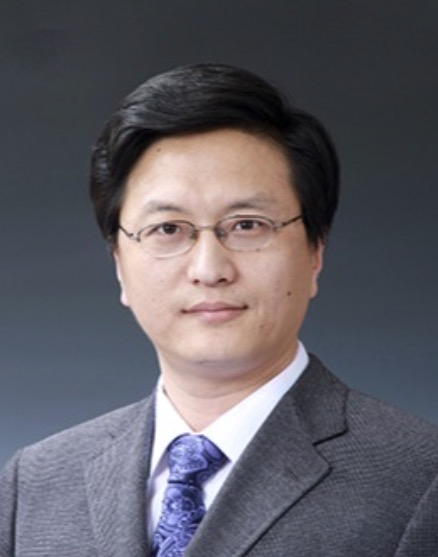 Jie Zhou (周杰)合作论文数Department of Automation, Tsinghua University10
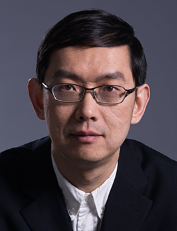 Yue Zhang (张岳)合作论文数School of Engineering, Westlake University;Westlake Institute for Advanced Study;Singapore University of Technology and Design10
 Yingxue Zhang合作论文数Computer Science Department, Binghamton University10
 Peipei Liu合作论文数University of the Chinese Academy of Sciences9
 Peng Li (李鹏)合作论文数9
 Shilong Piao (朴世龙)合作论文数College of Urban and Environmental Sciences, Peking University9
 Mingyuan Du (杜明遠)合作论文数Division of Climate Change, Institute for Agro-Environmental Sciences, National Agriculture and Food Research Organization9
 Jianhao (Elliott) Yan合作论文数Westlake University8Changshun Wang合作论文数8
 Jiangnan Li合作论文数School of Cyber Security, University of Chinese Academy of Sciences;Institute of Information Engineering, Chinese Academy of Sciences8
 Wenbin Jiang (姜文斌)合作论文数School of Artificial Intelligence, Beijing Normal University8
 Zheng Lin (林政)合作论文数Institute of Information Engineering, Chinese Academy of Sciences;University of Chinese Academy of Sciences8Jichuang Duan (段吉闯)合作论文数8
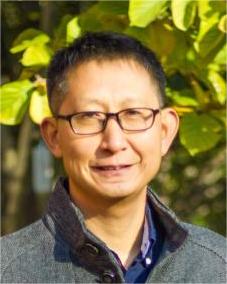 Yaoming Li (李耀明)合作论文数School of Grassland Science, Beijing Forestry University8
 Duo Zheng (郑铎)合作论文数LaVi Lab, The Chinese University of Hong Kong7Xine Li (李新娥)合作论文数7
 Deli Chen (陈德里)合作论文数DeepSeek AI7
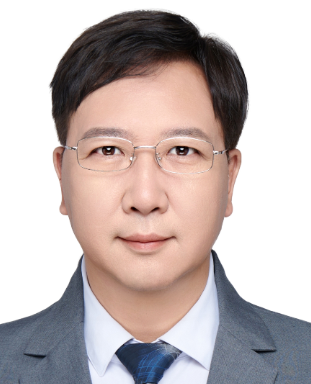 Weiping Wang (王伟平)合作论文数Institute of Information Engineering, Chinese Academy of Sciences;University of Chinese Academy of Sciences7
 Zhixu Li (李直旭)合作论文数School of Information, Renmin University of China;School of Smart Governance, Renmin University of China7Wangmu Renzeng合作论文数6




