This paper explores a number of initiatives of Curtin University’s Faculty of Humanities designed to respond to the changing tertiary environment, new opportunities for improving the student experience, and a growing recognition of the need to graduate globally competent citizens. It describes two initiatives: a new graduate degree aimed at producing globally-aware, interdisciplinarily competent, real-world-ready graduates; and a pilot project implementing challenge-based learning focused on topics relevant to sustainability, indigenous knowledge, learning, and global futures. In 2022, the Faculty introduced four capability platforms with the goal of breaking down disciplinary silos. These platforms are designed to experiment with new methods of learning and to enhance engagement and research opportunities. In a related move, the Faculty introduced a new Master of Global Engagement in 2024, which employs an innovative stacked structure combining a new Graduate Certificate in Global Engagement with existing Graduate Certificates to provide greater disciplinary flexibility and more global perspectives. Each initiative incorporates digital integration in multidisciplinary curriculum design, along with a range of other pedagogical innovations. This paper outlines the initiatives, the rationale and impetus driving these innovations, and initial reflections on their success.
More than two decades on, the shadow of 9/11 and the Bali bombings continues to linger over Australia and its small Muslim population. We posit this is due to an existential fear of both Islam and Muslims in the Australian imaginary, an imaginary that continues to be cast as Judeo-Christian. This has led to the hyper-securitisation of an entire religious community which has had several effects on the ways Muslims navigate a sense of belonging in and to contemporary Australia. This article analyses interviews with members of two specific and different ethnic groups in different locations in Australia, to explore similarities and differences in their lived experience resulting from this securitised environment. The comparative analysis between Indonesians in Perth and Lebanese in Sydney demonstrates strong mixed cultural identities are common, but finds tensions expressed about how the high levels of securitisation manifest in starkly different and novel ways. While the Lebanese participants are critical of the securitised and challenging socio-political context, the Indonesian participants interpret experiences of hostility and micro-aggressions as not necessarily directed towards all Muslims, but as focused on particular ethnic communities. Our data suggest that one outcome of the securitised environment is that the 'good Muslim' and the 'bad Muslim' distinction has become internalised. Plus de deux d & eacute;cennies apr & egrave;s les attentats du 11 septembre et ceux de Bali, leur ombre continue de planer sur l'Australie et sa petite population musulmane. La peur existentielle de l'islam et des musulmans dans l'imaginaire jud & eacute;o-chr & eacute;tien australien conduit & agrave; une hyper-s & eacute;curisation de la communaut & eacute; chr & eacute;tienne dans son ensemble, ce qui conditionne la mani & egrave;re dont les musulmans n & eacute;gocient leur sentiment d'appartenance & agrave; l'Australie contemporaine. Cet article analyse des entretiens men & eacute;s avec des membres de deux groupes ethniques sp & eacute;cifiques, vivant dans deux r & eacute;gions distinctes d'Australie, afin d'explorer les similitudes et les diff & eacute;rences dans leur exp & eacute;rience v & eacute;cue r & eacute;sultant de cet environnement s & eacute;curis & eacute;. L'analyse comparative entre les Indon & eacute;siens de Perth et les Libanais de Sydney montre qu'un fort m & eacute;lange d'identit & eacute;s culturelles est courant, mais r & eacute;v & egrave;le des tensions exprim & eacute;es & agrave; propos des niveaux & eacute;lev & eacute;s de s & eacute;curisation qui se manifestent de mani & egrave;re tr & egrave;s diff & eacute;rente et nouvelle. Alors que les participants libanais critiquent le contexte sociopolitique s & eacute;curis & eacute; et difficile, les participants indon & eacute;siens interpr & egrave;tent les exp & eacute;riences d'hostilit & eacute; et de micro-agressions comme n'& eacute;tant pas n & eacute;cessairement dirig & eacute;es contre tous les musulmans, mais plut & ocirc;t contre certaines communaut & eacute;s ethniques particuli & egrave;res. Nos donn & eacute;es sugg & egrave;rent que l'un des r & eacute;sultats de l'environnement s & eacute;curis & eacute; est que la distinction entre << bon musulman >> et << mauvais musulman >> est d & eacute;sormais int & eacute;rioris & eacute;e.
Recent African migration to Australia provides opportunities for trade and investment. However, little is known about the impact of legal frameworks on such opportunities. Australian laws confer rights and liberties on people under its jurisdiction, but constrain economic agency in some respects. First, there is very limited scope of international legal protection for Africans in Australia because Australia has limited international economic treaties with African countries. Second, Africans on temporary visas have limited economic agency in terms of businesses activities they can engage in. Third, but not least, the lack of recognition of educational qualifications and English language proficiency requirements constitute significant barriers to entering professions. These legislative constraints limit trade, investment and employment opportunities, and effective use of African migrants' knowledge and skills. This article lays the foundation for subsequent scholarship and policy frameworks on law and international economic relations between Africa and Australia.
How migrants negotiate and adjust to new cultural settings and how they transmit culture to their children are key questions for migration researchers. This paper explores how culture is experienced and negotiated among Russian-speaking migrants, drawing on interviews and observation data collected in Perth, Australia, and Madrid, Spain, together with online forum data and documents. Analysis reveals that long-term socio-historical processes taking place within the post-Soviet space generate certain similarities among its inhabitants. These shared features, which Norbert Elias (1996) called ‘national habitus’, include internalised dispositions and behavioural patterns evident and reproduced in everyday life, such as hygiene and healthcare practices, norms of conduct in public places, and practices and beliefs related to the control of children’s behaviour and discipline. Many migrants come to realise that they are bearers of these similarities only in the process of the migration experience. This process of recognition of their habitus, including realising the cultural nature of certain standards of behaviour perceived as ‘civilised’ and ‘rational’ in the past, and the making of decisions about what is important to keep and what is not, we refer to as ‘cultural continuity dilemmas’. Participants resolve these dilemmas in three main ways: reinforcing their cultural classification systems through condemnation or attempts to correct; adopting the new standards; or adjusting perceptions to find a compromise. In these processes, certain practices and norms may come to be recognised as Soviet in both positive and negative senses, as being acceptable, or outdated remnants of a totalitarian system. Solving such dilemmas creates a unique combination of practices, forming a common cultural hybridity and generating new awareness of cultural and national identities.
In this article, based on ethnographic research conducted in Perth, Western Australia and Madrid, Spain, we consider how community is understood and enacted for Russian-speaking migrants and its role in cultural (re)production. Studies often overlook the important role of struggle, contestation and power relations in everyday practices of community making. Drawing on Bourdieu's field theory, we describe the Russian-speaking migrant community as a structured social space in which community leaders and migrant institutions compete for the right to represent the community. As a result of power differentials, contested ideas about what Russian-speaking culture is and how it should be transmitted, maintained and produced are established, (re)produced and revised. The community is perceived by its own members as disunited and/or consisting of members with whom migrants do not want to identify, forming a 'community of unbelonging'.
In the past two decades, Australia has shifted from being a settler nation that promoted state-supported permanent migration to one where the scale and relative importance of temporary migration schemes have grown significantly. In 2017, Australia was the second largest issuing country of temporary visa permits after the United States, with temporary migrants applying, on average, for 3.3 temporary visas and spending 6.4 years in this multi-step visa journey to achieve permanent residency . As part of a broader research project on the social implications of temporary migration programs, we examine how Argentine temporary migrants exchange care to navigate temporary visa restrictions and the permanent temporariness in which they live. Our central argument is that transnational and local expressions, practices, and processes of care are co-constituted in particularistic temporary migrant care configurations that facilitate prolonged migration projects and continuity of care over time, despite the precarity that permanent temporariness brings. Drawing on extensive ethnographic fieldwork among Argentine temporary migrants, we illustrate the dynamics in which economic, accommodation, personal, practical, emotional and moral care is exchanged. The findings reveal the central role that transnational economic and practical as well as local, including local virtual, proximity care has in the everyday lives of Argentine temporary migrants. Ironically, their fragile temporariness may be an incentive to develop local support networks or maintain strong transnational ties to survive living in limbo.
This article analyses the ways Australia's overseas 'public information campaign' on asylum based around the phrase 'No way. You will not make Australia home' has been adopted by far-right movements in Europe. Considering examples of anti-asylum online video campaigns and activism in a range of European countries, we note semiotic and discursive similarities with the Australian campaign. We discuss the implications of such discursive transfer from official Australian government policy to far-right campaigns promoting a blatantly racist agenda in Europe. We also consider the broader question of the fundamental challenge to international law inherent in the promulgation of information that denies the right to seek asylum in Refugee Convention signatory states.
In the past twenty years, Australia has re-directed efforts to diversify the recruitment of temporary labour and students, attracting middle-class migrants from new sources, such as Latin America. This paper explores how structural, political and socio-economic contradictions in countries of origin and destination shape Argentine migrants' everyday experiences of trying to create a new home. Drawing on ethnographic research, this paper builds on work on temporary middle-class migration to show how a 'homing' lens contributes to refining our understanding of how precarity can become protracted for middle-class migrants moving from the Global South to the Global North. The findings demonstrate that feelings of detachment from their past home but difficulty planning a future due to their temporary status exclude such migrants from the ontological stability necessary for homing. Using metaphors of 'walls' and 'skidding', we show how spatial and temporal precarity discourage emotional and material investment in their present homes.
Black African migrants have recently become a visible presence in Australia. Many arrived through the humanitarian resettlement programme, but far greater numbers come through the "skilled stream". This paper explores recent research into these populations to tease out how material, social and existential elements of settlement intersect with belonging. As a heuristic, it uses Ager and Strang's ten markers and means of integration: material aspects (employment, housing, education and health); social connections internally and externally; facilitators (language, cultural knowledge, safety, stability); and rights and citizenship. A range of challenges to positive settlement and integration are identified, using these domains. However, Australian research has focused almost exclusively on African migrants of refugee background, with most sampling South Sudanese, making generalization impossible, even dangerous. The urgent need for research using wider samples, and more large-scale quantitative work, is called for and a range of policy recommendations suggested.
In this Thinking Space essay, we explain why the COVID-19 pandemic makes mobilities research more important than ever. In a time when mobilities have been reconfigured so dramatically, perhaps even leading people to value mobility differently, we need concepts and theories that can help us to attend to and navigate this new situation. Our contention is that mobilities research must recentre the region. Building on earlier work in the mobilities paradigm, we suggest ways that regionality can be conceptualised, and argue that mobilities in our part of the world take distinctive manifestations that warrant our attention. Our essay concludes by pointing to new directions for mobilities research from our region.
"Vale Professor Stephen Castles, 1944–2022: The End of an Age of Migration." Journal of Intercultural Studies, 43(6), pp. 689–690
How do mixed migrant families negotiate their cultural differences? Using in-depth data from 30 interviews with 13 families of mixed Asian and other backgrounds who have settled in Australia, we explore how habitus is generated and modified through these negotiations. Adding complexity to the experience of acculturation for migrant families from a single culture of origin, mixed families must engage two cultures of origin plus the new host culture, to create a unique familial environment supportive of cultural difference, but also adaptive within the new context. We apply Bourdieu's concepts of habitus and field, and an interest in emotion, to interrogate the transformations focussing on themes that arose inductively, namely food, education and children's socializing. We find evidence of care and compromise, pragmatism and apprehension, adaptability and rigidity, within the context of assimilative and integrative social forces. We also note the significance of gender roles. Mixed migrant families see themselves as no different from other families in the day-to-day negotiation of differences of opinion and practice. But they offer an insight into the complexity of living 'everyday multiculturalism', creating confluence from diversity.
Metaphors are powerful mechanisms by which to rally exclusionary nationalist sentiment without necessarily appearing racist. However, sometimes those metaphors are challenged, inverting exclusionary functions. In this paper, we track how metaphors in the Australian press over the last 165 years which have generally constructed migration as a threat to the integrity of the nation, are repurposed to counter the claims embedded within them. For example, while invasion, swamping and flooding are generally recruited to negative ends, the same tropes are used to argue that fears of invasion are unjustified, that numbers of migrants are too small to swamp the nation and that the so-called floods of foreigners are overstated. However, this does not necessarily result in a decrease in metaphor use, nor challenge the fundamental implications of the metaphors. We explore how the repurposing occurs, and why it may not be an effective tool for anti-racist action.
Migration from the African continent to Australia has increased in volume and diversity in the last three decades, with the most recent census identifying 2.6 % of the total Australian population as either born in, or having at least one parent born in, Africa. In examining demographic and socioeconomic characteristics, and interrogating political, economic, social and cultural transnational practices, using an interdisciplinary approach that combines demography, political science and sociology, this paper seeks to identify in what ways and for what purposes this population might be considered a pan-African diaspora. We argue that there is some evidence of (i) pan-African consciousness underpinning the collective identity of African-Australian community organisations; (ii) governments, NGO s, communities and individuals engaging in activities that contribute meaningfully to Australian society, countries of origin and identity formation; (iii) significant diversity and important cleavages among these populations. Broader research is required to more adequately identify and measure the multifaceted transnational contributions of African-background peoples in Australia.
 Simone Volet合作论文数School of Education, Murdoch University9
 Lisa Hartley合作论文数Ctr Human Rights Educ, Curtin Univ8Brian Spittles合作论文数6Catherine Austin合作论文数4
 Cassandra Colvin合作论文数University of South Australia4
 Loretta Baldassar合作论文数Anthropol & Sociol, Univ Western Australia4
 Catriona Stevens合作论文数Univ Western Australia3
 Catherine Martin合作论文数3
 David Mickler合作论文数3Zarine L. Rocha合作论文数3
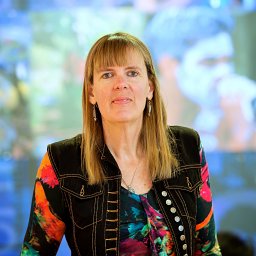 Pedersen Anne合作论文数Sch Psychol, Murdoch Univ3
 Adam Possamai合作论文数University of Western Sydney3
 Kate Ala'i合作论文数Curtin Univ2
 Raisa N. Akifyeva合作论文数2
 Dominic Npoanlari Dagbanja合作论文数Law School, The University of Western Australia2
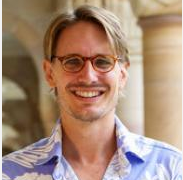 Gerhard Hoffstaedter合作论文数School of Social Science, Faculty of Humanities and Social Sciences, The University of Queensland2
 Debra McDougall合作论文数School of Social and Political Sciences, Faculty of Arts, The University of Melbourne2
 Israel Mark合作论文数2
 Barry J. Fraser合作论文数Curtin University2Sarah Palmer合作论文数2
 Jay Marlowe合作论文数School of Counselling, Human Services and Social Work, Faculty of Education and Social Work, The University of Auckland2Max Sully合作论文数2Mary Hawkins合作论文数National Institute of Neurological Disorders and Stroke, National Institutes of Health;Bethesda;National Institute of Neurological Disorders and Stroke, National Institutes of Health2
 Sarah Prout合作论文数Combined Universities Centre for Rural Health, University of Western Australia2
 Marianne Turner合作论文数School of Curriculum, Teaching and Inclusive Education, Faculty of Education, Monash University2
 Raelene Wilding合作论文数Dept Social Inquiry, La Trobe Univ2Louise Humpage合作论文数Centre for Applied Social Research2Jill M. Aldridge合作论文数Science and Mathematics Education Centre, Curtin University of Technology2Silvia Torezani合作论文数2
 David Tittensor合作论文数2Ilse O'Ferrall合作论文数1Suzanne Dziurawiec合作论文数1Carol Kaplanian合作论文数1mitchell low合作论文数Anthropol & Sociol, Univ Western Australia1
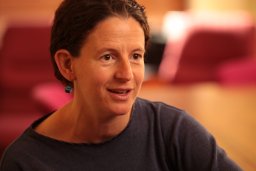 Susan Banki合作论文数Univ Sydney1
 Mary Setrana合作论文数Ctr Migrat Studies, Univ Ghana1
 Ashleigh Haw合作论文数Univ Melbourne1
 Mary Anne Kenny合作论文数Sch Law, Murdoch Univ1Suzanne Wijsman合作论文数1
 Donella Caspersz合作论文数Business School, The University of Western Australia1Renata Casado合作论文数1
 Rebecca Bennett合作论文数Murdoch Univ1
 Muhammad Dan Suleiman合作论文数Polit Sci & Int Relat, Univ Western Australia1
 David Radford合作论文数University of South Australia1
 Iain Walker合作论文数Research School of Psychology, College of Health and Medicine, The Australian National University1
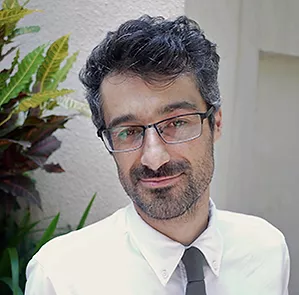 Benjamin L Iaquinto合作论文数Department of Geography, Faculty of Social Science, The University of Hong Kong1
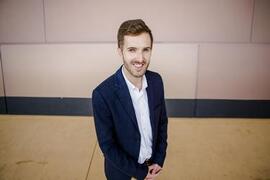 David Bissell合作论文数School of Geography, Earth and Atmospheric Sciences, Faculty of Science, The University of Melbourne1
 Brenda S.A. Yeoh合作论文数Department of Geography, Faculty of Arts and Social Sciences, National University of Singapore1
 Ernest Afari合作论文数1




