Real-world datasets for deep learning frequently suffer from the co-occurring challenges of class imbalance and label noise, hindering model performance. While methods exist for each issue, effectively combining them is non-trivial, as distinguishing genuine tail samples from noisy data proves difficult, often leading to conflicting optimization strategies. This paper presents a novel perspective: instead of primarily developing new complex techniques from scratch, we explore synergistically leveraging well-established, individually 'weak' auxiliary models - specialized for tackling either class imbalance or label noise but not both. This view is motivated by the insight that class imbalance (a distributional-level concern) and label noise (a sample-level concern) operate at different granularities, suggesting that robustness mechanisms for each can in principle offer complementary strengths without conflict. We propose Dual-granularity Sinkhorn Distillation (D-SINK), a novel framework that enhances dual robustness by distilling and integrating complementary insights from such 'weak', single-purpose auxiliary models. Specifically, D-SINK uses an optimal transport-optimized surrogate label allocation to align the target model's sample-level predictions with a noise-robust auxiliary and its class distributions with an imbalance-robust one. Extensive experiments on benchmark datasets demonstrate that D-SINK significantly improves robustness and achieves strong empirical performance in learning from long-tailed noisy data.
Inference efficiency in Large Language Models (LLMs) is fundamentally limited by their serial, autoregressive generation, especially as reasoning becomes a key capability and response sequences grow longer. Speculative decoding (SD) offers a powerful solution, providing significant speed-ups through its lightweight drafting and parallel verification mechanism. While existing work has nearly saturated improvements in draft effectiveness and efficiency, this paper advances SD from a new yet critical perspective: the verification cost. We propose TriSpec, a novel ternary SD framework that, at its core, introduces a lightweight proxy to significantly reduce computational cost by approving easily verifiable draft sequences and engaging the full target model only when encountering uncertain tokens. TriSpec can be integrated with state-of-the-art SD methods like EAGLE-3 to further reduce verification costs, achieving greater acceleration. Extensive experiments on the Qwen3 and DeepSeek-R1-Distill-Qwen/LLaMA families show that TriSpec achieves up to 35% speedup over standard SD, with up to 50% fewer target model invocations while maintaining comparable accuracy.
Diffusion Large Language Models (DLLMs) promise fast non-autoregressive inference but suffer a severe quality-speed trade-off in parallel decoding. This stems from the ”combinatorial contradiction” phenomenon, where parallel tokens form semantically inconsistent combinations. We address this by integrating continuous representations into the discrete decoding process, as they preserve rich inter-position dependency. We propose ReMix (Rejection Mixing), a framework that introduces a novel Continuous Mixing State as an intermediate between the initial masked state and the final decoded token state. This intermediate state allows a token's representation to be iteratively refined in a continuous space, resolving mutual conflicts with other tokens before collapsing into a final discrete sample. Furthermore, a rejection rule reverts uncertain representations from the continuous state back to the masked state for reprocessing, ensuring stability and preventing error propagation. ReMix thus mitigates combinatorial contradictions by enabling continuous-space refinement during discrete diffusion decoding. Extensive experiments demonstrate that ReMix, as a training-free method, achieves a 2-8 × inference speedup without any quality degradation.
Autoregressive large language models (AR-LLMs) have achieved remarkable success, but their inherently sequential decoding process remains a fundamental bottleneck for efficient inference. Diffusion large language models (DLLMs), with bidirectional modeling and parallel token generation, offer a promising alternative to break this token-by-token limitation. Yet despite rapid progress, the practical inference efficiency of current DLLMs remains unclear. From a verification perspective, this survey establishes a systematic taxonomy of existing acceleration methods, benchmarks representative techniques under a unified experimental setting, and further evaluates strong strategy combinations to quantify the gap between mainstream DLLM inference methods and state-of-the-art AR baselines. Specially, the overall analysis highlights that the parallel decoding efficiency of DLLMs still remains a significant lag compared to the decoding efficiency of AR-LLMs under inference acceleration. We provide an in-depth experimental analysis about the underlying trade-offs among generation quality, latency, and system compatibility, and build up a standard evaluation bench open to the community. Remaining bottlenecks are also summarized, together with future directions for more practical and competitive DLLM inference. Code is available at \url{https://github.com/haoyun-jiang/DLLM-AccelEval}.
While diffusion models have achieved remarkable performance in image generation, they often struggle with the imbalanced datasets frequently encountered in real-world applications, resulting in significant performance degradation on minority classes. In this paper, we identify model capacity allocation as a key and previously underexplored factor contributing to this issue, providing a perspective that is orthogonal to existing research. Our empirical experiments and theoretical analysis reveal that majority classes monopolize an unnecessarily large portion of the model's capacity, thereby restricting the representation of minority classes. To address this, we propose Capacity Manipulation (CM), which explicitly reserves model capacity for minority classes. Our approach leverages a low-rank decomposition of model parameters and introduces a capacity manipulation loss to allocate appropriate capacity for capturing minority knowledge, thus enhancing minority class representation. Extensive experiments demonstrate that CM consistently and significantly improves the robustness of diffusion models on imbalanced datasets, and when combined with existing methods, further boosts overall performance.
The open-ended generation in LLMs usually requires multi-dimensional rubrics to adequately assess quality and guide the improvement of reinforcement learning. However, a critical dilemma inherent in this training paradigm is the imbalanced reward polarization along different rubric dimensions. Under this bottleneck, even if LLMs achieve relatively high rewards after training, they may still exhibit severe deficiencies in certain dimensions, leading to a direct deterioration in user experience. To address this problem, we propose Focal Reward, a novel objective to automatically balance the training of reinforcement learning under rubric-based rewards. Specifically, we first leverage an inverse reward projection mechanism to estimate the saturation degree of each criterion in the rubric, which forms the basis to calibrate the reward direction. Then, the final objective is designed with an automatically reweighting coefficient for each criterion to achieve the fine-grained balancing. Extensive experiments across three model scales and six benchmarks demonstrate that our Focal Reward method outperforms the strongest static aggregation baseline in all 18 model-benchmark comparisons. Rollout, mechanism, and ablation analyses further show that these gains arise from online, saturation-aware reallocation toward rubrics that still have room for improvement.
To enhance the capability of off-policy multi-agent reinforcement learning (MARL), previous research has extensively investigated the agents’ decision-making and credit assignment. However, the role of experience replay is largely overlooked, with related works limited to prioritizing samples based on their TD-errors. Despite their improvements, more accurate Q-value estimations do not guarantee better decisions, as the relative advantage of different situations is more crucial for the greedy policy. To this end, we propose Diversified Experience Replay (DivER), which increases the experience diversity in the sampled mini-batch. Agents are guided to learn behaviors that transition to more superior situations, thus enhancing training efficiency. DivER is compatible with any off-policy MARL methods and has been experimentally proven to be effective across various tasks and algorithms.
Diffusion Large Language Models (DLLMs) have emerged as a compelling alternative to Autoregressive models, designed for fast parallel generation. However, existing DLLMs are plagued by a severe quality-speed trade-off, where faster parallel decoding leads to significant performance degradation. We attribute this to the irreversibility of standard decoding in DLLMs, which is easily polarized into the wrong decoding direction along with early error context accumulation. To resolve this, we introduce Wide-In, Narrow-Out (WINO), a training-free decoding algorithm that enables revokable decoding in DLLMs. WINO employs a parallel draft-and-verify mechanism, aggressively drafting multiple tokens while simultaneously using the model's bidirectional context to verify and re-mask suspicious ones for refinement. Verified in open-source DLLMs like LLaDA and MMaDA, WINO is shown to decisively improve the quality-speed trade-off. For instance, on the GSM8K math benchmark, it accelerates inference by 6 while improving accuracy by 2.58%; on Flickr30K captioning, it achieves a 10 speedup with higher performance. More comprehensive experiments are conducted to demonstrate the superiority and provide an in-depth understanding of WINO.
Diffusion Large Language Models (DLLMs) promise fast parallel generation, yet open-source DLLMs still face a severe quality-speed trade-off: accelerating decoding by revealing multiple tokens often causes substantial quality degradation. We attribute this dilemma to a train-inference mismatch amplified by irreversible decoding. While training reconstructs tokens from randomly corrupted states, efficient inference requires an adaptive denoising order, where easier tokens are revealed earlier and context-dependent ones are deferred. This view motivates two complementary methods: an inference-time method that makes parallel decoding revokable, and a training-time extension that distills the reliable order exposed by this revokable process. Accordingly, we first propose Wide-In, Narrow-Out (WINO), a training-free decoding algorithm that enables revokable parallel generation. WINO aggressively drafts multiple tokens, verifies generated tokens with enriched global context, and re-masks unreliable ones for later refinement. Building on this discovered order, we further introduce WINO+, which injects the verified denoising trajectories produced by WINO into model parameters, aligning training with efficient inference. Experiments on LLaDA and MMaDA show that WINO improves both quality and efficiency, while WINO+ further strengthens this progression. On GSM8K, WINO improves accuracy from 73.24
We propose L2T, an advancement of visual instruction tuning (VIT). While VIT equips Multimodal LLMs (MLLMs) with promising multimodal capabilities, the current design choices for VIT often result in overfitting and shortcut learning, potentially degrading performance. This gap arises from an overemphasis on instruction-following abilities, while neglecting the proactive understanding of visual information. Inspired by this, L2T adopts a simple yet effective approach by incorporating the loss function into both the instruction and response sequences. It seamlessly expands the training data, and regularizes the MLLMs from overly relying on language priors. Based on this merit, L2T achieves a significant relative improvement of up to 9% on comprehensive multimodal benchmarks, requiring no additional training data and incurring negligible computational overhead. Surprisingly, L2T attains exceptional fundamental visual capabilities, yielding up to an 18% improvement in captioning performance, while simultaneously alleviating hallucination in MLLMs. Github code: https://github.com/Feng-Hong/L2T.
While Contrastive Language-Image Pretraining (CLIP) has become the de facto standard for vision-language pretraining tasks, the exploration on the inherent long-tailed pretraining data distribution remains limited. From a neural collapse perspective, we show in principle that the vanilla CLIP training can be vulnerable to the long-tailed distributions, which might distort the representations with reduced inter-class separation and poor discriminative ability. To combat this issue, we propose an improved method, termed as Geometry-Balanced CLIP (GeoCLIP), which automatically constructs pseudo clusters and aligns them with a predefined equiangular geometric structure, thereby enjoying the theoretical merits of better maintaining the uniformity at the semantic level. Furthermore, we enhance GeoCLIP's generality for real-world complex distributions by incorporating harmonized clusters that integrate both empirically observed data structures and theoretically optimal geometry. Extensive experiments across various benchmarks demonstrate the consistent superiority of GeoCLIP in achieving robust and transferable representation under long-tailed distributions. The source code will be publicly available.
The remarkable success of contrastive-learning-based multimodal models has been greatly driven by training on ever-larger datasets with expensive compute consumption. Sample selection as an alternative efficient paradigm plays an important direction to accelerate the training process. However, recent advances on sample selection either mostly rely on an oracle model to offline select a high-quality coreset, which is limited in the cold-start scenarios, or focus on online selection based on real-time model predictions, which has not sufficiently or efficiently considered the noisy correspondence. To address this dilemma, we propose a novel Differential-Informed Sample Selection (DISSect) method, which accurately and efficiently discriminates the noisy correspondence for training acceleration. Specifically, we rethink the impact of noisy correspondence on contrastive learning and propose that the differential between the predicted correlation of the current model and that of a historical model is more informative to characterize sample quality. Based on this, we construct a robust differential-based sample selection and analyze its theoretical insights. Extensive experiments on three benchmark datasets and various downstream tasks demonstrate the consistent superiority of DISSect over current state-of-the-art methods. Source code is available at: https://github.com/MediaBrain-SJTU/DISSect.
A large language model (LLM) with knowledge in both scientific and general tasks is the foundation of science general intelligence. However, directly continued pretraining an LLM using science data usually leads to catastrophic forgetting, which indicates severe degradation in general ability. In this report, we present Innovator, which solves this problem by upcycling a pre-trained dense LLM into a fine-grained Mixtures-of-Experts model during continued pretraining, where different experts are expected to learn science knowledge in different disciplines, and a shared expert is utilized for general tasks. Innovator introduces a four-stage upcycle training paradigm: (1) Scientific Expert Induction on discipline-specific data, (2) Fine-grained Expert Splitting via FFN dimension decomposition, (3) Science-Aware Routing warmup, and (4) Generalist-Scientist Integration training on hybrid datasets. Such a paradigm enables knowledge in the general domain, and different scientific disciplines can be decoupled, avoiding the negative influence among knowledge in different domains. With 53.3B total parameters and 13.3B activated, Innovator extends Qwen2.5-7B using a shared general expert and 64 specialized scientific experts with 8 activated. Trained on 300B tokens with tri-level quality-controlled data, Innovator achieves 25
Long-tailed recognition is ubiquitous and challenging in deep learning and even in the downstream finetuning of foundation models, since the skew class distribution generally prevents the model generalization to the tail classes. Despite the promise of previous methods from the perspectives of data augmentation, loss rebalancing and decoupled training etc., consistent improvement in the broad scenarios like multi-label long-tailed recognition is difficult. In this study, we dive into the essential model capacity impact under long-tailed context, and propose a novel framework, Model Rebalancing (MORE), which mitigates imbalance by directly rebalancing the model's parameter space. Specifically, MORE introduces a low-rank parameter component to mediate the parameter space allocation guided by a tailored loss and sinusoidal reweighting schedule, but without increasing the overall model complexity or inference costs. Extensive experiments on diverse long-tailed benchmarks, spanning multi-class and multi-label tasks, demonstrate that MORE significantly improves generalization, particularly for tail classes, and effectively complements existing imbalance mitigation methods. These results highlight MORE's potential as a robust plug-and-play module in long-tailed settings.
In deep learning, model performance often deteriorates when trained on highly imbalanced datasets, especially when evaluation metrics require robust generalization across underrepresented classes. To address the challenges posed by imbalanced data distributions, this study introduces a novel method utilizing density ratio estimation for dynamic class weight adjustment, termed as Re-weighting with Density Ratio (RDR). Our method adaptively adjusts the importance of each class during training, mitigates overfitting on dominant classes and enhances model adaptability across diverse datasets. Extensive experiments conducted on various large scale benchmark datasets validate the effectiveness of our method. Results demonstrate substantial improvements in generalization capabilities, particularly under severely imbalanced conditions.
Machine learning algorithms learned from data with skewed distributions usually suffer from poor generalization, especially when minority classes matter as much as, or even more than majority ones. This is more challenging on class-balanced data that has some hidden imbalanced subpopulations, since prevalent techniques mainly conduct class-level calibration and cannot perform subpopulation-level adjustments without subpopulation annotations. Regarding implicit subpopulation imbalance, we reveal that the key to alleviating the detrimental effect lies in effective subpopulation discovery with proper rebalancing. We then propose a novel subpopulation-imbalanced learning method called Scatter and HarmonizE (SHE). Our method is built upon the guiding principle of optimal data partition, which involves assigning data to subpopulations in a manner that maximizes the predictive information from inputs to labels. With theoretical guarantees and empirical evidences, SHE succeeds in identifying the hidden subpopulations and encourages subpopulation-balanced predictions. Extensive experiments on various benchmark datasets show the effectiveness of SHE.
Class incremental learning (CIL) aims to incrementally update a trained model with the new classes of samples (plasticity) while retaining previously learned ability (stability). To address the most challenging issue in this goal, i.e., catastrophic forgetting, the mainstream paradigm is memory-replay CIL, which consolidates old knowledge by replaying a small number of old classes of samples saved in the memory. Despite effectiveness, the inherent destruction-reconstruction dynamics in memory-replay CIL are an intrinsic limitation: if the old knowledge is severely destructed, it will be quite hard to reconstruct the lossless counterpart. Our theoretical analysis shows that the destruction of old knowledge can be effectively alleviated by balancing the contribution of samples from the current phase and those saved in the memory. Motivated by this theoretical finding, we propose a novel Balanced Destruction-Reconstruction module (BDR) for memory-replay CIL, which can achieve better knowledge reconstruction by reducing the degree of maximal destruction of old knowledge. Specifically, to achieve a better balance between old knowledge and new classes, the proposed BDR module takes into account two factors: the variance in training status across different classes and the quantity imbalance of samples from the current phase and memory. By dynamically manipulating the gradient during training based on these factors, BDR can effectively alleviate knowledge destruction and improve knowledge reconstruction. Extensive experiments on a range of CIL benchmarks have shown that as a lightweight plug-and-play module, BDR can significantly improve the performance of existing state-of-the-art methods with good generalization. Our code is publicly available here.
The remarkable success of modern machine learning models on large datasets often demands extensive training time and resource consumption. To save cost, a prevalent research line, known as online batch selection, explores selecting informative subsets during the training process. Although recent efforts achieve advancements by measuring the impact of each sample on generalization, their reliance on additional reference models inherently limits their practical applications, when there are no such ideal models available. On the other hand, the vanilla reference-model-free methods involve independently scoring and selecting data in a sample-wise manner, which sacrifices the diversity and induces the redundancy. To tackle this dilemma, we propose Diversified Batch Selection (DivBS), which is reference-model-free and can efficiently select diverse and representative samples. Specifically, we define a novel selection objective that measures the group-wise orthogonalized representativeness to combat the redundancy issue of previous sample-wise criteria, and provide a principled selection-efficient realization. Extensive experiments across various tasks demonstrate the significant superiority of DivBS in the performance-speedup trade-off. The code is publicly available.
Vision-Language Pre-training (VLP) that utilizes the multi-modal information to promote the training efficiency and effectiveness, has achieved great success in vision recognition of natural domains and shown promise in medical imaging diagnosis for the Chest X-Rays (CXRs). However, current works mainly pay attention to the exploration on single dataset of CXRs, which locks the potential of this powerful paradigm on larger hybrid of multi-source CXRs datasets. We identify that although blending samples from the diverse sources offers the advantages to improve the model generalization, it is still challenging to maintain the consistent superiority for the task of each source due to the existing heterogeneity among sources. To handle this dilemma, we design a Conquer-and-Divide pre-training framework, termed as UniChest, aiming to make full use of the collaboration benefit of multiple sources of CXRs while reducing the negative influence of the source heterogeneity. Specially, the “Conquer" stage in UniChest encourages the model to sufficiently capture multi-source common patterns, and the “Divide" stage helps squeeze personalized patterns into different small experts (query networks). We conduct thorough experiments on many benchmarks, e.g., ChestX-ray14, CheXpert, Vindr-CXR, Shenzhen, Open-I and SIIM-ACR Pneumothorax, verifying the effectiveness of UniChest over a range of baselines, and release our codes and pre-training models at https://github.com/Elfenreigen/UniChest.
Clinical classification of chest radiography is particularly challenging for standard machine learning algorithms due to its inherent long-tailed and multi-label nature. However, few attempts take into account the coupled challenges posed by both the class imbalance and label co-occurrence, which hinders their value to boost the diagnosis on chest X-rays (CXRs) in the real-world scenarios. Besides, with the prevalence of pretraining techniques, how to incorporate these new paradigms into the current framework lacks of the systematical study. This technical report presents a brief description of our solution in the ICCV CVAMD 2023 CXR-LT Competition. We empirically explored the effectiveness for CXR diagnosis with the integration of several advanced designs about data augmentation, feature extractor, classifier design, loss function reweighting, exogenous data replenishment, etc. In addition, we improve the performance through simple test-time data augmentation and ensemble. Our framework finally achieves 0.349 mAP on the competition test set, ranking in the top five.
 Jiangchao Yao (姚江超)合作论文数Cooperative Medianet Innovation Center, School of Integrated Circuits, Shanghai Jiao Tong University;Shanghai Artifcial Intelligence Laboratory22
 Yanfeng Wang (王延峰)合作论文数Artificial Intelligence Institute, Shanghai Jiao Tong University;Cooperative Medianet Innovation Center19
 Ya Zhang (张娅)合作论文数School of Artificial Intelligence, Shanghai Jiao Tong University;Cooperative Medianet Innovation Center, School of Electronic Information and Electrical Engineering, Shanghai Jiao Tong University17
 Bo Han (韓波)合作论文数Department of Computer Science, Faculty of Science, Hong Kong Baptist University7
 Zhihan Zhou合作论文数Shanghai Jiao Tong University7
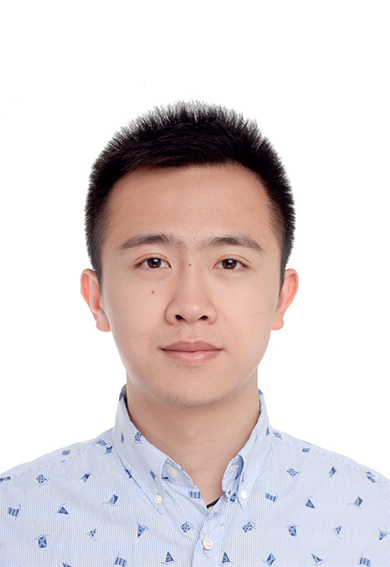 Huangjie Zheng (郑煌杰)合作论文数Apple3
 Tianjie Dai合作论文数2Yueming Lyu合作论文数2
 Zhiyong Chen (陈智勇)合作论文数Cooperative Medianet Innovation Center, Department of Electronic Engineering, School of Electronic Information and Electrical Engineering, Shanghai Jiao Tong University2XXX合作论文数 2
 Dongsheng Li (李东胜)合作论文数Microsoft Research Asia;School of Computer Science, Fudan University2
 Ivor Tsang合作论文数Agency for Science, Technology and Research2Yushi Ye合作论文数Cooperative Medianet Innovation Center, Shanghai Jiao Tong University1Benyuan Liu合作论文数1Pengyi Chen合作论文数1Jiaan Luo合作论文数1Qiang Hu合作论文数1Xiaohan Qin合作论文数1
 Jiale Ma合作论文数School of Electronic, Information and Electrical Engineering, Shanghai Jiao Tong University1Xiaoxing Wang (王晓星)合作论文数Institute for Advanced Algorithms Research, Shanghai1Yifei Shen合作论文数Microsoft Research Lab – Asia1Zhaoxin Huan合作论文数Ant Group1
 Xu Chen (陈旭)合作论文数Alibaba Group1
 Zihua Zhao合作论文数Cooperative Medianet Innovation Center, Shanghai Jiao Tong University1Zhiyu Li合作论文数1
 Ning Liao合作论文数MoE Key Lab of Artificial Intelligence, Shanghai Jiao Tong University1
 Ruipeng Zhang (张瑞鹏)合作论文数MediaBrain Lab, Cooperative Medianet Innovation Center, Shanghai Jiao Tong University;Shanghai Artificial Intelligence Laboratory1Mengxi Chen合作论文数1
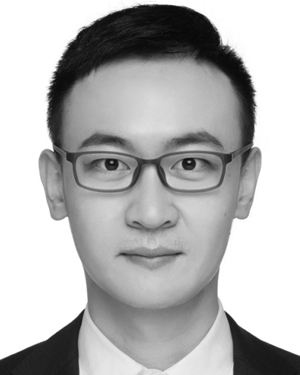 Peisen Zhao合作论文数Shanghai Jiao Tong University1Yuhang Zhou合作论文数Equal contribution.1
 Guoliang Fan (范国梁)合作论文数Institute of Automation, Chinese Academy of Sciences;School of Artificial Intelligence, University of Chinese Academy of Sciences1
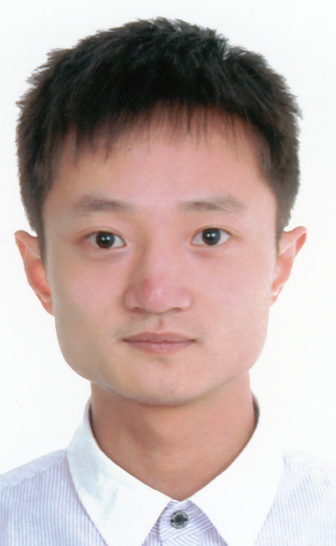 Zhouhan Lin (林洲汉)合作论文数John Hopcroft Center of Computer Science, Shanghai Jiao Tong University;School of Eletronic Information and Electrical Engineering, Shanghai Jiao Tong University1
 Linfeng Zhang (张林峰)合作论文数1
 Junyang Lin (林俊旸)合作论文数Data Analytics and Intelligence Lab, DAMO Academy, Alibaba Group1
 Jianwei Zhang合作论文数PingCAP;Alibaba Group1
 Feng Liu (刘峰)合作论文数School of Computing and Information Systems, Faculty of Engineering and Information Technology, The University of Melbourne1
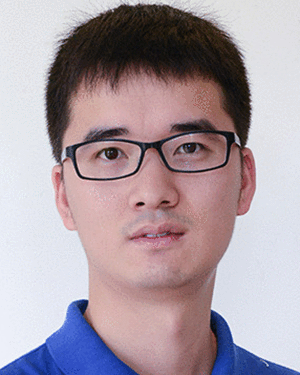 Jun Zhou合作论文数Ant Group1
 Xiaolu Zhang合作论文数Ant Financial1
 Kai Chen (陈恺)合作论文数1
 Qi Tian (田奇)合作论文数Huawei Consumer Business Group;Guangming Laboratory1
 Junchi Yan (严骏驰)合作论文数Department of Computer Science and Engineering, Shanghai Jiao Tong University;ReThinkLab, Shanghai Jiao Tong University1
 Feiyu Xiong (熊飞宇)合作论文数Institute for Advanced Algorithms Research, Shanghai1




