L’économie circulaire, présentée comme une stratégie prioritaire en vue d’une transition écologique, estelle réellement un nouveau modèle comme le prétendent ses promoteurs ? Nous montrerons dans cet article que c’est une idée ancienne qui a fait l’objet de différentes doctrines au XIX e siècle. Elle constituait, à cette époque, le mode dominant d’organisation des activités économiques. Pour comprendre les résultats décevants observés aujourd’hui en matière de circularité, nous expliquerons, à la lumière de l’histoire, pourquoi la circularité infinie est un mythe et la nécessité de promouvoir des démarches de sobriété face à l’impasse de la croissance matérielle.
Taking on the much-criticized concepts of green growth, bioeconomy, and efficiency, both sufficiency and, in certain circumstances, the circular economy, are presented as potential new paradigms that can play a central role in a transition towards a stronger sustainability and enable humanity to remain within planetary boundaries. In this context, this study aims to identify new sufficiency practices that have been adopted by retailers and to assess to what extent these practices have transformed their traditional business model, thus providing useful insights to practitioners, policymakers and the nascent academic literature on the topic. Through a combination of action research and case studies of the French actors Fnac-Darty and Decathlon, this article emphasizes that retailers may try to slow material and value loops by assessing products' repairability and durability and informing customers through a specific index, for certain products or more globally their overall product port-folio, but also by using such indexes in eco-design requirements to suppliers, supplier selection processes, and product purchasing policies. By favoring the most repairable products and excluding the least durable ones, retailers can also improve their value proposition to customers. Through concrete examples, this study also shows that sufficiency-based business models can be scaled up and describes some of the associated processes. On a less optimistic note, certain limitations of the observed ongoing upscaling processes are highlighted, amongst which are the limited number of retailers that have started this process, the limited contribution of these new practices to overall value creation and capture at the firm level, and clear evidence of rebound effects.
Under what conditions do environmental assessment tools (such as Life Cycle Assessment or Internal Carbon Pricing) succeed in transforming corporate practices in order to better take the environment into account in their decisions? Based on both intervention research at an automobile manufacturer’s and a survey among several companies using monetary valuation of environmental externalities, this chapter explores how actors in the field take charge of and interpret environmental management tools to make sense of them. It describes in particular an experimentation with a simplified LCA tool and Internal Carbon Pricing at an automobile manufacturer’s.
Consumers increasingly demand information about the environmental impacts of their food. The French government is in the process of introducing environmental labelling for all food products. A scientific council was set up, and its main conclusions are presented in this article, through six questions: What environmental issues should be considered? What objective should be targeted? What data are needed, and for whom? What methods for assessing environmental impacts? Which environmental scores should be chosen? What label format should be proposed? By answering these questions and considering the context, the available data, the proposed methods and adjustments, and the knowledge of consumer perception of formats, the scientific council considers that a labelling scheme is feasible and relevant.
L’économie circulaire, concept aux résonances utopiques, suscite un fort engouement des organisations publiques et privées. Dans cet article, les auteurs montrent que ce succès d’une part, tient au caractère indéterminé et oecuménique d’une utopie rationnelle attractive et mobilisatrice construite autour de l’économie circulaire, et d’autre part, n’est qu’apparent dans la mesure où cette utopie rationnelle laisse dans l’ombre plusieurs angles morts relatifs à la conduite de l’action collective. Dans cette perspective, ils opposent une performation de surface au niveau des discours et des engagements à une performation profonde, capable de transformer les pratiques opérationnelles. Ils montrent qu’une performation profonde du récit utopique de l’économie circulaire suppose l’activation de leviers spécifiques et le déploiement de dispositifs sociotechniques et managériaux permettant de guider et de structurer l’action collective.
Dans l’économie politique classique, les entreprises sont considérées comme des acteurs purement économiques, leur action politique constituant un impensé. Lorsqu’elle est étudiée, elle est souvent réduite aux stratégies d’influence que les entreprises déploient pour protéger leurs intérêts. Cet article propose une autre conceptualisation, d’inspiration pragmatiste, qui définit l’action politique comme un processus d’action collective distribué visant à produire des normes d’action publique ou à répondre à des contestations sociales.
Extended Producer Responsibility (EPR) systems have been criticized to provide little incentive for producers to eco-design. To this end, an incentive scheme, called eco-modulation, based on modulated product fees according to their level of eco-design has recently been introduced. This paper provides a comprehensive analysis of the introduction of this scheme as part of the collective EPR system in the WEEE sector in France and discusses the impacts of this policy instrument on product design (direct effects) and collective action and innovation (indirect effects). From a theoretical standpoint, we consider policy instruments in our research as part of complex policy mixes and within adaptive policy-making, i.e. on how these mixes evolve over time to adapt to complex and changing issues and collective dynamics. In this perspective, we stress that, while eco-modulation has shown little direct impact, important indirect effects can be identified. We argue that framework conditions, i.e. how the EPR system is organized and conducted in practice, explain better the occurrence of such indirect effects rather than the policy instrument in itself. In this perspective, the paper provides insights on the role of Producer Responsibility Organizations (PRO) in linking individual and collective producer responsibilities and organizing collective action. Moreover, it shows that implementing such a policy instrument requires intense dialog with stakeholders to advance its acceptability, a collective organization to organize its monitoring and deployment, and careful integration with other instruments within a coherent and adaptive policy.
Public procurement has been studied by numerous researchers and is considered to be an effective instrument for leading public and private actors to implement more sustainable practices. For researchers, public procurement can be leveraged to develop innovative practices oriented towards sustainability and create new markets for eco-friendly products. However, there is still a paucity of empirical evidence on the mechanisms by which public procurement can effectively stimulate sustainable innovation and foster the development of greener markets in relation to circular economy. To shed light on the emerging issue of circular public procurement, we use a qualitative method relying on an empirical case relating to a public tender in Denmark. Our research shows that public procurement can be studied as a design activity and clarifies the mechanisms by which public procurement can stimulate sustainable innovation in organizations, creating opportunities for collective innovative practices. Furthermore, we shed light on the process through which circular public procurement can create green markets, defining the qualities of the goods to be exchanged.
 Mélodie Cartel合作论文数School of Management & Governance, Business School, The University of New South Wales17
 Julie Labatut合作论文数Castanet Tolosan France13
 Helen Micheaux合作论文数Corresponding author.12
 Joel Ntsonde合作论文数10
 Morgane Le Breton合作论文数7
 Eva Boxenbaum合作论文数7
 Aurelien Acquier合作论文数Département stratégie, hommes et organisations, ESCP-EAP7
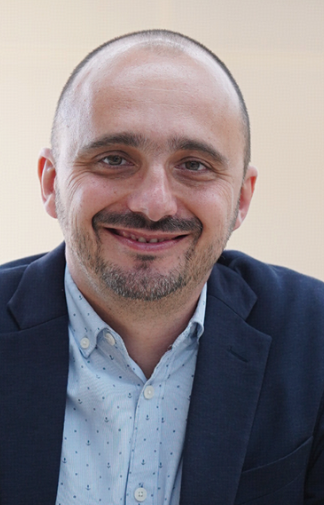 Rémi Beulque合作论文数TBS Education;AIFREC - Circulades;MINES ParisTech;Paris Elite Institute of Technology, Shanghai Jiao Tong University6Nathalie Girard合作论文数Université de La Rochelle6olivier favereau合作论文数5
 Nabila Iken合作论文数ParisTech, CGS Mines5
 Hans Pohl合作论文数Institut für Spezielle Zoologie und Evolutionsbiologie, FSU Jena5Bernard Bibé合作论文数5
 Stephane Morel合作论文数Domaine de l’Hermitage Lab. de Rhéologie du Bois de Bordeaux, Univ. Bordeaux. 1)5
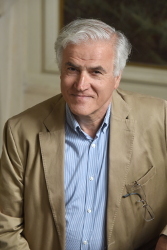 Armand Hatchuel合作论文数Centre de Gestion Scientifique5Chloé Steux合作论文数4Jean-Yves Caneill合作论文数4
 Maria Elmquist合作论文数Dept. of Technology Management and Economics, Chalmers University of Technology4
 Frederique Pallez合作论文数4
 Gabriela Garza de Linde合作论文数3
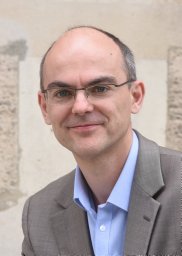 Pascal Le Masson合作论文数Centre de gestion scientifique (CGS),, École des Mines3
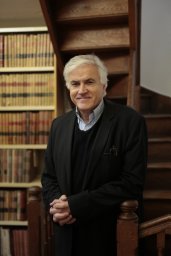 Armand Hatchuel合作论文数Ecole des Mines de Paris3
 Blanche Segrestin合作论文数Mines ParisTech, PSL Res Univ3
 Susse Georg合作论文数Department of Sustainability and Planning, Technical Faculty of IT and Design, Aalborg Universitet3Chantal Julia合作论文数2anne branciard合作论文数2Romain Poivet合作论文数2
 rebecca pinheirocroisel合作论文数2
 Christophe Abrassart合作论文数University of Montreal2
 Lydiane Nabec合作论文数2
 Albert David合作论文数PSL Res Univ, Paris Dauphine Univ2
 Antonin Pottier合作论文数2
 Vincent Mangematin合作论文数Institut National de la Recherche Agronomique -;Université Pierre;Institut National de la Recherche Agronomique -|, Université Pierre2
 Catherine Paradeise合作论文数Laboratoire Interdisciplinaire Sciences Innovations Sociétés, Université Paris-Est Marne-la-Vallée2Louis-Georges Soler合作论文数2Hayo M. G. Van Der Werf (Hayo Van Der Werf)合作论文数Institut National de la Recherche Agronomique2
 Jean-Yves Dourmad合作论文数Institut National de la Recherche Agronomique2
 Ashveen Peerbaye合作论文数Institut National de la Recherche Agronomique -;Université Pierre;Institut National de la Recherche Agronomique -|, Université Pierre2
 Arnaud Hélias合作论文数Montpellier SupAgro2
 Genet Corine合作论文数2Bernard Ruffieux合作论文数2Gilles Garel合作论文数2
 Gilles Trystram合作论文数CEMAGREF, INAPG2Valérie Chanal合作论文数2
 Sylvain Pellerin合作论文数UMR 1220 TCEM (INRA-ENITAB),, INRA2
 Richard Baron合作论文数CREUSET, University of Saint-Etienne2romain laufer合作论文数1
 Severine Saleilles合作论文数1satu reijonen合作论文数1




