The compounding of plastics with recycled material remains a practical challenge, as the properties of the processed material is not as easy to control as with completely new raw materials. For a data scientist, it makes sense to plan the necessary experiments in the development of new compounds using Bayesian Optimization, an optimization approach based on a surrogate model that is known for its data efficiency and is therefore well suited for data obtained from costly experiments. Furthermore, if historical data and expert knowledge are available, their inclusion in the surrogate model is expected to accelerate the convergence of the optimization. In this article, we describe a use case in which the addition of data and knowledge has impaired optimization. We also describe the unsuccessful methods that were used to remedy the problem before we found the reasons for the poor performance and achieved a satisfactory result. We conclude with a lesson learned: additional knowledge and data are only beneficial if they do not complicate the underlying optimization goal.
The practical use of Bayesian Optimization (BO) in engineering applications imposes special requirements: high sampling efficiency on the one hand and finding a robust solution on the other hand. We address the case of adversarial robustness, where all parameters are controllable during the optimization process, but a subset of them is uncontrollable or even adversely perturbed at the time of application. To this end, we develop an efficient information-based acquisition function that we call Robust Entropy Search (RES). We empirically demonstrate its benefits in experiments on synthetic and real-life data. The results show that RES reliably finds robust optima, outperforming state-of-the-art algorithms.
Fatigue strength estimation is a costly manual material characterization process in which state-of-the-art approaches follow a standardized experiment and analysis procedure. In this paper, we examine a modular, Machine Learning-based approach for fatigue strength estimation that is likely to reduce the number of experiments and, thus, the overall experimental costs. Despite its high potential, deployment of a new approach in a real-life lab requires more than the theoretical definition and simulation. Therefore, we study the robustness of the approach against misspecification of the prior and discretization of the specified loads. We identify its applicability and its advantageous behavior over the state-of-the-art methods, potentially reducing the number of costly experiments.
A measurement of the fragmentation functions of jets into charged particles in p Pb collisions and pp collisions is presented. The analysis utilizes 28 nb(-1) of p Pb data and 26 pb(-1) of pp data, both at root(TN)-T-s= 5.02 TeV, collected in 2013 and 2015, respectively, with the ATLAS detector at the LHC. The measurement is reported in the centre-of-mass frame of the nucleon-nucleon system for jets in the rapidity range vertical bar y*vertical bar <1.6 and with transverse momentum 45 < p(T) < 260 GeV. Results are presented both as a function of the charged-particle transverse momentum and as a function of the longitudinal momentum fraction of the particle with respect to the jet. The pp fragmentation functions are compared with results from Monte Carlo event generators and two theoretical models. The ratios of the p +Pb to pp fragmentation functions are found to be consistent with unity. (C) 2018 CERN for the benefit of the ATLAS Collaboration. Published by Elsevier B.V.
Bose-Einstein correlations between identified charged pions are measured for $p$+Pb collisions at $\sqrt{s_{\mathrm{NN}}}=5.02$ TeV using data recorded by the ATLAS detector at the LHC corresponding to a total integrated luminosity of $28$ $\mathrm{nb}^{-1}$. Pions are identified using ionization energy loss measured in the pixel detector. Two-particle correlation functions and the extracted source radii are presented as a function of collision centrality as well as the average transverse momentum ($k_{\mathrm{T}}$) and rapidity ($y^{\star}_{\pi\pi}$) of the pair. Pairs are selected with a rapidity $-2<y^{\star}_{\pi\pi}<1$ and with an average transverse momentum $0.1<k_{\mathrm{T}}<0.8$ GeV. The effect of jet fragmentation on the two-particle correlation function is studied, and a method using opposite-charge pair data to constrain its contributions to the measured correlations is described. The measured source sizes are substantially larger in more central collisions and are observed to decrease with increasing pair $k_{\mathrm{T}}$. A correlation of the radii with the local charged-particle density is demonstrated. The scaling of the extracted radii with the mean number of participating nucleons is also used to compare a selection of initial-geometry models. The cross-term $R_\mathrm{ol}$ is measured as a function of rapidity, and a nonzero value is observed with $5.1\sigma$ combined significance for $-1<y^{\star}_{\pi\pi}<1$ in the most central events.
Citation Aad, G., B. Abbott, J. Abdallah, S. Abdel Khalek, O. Abdinov, R. Aben, B. Abi, et al. 2015. “Erratum to: Search for production of WW / WZ resonances decaying to a lepton, neutrino and jets in pp collisions at documentclass[12pt]{minimal} usepackage{amsmath} usepackage{wasysym} usepackage{amsfonts} usepackage{amssymb} usepackage{amsbsy} usepackage{mathrsfs} usepackage{upgreek} setlength{oddsidemargin}{-69pt} begin{document}$$sqrt{s}=8$$end{document}s=8 TeV with the ATLAS detector.” The European Physical Journal. C, Particles and Fields 75 (8): 370. doi:10.1140/epjc/s10052-0153593-4. http://dx.doi.org/10.1140/epjc/s10052-015-3593-4.
This paper presents cross sections for the production of a W boson in association with jets, measured in proton–proton collisions at √ s = 7 TeV with the ATLAS experiment at the large hadron collider. With an integrated luminosity of 4.6 fb−1, this data set allows for an exploration of a large kinematic range, including jet production up to a transverse momentum of 1 TeV and multiplicities up to seven associated jets. The production cross sections for W bosons are measured in both the electron and muon decay channels. Differential cross sections for many observables are also presented including measurements of the jet observables such as the rapidities and the transverse momenta as well as measurements of event observables such as the scalar sums of the transverse momenta of the jets. The measurements are compared to numerous QCD predictions including next-toleading-order perturbative calculations, resummation calculations and Monte Carlo generators.
 P. Kodys合作论文数26
 Yasuhiro Makida (槙田康博)合作论文数Institute of Particle and Nuclear Studies, High Energy Accelerator Research Organization26
 Enrique Kajomovitz合作论文数Department of Physics, Technion, Israel Institute of Technology26
 Walter Lampl合作论文数Department of Physics, College of Science, The University of Arizona26
 Michael Boehler合作论文数Physikalisches Institut, Universität Freiburg26
 Peter J. Bussey合作论文数School of Physics & Astronomy, University of Glasgow26
 Szymon Gadomski合作论文数Département d'Astronomie, Université de Genève;Department of Particle Physics, University of Geneva26
 Rustem Ospanov合作论文数CERN26barbara wosiek合作论文数26oleksandr viazlo合作论文数26helen hayward合作论文数26maria smizanska合作论文数26
 Dimitris Fassouliotis合作论文数Department of Physics, National and Kapodistrian University of Athens26
 Abdeslam Hoummada合作论文数CERN;Université Hassan II Casablanca;Académie Hassan II des Sciences et Techniques26
 Lorenzo Bellagamba合作论文数Gran Sasso Laboratory, INFN26
 Julien Donini合作论文数Laboratoire de Physique de Clermont Auvergne, Institut National De Physique Nucléaire Et De Physique Des Particules, CNRS;Université Clermont Auvergne26
 Miloš Lokajíček Jr合作论文数Division of Elementary Particle Physics, Particle Physics Department, Institute of Physics of the Czech Academy of Sciences26C Amelung合作论文数26
 Stavros Maltezos合作论文数Department of Physics, School of Applied Mathematical and Physical Sciences, National Technical University of Athens26
 Faig Ahmadov合作论文数Institute of Physics MSE;Joint Institute for Nuclear Research;CERN26
 Enrico Tassi合作论文数Department of Physics, Università della Calabria26
 Theo Alexopoulos合作论文数Department of Physics, School of Applied Mathematical & Physical Sciences, National Technical University of Athens;Hellenic Open University26Tancredi Carli合作论文数CERN26
 Fabrizio Petrucci合作论文数Dipartimento di Matematica e Fisica, Università Roma Tre26
 Sune Jakobsen合作论文数CERN26S. M. Farrington合作论文数26
 Steven Schramm合作论文数Département de Physique Nucléaire et Corpusculaire, Faculty of Science, Université de Genève26
 Stefano Terzo合作论文数IFAE26
 Alexander Kupčo合作论文数Institute of Physics, Czech Academy of Sciences26
 Rainer Stamen合作论文数Kirchhoff Institute for Physics, Universität Heidelberg26francesco guescini合作论文数26
 Marisilvia Donadelli合作论文数Institute of Physics, University of Sao Paulo;Universidade do Estado do Rio de Janeiro26
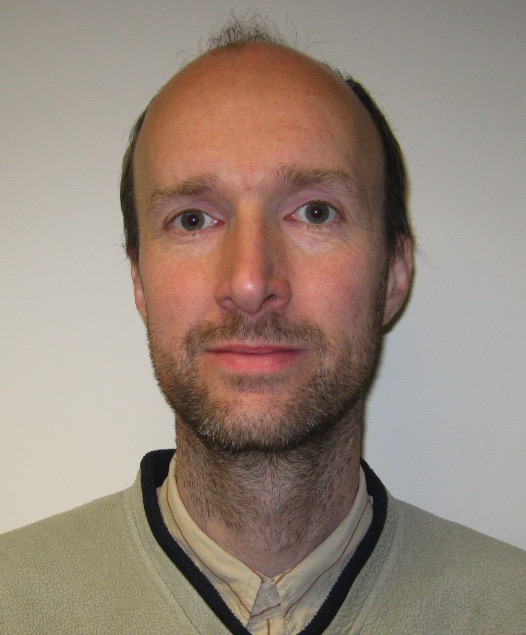 Richard Bates合作论文数School of Physics and Astronomy, University of Glasgow26jelena jovicevic合作论文数26Yiming Abulaiti合作论文数26andrew christopher daniells合作论文数26tulin varol合作论文数26elena plotnikova合作论文数26christian meineck合作论文数26lars graber合作论文数26vasiliki kouskoura合作论文数26kristof kreutzfeldt合作论文数26richard peschke合作论文数26emma sian kuwertz合作论文数26K. Rosbach合作论文数26
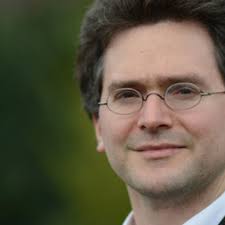 Philip Bechtle合作论文数Physikalisches Institut, Universität Bonn;Faculty of Mathematics and Natural Sciences, Universität Bonn26nils ruthmann合作论文数26
 Philip J Clark合作论文数Institute for Particle and Nuclear Physics, School of Physics and Astronomy, The University of Edinburgh26shota tsiskaridze合作论文数26




