Free will discourse is primarily centred around the thesis of determinism. Much of the literature takes determinism as its starting premise, assuming it true for the sake of discussion, and then proceeds to present arguments for why, if determinism is true, free will would be either possible or impossible. This is reflected in the theoretical terrain of the debate, with the primary distinction currently being between compatibilists and incompatibilists and not, as one might expect, between free will realists and skeptics. The aim of this paper is twofold. First, we argue that there is no reason to accept such a framing. We show that, on the basis of modern physics, there is no good evidence that physical determinism of any variety provides an accurate description of our universe and lots of evidence against such a view. Moreover, we show that this analysis extends equally to the sort of indeterministic worldviews endorsed by many libertarian philosophers and their skeptics, a worldview which we refer to as determinism plus randomness. The papers secondary aim is therefore to present an alternative conception of indeterminism, which is more in line with the empirical evidence from physics. It is this indeterministic worldview, we suggest, that ought to be the central focus of a reframed philosophy of free will.
Quantum physics is a linear theory, so it is somewhat puzzling that it can underlie very complex systems such as digital computers and life. This paper investigates how this is possible. Physically, such complex systems are necessarily modular hierarchical structures, with a number of key features. Firstly, they cannot be described by a single wave function: only local wave functions can exist, rather than a single wave function for a living cell, a cat, or a brain. Secondly, the quantum to classical transition is characterised by contextual wave-function collapse shaped by macroscopic elements that can be described classically. Thirdly, downward causation occurs in the physical hierarchy in two key ways: by the downward influence of time dependent constraints, and by creation, modification, or deletion of lower level elements. Fourthly, there are also logical modular hierarchical structures supported by the physical ones, such as algorithms and computer programs, They are able to support arbitrary logical operations, which can influence physical outcomes as in computer aided design and 3-d printing. Finally, complex systems are necessarily open systems, with heat baths playing a key role in their dynamics and providing local arrows of time that agree with the cosmological direction of time that is established by the evolution of the universe.
Unphysical equations of state result from the unrestricted use of the Synge G-trick of running the Einstein field equations backwards; in particular often this results in ρ + p < 0 which implies negative inertial mass density, which does not occur in reality. This is the basis of some unphysical spacetime models including phantom energy in cosmology and traversable wormholes. The slogan “ER = EPR” appears to have no basis in physics and is merely the result of vague and unbridled speculation. Wormholes (the “ER” of the slogan) are a mathematical curiosity of general relativity that have little to no application to a description of our universe. In contrast quantum correlations (the “EPR” of the slogan) are a fundamental property of quantum mechanics that follows from the principle of superposition and is true regardless of the properties of gravity. The speculative line of thought that led to “ER = EPR” is part of a current vogue for anti-geometrical thinking that runs counter to (and threatens to erase) the great geometrical insights of the global structure program of general relativity.
This paper advocates for considering disgust as a primary emotional system within Panksepp’s Affective Neuroscience framework, which has the potential to improve the efficacy of psychotherapy with obsessive-compulsive disorder, hypochondriasis, and emetophobia. In 2007, Toronchuk and Ellis provided comprehensive evidence that DISGUST system, as they defined it, matched all Panksepp’s criteria for a primary emotional system. A debate ensued and was not unambiguously resolved. This paper is an attempt to resume this discussion and supplement it with the data that accumulated since then on DISGUST’s relationship with the immune system and the role of DISGUST dysregulation in psychopathology. We hope that renewed research interest in DISGUST has the potential to improve clinical efficacy with hard-to-treat conditions.
Is there a single linearly evolving Wave Function of the Universe that is able to lead to all the nonlinearities we see around us? This proposal seems a priori highly implausible. I claim that instead, in the real Universe, generically only local wave functions exist. Non-local wave functions occur for carefully engineered contexts such as Bell experiments, but there is no single wave function for a cat or similar macroscopic objects such as a brain. Contextual wave function collapse leads to a defensible version of the Copenhagen interpretation, where classical macro levels provide the context for quantum events and biological emergence. Complexity arises via adaptive multiscale modular hierarchical structures that enable logical branching to emerge from the underlying linear physics. Each emergent level is causally effective because of the confluence of upwards and downwards causation that takes place consistently with the underlying physics. Quantum chemistry approaches in biological contexts fit this local wavefunction picture.
This paper discusses complexity theory, that is, the many theories that have been proposed for emergence of complexity from the underlying physics. Our aim is to identify which aspects have turned out to be the more fundamental ones as regards the emergence of biology, engineering, and digital computing, as opposed to those that are in fact more peripheral in these contexts. In the cases we consider, complexity arises via adaptive modular hierarchical structures that are open systems involving broken symmetries. Each emergent level is causally effective because of the meshing together of upwards and downwards causation that takes place consistently with the underlying physics. Various physical constraints limit the outcomes that can be achieved. The underlying issue concerns the origin of consciousness and agency given the basis of life in physics, which is structured starting from symmetries and variational principles with no trace of agency. A possible solution is to admit that consciousness is an irreducible emergent property of matter.
This paper considers how a classification of causal effects as comprising efficient, formal, material, and final causation can provide a useful understanding of how emergence takes place in biology and technology, with formal, material, and final causation all including cases of downward causation; they each occur in both synchronic and diachronic forms. Taken together, they underlie why all emergent levels in the hierarchy of emergence have causal powers (which is Noble's principle of biological relativity) and so why causal closure only occurs when the upwards and downwards interactions between all emergent levels are taken into account, contra to claims that some underlying physics level is by itself causality complete. A key feature is that stochasticity at the molecular level plays an important role in enabling agency to emerge, underlying the possibility of final causation occurring in these contexts.
Evolution by natural selection peerlessly describes how life’s complexity develops — but can it be explained in terms of physics? A new approach suggests it can.
This paper is a comment on both Bunamano and Rovelli (Bridging the neuroscience and physics of time arXiv:2110.01976. (2022)) and Gruber et al. (in Front. Psychol. Hypothesis Theory, 2022) and which discuss the relation between physical time and human time. I claim here, contrary to many views discussed there, that there is no foundational conflict between the way physics views the passage of time and the way the mind/brain perceives it. The problem rather resides in a number of misconceptions leading either to the representation of spacetime as a timeless Block Universe, or at least that physically relevant universe models cannot have preferred spatial sections. The physical expanding universe can be claimed to be an Evolving Block Universe with a time-dependent future boundary, representing the dynamic nature of the way spacetime develops as matter curves spacetime and spacetime tells matter how to move. This context establishes a global direction of time that determines the various local arrows of time. Furthermore time passes when quantum wave function collapse takes place to an eigenstate; during this process, information is lost. The mind/brain acts as an imperfect clock, which coarse-grains the physical passage of time along a world line to determine the experienced passage of time, because neural processes take time to occur. This happens in a contextual way, so experienced time is not linearly related to physical time in general. Finally I point out that the Universe is never infinitely old: its future endpoint always lies infinitely faraway in the future.
John Barrow wrote dozens of books and hundreds of papers, including more than 10 papers and one book during his final illness, addressing a grand problem: why is the universe the way it is? What is the fundamental nature of physics, and what are its cosmological outcomes? His most famous book was on the Anthropic Principle with Frank Tipler, and his most significant physics research was on the possibility of a variation of the fundamental constants of physics—which, if true, requires a rejigging of our foundational physics theories. He was an outstanding communicator of science to the public, being asked to lecturer at as varied places as Downing Street and Buckingham Palace. His most important public service was as director of the Millennium Mathematics Project, for which he was awarded the Queen's Anniversary Prize for Educational Achievement by Queen Elizabeth II at Buckingham Palace. He was awarded many other prizes, including the Templeton Prize, the Gold Medal of the Royal Astronomical Society, both the Kelvin Medal and the Dirac Gold Medal of the Institute of Physics and the Faraday Medal of the Royal Society.
In this paper, we will look at key aspects of this process of coming into being of the present world, via the transitions from cosmological to planetary to cellular, physiological, social, ecological, and engineering realms.
n analysis of astronomical data suggests not only that the Universe is finite, but also that it has a specific, rather rigid topology. If confirmed, this is a major discovery about the nature of the Universe.
Multilevel interpretations of development and evolution take to heart the contextual nature of both those processes, and so necessarily assume top-down causation occurs, right down to the physics level. In this article we revisit the Principle of Biological Relativity proposed by Noble in 2012, where all emergent levels of organisation are equally causally valid. While this is true in general for physical interactions between levels, we argue that in the case of conscious organisms making rational choices, there is indeed a preferred causal origin - namely the overall embracing influence of meaning and values. This is the opposite of what is suggested by a reductionist viewpoint, where it is the bottom-most physical level that is stated to be causally preferred (by some physicists), or the genetic level (by some evolutionary theorists). Charles Darwin was therefore correct to distinguish between Artificial (conscious) Selection, where values enter, and Natural Selection. The Modern Synthesis was wrong to exclude Darwin's distinction.
In this response, George Ellis comments on the publications of Part IV. He responds first to James Woodward, Richard Healey, Jan Voosholz, Simon Friederich and Sach Mukherjee, before outlining his thoughts on Max Kistler’s piece.
We prove here a long standing conjecture in general relativity, that if barotropic perfect fluid is moving in a shear free way, then it must be either expansion free or rotation free.
In this paper, we explore the architecture of downward causation on the basis of three central cases. (1) We set out by answering the question of how top-down causation is possible in the universe. The universe is not causally closed, because of irreducible randomness at the quantum level. What is more, contextual effects can already be observed at the level of quantum physics, where higher levels can modify the nature of lower-level elements by changing their context, or even creating them. As one moves up through higher levels, contextual effects on lower levels occur on various scales within nature, which is crucial in biology in general and the brain in particular. (2) We then argue that there are important logical downward causes. Abstract objects (such as logical principles of intelligibility) have causal effects on material-energetic systems. It can be shown that abstract objects (institutions, numbers, intentionality etc. as well as algorithms and plans) have measurable effects on lower levels, which needs to be accounted for by successful explanations of real phenomena such as intentional action. Intentional action has the form of deductive causation from logical structures to human agency. Without this assumption, we would not be warranted in believing that our physical theories latch onto a universe that is essentially the way we discover it to be. Denying top-down causation on account of the idea that the universe permits only bottom-up constitution of wholes from lower-level elements leads to undermining the very possibility of knowledge and science. Thus, it can be rejected as a global form of explanation. (3) We sketch a model for mind-body interaction according to which the various levels of a human organism together enable the emergence of mental top-down effects. They are necessary conditions for the emergence of human mindedness. Once it is clear that downward causation is a widespread natural phenomenon, the apparent mystery of mental causation (how abstract objects can cause measurable changes in the universe via our mental representations of them) is, in principle, solved.
Significant challenges exist globally regarding literacy teaching and learning, particularly in poor socio-economic settings in countries of the Global South. In this paper we argue that to address these challenges, major features of how the brain works that are currently ignored in the educational literature should be taken into account. First, perception is an active process based in detection of errors in hierarchical predictions of sensory data and action outcomes. Reading is a particular case. Second, emotions play a key role in underlying cognitive functioning. Innate affective systems underlie and shape all brain functioning, including oral and written forms of language and sign. Third, there is not the fundamental difference between listening/speaking and reading/writing often alleged on the basis of evolutionary arguments. Both are socio-cultural practices driven and learnt by the communication imperative of the social brain. Fourth, like listening, reading is not a linear, bottom-up process. Both are non-linear contextually shaped psycho-social processes of understanding, shaped by current knowledge and cultural contexts and practices. Reductionist neuroscience studies which focus on decontextualized parts of reading cannot access all the relevant processes. An integrated view of brain function reflecting this non-linear nature implies that an ongoing focus on personal meaning and understanding provides positive conditions for all aspects of literacy learning. Assessment of literacy teaching at all its stages should include indicators that take into account these foundational features relating reading and writing to neuroscience.
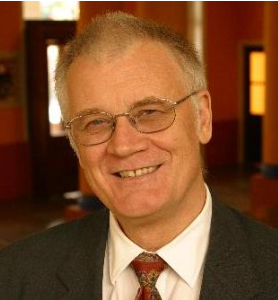 Malcolm A. H. Maccallum合作论文数School of Mathematical Sciences, Queen Mary University of London40
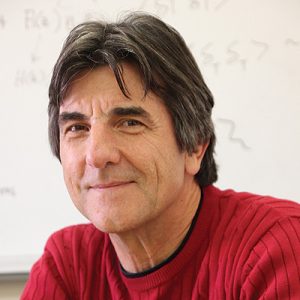 Roy Maartens合作论文数Department of Physics & Astronomy, University of Western Cape38
 Rituparno Goswami合作论文数School of Agriculture and Science, University of KwaZulu-Natal18
 Andrzej Krasiński合作论文数N. Copernicus Astronomical Center, Polish Academy of Sciences17
 Henk van Elst合作论文数Astronomy Unit;Queen Mary, University of London;Astronomy Unit|Queen Mary, University of London17
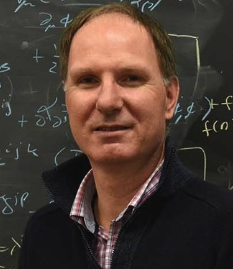 Peter Dunsby合作论文数Department of Mathematics and Applied Mathematics, University of Cape Town15John Wainwright合作论文数Department of Applied Mathematics, University of Waterloo11William R Stoeger合作论文数10
 Jeff Murugan合作论文数Cosmology & Gravity Center;Department of Mathematics and Applied Mathematics;University of Cape;Cosmology & Gravity Center, University of Cape9Amanda Weltman合作论文数9
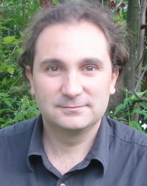 Jean–Philippe Uzan合作论文数Institut d’Astrophysique de Paris, CNRS – Universite Pierre et Marie Curie9
 Charles Hellaby合作论文数Department of Mathematics;University of Cape Town;Department of Mathematics, University of Cape Town9
 Reza Tavakol合作论文数School of Physical and Chemical Sciences, Queen Mary University of London8
 Tony Rothman合作论文数Princeton University;Haverford College;Haverford College, Princeton University8peter coles合作论文数7
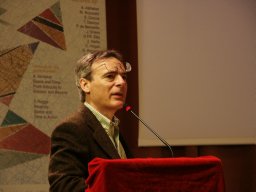 Mauro Carfora合作论文数Istituto Nazionale di Fisica Nucleare;Sezione di Pavia;Sezione di Pavia, Istituto Nazionale di Fisica Nucleare7
 Leendert A. Remmelzwaal合作论文数7Pks Dunsby合作论文数6SD NEL合作论文数6
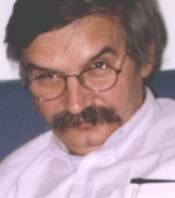 Marek Abramowicz合作论文数Institutionen for Fysik, Goteborgs Universitet6Judith Toronchuk合作论文数6
 Thomas Buchert合作论文数Centre de Recherche Astrophysique de Lyon, Ecole Normale Superieure de Lyon;Physics Department, Université Claude Bernard Lyon 15
 Ruth M Williams合作论文数5
 Deon Solomons合作论文数Cape Peninsula University of Technology5William M. Lesame合作论文数5
 Tim Gebbie合作论文数University of Cape Town5
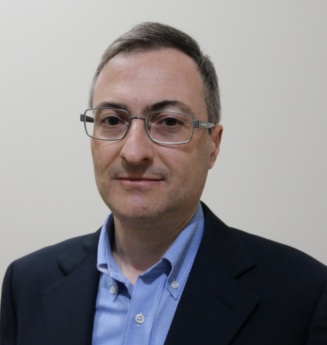 Antonino Francesco Lanza合作论文数Osservatorio Astrofisico di Catania, Istituto Nazionale di Astro Fisica5
 Nazeem Mustapha合作论文数Department of Mathematics;University of Cape Town;Department of Mathematics, University of Cape Town5malcolm maccallum合作论文数4W. Stoeger合作论文数4
 Jonathan Kopel合作论文数Health Sciences Center, Texas Tech University4
 Chris Clarkson合作论文数School of Physical and Chemical Sciences, Queen Mary University of London;University of the Western Cape4
 Sunil Maharaj合作论文数Astrophysics Research Centre, College of Agriculture, Engineering and Science, University of KwaZulu-Natal4
 Marco Bruni合作论文数Institute of Cosmology and Gravitation, University of Portsmouth4John C. Miller合作论文数School for Advanced Studies, International4William R. Stoeger合作论文数4
 Javad Taghizadeh Firouzjaee合作论文数Department of Physics, Sharif University of Technology4Julien Larena合作论文数LUTH, ObS. Paris-Meudon4
 Jonathan Tapson合作论文数Department of Electrical Engineering, University of Cape Town4
 Amit Kumar Mishra合作论文数Electrical Engineering Department, University of Cape Town4ahilleas nikolaou maurellis合作论文数3Sayuri Singh合作论文数3
 Maciek Wielgus合作论文数Max-Planck-Institut für Radioastronomie, Auf dem Hügel 69, D-53121 Bonn, Germany3
 Barbara Drossel合作论文数Fachbereich Physik, Technical University of Darmstadt3
 Melike Fourie合作论文数ACSENT Laboratory, University of Cape Town Cape Town3
 Mattias Marklund合作论文数Department of Physics, Faculty of Science, University of Gothenburg;Swedish Research Council3
 Hermann Nicolai合作论文数Albert Einstein Institute, Max Planck Institute for Gravitational Physics3
 Denis Noble合作论文数Department of Physiology, Anatomy and Genetics, University of Oxford3




