Cropland acidification in China has decreased crop yields and accelerated cadmium accumulation in edible crops. Enhancing manure recycling effectively mitigates soil acidification but increases the risks for cadmium accumulation due to elevated cadmium contents in manure. Here we coupled a dynamic cadmium model with the soil acidification model VSD+ to assess the spatial-temporal impacts of nutrient management on soil acidification and cadmium dynamics in a typical Chinese paddy rice system. Enhancing manure recycling decreased soil acidification and almost completely reduced mineral phosphorus fertilizer use, but accelerated soil cadmium accumulation through increased manure cadmium inputs and reduced cadmium leaching. Raising soil pH without lowering cadmium inputs reduced rice cadmium contents in the short to medium term, but continued soil cadmium accumulation offset these benefits in the long term. Under current cadmium deposition levels, only around 20% of the manure can be safely recycled without exceeding cadmium safety thresholds, which is lower than the current manure recycling ratio of 30%. When cadmium deposition is minimized, the manure recycling ratio can increase up to 85%. To enhance manure recycling sustainably, a lowering of cadmium content in manure and cadmium deposition is required.
Soil microbes buffer ecosystems against climate perturbation by regulating carbon storage, greenhouse gas fluxes, and nutrient cycling. Yet, predicting their long-term, global-scale responses to warming remains challenging due to the short duration and limited geographic scope of existing studies. Here, we conducted a global meta-analysis of 2,786 paired observations to assess the impacts of warming on soil microbial diversity and abundance. Overall, soil microbial diversity and abundance consistently declined with increasing warming magnitudes and mean annual temperatures. Long-term warming (>= 5 years) is projected to reduce global soil microbial richness by 7%-9% under the Paris Agreement-aligned scenario SSP1-2.6. These findings reveal global patterns of microbial diversity and abundance loss under warming, thereby improving predictive models of ecosystem responses. They enhance our ability to assess the sustainability risks of climate change and highlight the urgent need for mitigation strategies to protect the soil microbiome.
Abstract A national action, titled the Zero Growth of Pesticide Use Action Plan (ZAP), was launched to tackle pesticide pollution risks by the Chinese government in 2015, leading to substantial reductions in pesticide inputs. However, the effect of such a national action on risk mitigation remains unknown. This study characterizes the spatiotemporal dynamics of pesticide inputs and risks of 146 pesticide active ingredients across China from 2001 to 2022 and provides projections up to 2050 to evaluate the efficacy of ZAP under a moderate future climate change scenario. A transition in pesticide input was observed from 2001 to 2022, revealing a redistribution of hotspots from the North China and Yangtze River basins to more widely distributed locations in southern China. Despite the overall reduction in quantities used, pesticide concentrations doubled in soils from 2001 (1.04 mg kg–1) to 2022 (2.25 mg kg–1), with pesticide residues in soils becoming more persistent. The launch of ZAP in the short term (from 2015 to 2022) decreased the applied mass of hazardous pesticides. From the long-term view, a reduction of pesticide inputs exceeding 50% is projected to be achieved with herbicide inputs continuously increasing. By mode of action, protoporphyrinogen oxidase inhibitors and photosystem I electron diverters contributed disproportionately to soil ecological risk. Consequently, a delayed risk mitigation effect was observed: the proportion of croplands at medium risk fell from 85% in 2015 to 70% in 2050. Our analysis calls for integrated measures toward precise pesticide management, including sustainable plant protection and pollution remediation.
Soil organic carbon (SOC) loss driven by water erosion poses a dual threat to agricultural biogeochemical cycles and global carbon balance. While soil microbial communities are known to respond to erosion, their adaptive strategies and the consequent impacts on the fate of SOC across soil profiles in various positions of eroded landscapes remain poorly understood. This study integrated observations from 0–100 cm soil profiles in the upper (eroding) and lower (depositional) slope positions in northeastern China's black soils to investigate the adaptive responses of soil microbiomes to water erosion stress and their cascading effects on SOC decomposition. Water erosion induced distinct microbial adaptive strategies across soil depths, with major changes occurring in the topsoil (0–40 cm) whereas the fate of SOC deeper in soil was unaffected. Erosion reduced SOC content in the upper slope, particularly in the 2–10 μm colloidal soil particles by 30
Understanding how environmental and management factors shape arthropod functional guilds is essential for assessing ecological sustainability in rice agroecosystems. This study investigated the multiscale drivers of arthropod functional guilds dynamics across 12 rice farms in Taiwan from 2017 to 2019, integrating climatic, landscape, and management variables using generalized estimating equations and structural equation modeling. Four functional guilds (i.e., pests, predators, parasitoids, and detritivores) were analyzed to evaluate abiotic and biotic regulation across gradients of elevation, seasonality, and land use. Abiotic factors had the strongest effects on guild abundance and diversity, in particular for temperature, elevation, and season. Biotic mediation among guilds was limited, with weak but positive co-occurrence among pests, predators, and parasitoids, while detritivores responded independently. Landscape heterogeneity influenced community composition, particularly at intermediate spatial scales (500 m), but its contribution was relatively weaker than that along environmental gradients. Our findings emphasize the importance of climate and landscape in structuring these assemblages, suggesting the need for adaptive, climate-informed, and landscape-integrated management strategies to maintain resilient rice agroecosystems.
CONTEXT Effective utilization of nitrogen (N) and phosphorus (P) in crop-livestock systems is essential for food security and environmental health, particularly in areas facing nutrient overload that endangers agricultural sustainability. OBJECTIVE Hainan, China's only tropical province, is known as the “winter basket of fruits and vegetables”, but this comes with significant N and P overuse. As the largest free trade pilot zone in China, Hainan is dedicated to sustainable agricultural development and aims to serve as a model for other tropical regions. METHODS Taking this island as an example, we simulated N and P flows, establishing thresholds for minimum input to maintain agricultural production and maximum inputs for protecting air and water quality. We also evaluated the current policies for 2030 to identify strategies to bridge the gap between these thresholds and actual practices. RESULTS AND CONCLUSIONS From 1988 to 2020, N and P inputs increased by 2.8 and 8.2 times, respectively, while environment losses rose by 4.0 and 23.7 times. Environmental thresholds were exceeded by 2% to 80%, with projections of 40% to 140% by 2030. Although N use efficiency (NUE) improved from 16% to 22%, P use efficiency (PUE) dropped from 52% to 18%. Scenario analysis indicates that a 45% reduction in N and 37% in P inputs compared to 2020 levels is necessary for environmental safety, although it would only meet 96% of target yields. SIGNIFICANCE By examining the current and desired states of agricultural productivity, we address the agronomic and environmental challenges of excessive nutrient use, emphasizing the trade-off between environmental protection and agricultural productivity in sustainable management.
Sustainably feeding an increasingly affluent global population remains a major challenge. Since the 1980s, China has implemented national agricultural programs, initially aimed at boosting yields and later expanding to improve resource use efficiency and sustainability. Using an ensemble machine learning framework, we quantified their impacts on crop yield and fertilizer use efficiency (FUE) from 1980 to 2020 while combining anthropogenic and natural factors. This approach explained about 80% of variation in crop yield and FUE. Over four decades, China's average crop yield doubled from 2.9 to 5.7 t ha−1, with 59% of the increase associated with these programs. Yield gains were initially linked to increased fertilizer inputs, which were accompanied by a decline in FUE, and over time, national programs coincided with the stabilization and improvement of FUE in most prefectures. These results highlight four decades of Chinese agricultural policy interventions from input-driven to efficiency-sustained yield growth, offering guidance for sustainable food security.
Inorganic fertilizers have frequently been debated in terms of food security and environmental impact, but also risks associated with availability or affordability. We quantified the fertilizer contribution to food production from cropland for nitrogen (N), phosphorus (P) and potassium (K) inorganic fertilizers since 1961. We used two approaches: (1) the percentage of total nutrient input in cropland that came from inorganic fertilizer (nutrient supply approach); (2) the percentage of total crop production coming from inorganic fertilizer given farm application rates and experimental agronomic efficiencies (agronomic efficiency approach). Using the nutrient supply approach we estimated that inorganic fertilizers contributed 31%, 59% and 27% of total N, P and K inputs in cropland worldwide between 1961 and 1970, which increased over time to 56%, 73% and 52% between 2014 and 2023. On the one hand, these estimates may be conservative because they did not account for dependence of livestock manure, biological N fixation and atmospheric (N) deposition on inorganic fertilizers. Every 25% of livestock manure production deemed dependent on inorganic fertilizer was estimated to increase the contribution based on the nutrient supply approach by 3, 6 and 11 percentage points for N, P and K respectively. On the other hand, the inorganic N contribution to food production estimates using the agronomic efficiency approach was on average 26 percentage points lower than the nutrient supply approach. We show that methodological differences influence the magnitude of estimates, and the increasing share of inorganic fertilizers for sustaining global cropland productivity.
Demand for monitoring the supply and use of natural resources in agriculture is growing. Farming depends on ecosystem services yet contributes to their loss. Ecosystem accounting frameworks help to integrate nature into decision-making by consistently revealing those impacts and dependencies. We apply the United Nations' System of Environmental-Economic Accounting - Ecosystem Accounting (SEEA EA) to a 38,603-hectare farm in southern Amazonia, Brazil. We assess uncertainties in spatial datasets compared to field data, and evaluate their suitability for the accounts. Our results show that combined spatial and field data allow farm-level monitoring of ecosystem extent, integrity, and services that is consistent with SEEA EA. Farm data effectively capture nitrogen use efficiency and pesticide-related biodiversity risks. Land-use and carbon flows could be tracked with acceptable accuracy with spatial data, while soil variables had to rely solely on field data. Despite these uncertainties, the accounts deliver actionable insights. For farmers who often perceive forest as a burden, the accounts clarify the role of forests in sustaining key services for their rainfed crops, such as rainfall regulation and carbon sequestration with associated climate regulation benefits. Consistent yearly monitoring also supports informed decisions on managing and financing agriculture for better use of natural capital.
Soils are the largest terrestrial carbon reservoir, with soil organic carbon (SOC) playing a critical role in maintaining soil quality and associated ecosystem services. Accurately estimating SOC stocks at high spatial and temporal resolution over large scales remains challenging, particularly in agricultural systems where carbon inputs are often uncertain or unavailable. In this study, we used the RothC model to simulate SOC stocks in Dutch agricultural mineral soils from 1986 to 2022, at 25 m & times; 25 m resolution. We examined the temporal and spatial variation of the total SOC stock and its distribution over RothC carbon pools and unravelled how livestock manure inputs and land use affect the observed trends. Averaged SOC stocks in the topsoil (0-30 cm) increased by 13.2% under grassland, decreased by 10.4% under cropland, and decreased by 3.9% in areas with changing land use. Carbon gains in grassland were linked to systematically higher manure inputs and accumulation in stable pools, whereas lower manure inputs and more intensive management led to declining labile SOC pools. Independent validation on three spatial datasets showed the highest model performance for point-based field data (model efficiency coefficient MEC = 0.32 in 1986 and 0.37 in 2022). Observed changes in SOC over time could be less well reproduced (MEC approximate to 0) across all datasets, but simulated spatiotemporal patterns were consistent with previous observational studies. The study illustrates the potential of RothC for national-scale SOC stock assessment and monitoring, while highlighting the need for improved input data and temporal validation data. Importantly, this modelling approach effectively captures SOC stock dynamics, which remains challenging for purely empirical, statistical models. Future work could benefit from hybrid modelling approaches that integrate RothC with machine learning, enhancing the ability to capture currently unexplained variability and improve simulation performance.
The European Union's Green Deal aims to reduce nutrient losses to air and water by 50% by 2030, requiring a substantial reduction in nitrogen (N) surplus from agricultural land. Using Europe-wide datasets of N budget, we show that cropland N surplus declined during 1990–2010 but reversed in 2011–2020 due largely to increasing synthetic fertilizer use and relatively lower crop N uptake. Our assessment highlights the need for improved nitrogen-use efficiency and regionally tailored strategies, while considering climate change impacts on N uptake, to reduce N pollution and meet EU environmental targets.
Sustainable phosphorus (P) management includes producing food within environmental boundaries for water quality. In regions where environmental boundaries are crossed, it is beneficial to identify P loss hotspots and implement mitigation measures. In this study, we assessed the risk of P losses to shallow groundwater and surface water from agricultural fields on non-calcareous sandy soils with an exceptionally low P sorption capacity and high hydrological connectivity due to shallow groundwater levels and the presence of open trenches. Specifically, we investigated P quantity-intensity relationships in soils from two agricultural fields and monitored groundwater levels and P concentrations in both groundwater and water fluxes from open trenches. The results showed that non-calcareous soils with low sorption capacities reach high P saturation degrees when fertilized to an agronomic optimum based on a P quantity measure. This leads to high reactive P concentrations in soil solution that can be transported to surface water via interflow, overland flow, and land drainage. In these situations, open trenches are a significant P loss pathway because they directly connect the P-saturated topsoil to surface water, leading to P losses ranging from 1.3 to 7.5 kg P ha-1 year-1. Effective mitigation measures include reducing dissolved P losses by reducing the soil P status of fields to environmental soil P intensity thresholds through negative P balances and reducing particulate P losses by implementing erosion control measures. However, because inlet water substantially contributes to the total water discharge, within-catchment mitigation measures may need to be complemented by upstream mitigation measures.
Nitrogen plays a critical role in Earth's biogeochemical cycles, acting as both an essential nutrient for life and an environmental pollutant. Managing nitrogen use within safe boundaries is crucial for achieving the Sustainable Development Goals, particularly under the pressures of a growing global population. Here, we quantified the temporal dynamics in the safe boundary for nitrogen input to the human-nature system in view of surface water quality in China, driven by changes in management practices and runoff over the period of 1980 to 2020. Insufficient nitrogen management in the human-nature system led to a reduction in the safe nitrogen boundary from 27 Tg N year-1 in 1980 to 17 Tg N year-1 in 2006. Subsequently, improvements in agricultural nitrogen use efficiency and urban waste management contributed to an expansion of this boundary, which reached 34 Tg N year-1 by 2020. Further integration of nitrogen management strategies spanning agriculture, urban waste, and human dietary patterns is needed to maintain nitrogen use within the established safe boundary by 2050, generating societal benefits of US$335 billion for ecosystems, human health, climate, and food supply, with associated implementation costs of US$106 billion. These findings demonstrate that improved nitrogen management practices can dynamically expand the safe operating space for higher nitrogen utilization to support human well-being while keeping nitrogen pollution within safe environmental limits.
Incorporating environmental boundaries into P fertilizer recommendations is key to reconcile agronomic objectives and P leaching risks to ground- and surface waters. Current agronomic soil P quantity tests, used as the basis for fertilizer recommendations, are poorly suited for this purpose as they provide no information on the ortho-P concentration in soil solution which is prone to leach. Therefore, we converted agronomic soil P test values to the equilibrium ortho-P concentration in soil solution through the corresponding P saturation degree (PSD), using information on the P sorption capacity and the affinity of ortho-P to bind to soil. We derived an environmental PSD threshold and compared this with the current PSD and the agronomic target values. In Dutch agricultural soils, current PSD values exceed the agronomic target and environmental threshold for 84 % and 94 % of the agricultural land area, respectively. Decreasing the current PSD to the environmental threshold through P mining showed limited adverse effects on crop yields, except in areas being vulnerable to P losses because of a low P sorption capacity and high hydrological connectivity. Here, the cultivation of less P-sensitive crops or the provision of other ecosystem services than food production may be more appropriate. Limited adverse effects on crop yield result from high agronomic soil P targets in Dutch fertilizer recommendations, based on achieving 99 % of the maximum yield for the P-sensitive potato crop. Given the high livestock density and excess manure in the Netherlands, reducing the current PSD to the environmental threshold poses a significant challenge.
As the world's largest livestock producer, China faces pressing challenges in recycling manure to minimize resource waste and environmental degradation resulting from the vast amounts of manure generated. Understanding the drivering forces behind manure recycling is essential for advancing sustainable agriculture in China. This study estimated the manure recycling ratio (MRR), measured by nitrogen content, across 2853 Chinese counties using data from 390,000 farms representing four major livestock farming types in 2017. Northern Chinese counties demonstrated significantly higher MRRs, with values exceeding 50 %, compared to Southern regions, with values being lower than 30 %. Higher MRRs were linked to larger cropland size, higher urbanization levels, and a greater proportion of chicken farming. In contrast, MRRs declined in regions with higher temperatures, increased precipitation, higher manure production per livestock unit, a greater emphasis on pig farming, and an ageing rural population. Notably, natural factors such as temperature and precipitation predominantly influenced MRRs in both Southern and Northern China, whereas socioeconomic factors like cropland size and urbanization were more impactful in Eastern and Southwestern regions. These findings highlight the need for region-specific strategies that account for natural and socioeconomic conditions to enhance manure recycling practices across China.
ABSTRACTInsight into the variation of the soil phosphorus (P) adsorption maximum (Qmax) and the P adsorption affinity constant (KL) is crucial for accurately assessing the dynamics of P availability, P uptake and P leaching in agricultural systems at regional scale. Data on the variation in soil P adsorption characteristics, derived from traditional batch experiments, combined with data on soil properties affecting them, such as pH, clay and organic matter content, can be used to assess the influence of soil properties on P adsorption characteristics. However, current studies are limited to explaining the variation in Qmax using linear models, focusing on either noncalcareous or calcareous soils. This study aims to (1) identify the soil properties governing both Qmax and KL for a combination of noncalcareous and calcareous soils, including nonlinear and interaction effects; and (2) create spatial maps depicting the variations in both soil P adsorption characteristics at the regional scale (two typical Chinese counties). We leveraged 83 data points of both Qmax and KL from 16 publications with main soil properties affecting P adsorption, that is, pH and the content of soil organic matter (SOM), clay and oxalate extractable Fe and Al (FeOX and AlOX), to develop predictive models for soil P adsorption. General linear regression (GLM) and extreme gradient boosting (XGB) models were used to unravel the relationships between soil properties and P adsorption characteristics. The XGB model outperformed GLM model, explaining more than 80% of the variations in both Qmax and KL in noncalcareous and calcareous soils, while the GLM model explained 52% for Qmax and only 21% for KL. Key drivers influencing Qmax were found to be FeOX, AlOX and pH, while clay and pH played significant roles in explaining the variability in KL. When applying these models at the county level using county‐level inventory data, noncalcareous soils generally exhibited higher P sorption capacity and binding energy than calcareous soils. To enhance the accuracy of soil P sorption predictions and guide sustainable P fertiliser use, regional mapping of FeOX and AlOX content is essential.
Agriculture and urbanization often cause nitrogen (N) and phosphorus (P) losses, and associated environmental impacts in Europe. Here, we aim to quantify the effects of using recovered N from manure processing and recovered P from treated sewage sludge, increasing N and P use efficiencies in agriculture, and improving sewage treatments on reducing future nutrient emissions to the air, and losses to rivers and seas of Europe. Exploring synergistic options we show that 30 % less N is expected in the air via ReNuRe products and higher N use efficiency by 2050. Rivers are projected to receive 23-68 % less nutrients relative to the future baseline scenario. These rivers may export up to two-thirds less nutrients relative to the future baseline. Recovered P from treated sewage sludge can fulfill P fertilizer need in Europe in 2050. Our analysis supports the adoption of bio-based fertilizers to mitigate nutrient losses and contributes to circular economy.
Elevated inputs of mineral nitrogen (N) and phosphorus (P) fertilizer applications increased crop yield but enhanced eutrophication and soil acidification due to nitrate-induced base cation (BC) leaching in China. Increasing inputs of manure counteract soil acidification since it contains BC apart from N and P, but its use may enhance eutrophication by unwanted P accumulation in soils with a high P status. In addition, however, N and P fertilizer inputs can go down by improving management practices, increasing the N and P use efficiency (NUE and PUE). In this study, we assessed spatially explicit optimal manure and N and P fertilizer application rates, by balancing crop N and P demand with their inputs while using attainable NUE values for manure and fertilizer and enhancing PUE values by accounting for the legacy soil P pools, at 151 sites in Qiyang, a typical Chinese agricultural county. We evaluated the impacts on N and P surpluses and soil acidification rates (lime requirements) using the acidification model VSD+ and extrapolated these impacts to county-level. Historical acidification in paddy soils was mainly caused by natural acidification and crop removal, while in upland soils mineral fertilizers dominated the factors controlling acidification. Balancing N and P input with crop demand and recycling all available manure can nearly fulfil the crop P requirements, and reduced N and P fertilizer use by 74 % and 99 %, respectively. The N and P surpluses subsequently declined by 70-90 %, respectively, whereas the organic carbon (C) input increased by 48 % and the soil acidification rates for non-calcareous soils declined by 50 %. Recommendation systems for fertilizer and manure use, combining the flows of C, N, P and base cations are key to counteract soil acidification and substantially reduce environmental impacts while sustaining crop production.
Phosphorus (P) is an essential nutrient for plant growth and is applied to agricultural soils in the form of organic manure or inorganic fertilizer. To guide farmers in achieving optimal crop yields, P fertilizer recommendations are in place with the rationale to bring soils to a “target soil P status” following the classic build-up and maintenance approach. The target soil P status where crop yield is not limited by P deficiencies is generally operationalized as the soil P status at which 90-99% of the potential crop yield is found in long-term fertilization field experiments. Though these fertilizer recommendations allow for an economic optimization of crop yield versus P inputs, environmental objectives are barely considered. In our research, we revised the classic build-up and maintenance approach to balance crop production, water quality and the use of finite P reserves. This revision requires insights into the P sorption capacity of soils (PSC) and its saturation with P. We identify the oxalate extraction method as a key component of this approach since it quantifies the PSC from the combined measurement of amorphous iron- and aluminium-(hydr)oxides and the total pool of reversibly bound P. For the Netherlands, we show the implications of the approach for P fertilizer use. We quantified soil amorphous iron- and aluminium(hydr)oxides contents at a 25m resolution across the soil depth profile using a Digital Soil Mapping approach and used these predictions to translate agronomic soil P data to new insights to optimize P fertilizer use. We finally argue that agronomic P target levels should be lowered in soils with a low PSC to decrease the risk of P leaching and in soils with a high PSC to ensure judicious use of finite P reserves.
 W (Wim) de Vries合作论文数Wageningen University & Research25
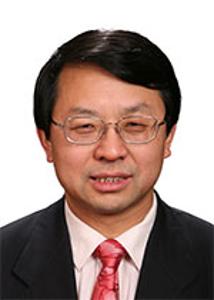 Fusuo Zhang (张福锁)合作论文数Shanxi Agricultural University;China Agricultural University13
 Qichao Zhu (朱齐超)合作论文数College of Resources and Environmental Sciences, China Agricultural University10
 E. J. M. Temminghoff合作论文数10
 Minggang Xu (徐明岗)合作论文数South Subtropical Crop Research Institute, China Academy of Tropical Agricultural Sciences7
 Ellis Hoffland合作论文数Department of Environmental Sciences, Wageningen University and Research7Sven Verweij合作论文数6
 Madaline Young合作论文数5
 Donghao Xu (徐东昊)合作论文数5ZeJiang Cai (蔡泽江)合作论文数5
 J (Hans) Kros合作论文数Wageningen Environmental Research, Wageningen University & Research5Debby van Rotterdam合作论文数4P.N.M. Schipper合作论文数4Luuk van Gerven合作论文数4
 Maarten van Doorn合作论文数4
 Luncheng You (油伦成)合作论文数College of Resources and Environment, Shandong Agricultural University4
 Xuejun Liu (刘学军)合作论文数College of Resources and Environmental Sciences, China Agricultural University4
 Yongliang Chen (陈永亮)合作论文数College of Resources and Environmental Sciences, China Agricultural University4Willem H. Van Riemsdijk合作论文数4
 Piet Groenendijk合作论文数Alterra4Nick Van Eekeren合作论文数4Jan Cees Voogd合作论文数3
 Tessa Sophia van der Voort合作论文数3
 Xiaoliang Qin (秦晓梁)合作论文数College of Agronomy, Northwest A&F University3
 Jiquan Xue (薛吉全)合作论文数College of Agronomy, Northwest A&F University3
 Yong Hou (侯勇)合作论文数College of Resources and Environmental Sciences, China Agricultural University;National Academy of Agriculture Green Development3
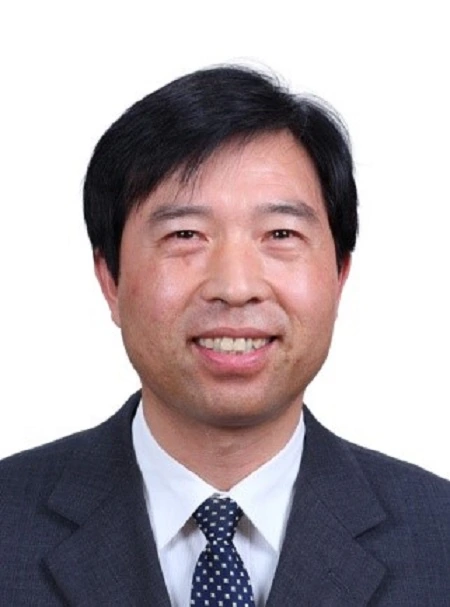 Ying Zhang (张颖)合作论文数School of Economics & Management, Beijing Forestry University3
 Jianbo Shen (申建波)合作论文数College of Resources and Environmental Sciences, China Agricultural University;National Academy of Agriculture Green Development, China Agricultural University3d w bussink合作论文数3
 Gerwin F. Koopmans合作论文数Soil Science Center, Alterra–Wageningen UR3A. B. Smit合作论文数2Koos Verloop合作论文数2Olusegun Yerokun合作论文数2Yuki Fujita合作论文数2
 Roberto Parra-Saldivar合作论文数Universidad Autonoma de Nuevo Leon2
 Zhilong He合作论文数2
 Siddhartha Shankar Bhattacharyya合作论文数Dept Agron, Bangladesh Agr Univ2J. Pijlman合作论文数2
 Lena Schulte-Uebbing合作论文数Environm Syst Anal Grp, Wageningen Univ & Res2
 Mengru Wang合作论文数Water Systems and Global Change Group, Wageningen University & Research2Nan Sun合作论文数2
 G.D.H. Claassen合作论文数2
 Hafiz M. N. Iqbal合作论文数Autonomous University of Nuevo León2
 Gerard B M Heuvelink合作论文数ISRIC World Soil Information;Wageningen University2
 Wen Xu (许稳)合作论文数College of Resources and Environmental Sciences, China Agricultural University;National Academy of Agriculture Green Development, China Agricultural University2
 Hongliang Wang (王洪亮)合作论文数College of Agronomy and Biotechnology, China Agricultural University;Center of Biomass Engineering, China Agricultural University2
 Philippe Ciais合作论文数Laboratoire des Sciences du Climat et de l'Environnement2Yu-Pin Lin合作论文数2
 Shilin Wen (文石林)合作论文数Institute of Agricultural Resources and Regional Planning, Chinese Academy of Agricultural Sciences2




