Green manure (GM) boosts sustainable agriculture by enhancing soil fertility and crop yields. However, the dynamics of nitrogen (N) release from different GM residues into soil and their supply patterns to wheat remain unclear. Clarifying residue N mineralization during the growing season and its contribution to soil N fractions and wheat is key to optimizing GM use strategies. An in-situ decomposition experiment using 15N-labeled soybean (SB) and sudangrass (SG) GM was conducted in a wheat field on the Loess Plateau. Soil and wheat samples were collected at different wheat growth stages. We determined GM-N mineralization, wheat N uptake, and yield at maturity. The contribution and recovery rate of residue N to soil total N (STN), particulate organic N (PON), microbial biomass N (MBN), available N (NH4⁺ and NO3⁻), and to the wheat were also measured. Our results showed that the GM-N mineralization rate and amount from SB consistently exceeded those from SG throughout the wheat growth stages. At maturity, compared to the CK, SB and SG treatments increased wheat N uptake by 112% and 47%, and yield by 65.30% and 39.09%, respectively. The contribution of SB-N to wheat was 8.23 times greater than that of SG. During the wheat season, SB exhibited higher soil N distribution and recovery rates than SG. Before green-up, SB showed greater distribution and recovery rates in PON and MBN than SG. However, during jointing and heading stages, SG demonstrated higher recovery rates in PON and MBN than SB. SB residue N was predominantly accumulated in PON and MBN pools in the early growth stage, which may act as transient N reservoirs and potentially contribute to subsequent wheat N uptake. In contrast, SG’s contribution was more consistent with direct N mineralization supplying available N. Correlation analysis revealed a positive relationship between GM-N contributions to soil N fractions and wheat N uptake, which was closely associated with yield formation. Legume residue N is initially retained in PON and MBN pools, and may subsequently contribute to plant N supply during peak wheat demand after green-up, thereby showing greater temporal synchrony. In contrast, the asynchrony of the non-legume residue N supply may be partly explained by intense early-stage microbial N immobilization competition and limited storage in soil organic N. This demonstrates the greater potential of legume GM for enhancing soil fertility and crop yields.
Integrated organic–inorganic soil amendments have been proposed as a strategy to improve soil fertility while maintaining crop productivity, yet their effects on seasonal nutrient dynamics and chile (Capsicum annuum L.) performance remain unclear. Two chile cultivars (‘NuMex Odyssey’, ‘NuMex Sandia Select’) were tested to evaluate the effects of organic and inorganic amendments on soil nutrient dynamics, chile vegetative growth, and fruit yield and dimensions across key growth stages. The amendments included an unamended control (CK), half-rate (CF) and full-rate (CFCF) chemical fertilizer, and three integrated amendments consisting of composted manure–biochar blend (CFMB), composted manure (CFM), and pea residues (CFP) applied at a 1:1 ratio with chemical fertilizer on a plant-available nitrogen (PAN) basis. CFCF produced the highest early-season availability of N, P, and K, whereas CFP and CFM provided a more gradual nutrient release pattern, maintaining PAN comparable to CFCF through flowering and sustaining P and K availability through harvest. ‘NuMex Sandia Select’ exhibited greater yield responsiveness to soil amendments, while ‘NuMex Odyssey’ produced fewer but higher dimension fruits. CFP maintained fruit yields comparable to CFCF while producing lower vegetative biomass. Correlation analyses showed that significant nutrient–plant relationships were concentrated at harvest, with soil NO3−-N associated with fruit number and NH4+-N with fruit dimensions. These findings indicate that partial substitution of mineral fertilizer with organic amendments may sustain nutrient availability and chile productivity while providing a more gradual nutrient release throughout the growing season.
Organic amendments, including biochar and compost, are widely recognized for their potential to improve soil health, but their linkage to soil water functions (e.g., storage, infiltration, plant availability) is not clear. Over two years (2024-2025), we investigated soil water infiltration and associated soil health properties in response to soil amendment application under no-tillage conditions in semi-arid agroecosystems of the southwestern USA. Soil water infiltration was measured in biochar, compost, biochar and compost, and control plots using the SATURO dual-head infiltrometer. Soil physical and chemical properties, including bulk density (BD), soil moisture content (SMC), water-filled pore space (WFPS), residue cover, mean weight diameter (MWD) of dry aggregates, water-stable aggregates (WSA), pH, soil organic carbon (SOC), and total nitrogen (TN), were assessed at 0-15 cm soil depth. The results show a 31.5% higher infiltration rate along with, a small but statistically significant (3.7% lower) bulk density, and 119% greater wet aggregate stability in the biochar-amended plots than in the control plots. Compost with biochar also improved soil health, but infiltration responses were variable. Infiltration was positively correlated with residue cover and soil pH, whereas it was negatively correlated or not correlated with other soil properties. This study demonstrates that biochar under no-tillage conditions can enhance soil health and resilience of semi-arid agroecosystems by improving soil water functions.
Soil fungi constitute multiple functional communities essential for organic matter decomposition. Cover crops stabilize sustainable crop production by introducing exogenous organic matter to mitigate chemical fertilization-induced soil degradation. But responses of wheat growth to soil characteristics and fungal functionality communities under combined impacts of cover crop and nitrogen fertilization were not obviously elucidated. Herein, the long-term interactive experiments of cover crop and nitrogen fertilization revealed that cover crop increased soil organic carbon by an average of 18% and increased soil mineral-associated organic carbon by 13%, while fertilization increased them by an average of 8% and 7%, respectively. Legume cover crop reduced soil bulk density by 7%-8%, but increased soil water content by 8%-31% among distinct fertilizations. Soil fungal functional communities were mainly composed of the saprotroph communities, their diversity generally had the highest values in the middle fertilization in each cover crop. Meanwhile, cover crop and fertilization singly and interactively had stronger effects on the pathotroph and symbiotroph community compositions, respectively. Stochastic processes governed the saprotroph and pathotroph communities, while deterministic processes intensified along with elevated fertilization. Networks of soil fungal functionality communities were composed of specialized modules consistently containing diversified trophic mode phylotypes. Overall, wheat growth indicated by wheat biomass and grain yield was enhanced by optimal fertilization rate in legume cover crop. Moreover, wheat growth was primarily regulated by the direct effects of pathotroph community composition and the total effects of fertilization and soil characteristics based on partial least squares path modeling. These findings suggest that optimal combinations of cover crop and nitrogen fertilization can benefit crop production through regulating soil characteristics and fungal functionality communities, which likely serves as a valuable reference for cover crop agricultural system to balance the management of cover crop and nitrogen fertilization.
Abstract Organic amendments are applied to enhance soil carbon (C) storage, improve nutrient cycling, and mitigate greenhouse gas (GHG) emissions, yet their interaction with soil moisture regimes in regulating C and nitrogen (N) cycling is largely overlooked. A study was designed to assess the interaction between soil moisture regimes and organic amendments in regulating C and N cycling through a laboratory incubation experiment. We quantified carbon dioxide (CO 2 ) and nitrous oxide (N 2 O) emissions following biochar, compost, and a 50:50 biochar + compost (BC mix) amendment in soils at field capacity (FC), 80% of FC (FC80), and 60% of FC (FC60). Results showed that biochar at FC had the highest cumulative CO 2 ‐C and N 2 O‐N emissions, with 40% and 50% higher emissions than control (CTRL), respectively. The FC80 level increased CO 2 ‐C emissions by 20% in CTRL, while it reduced CO 2 ‐C emissions by 4% in biochar treatment. Soil N 2 O‐N release increased with reduced moisture levels to FC80 and FC60, except in biochar treatment. At FC60, biochar reduced cumulative CO 2 ‐C and N 2 O‐N emissions by 23% and 9%, respectively. Soil C mineralization correlated positively with soil C content ( r = 0.74) at the beginning of the incubation, while N mineralization had a positive correlation with soil C ( r = 0.50) and a negative correlation with soil total N ( r = −0.47). A double exponential model (DEM) captured the mineralization kinetics of labile C and N following amendment application. Overall, soil moisture regulates C and N mineralization following organic amendment application. Optimized water management can offset the elevated GHG emissions following biochar application in water‐limited agroecosystems.
Biochar amendment improves soil health and mitigates the impacts of climate change on agriculture by promoting sustained crop production. Biochar is modified to further optimize its agronomic and environmental benefits; however, the magnitude and mechanism of microbial community, soil organic carbon (SOC), and crop yield responses remain unclear. This study evaluated the impact of different feedstock-derived pristine biochars and their modifications on soil health, short-term SOC dynamics, and the relationship between these changes and crop productivity. Pine-derived pristine or unmodified biochar (BC), carbon dioxide-modified biochar (C-BC), sulfur-modified biochar (S-BC), and poultry litter biochar (P-BC) were applied to the soil (1% w/w), and sorghum (Sorghum bicolor) was cultivated for three months in greenhouse conditions. Pine biochar nearly doubled short-term SOC storage, with BC, C-BC, and S-BC accumulating 97%, 105%, and 96% more SOC than the unamended soil, respectively, alongside increased particulate organic carbon (POC). Notably, BC increased soil fungal abundance by 16% compared to unamended soil. S-BC simultaneously enhanced short-term SOC accumulation and crop yields, with more significant positive effects on soil fungi, K, and S than C-BC, resulting in 9% and 13% greater grain yields than C-BC and unamended soil, respectively. In contrast, P-BC increased soil nutrient availability and grain yield but reduced microbial abundance (e.g., soil fungi) and SOC accumulation in the short term, with these effects likely depending on application rate, experimental duration, and soil type. Modified pine biochar, specifically S-modified biochar, can enhance short-term SOC accumulation and improve productivity in low-fertility arid soils by boosting microbial activity and improving nutrient cycling. While SOC storage was positively correlated with biochar C, C/N ratio, surface area, and pore volume, as well as with soil POC and microbial biomass C, the yield response was more closely related to biochar nutrient content and soil pH regulation.
Nature-positive farming, an approach that improves crop production while increasing resilience and harmony between nature and society, is expected to enhance soil health and increase soil water infiltration. However, limited research exists on how diverse nature-positive farming practices affect soil health and soil water infiltration dynamics. This study assessed the impact of three nature-positive farming practices on soil water infiltration and the relationship with other soil properties. For this, soil water infiltration was measured using a SATURO dual-head infiltrometer, and selected soil health parameters were measured in soil samples collected from 0-15 cm depth of the respective fields. The results show significantly higher water infiltration rates in nature-positive practices than their respective controls, with infiltration rates 86% to 198% higher in nature-positive management than in controls. Identifying factors regulating infiltration rate using a linear mixed-effects model shows 70 % of the total variation in infiltration was governed by soil health indicators, with water stable aggregates being the most critical factor, accounting for 49% of the total variation. Nature-positive management could be a sustainable solution to improve soil health and security in semi-arid agroecosystems, and stability of soil aggregates plays a critical role in improved water functions, including soil water infiltration, irrespective of the nature-positive practices.
Recent interest in natural climate solutions has emphasized the role of urban soils in sequestering carbon (C) and improving soil health. Mulching can increase soil C sequestration, protect the soil from erosion, minimize soil temperature fluctuations, and maintain soil moisture levels. However, the effects of various mulching materials on soil C, nutrients, and soil health have rarely been reported from arid urban areas. This study evaluated soil C and nitrogen (N) fractions along with other soil health parameters after the application of organic and inorganic mulch at depths of 0–15 cm and 15–30 cm in an arid landscape of the southwestern USA. Two mulches tested include organic (woodchips) and inorganic (landscape rocks). Results showed that mulching increased the SOC by up to 31
Cotton (Gossypium spp.) is the most important fiber crop for the textile industry globally. Abiotic stresses, including drought, have become prevalent in affecting cotton production worldwide. There is a shortage of studies on the use of biochar as a soil amendment in the semi-arid and arid Southwest and West U.S. Cotton Belt to alleviate drought stress. This study was conducted to examine the effects of biochar at four application rates (0, 6.25, 12.5, and 25.0 t ha−1) on cotton yield and yield components using six tetraploid cotton genotypes, including one Pima (G. barbadense L.) and five Upland cottons (G. hirsutum L.), under well-watered (WW) and drought stress (DS) conditions in an arid region of New Mexico, USA. The six cotton genotypes consistently showed that DS at the flowering stage significantly decreased boll number (BN), boll weight (BW), and lint percentage (LP), and thereby seed cotton weight (SCW) per plant and lint weight (LW) per plant. However, Pima DP 359 RF had the lowest reduction (23–33%) in BN, SCW, and LW due to drought, while DP 2020 B3XF was the most sensitive to drought, with a 45–48% reduction in the traits. Under DS conditions, biochar at the rate of 12.5 t ha−1 had the highest SCW and LW, and the lowest reduction in BN, BW, SCW, and LW due to drought, which was significantly different from the non-biochar control, and no genotype × biochar interaction was detected. However, biochar had no positive effects on cotton productivity under non-drought conditions. This study has demonstrated the positive effects of biochar on cotton yield and yield components in alleviating drought stress, laying the foundation for more follow-up studies toward its utility in cotton production in semi-arid and arid areas.
Abstract Soil organic carbon (SOC) dynamics and greenhouse gas (GHG) emissions in dry (arid and semi‐arid) agroecosystems are regulated by low and variable moisture, episodic wet–dry cycles, and limited organic inputs. Although process‐based biogeochemical models are widely used to quantify these processes, a comprehensive assessment of their performance in dryland agroecosystems is lacking. Therefore, we evaluated four widely used models, Agricultural Production Systems sIMulator (APSIM), daily century model (DayCent), DeNitrification‐DeComposition (DNDC), and decision support system for agrotechnology transfer (DSSAT), across dry regions defined by the United Nations Environment Program aridity index (AI < 0.65). Peer‐reviewed studies published between 2010 and 2026 were assessed using reported quantitative metrics, including R 2 , Nash–Sutcliffe efficiency (NSE), and root mean square error (RMSE), for SOC, CO 2, and N 2 O emissions, and crop yields. DayCent and APSIM consistently simulate long‐term SOC dynamics under input‐constrained conditions (DayCent R 2 ≤ 0.99; APSIM R 2 = 0.92, RMSE = 3.33 Mg C ha − 1 ). DNDC performed well for SOC in residue‐incorporated systems (NSE ≤ 0.84) but underestimated surface‐applied residue SOC by 5%–12%. DSSAT reliably simulated yields (normalized root mean square error [nRMSE] ≤ 19%–22%) but underestimated SOC gains under organic amendments by 5%–22%. For GHGs, DayCent and APSIM captured cumulative N 2 O emissions reasonably ( R 2 ≈ 0.7–0.8), whereas DNDC resolved management‐driven contrasts. Shared limitations across models include difficulty in estimating emission pulses following wetting events and in representing yield–soil feedbacks. Overall, model performance in dryland systems can be improved by representing agroecosystem processes and improving calibration, irrespective of the parameters simulated or the model selection.
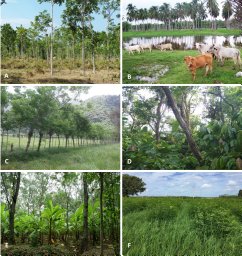
The role of tropical forests in mitigating atmospheric carbon dioxide is widely acknowledged. However, there is still significant uncertainty in quantifying carbon (C) sinks and sources in secondary forests of varying ages, due to the diverse changes in functional attributes and biogeochemical processes during succession. This study measured C accumulation, transfers between reservoirs, and fluxes to estimate the C balance along a successional gradient of tropical forests in southern Mexico. The C balance was quantified by measuring ecosystem processes such as biomass accumulation, tree mortality, fine and coarse detritus production, fine root turnover, woody detritus and litter decomposition, and heterotrophic respiration along a chronosequence of semi-evergreen tropical forests, regenerated after the abandonment of slash-and-burn agriculture. We found that both secondary and primary forests in the region had a positive C balance, indicating that they acted as a net C sink during the measurement years. The net C removal by secondary forests varied between 1.1 ± 0.4 and 2.4 ± 1.1 Mg C ha−1 yr−1, and that of primary forests was 1.2 ± 0.7 Mg C ha−1 yr−1. Structural equation modeling showed that forest age-driven changes in standing C stocks significantly but distinctly predicted C-sink capacity, whereas land use intensity and site quality index played lesser roles. Living biomass stock showed a positive path coefficient (β = 0.99, p < 0.01), while deadwood and litter stocks showed negative path coefficients with net C balance. Furthermore, we showed how successional changes in ecosystem functional processes, taxonomic richness, and floristic composition convergence regulate the total C storage during secondary forest restoration. Estimates of C stocks, balances from the integrated assessment of forest biogeochemical processes, and their associations with biodiversity recovery can improve the design and implementation of climate change mitigation strategies and other restoration initiatives.
Abstract Agroecosystems in arid and semi-arid regions face growing risks of climate extremes and soil degradation. The addition of exogenous carbon can restore degraded soils by adding soil organic carbon, but its effects on greenhouse gas (GHG) emissions and global warming mitigation remain elusive. This study evaluated emissions of three major GHGs–nitrous oxide (N2O), carbon dioxide (CO2), and methane (CH4)–following soil amendment with biochar, compost, and a biochar + compost (BC) mixture. Biochar application reduced cumulative N2O–N and CH4–C emissions by 52% and 16%, respectively. Soil CH4–C emissions were generally negative, being lowest with biochar and highest with compost. During the crop season, average CO2–C and N2O–C emissions were 75% and 45% greater, respectively, while CH4–C was 66% less compared to the no-crop season. Increasing soil moisture content increased N2O–N emissions (R 2 = 0.39), while soil temperature influenced CH4–C emissions (R 2 = 0.37). Among amendments, biochar-treated soil had the lowest cumulative N2O–N and CH4–C emissions, reducing net global warming potential (GWP) by 43% and 30%, respectively, compared to compost-treated soil and control (CTRL). Biochar amendment can be a climate-smart strategy for semi-arid regions as it improves soil health and mitigates GWP by reducing N2O and CH4 emissions.
Abstract Soil moisture prediction remains a major challenge in arid and semi‐arid agroecosystems, where highly variable rainfall, intermittent irrigation, and heterogeneous soil properties create strong nonlinearities in soil‐water dynamics. Reliable forecasts and interpretable models are needed for optimizing irrigation scheduling and improving water‐use efficiency under such conditions. The purpose was development of a novel, dual‐resolution framework that integrates machine learning (ML) and deep learning (DL) approaches with explainable artificial intelligence to evaluate soil moisture dynamics under different cover crop treatments. A 2‐year field experiment was conducted in Clovis, NM, where soil moisture, temperature, and meteorological variables were continuously monitored across five treatments: fallow, pea, oat, pea–oat mixture, and a six‐species mixture. ML models (random forest, light gradient boosting machine [LGBM], and eXtreme gradient boosting) and DL models, such as long short‐term memory and Transformer models, were trained on both daily and 5‐min datasets. SHapley Additive exPlanations (SHAP) indicates that features from the three most recent days had the strongest influence on daily predictions, informing a 72‐h lookback for short‐term modeling. LGBM achieved the highest accuracy, while Transformer reduced temporal lag in high‐frequency predictions. SHAP analysis further identified treatment‐specific sensitivities and scale‐dependent relationships between environmental variables and soil moisture content, with historical soil moisture and total water input dominating daily predictions, and solar radiation, temperature, and recent water events prevailing at finer scales. This framework improves both predictive accuracy and interpretability of soil water dynamics, supporting data‐driven irrigation and crop management in arid and semi‐arid regions.
Climate change and variability have severely impacted agriculture in arid and semi-arid regions. It calls for innovations in agriculture to enhance soil health, increase water use efficiency, and mitigate soil organic matter and nutrient loss while sustaining crop production. This study investigated how integrating innovative circular buffer strips of native perennial grasses with row crop strips minimizes soil greenhouse gas (GHG) emissions and the factors driving these emissions. Soil carbon dioxide (CO2) and nitrous oxide (N2O) fluxes were measured weekly over two years in plots under buffer strip grass (BSG), buffer strip corn (BSC), and continuous conventional corn (CCC) without grass buffers. Average soil N2O fluxes from BSG were 23.9-53.1% lower than corn fields (BSC and CCC), resulting in a 34.1-45.5% reduction in cumulative N2O emissions. Similarly, BSG had 36.9-51.3% lower cumulative CO2-C emissions than corn fields. Among corn fields, BSC emitted 22% less CO2-C and 22.3% less water-normalized CO2-equivalent emissions than CCC. The crop phase accounted for ∼90% of total CO2 and ∼63% of total N2O emissions, suggesting that CO2 emissions are more closely associated with plant growth, while winter fluxes are crucial for accurate N2O estimates. Evaluation of factors driving GHG emissions using random forest models showed that it describes 70% and 30% variability in CO2 and N2O emissions, respectively. Soil temperature was the primary driver of CO2 and N2O emissions, followed by inorganic N and soil water content. Integrating perennial grass strips can reduce GHG emissions in semi-arid cropping systems by moderating soil and microclimatic conditions.
ABSTRACT Soil organic carbon (SOC) is central to soil health, crop productivity, and agroecosystem resilience because of its influence on soil physical, chemical, and biological properties and processes. However, increasing SOC does not uniformly improve crop productivity, as SOC responses to management are often slow and the resulting agronomic benefits depend on soil, climate, and management context. In this narrative review, we synthesize evidence from arable field studies without constraining geographic boundaries to examine SOC‐associated soil processes, long‐term SOC changes under agricultural management, and relationships between SOC content and crop yield. Nine long‐term field studies spanning diverse geographic and climatic regions were used to summarize changes in SOC over time under contrasting management practices. To explore SOC‐yield relationships, studies reporting both SOC and yield were compiled from long‐term field studies of corn and wheat as examples. Across these studies, SOC content was positively associated with corn and wheat yields, although the strength of these relationships varied and likely reflected interactions among soil, climate, cropping systems, and management. Specifically, the slow and context‐dependent nature of SOC responses, climate variability, trade‐offs between C sequestration and agronomic benefits, and socio‐economic barriers to implementing SOC‐enhancing practices pose major challenges in adopting management strategies that increase SOC. Addressing these challenges will require long‐term field monitoring, optimization of C and nutrient inputs and soil disturbance, climate‐adaptive management, and supportive economic and policy frameworks. Overall, SOC management should move beyond increasing C stocks alone toward context‐specific strategies that enhance SOC‐associated soil functions and support crop productivity and agroecosystem resilience.
Tillage involves the manipulation of soil for successful crop production, but the frequency and intensity of soil disturbance can affect the storage, release, or redistribution of soil organic carbon (SOC) and nitrogen (N), as well as emissions of greenhouse gases (GHG). In recent years, strategic occasional tillage has been increasingly implemented to harness the benefit of mixing residues and incorporating fertilizer while meeting conservation goals. However, how such disturbances affect SOC and N storage and GHG emissions has not been studied widely. This study was designed to evaluate the response of SOC and N fractions and GHG fluxes under one-time strategic tillage (OT) with chisel after nine years of no-tillage (NT) management compared to long-term conventional high-intensity tillage (CT), low-intensity strip tillage (ST), and NT. In the semiarid dryland cropping systems of New Mexico, the OT was implemented before winter wheat planting in the long-term NT winter wheat (Triticum aestivum L.)-corn (Zea mays L.)-sorghum (Sorghum bicolor [L.] Moench) four-year rotation. Soil samples were collected right after tillage and 8 and 12 months after tillage and analyzed for SOC, microbial biomass carbon (MBC), potentially mineralizable carbon (PMC), and total, labile organic, and inorganic N contents. Soil GHG fluxes were measured using a portable Gasmet GT5000 analyzer connected to an Eosense automated chamber. OT after long-term NT did not compromise the C sequestration benefit of NT over CT. Compared to SOC under CT, it was 19.3% greater under ST, 34.8% greater under OT, and 21.1% greater under NT. Total N contents under ST, OT, and NT were 16.9%, 38.5%, and 15.4% greater than CT. All conservation tillage systems (ST, NT, and OT) also removed more atmospheric methane (CH4) than CT. The principal component analysis reflected the association of labile C with carbon dioxide emissions and C:N ratio, and MBC with CH4 and nitrous oxide emissions. The SOC correlated positively with total and soil inorganic N. Occasional strategic disturbance could be considered an effective soil management strategy without compromising the benefits of NT on SOC sequestration and GHG emissions mitigation in semiarid dryland cropping systems.
Soil health is crucial for sustaining agriculture in arid and semi-arid environments. However, soil health assessments in these environments often lack indicators that are both sensitive to management and functionally linked to ecosystem services such as water regulation. This study evaluated a range of physical, chemical, and biological indicators of soil health under varying cropping intensities and amendments at two semi-arid locations to evaluate their sensitivity to management and their linkages to key soil water functions. Among various indicators tested, microbial responses were highly sensitive to compost application. Compost-amended cropping systems had significantly greater soil microbial biomass, labile carbon (C) content, and inorganic nitrogen (N), with the long-term compost site showing a 211% greater particulate organic matter-C, a 63% greater mineral-associated organic matter-C, and 63% to 268% greater microbial community sizes than those in no-compost amended systems. Cover cropping, particularly with a diverse mixture, modestly improved microbial activity and arbuscular mycorrhizal fungi abundance, with a stronger effect when combined with compost. While some indicators exhibited site-specific sensitivity, the most consistently responsive across sites were potentially mineralizable C, total fatty acid methyl esters (FAME), total labile N. Multivariate analysis identified total FAME (microbial community size), total labile N, particulate organic C and field saturated hydraulic conductivity (Kfs) as a minimum data set of indicators for soil health assessment based on their sensitivity, robustness in response, and functional relevance to soil water processes. These findings also support that compost application and intensification of cropping systems can optimize soil health and water regulation in water-limited environments.
Balancing food security and climate change mitigation has been a global priority, yet viable pathways to achieve both simultaneously remain elusive. The dual potential of cover crops (CCs) to increase soil organic carbon (SOC) and succeeding crop yield was evaluated by meta-analysis of 1396 paired observations globally. Outcomes were Win-Win (+, +), Trade-off 1 (+, -) Trade-off 2 (-, +), and Lose-Lose (-, -) in 68.9%, 16.4%, 9.0%, and 5.7% of the observations, respectively. The synthetic intensity for the responses of SOC and crop yield to CCs was controlled by CC biomass, tillage practice, establishment years, and nitrogen rate. Global optimal window to maximize co-benefits included CC biomass < 7.65 t ha -1 , duration > 4 years, adoption of legume CCs and conservation tillage, and reduced N input. Specifically, CCs had a large Win-Win potential in rice systems and arid regions with low inherent SOC content. Emphasizing context-specific CC management strategies that promote Win-Win and minimize Trade-off or Lose-Lose conditions can reconcile historical contradictions over yield–SOC trade-offs and support the dual goal of enhancing climate mitigation and food security.
Cultivated soils in arid and semi-arid regions are vulnerable to soil organic carbon (SOC) loss due to variable crop yields, residue removal, and frequent fallowing. Replacing fallow periods with cover crops has been promoted to increase SOC storage and improve crop production. However, its effectiveness across soil and environmental conditions remains underexplored. This study used field observations with the DayCent biogeochemical model to evaluate the effects of multi-species cover crops on SOC, total nitrogen (TN), and crop yields in a winter wheat (Triticum aestivum L.)-sorghum (Sorghum bicolor (L.) Moench) rotation. Field data (2016-2024) collected from two cover crop treatments, Cover 1 (pea [Pisum sativum L.] + canola [Brassica napus L.]), Cover 2 (pea + oat [Avena sativa L.] + canola), and a fallow (control) treatment were used for model calibration and validation. DayCent simulated crop yields and reproduced general treatment differences in SOC and TN levels, with performance metrics (NSE, RMSE, and NRMSE) indicating reasonable model skill; however, short-term SOC changes (Delta SOC) were captured with some uncertainty. The validated model used to simulate long-term SOC and yield dynamics over a 35-year simulation period under a continued historical climate and an imposed SSP5-8.5 highemission climate signal showed that SOC gains relative to the fallow system may emerge only after 15-20 simulation years. In contrast, under the repeated historical climate, noticeable SOC increases above the fallow system appeared only after 29 simulation years. Across the simulation period, average SOC increases under SSP5-8.5 were 26.8 % for Cover1, 19.6 % for Cover2, and 9.2 % for fallow. Despite these SOC gains, cover crops did not improve yields under either climate condition. These findings highlight the potential of multi-species cover crops to enhance long-term SOC sequestration in semi-arid systems, while also emphasizing the need for realistic expectations on crop yield under water-limited conditions.
Frequent and severe droughts and reduced irrigation water availability in recent years have impacted soil health, soil organic carbon (SOC) storage, and nutrients in arid and semi-arid regions across the world. However, the magnitude and mechanisms of the changes in SOC and nitrogen (N) components and microbial community responses in lands experiencing irrigation retirement remain largely unexplored. We examined selected SOC and N pools and microbial community responses to diverse management strategies in silage corn (Zea mays) production under irrigation and after irrigation retirement in a clay loam semi-arid soil in New Mexico, USA. Under irrigation, mixed (CCM: grass, brassica, legume) and grass-only (CCG) cover crops with residue retained and mixed cover crops with residue removed (CCM-Rem) were examined. Under irrigation retired plots, perennial grass (PG) replaced CCG. Cover crops stored 13-19 % more SOC than fallow with no cover crop (NCC) in irrigated conditions, with up to 17 %, 59 %, and 41 % mineral-associated organic C (MAOC), potentially mineralizable C (PMC), and microbial biomass C (MBC), respectively. In irrigation retired plots, SOC was 14-26 % greater under cover crops and PG than NCC, with up to 24 % more SOC and 28 % more MAOC. Irrigation retirement increased particulate organic C (POC) by 80 % above the irrigated condition, representing a large portion of partially decomposed materials on the soil surface. Despite short-term increases in SOC fractions, a shift in the microbial community along with increased labile SOC following irrigation retirement may not lead to long-term C storage if proper conservation practices are not adopted. Cover cropping and PG enhanced the abundance of Actinobacteriota and Ascomycota, plant-associated microbes, while lowering the abundance of Chloroflexi. The Ascomycota, Mortierellomycota, and Bacteroidetes are linked to SOC storage due to their ability to rapidly accumulate microbial biomass. Cover crops and perennial grasses are crucial for preserving soil biological health and SOC storage in lands undergoing irrigation retirement.
 Prakriti Bista合作论文数Columbia Basin Agr Res Ctr, Oregon State Univ23
 Upendra M. Sainju合作论文数Northern Plains Agricultural Research Laboratory, U.S. Department of Agriculture, Agricultural Research Service22
 Vesh R. Thapa合作论文数Agricultural Science Center, New Mexico State University16
 Sundar Sapkota合作论文数14
 Pramod Acharya合作论文数Department of Plant and Environmental Sciences, New Mexico State University14
 Jun Wang (王俊)合作论文数College of Urban and Environmental Sciences, Northwest University;College of Soil and Water Conservation Science and Engineering, Northwest A&F University14
 Mark A. Marsalis合作论文数14
 O. John Idowu合作论文数Department of Crop and Soil Sciences;Cornell University;Department of Crop and Soil Sciences, Cornell University13
 Deb Raj Aryal合作论文数Facultad de Ciencias Agronómicas, Universidad Autónoma de Chiapas12
 Veronica Acosta-Martinez合作论文数Cropping Systems Research Laboratory, USDA Agricultural Research Service11Sangamesh V. Angadi合作论文数11
 Urszula Norton合作论文数Department of Plant Sciences10
 Fazhu Zhao (赵发珠)合作论文数College of Urban and Environmental Sciences, Northwest University9
 Jay B. Norton合作论文数School of Forestry, University of Montana9
 Stephen Machado合作论文数Columbia Basin Agricultural Research Center (CBARC),, Oregon State University8Wooiklee Paye合作论文数Agricultural Science Center, New Mexico State University7Sangu Angadi合作论文数Dept . of Soil Science;University of Manitoba;Dept . of Soil Science, University of Manitoba7
 Abdel Mesbah合作论文数Agricultural Science Center at Clovis, College of Agricultural, Consumer and Environmental Sciences, New Mexico State University;Department of Entomology, Plant Pathology & Weed Science, College of Agricultural, Consumer and Environmental Sciences, New Mexico State University7Dawn M. Vanleeuwen合作论文数Agriculture and Extension Department;New Mexico State University;Agriculture and Extension Department, New Mexico State University7
 Sushil Adhikari合作论文数Department of Biosystems Engineering, Auburn University6
 Meagan E. Schipanski合作论文数Department of Horticulture, Cornell University6
 Atinderpal Singh合作论文数Dept Plant & Soil Sci, Texas Tech Univ5
 Yang Liu (刘杨)合作论文数College of Agronomy, Northwest A&F University5
 April Ulery合作论文数U.S. Salinity Laboratory5
 Gilberto Villanueva-López合作论文数Correspondence: Gilberto Villanueva-López, El Colegio de la Frontera Sur4
 Binod Ghimire合作论文数Dept Entomol Plant Pathol & Weed Sci, New Mexico State Univ4Abdelaziz Nilahyane合作论文数African Sustainable Agr Res Inst ASARI, Mohammed VI Polytech Univ UM6P4
 Fernando Casanova-Lugo合作论文数Tecnol Nacl Mexico, Inst Tecnol Zona Maya4
 Manoj K. Shukla合作论文数Department of Endocrinology, Sanjay Gandhi Post Graduate Institute4
 Umakant Mishra合作论文数Sch Environm & Nat Resources, Ohio State Univ4Maysoon M. Mikha合作论文数USDA-ARS, Central Great Plains Research Station4
 Augustine K. Obour合作论文数Range Cattle Research and Education Center, University of Florida4
 Caidi Yang合作论文数3
 Nannan Zhang合作论文数3
 Sandya Kesoju合作论文数Columbia Basin Coll, Dept Agr, Pasco, WA 99301 USA3
 Mohammed Omer合作论文数Dept Extens Plant Sci, New Mexico State Univ3Shaohong Zhang合作论文数3
 Katie L. Lewis合作论文数Soil and Crop Sciences, Texas A&M University3
 Bharat Sharma Acharya合作论文数Oklahoma Department of Mines, State of Oklahoma3
 Xin Fu合作论文数3
 Pradhan Gautam合作论文数3
 Rui Liu (刘睿)合作论文数School of Ecology and Environmental Science, Yunnan University;Institute for Ecological Research and Pollution Control of Plateau Lakes, Yunnan University3
 Sadikshya R. Dangi合作论文数3
 Steven J Fonte合作论文数Department of Plant Sciences, University of California, Davis3Shree Chandra Shah合作论文数2Andrew J. Dominguez合作论文数2Jacobb Pintar合作论文数2Youngkoo Cho合作论文数2
 Rajendra Regmi合作论文数2




